ExpertPeacefulNot Reef Safe
Moorish Idol
Zanclus cornutus
Family: Zanclidae · Oddball & Rare Fish
Also known as: Crowned Scythe, Idol Fish
(c) Harry Rosenthal, some rights reserved (CC BY-NC)
Max Size
9"
Min Tank
125 gal
Lifespan
3-5 years (in captivity; longer in the wild)
Origin
Indo-Pacific, Indian Ocean
Diet
Omnivore
Swims
All
About
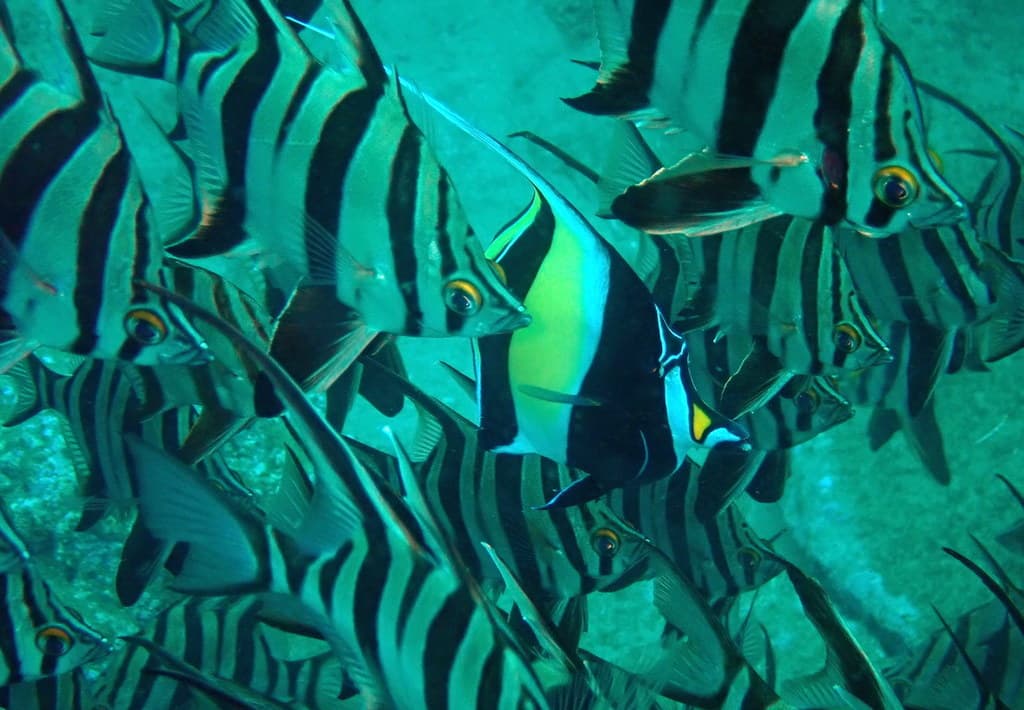
The Moorish Idol is arguably the most iconic tropical reef fish in the world, recognizable to millions from its appearance in popular media and as a universal symbol of coral reef beauty. Its body features bold, alternating bands of black, white, and yellow, with a dramatically elongated dorsal fin filament that trails behind the fish like an elegant banner. The snout is elongated and tubular, adapted for probing into crevices to extract food, and the overall body shape is laterally compressed and disc-like. As the sole living member of the family Zanclidae, it has no close living relatives.
In the wild, Zanclus cornutus has one of the widest distributions of any tropical reef fish, found throughout the Indo-Pacific from East Africa and the Red Sea to Hawaii and the Eastern Pacific. It occurs on coral reefs, rocky reefs, and lagoons at depths from 3 to 180 meters. It is often seen in pairs or small groups, moving gracefully along reef walls as it feeds on sponges, tunicates, algae, and small invertebrates. Its beauty and ubiquity on tropical reefs have made it one of the most desired aquarium fish, but this desire has come at a tragic cost.
The Moorish Idol is widely considered the most difficult commonly traded marine fish to keep alive in captivity, with mortality rates exceeding 90% within the first few months. The primary challenge is feeding — most wild-caught specimens steadfastly refuse all offered foods and slowly starve to death. Those rare individuals that do begin feeding are then highly susceptible to stress, disease, and water quality issues. Despite decades of attempts by expert aquarists, no reliable husbandry protocol exists, and this species is classified as expert-only with a strong recommendation against purchase by all but the most experienced specialists with dedicated systems. Many marine fish retailers and conservation advocates urge hobbyists not to buy this species at all.
Feeding & Diet
Omnivore
Moorish Idols feed on sponges, tunicates, algae, and small invertebrates in the wild. In captivity, getting them to eat is the single greatest challenge and the primary cause of mortality. If feeding can be initiated, offer a combination of frozen mysis shrimp, enriched brine shrimp, marine algae sheets (nori), spirulina, sponge-based frozen foods, and live rock with natural growth. Live foods such as brine shrimp nauplii or copepods may help stimulate initial feeding. Feed multiple times daily if the specimen is eating.
Compatibility
peacefulexpert-onlysensitiveiconic
The Moorish Idol is a peaceful species that must not be housed with aggressive or highly active fish that could cause stress. Compatible with other peaceful species such as tangs, butterflies, and angelfish, provided the tank is large enough. Do not keep with aggressive species or competitive feeders, as the Moorish Idol's reluctance to feed means it will be easily outcompeted. Not reef-safe due to its tendency to graze on sponges and some corals.
Check CompatibilityBreeding
Not bred in captivity
Moorish Idols have never been bred in home aquariums. They are pelagic spawners that release eggs into the water column. The larvae undergo an extended pelagic phase lasting approximately 70 days before settling on the reef, which is one of the longest larval periods of any reef fish. This extended larval stage, combined with the near impossibility of maintaining adults in captivity, makes captive breeding an unrealized goal.
Special Requirements
- Extremely high mortality rate in captivity — expert only
- Most specimens refuse food and starve — the single greatest challenge
- Requires pristine water quality at all times
- Prone to stress-related diseases and parasitic infections
- Many experts and retailers advise against purchasing this species
- Needs ample swimming space and peaceful tankmates
- May pick at sponges, tunicates, and some coral species
Water Parameters
Temperature74–80°F
Specific Gravity1.02–1.025 sg
pH8.1–8.4
Alkalinity8–12 dKH
Coloration
blackwhiteyelloworange
Tags
peacefulexpert-onlysensitiveiconic