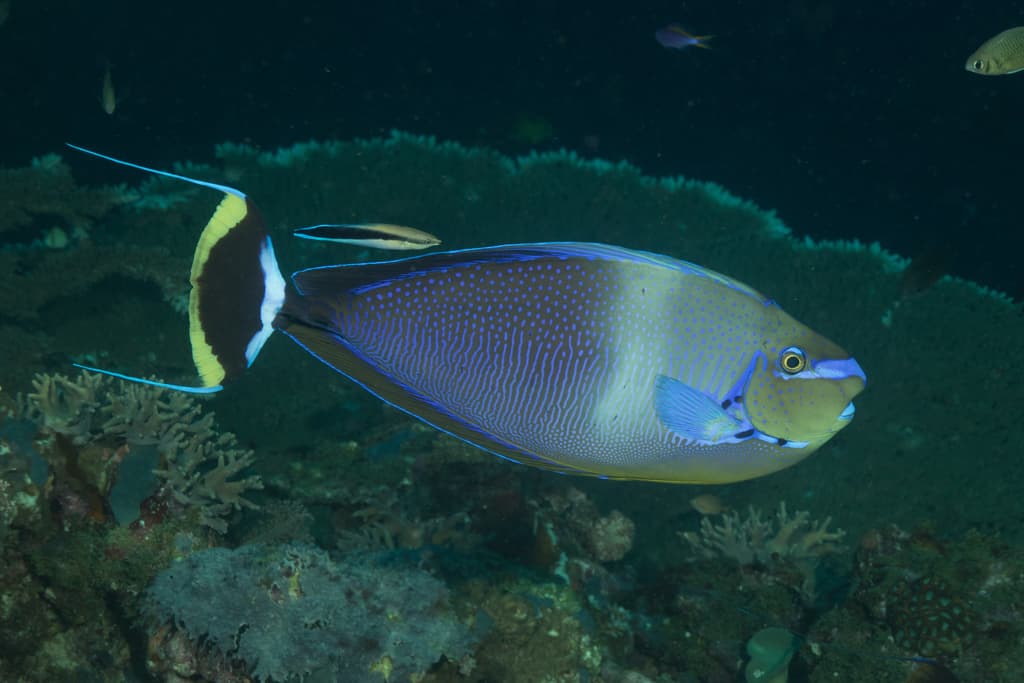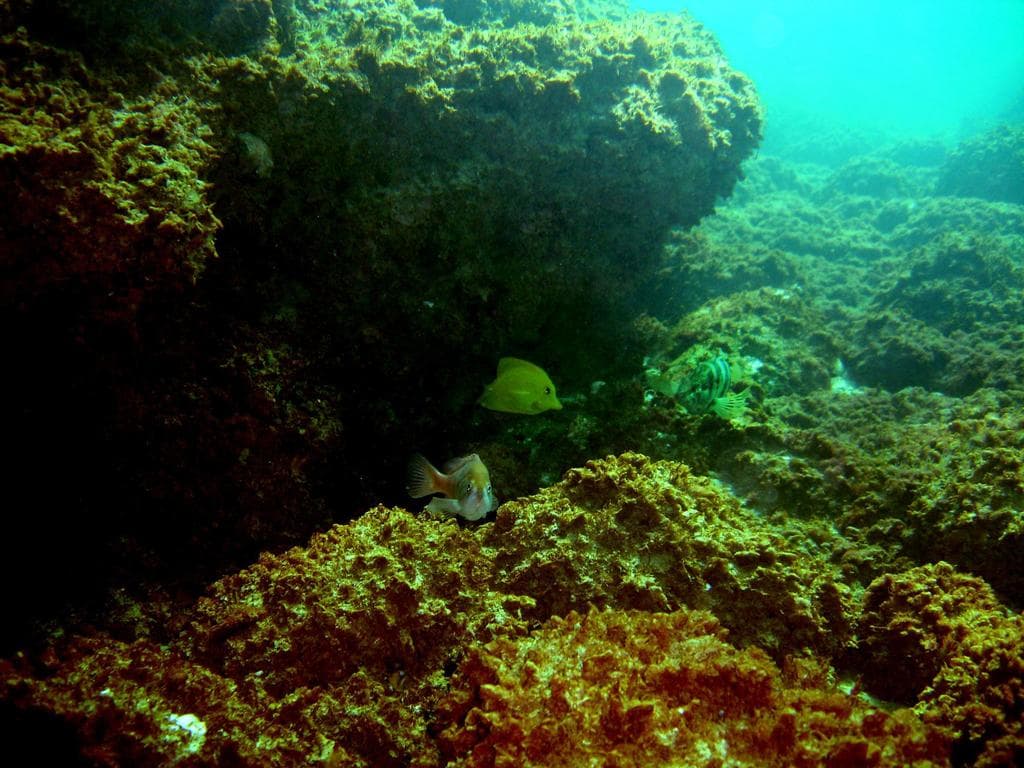
IntermediateSemi-AggressiveReef SafeIUCN: Least ConcernCaptive-Bred Available
Yellow Tang
Zebrasoma flavescens
Family: Acanthuridae · Tangs & Surgeonfish
Also known as: Yellow Sailfin Tang, Yellow Surgeonfish
(c) boris weitzmann, all rights reserved
Max Size
8"
Min Tank
100 gal
Lifespan
15-20 years
Origin
Hawaii, Central Pacific
Diet
Herbivore
Swims
All
Did You Know?
- In 2015, researchers at the Oceanic Institute of Hawaii Pacific University achieved the first-ever captive breeding of Yellow Tangs after years of effort
- Hawaii banned the collection of Yellow Tangs for the aquarium trade in 2021, making captive-bred specimens the sustainable choice
- Yellow Tangs turn a darker brownish color at night as a camouflage mechanism, returning to bright yellow at dawn
About
The Yellow Tang is one of the most iconic and sought-after marine aquarium fish, prized for its striking, uniform lemon-yellow coloration and active swimming behavior. Native primarily to the shallow reefs of Hawaii and the broader Pacific Ocean, this species plays an important ecological role as an algae grazer. Its laterally compressed, disc-shaped body and prominent dorsal and anal fins give it a distinctive sailfin profile that makes it instantly recognizable. A sharp, retractable spine at the base of the tail serves as a defensive weapon against predators and rival fish.
In the home aquarium, Yellow Tangs are highly valued for their relentless algae-grazing behavior, which helps keep live rock and glass free of nuisance algae growth. They are active, bold swimmers that require ample open swimming space, making them unsuitable for small or overcrowded aquariums. While generally peaceful toward dissimilar species, Yellow Tangs can be aggressive toward other tangs and similarly shaped fish, particularly in tanks that lack sufficient space. Introducing multiple tangs simultaneously to a large system can help diffuse aggression.
Due to collection restrictions in Hawaii beginning in 2021, wild-caught Yellow Tangs have become significantly more expensive and less readily available. However, a major breakthrough in aquaculture by researchers at the Oceanic Institute of Hawaii Pacific University has made captive-bred Yellow Tangs increasingly available, though at a premium price. These captive-bred specimens are hardier and better adapted to aquarium life. With proper care, Yellow Tangs can live well over a decade and will become a bold, centerpiece fish in any marine aquarium.
Feeding & Diet
Herbivore
Yellow Tangs are primarily herbivores that require a diet rich in marine algae. Offer dried nori (seaweed) on a clip daily, supplemented with high-quality Spirulina-enriched flakes or pellets. They will also accept frozen preparations containing algae and occasional meaty foods such as mysis shrimp. Insufficient vegetable matter in their diet can lead to Head and Lateral Line Erosion (HLLE).
Compatibility
reef-safealgae-grazeractive-swimmertang-aggressioncommunity-compatiblecaptive-bred-available
Yellow Tangs are generally peaceful toward fish that do not resemble them in body shape or color. They may harass other tangs, especially in smaller tanks. Best kept as the only tang in tanks under 125 gallons. In larger systems (180+ gallons), they can be kept with other tang species if introduced simultaneously. Excellent reef fish that will not bother corals or most invertebrates.
Check CompatibilityBreeding
Extremely Difficult
Yellow Tang breeding in captivity was achieved for the first time in 2015 by researchers at the Oceanic Institute in Hawaii after years of effort. The larvae have an extended pelagic phase lasting approximately 60 days, requiring specialized live food cultures including copepod nauplii. Home aquarium breeding is not currently feasible due to the complexity of larval rearing.
Special Requirements
- Requires minimum 100-gallon tank with ample swimming room
- Daily offering of dried seaweed or nori is essential
- Prone to ich (Cryptocaryon irritans) - quarantine recommended
- Susceptible to HLLE without proper nutrition
- Strong water flow and high oxygenation preferred
Water Parameters
Temperature72–78°F
Specific Gravity1.02–1.026 sg
pH8–8.4
Alkalinity8–12 dKH
Coloration
yellow
Tags
reef-safealgae-grazeractive-swimmertang-aggressioncommunity-compatiblecaptive-bred-available