ExpertPeacefulNot Reef Safe
Blue Ribbon Eel
Rhinomuraena quaesita
Family: Muraenidae · Eels
Also known as: Ribbon Eel, Ribbon Moray, Leaf-nosed Moray, Bernis Eel
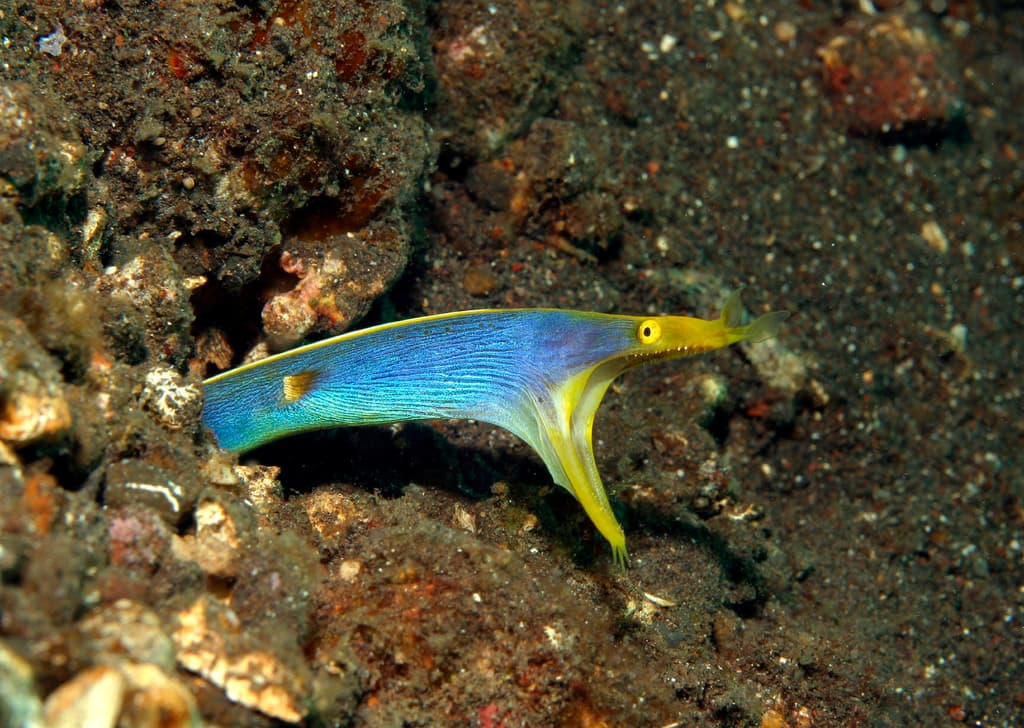
(c) Ron Greer, some rights reserved (CC BY-NC)
Max Size
48"
Min Tank
55 gal
Lifespan
Up to 20 years in the wild; rarely survives beyond 1-2 years in captivity
Origin
Indo-Pacific, Indonesia
Diet
Carnivore
Swims
Bottom
About
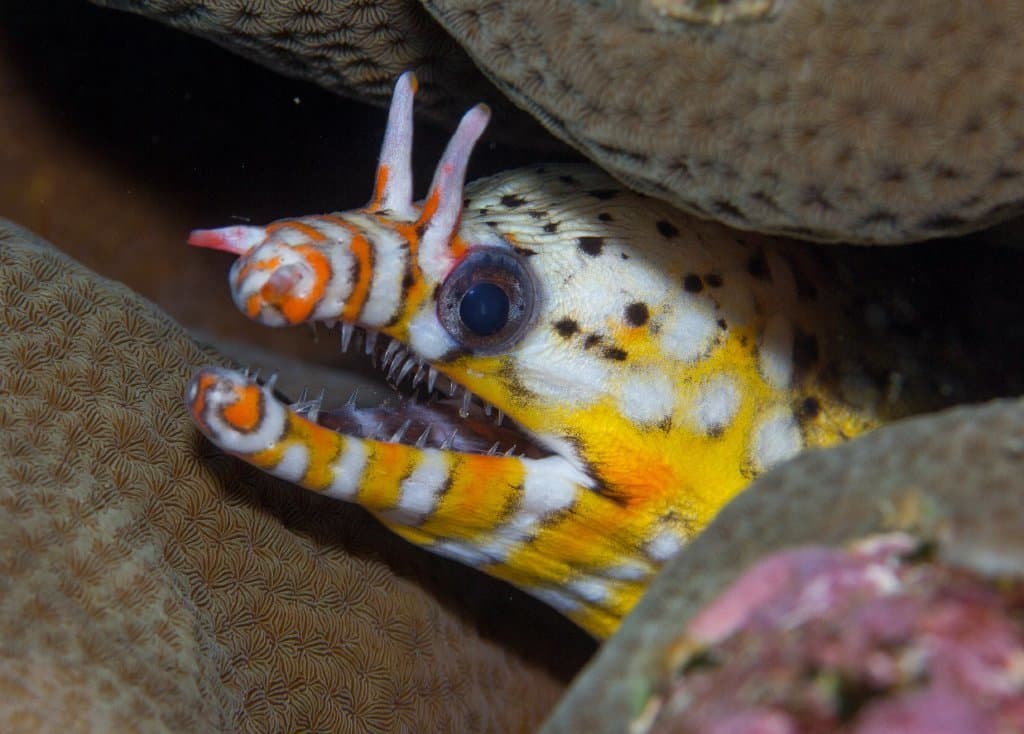
The Blue Ribbon Eel is arguably the most visually spectacular eel species in the marine world, with a strikingly slender, ribbon-like body clad in electric blue with a vivid yellow dorsal fin and elaborate flared nostrils that give it an almost dragon-like appearance. Males display the iconic blue and yellow coloration, while juveniles are jet black with a yellow dorsal fin, and females are predominantly yellow. This species undergoes sequential hermaphroditism, starting life as male and transitioning to female as they mature.
Despite its breathtaking beauty, the Blue Ribbon Eel is widely regarded as one of the most challenging marine fish to maintain in captivity. The vast majority of wild-caught specimens refuse to eat in aquariums and slowly starve to death over the course of weeks to months. Even individuals that initially accept food often go on extended hunger strikes. Their survival rate in captivity is dismally low, and many experienced aquarists and marine biologists advise against purchasing this species. It is classified as an expert-only species and should only be attempted by highly experienced keepers with dedicated systems.
For the rare keeper who successfully maintains a Blue Ribbon Eel, the setup must include a deep sand bed for burrowing, a secure lid with no escape points, and an extremely peaceful environment free from aggressive or competitive tankmates. Live feeder fish or ghost shrimp may be necessary to initiate feeding, with a gradual transition to frozen foods attempted over time. This species is not reef-safe, as it will consume small fish and is too delicate for the typical reef environment.
Feeding & Diet
Carnivore
Blue Ribbon Eels are carnivores that feed primarily on small fish in the wild, using their elaborate nasal flaps to sense prey. In captivity, most specimens refuse to eat and this is the primary cause of mortality. Live feeder fish or ghost shrimp may be necessary to initiate feeding. Transition attempts to frozen silversides, shrimp, and other meaty foods should be made gradually. Feed every two to three days if the eel accepts food. Enriched live foods are recommended.
Compatibility
not-reef-safepeacefulexpert-onlyspecies-only-preferredfish-predatorescape-artist
The Blue Ribbon Eel must be housed in an extremely peaceful environment. It is easily stressed by aggressive or boisterous tankmates. If kept in a community setting, only the most gentle species should be present. It will consume small fish that fit in its mouth. Due to its fragile nature and feeding difficulties, a species-specific setup is strongly recommended. It is not compatible with the typical reef aquarium environment.
Check CompatibilityBreeding
Not bred in captivity
Blue Ribbon Eels have never been bred in captivity. They are protandrous hermaphrodites, transitioning from male (blue) to female (yellow) during their lives. Juveniles start as black. The complex life cycle, feeding challenges, and extended larval development have prevented any captive breeding attempts from succeeding.
Special Requirements
- Expert only - extremely difficult to maintain in captivity
- Most specimens refuse food and slowly starve
- Deep sand bed required for burrowing
- Absolutely secure, escape-proof lid with no gaps
- Extremely peaceful environment required - no aggressive tankmates
- Live foods may be necessary to initiate feeding
- Dedicated species tank strongly recommended
- Consider whether keeping this species is ethical given survival rates
Water Parameters
Temperature72–78°F
Specific Gravity1.02–1.025 sg
pH8.1–8.4
Alkalinity8–12 dKH
Coloration
blueyellowblack
Tags
not-reef-safepeacefulexpert-onlyspecies-only-preferredfish-predatorescape-artist