IntermediatePeacefulNot Reef Safe
Bicolor Parrotfish
Cetoscarus bicolor
Family: Scaridae · Oddball & Rare Fish
Also known as: Bicolour Parrotfish, Two-colored Parrotfish, Humphead Parrotfish
(c) saraorca, some rights reserved (CC BY-NC)
Max Size
36"
Min Tank
300 gal
Lifespan
10-20 years
Origin
Indo-Pacific, Red Sea
Diet
Herbivore
Swims
All
About
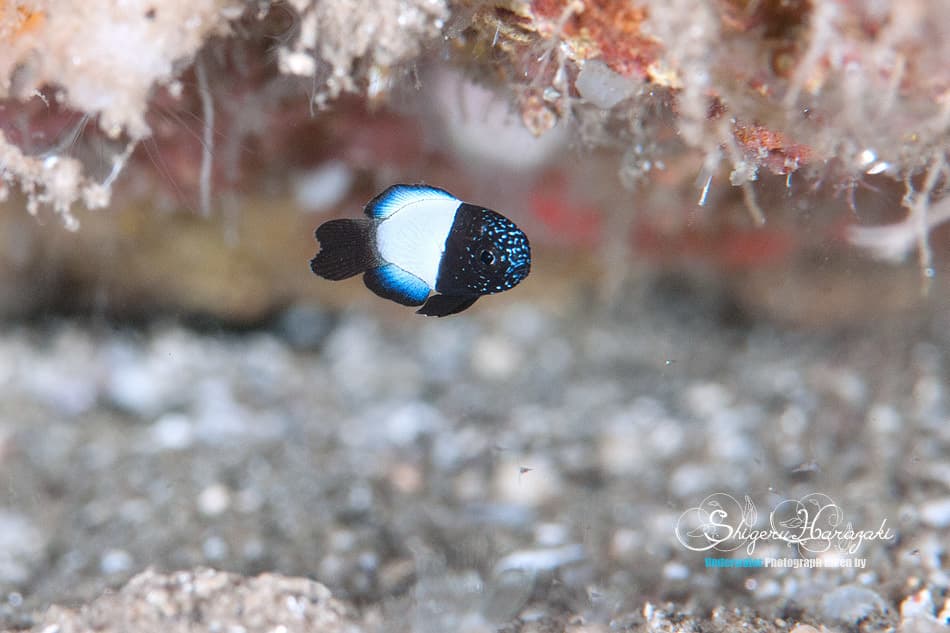
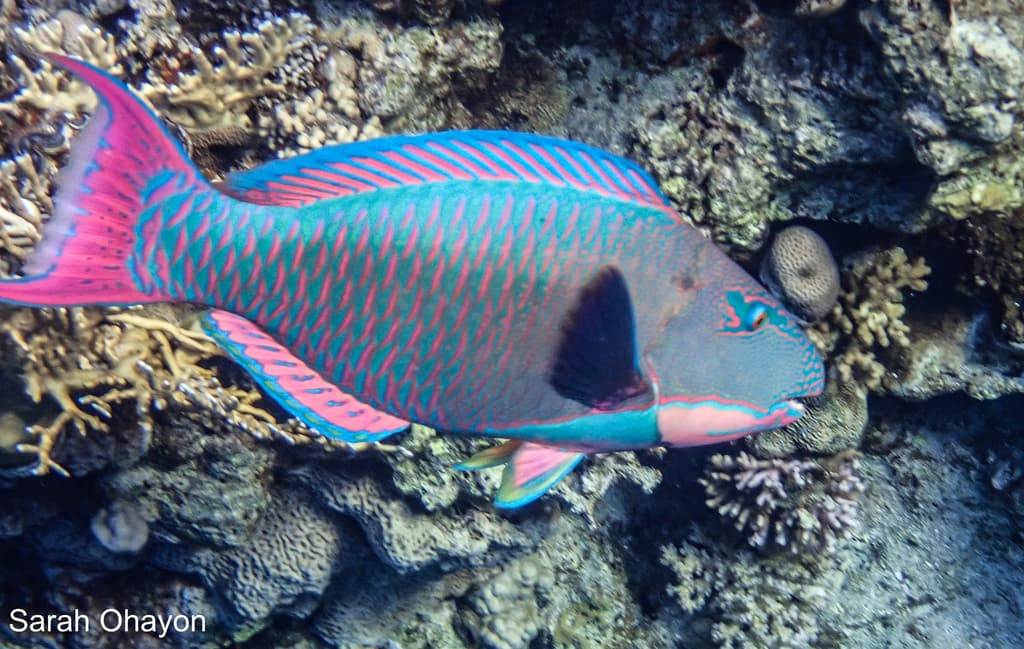
The Bicolor Parrotfish is a large, impressive member of the parrotfish family that undergoes dramatic color changes throughout its life. Juveniles are predominantly white with a broad dark brown to black saddle across the upper body and an orange-red blotch near the head, creating the striking two-tone pattern that gives this species its common name. Initial phase (female) adults develop a mottled pattern of brown, red, and white, while terminal phase (supermale) individuals transform into a spectacular teal-green with pink and purple accents. At a potential maximum size of 36 inches, this is one of the larger parrotfish species encountered in the aquarium trade.
In the wild, Cetoscarus bicolor is found throughout the Indo-Pacific, from the Red Sea and East Africa across the Indian Ocean to the Western Pacific. It inhabits coral reefs and lagoons at depths of 1 to 30 meters, where it performs the ecologically critical function of bioeroding coral rock with its powerful fused beak-like teeth. Parrotfish scrape and bite coral surfaces to access the symbiotic algae and microorganisms within, grinding the coral skeleton into fine sand in the process. A single large parrotfish can produce hundreds of pounds of sand per year, playing a fundamental role in creating the white sand beaches of tropical islands.
In the aquarium, the Bicolor Parrotfish is a challenging species primarily due to its enormous adult size, specialized diet, and constant need for hard substrate to grind with its beak teeth, which grow continuously. A minimum tank of 300 gallons is required, and even this is marginal for a full-grown adult. The fish needs live rock or dead coral skeleton to gnaw on, and its feeding behavior produces significant amounts of fine sediment. It is not reef-safe as it will actively consume coral. This species is best suited for very large fish-only systems or public aquariums.
Feeding & Diet
Herbivore
Bicolor Parrotfish are herbivores that feed by scraping algae and microorganisms from coral rock with their powerful beak-like teeth. In captivity, provide marine algae sheets (nori), spirulina flakes and pellets, blanched vegetables, and ample live rock or dead coral skeleton for grazing. The beak teeth grow continuously and require hard substrate for natural wearing. Supplement with frozen herbivore preparations. Feed multiple times daily, as this species grazes constantly in the wild.
Compatibility
peacefullarge-tankFOWLRherbivore
The Bicolor Parrotfish is a peaceful, non-aggressive species that poses no threat to other fish. Its large adult size means it can only be housed with similarly large, robust species in very big systems. Good companions include large tangs, angelfish, wrasses, and other large peaceful to semi-aggressive fish. It will destroy coral and is completely incompatible with reef aquariums. Its constant grazing and sediment production require dedicated filtration.
Check CompatibilityBreeding
Not bred in captivity
Bicolor Parrotfish are protogynous hermaphrodites, with dominant females transforming into supermales. Terminal phase supermales are brilliantly colored and maintain harems of females. Spawning occurs at dusk with pelagic egg release. Captive breeding is not feasible due to the species' enormous adult size and complex social hierarchy requirements. Interestingly, parrotfish secrete a mucus cocoon around themselves at night while sleeping, which is thought to mask their scent from nocturnal predators.
Special Requirements
- Very large tank required (300+ gallons) — grows to 36 inches
- Continuously growing beak teeth require hard substrate for wearing
- Produces large amounts of fine sediment from grinding — strong filtration essential
- Needs live rock or dead coral skeleton for grazing and dental health
- Will actively consume and destroy coral — absolutely not reef-safe
- Dramatic color changes through life stages
Water Parameters
Temperature74–80°F
Specific Gravity1.02–1.025 sg
pH8.1–8.4
Alkalinity8–12 dKH
Coloration
white (juvenile)brown (juvenile)orange (juvenile)teal-green (terminal male)pink (terminal male)
Tags
peacefullarge-tankFOWLRherbivore