IntermediatePeacefulReef Safe with Caution
Marine Betta
Calloplesiops altivelis
Family: Plesiopidae · Oddball & Rare Fish
Also known as: Comet, Comet Grouper, Roundhead
(c) Shigeru Harazaki, all rights reserved
Max Size
8"
Min Tank
55 gal
Lifespan
5-10 years
Origin
Indo-Pacific, Red Sea
Diet
Carnivore
Swims
Middle
About
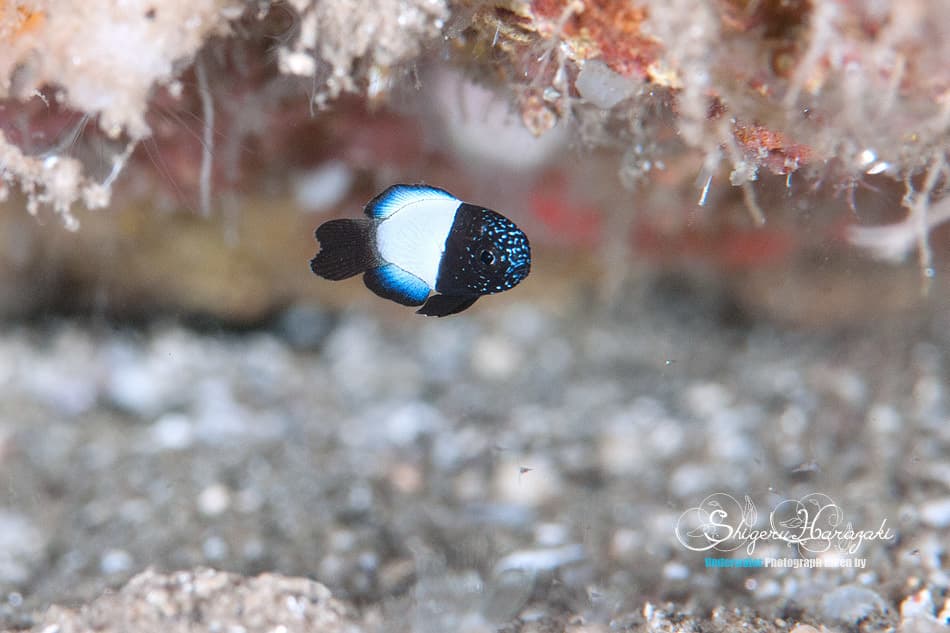
The Marine Betta is one of the most visually spectacular and unusual fish available to marine aquarists. Its elongated body and dramatically oversized, flowing fins are jet black and covered with a constellation of small white spots, giving it a comet-like or celestial appearance that is truly unlike any other aquarium species. A large false eyespot, or ocellus, is prominently positioned on the rear dorsal fin area, which plays a central role in the fish's remarkable defensive mimicry strategy.
When threatened, the Marine Betta retreats headfirst into a crevice, leaving its spotted rear end and prominent false eyespot exposed. This display closely mimics the head of a White-Mouth Moray Eel (Gymnothorax meleagris), which shares a similar spotted pattern. Predators approaching the Marine Betta from behind are confronted with what appears to be the face of a much larger, dangerous eel, causing them to retreat. This is one of the most elegant examples of Batesian mimicry in the marine world and is regularly observed in the aquarium setting.
In the aquarium, the Marine Betta is a shy, nocturnal predator that requires patience during the acclimation period. It often hides for the first several weeks and may initially refuse prepared foods, requiring live ghost shrimp or small feeder fish to stimulate feeding. Once acclimated, most specimens learn to accept frozen silversides, mysis shrimp, and other meaty foods. It is peaceful toward fish too large to swallow but will readily consume small shrimp and very small fish. The Marine Betta does best in a dimly lit aquarium with ample caves and overhangs, and it becomes more visible and bold over time as it learns to associate its keeper with food.
Feeding & Diet
Carnivore
Marine Bettas are carnivorous ambush predators that feed on small fish and crustaceans. In captivity, they may initially require live ghost shrimp or small feeder fish before being weaned onto frozen foods. Offer frozen silversides, mysis shrimp, krill, and enriched brine shrimp. Feed every other day once established. Use feeding tongs to target-feed if necessary.
Compatibility
reef-cautionpeacefulpredatornocturnaloddballmoray-mimic
The Marine Betta is peaceful toward fish too large to swallow but is a stealthy predator of small fish and shrimp. Compatible with medium to large community fish including tangs, angelfish, larger wrasses, and clownfish. Avoid housing with small gobies, firefish, or ornamental shrimp. Best added to the tank before more aggressive species to give it time to establish territory.
Check CompatibilityBreeding
Difficult
Marine Bettas have been bred in captivity, though it remains uncommon. They are secretive cave spawners, with the male guarding a large egg mass deposited on the ceiling of a cave. The male does not eat during the incubation period, which lasts approximately five to six days. Larvae are pelagic and require rotifers and copepod nauplii as first foods.
Special Requirements
- Subdued lighting or ample shaded caves essential
- Nocturnal - most active at dusk and nighttime
- May require live food initially before weaning to frozen
- Will eat small shrimp and very small fish
- Provide multiple hiding spots - may hide for weeks during acclimation
- Feeding tongs recommended for target feeding
- Becomes bolder over time with consistent care
Water Parameters
Temperature74–80°F
Specific Gravity1.02–1.026 sg
pH8.1–8.4
Alkalinity8–12 dKH
Coloration
blackwhitebrown
Tags
reef-cautionpeacefulpredatornocturnaloddballmoray-mimic