ExpertSemi-AggressiveReef Safe with Caution
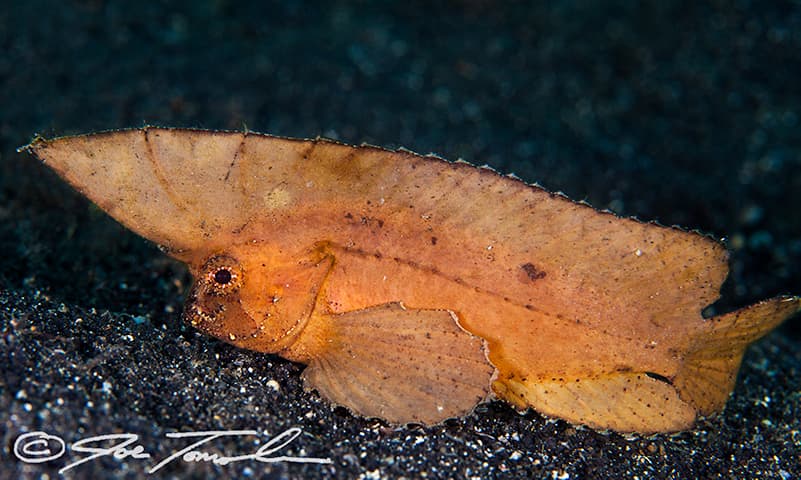
Cockatoo Waspfish
Ablabys taenianotus
Family: Tetrarogidae · Oddball & Rare Fish
Also known as: Rogue Fish, Leaf Fish, Cockatoo Leaf Fish
(c) Joe Tomoleoni, all rights reserved
Max Size
6"
Min Tank
50 gal
Lifespan
5-8 years
Origin
Indo-Pacific, Western Pacific
Diet
Carnivore
Swims
Bottom
About
The Cockatoo Waspfish is a bizarre and fascinating oddball species that has evolved to mimic a dead leaf drifting in the current. Its laterally compressed, tall body is adorned with a dramatically elevated, spiny dorsal fin reminiscent of a cockatoo's crest, which gives the species its common name. The body color varies from brown to maroon, reddish, or nearly black, with irregular mottling and textured skin that enhances its leaf-like camouflage. When resting on the substrate or drifting in the current, it is virtually indistinguishable from a piece of dead vegetation or algae.
In the wild, Ablabys taenianotus is found throughout the Indo-Pacific, particularly in the Western Pacific from Indonesia and the Philippines to Australia and Papua New Guinea. It inhabits sandy, muddy, and rubble bottoms in sheltered bays, harbors, and reef margins at depths of 1 to 15 meters. It is primarily nocturnal, spending daylight hours resting motionlessly on the substrate or swaying gently in the current to enhance its leaf mimicry. At night, it becomes an active ambush predator, using its camouflage to surprise small fish and crustaceans that approach too closely.
The Cockatoo Waspfish is classified as expert-only due to a critical safety consideration: its dorsal spines are venomous and can deliver an extremely painful sting comparable to a wasp sting, which is the origin of its common name. While not life-threatening to most adults, the venom can cause intense localized pain, swelling, and in some cases systemic reactions. Extreme caution must be exercised during tank maintenance, netting, and handling. Beyond the safety concern, the species is challenging due to its preference for live food and its nocturnal, sedentary lifestyle that makes feeding assessment difficult.
Feeding & Diet
Carnivore
The Cockatoo Waspfish is a nocturnal ambush predator that feeds on small fish, shrimp, and crabs in the wild. In captivity, it often requires live food initially, including live ghost shrimp and small feeder fish. With patience, most specimens can be weaned onto frozen foods offered via feeding tongs — wiggle frozen silversides or mysis shrimp near the fish to simulate live prey. Feed two to three times per week, primarily at dusk or after lights-out when the fish is most active.
Compatibility
venomousnocturnalambush-predatorspecies-tankexpert-only
The Cockatoo Waspfish should only be kept with fish too large to eat and too slow to outcompete it for food. Its venomous spines can injure curious tankmates that attempt to nip at it. Compatible with other slow-moving predators such as frogfish, scorpionfish, and seahorses (with caution). Never house with aggressive species that might harass it, nor with small fish or shrimp that will be consumed. A species-appropriate setup is strongly recommended.
Check CompatibilityBreeding
Not bred in captivity
Cockatoo Waspfish have not been bred in home aquariums. Little is known about their reproductive behavior in the wild. They are believed to produce floating egg masses. The venomous nature of the species and the challenges of maintaining multiple individuals in close proximity make captive breeding efforts impractical for hobbyists.
Special Requirements
- VENOMOUS DORSAL SPINES — handle with extreme caution at all times
- Sting causes intense pain comparable to wasp stings — seek medical attention if stung
- Nocturnal — most active and feeds at night
- May require live food initially before weaning to frozen
- Provide sandy substrate and low-flow areas for resting
- Excellent leaf mimicry makes it difficult to locate in the tank
- Will eat small fish and shrimp that fit in its mouth
Water Parameters
Temperature72–78°F
Specific Gravity1.02–1.025 sg
pH8.1–8.4
Alkalinity8–12 dKH
Coloration
brownmaroonredblack
Tags
venomousnocturnalambush-predatorspecies-tankexpert-only