IntermediateSemi-AggressiveReef Safe with Caution
Volitan Lionfish
Pterois volitans
Family: Scorpaenidae · Lionfish & Scorpionfish
Also known as: Red Lionfish, Common Lionfish, Turkeyfish, Red Firefish
(c) Shigeru Harazaki, all rights reserved
Max Size
15"
Min Tank
120 gal
Lifespan
10-15 years
Origin
Indo-Pacific, Western Pacific
Diet
Carnivore
Swims
All
About
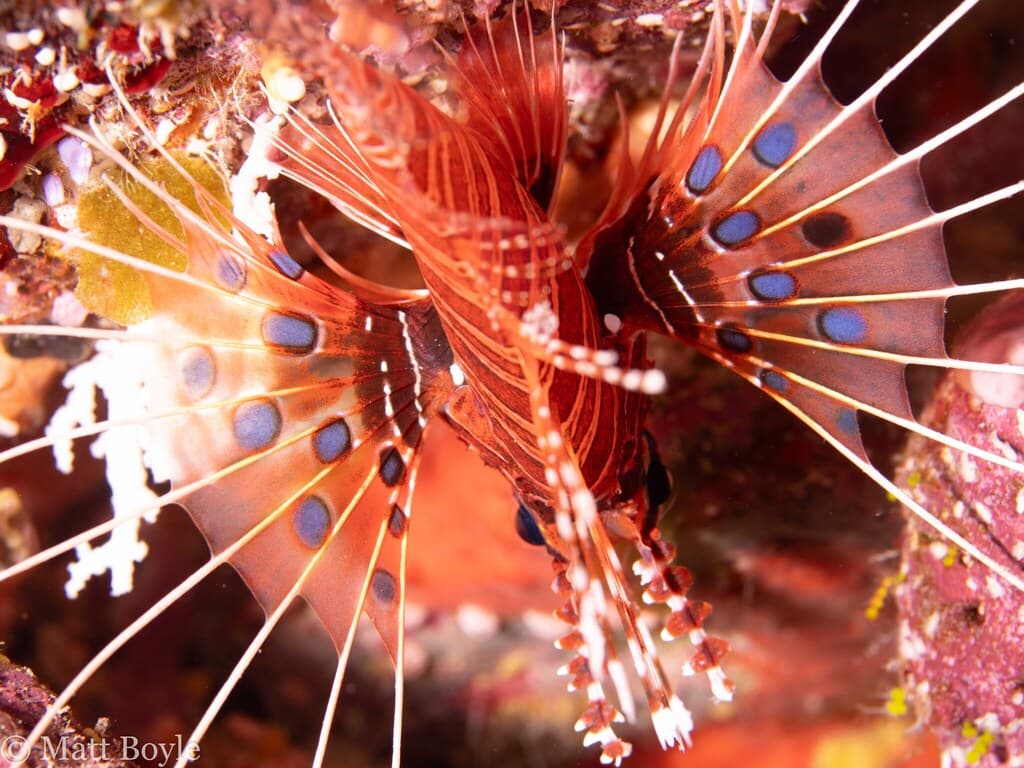
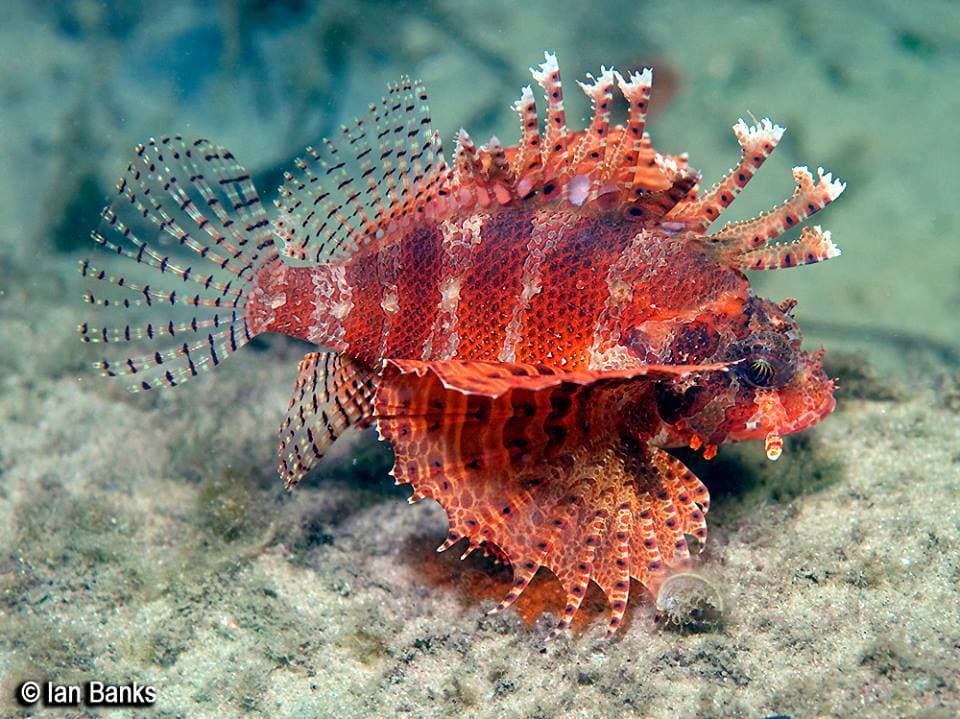
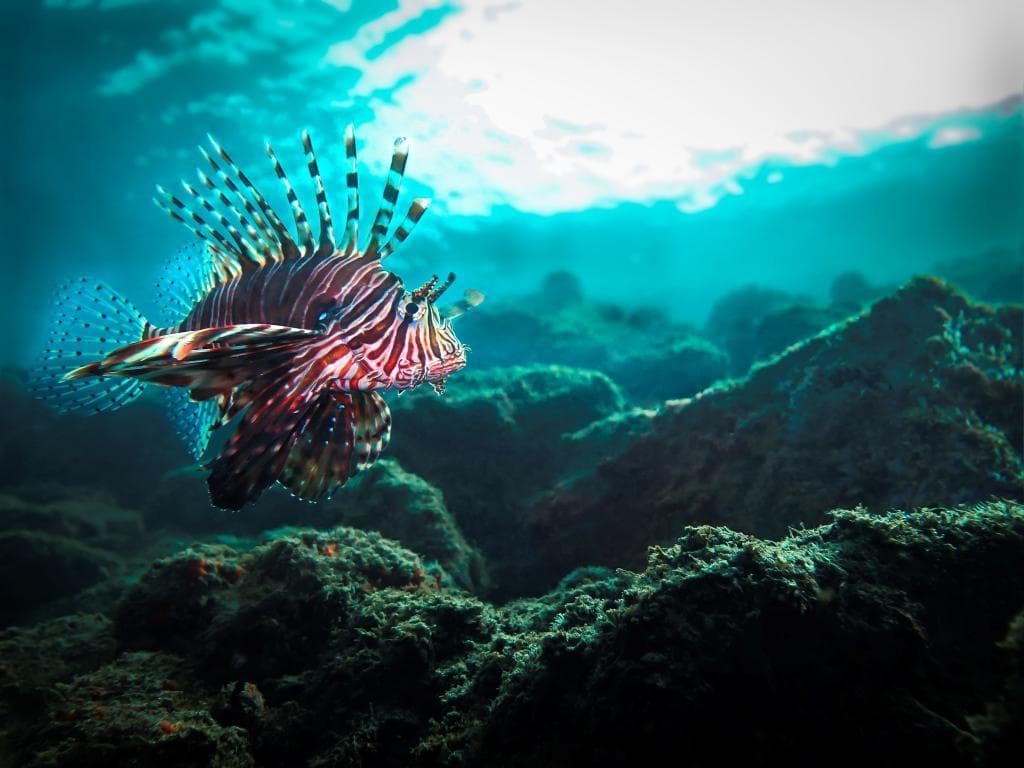
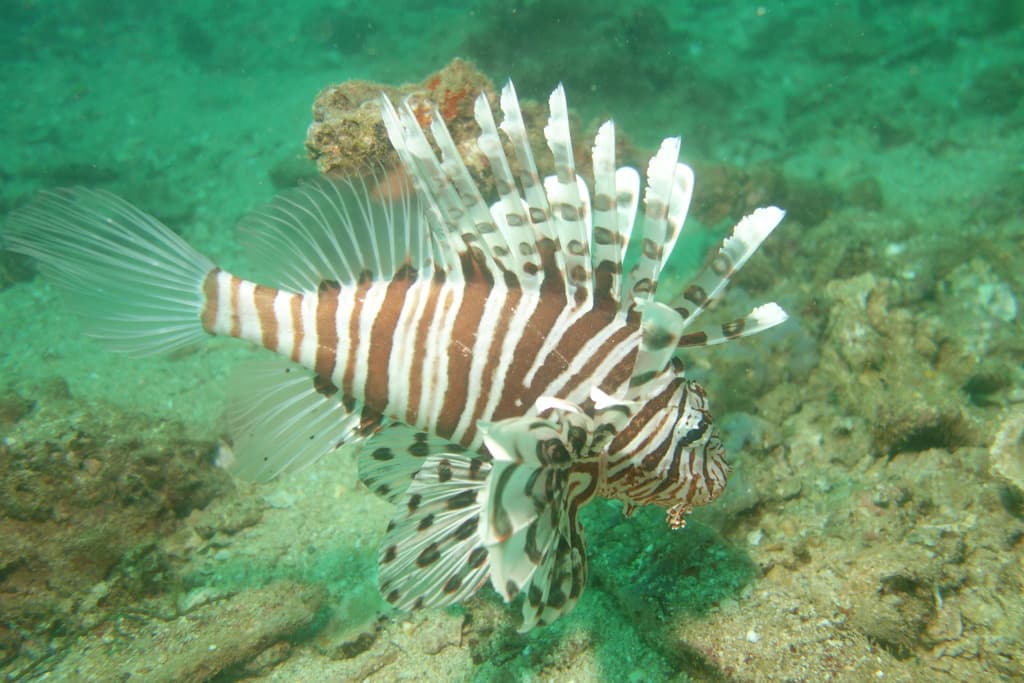
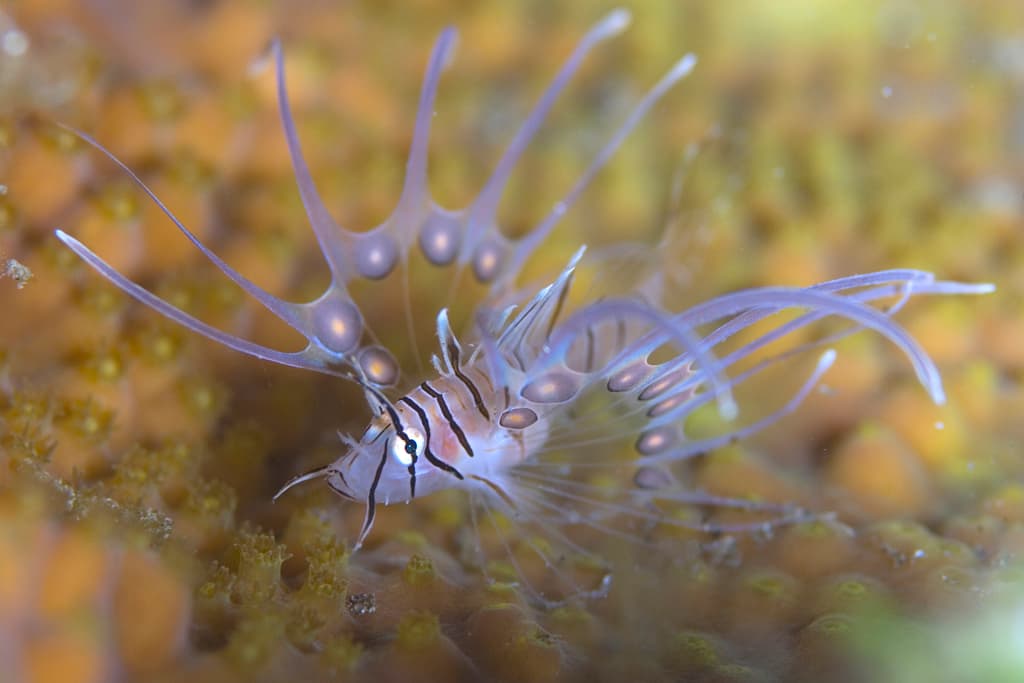
The Volitan Lionfish is arguably the most iconic and dramatic predatory fish available in the marine aquarium hobby. Its massive, fan-like pectoral fins spread wide like ornate feathered wings, while elongated dorsal spines trail delicate, venomous streamers above its boldly banded body. The coloration features alternating vertical stripes of deep maroon-red and creamy white, with intricate patterns adorning the fins and head. Growing to an impressive 15 inches, this is a truly show-stopping centerpiece fish that commands attention in any large marine aquarium.
The Volitan Lionfish has gained worldwide notoriety as one of the most destructive invasive marine species in history. Introduced to the Western Atlantic, likely through aquarium releases in the 1980s off the coast of Florida, it has since spread throughout the Caribbean, Gulf of Mexico, and along the Eastern Seaboard from New England to South America. With no natural predators in Atlantic waters, voracious appetites, and rapid reproduction, invasive lionfish populations have caused devastating declines in native reef fish species. This ecological disaster underscores the critical importance of responsible aquarium ownership and the imperative to never release aquarium fish into the wild.
In the aquarium, the Volitan Lionfish is a surprisingly sedentary ambush predator that spends much of its time hovering motionlessly or perched on ledges and overhangs, waiting for prey to venture within striking distance. Its feeding strike is lightning-fast, using those expansive pectoral fins to herd and corner small fish before engulfing them whole. While it is safe with corals and will not damage reef structures, it will consume any fish or crustacean small enough to fit in its cavernous mouth. The venomous dorsal, pelvic, and anal fin spines demand respect during all tank maintenance, as stings are extremely painful and may require medical attention.
Feeding & Diet
Carnivore
Volitan Lionfish are voracious carnivores and ambush predators. In captivity, wean onto frozen silversides, large mysis shrimp, krill, squid, and other meaty seafoods. Many specimens initially require live food such as ghost shrimp or feeder guppies to stimulate feeding, but should be weaned to frozen as soon as possible. Use feeding tongs to wiggle food to simulate live prey. Feed every other day to every two days for adults. Avoid long-term use of freshwater feeder fish, which lack essential marine fatty acids.
Compatibility
reef-cautionpredatorvenomous-spinesambush-hunterlarge-fish-onlyeats-small-fish
The Volitan Lionfish is peaceful toward fish too large to consume but will eat any fish or crustacean small enough to fit in its large mouth - which is substantially bigger than it appears. Compatible with large tangs, angelfish, groupers, triggerfish, moray eels, and other similarly-sized robust species. Avoid housing with any fish under 4-5 inches. While safe with corals, all ornamental shrimp and small invertebrates are at risk. Can be kept with other lionfish species in sufficiently large systems.
Check CompatibilityBreeding
Difficult
Volitan Lionfish are sexually dimorphic, with males being slightly larger and darker than females. During courtship, the male performs ascending displays and circles the female near the surface. The female releases two buoyant gelatinous egg masses containing 15,000-30,000 eggs each, which the male fertilizes. Larvae are pelagic and very small, requiring rotifers and copepod nauplii as first foods. Captive breeding has been documented but is uncommon in home aquariums. Their prolific reproductive capacity is a major factor in their invasive success in Atlantic waters.
Special Requirements
- VENOMOUS dorsal, pelvic, and anal fin spines - exercise extreme caution during maintenance
- Large aquarium of 120+ gallons required for adult specimens
- Powerful protein skimmer recommended due to messy feeding habits
- Will consume any fish or shrimp small enough to swallow
- Feeding tongs essential for targeted feeding and safety
- May require live food initially before weaning to frozen
- NEVER release into the wild - devastating invasive species
Water Parameters
Temperature74–80°F
Specific Gravity1.02–1.026 sg
pH8.1–8.4
Alkalinity8–12 dKH
Coloration
redmaroonwhitebrowncream
Tags
reef-cautionpredatorvenomous-spinesambush-hunterlarge-fish-onlyeats-small-fish