AdvancedSemi-AggressiveNot Reef SafeIUCN: Not Evaluated
Queen Angelfish
Holacanthus ciliaris
Family: Pomacanthidae · Large Angelfish
Also known as: Queen Angel, Blue Angelfish, Golden Angelfish
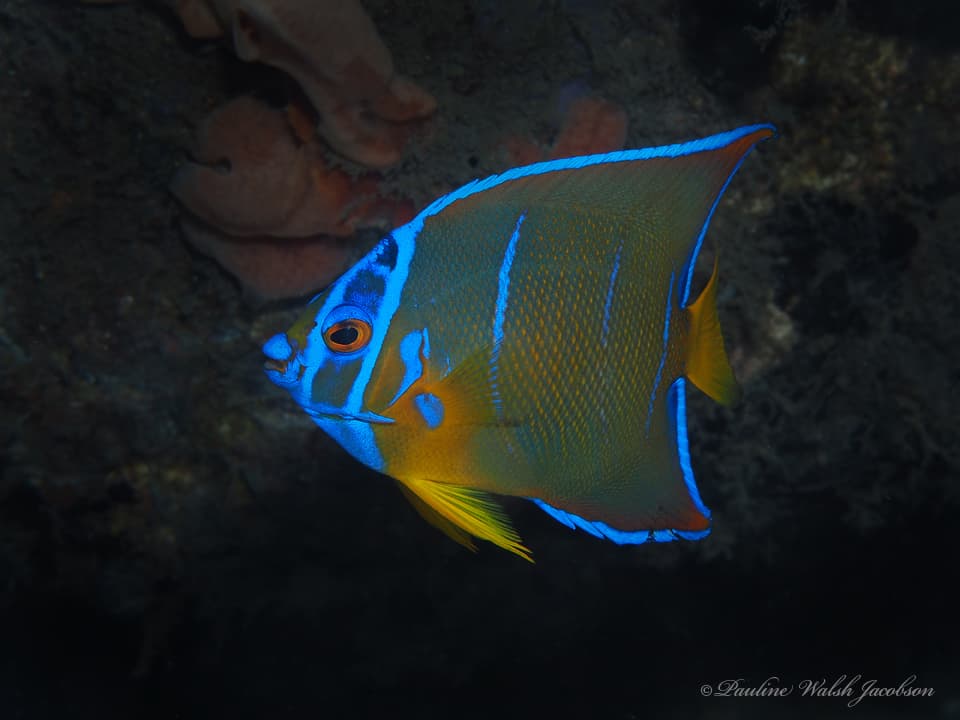
(c) Pauline Walsh Jacobson, some rights reserved (CC BY)
Max Size
18"
Min Tank
220 gal
Lifespan
15-20 years
Origin
Western Atlantic, Caribbean
Diet
Omnivore
Swims
Middle
Did You Know?
- The Queen Angelfish gets its name from the distinctive dark-ringed blue spot on its forehead that resembles a royal crown or diadem
- Juvenile Queen Angelfish serve as cleaner fish on Caribbean reefs, setting up cleaning stations where they remove parasites from larger fish including tangs, groupers, and snappers
- Queen Angelfish can naturally hybridize with the closely related Blue Angelfish (Holacanthus bermudensis) in the wild, producing offspring known as Townsend Angelfish
About
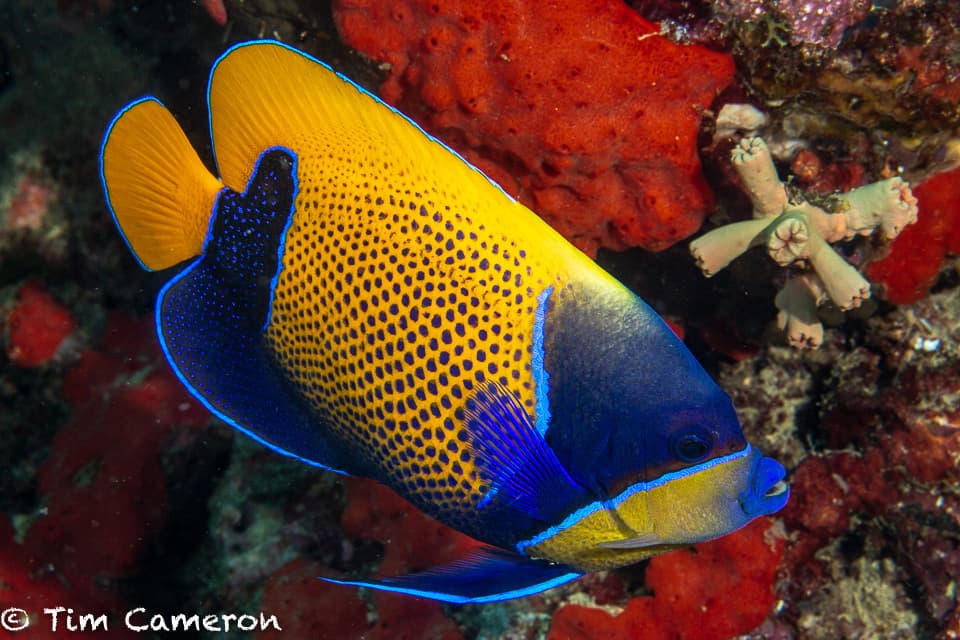
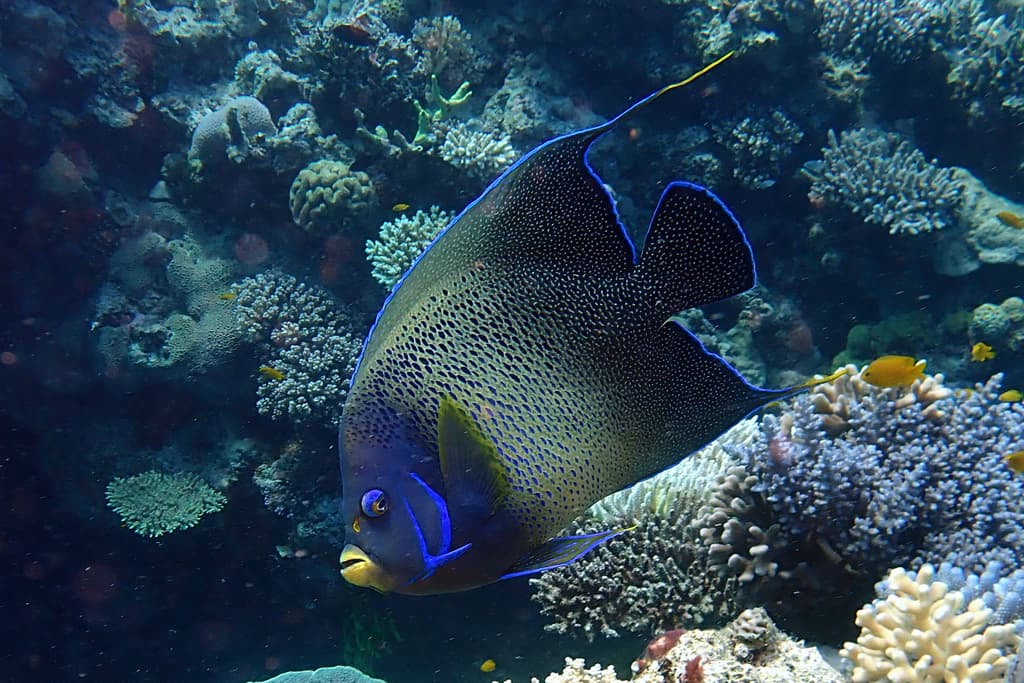
The Queen Angelfish is widely regarded as one of the most magnificent marine fish in the Western Atlantic, displaying a regal combination of electric blue and vibrant yellow-gold that fully justifies its royal name. Adults feature a brilliant blue body edged and accented with bright yellow on the pectoral fins, dorsal and anal fin margins, and tail. The most distinguishing feature is the dark blue-ringed ocellus or "crown" on the forehead, which resembles a royal diadem and gives the species its common name. It is a breathtaking sight both on Caribbean reefs and in large home aquariums.
In the wild, Queen Angelfish are found throughout the Western Atlantic, from Bermuda and Florida through the Caribbean to Brazil, inhabiting coral reefs at depths of 1 to 70 meters. They are typically encountered as solitary individuals or in pairs, feeding primarily on sponges, which make up the bulk of their natural diet, along with tunicates, jellyfish, corals, plankton, and algae. Juveniles serve as cleaner fish, setting up cleaning stations where they remove parasites from larger fish species.
Due to its large adult size of up to 18 inches, the Queen Angelfish requires a very large aquarium of at least 220 gallons. It is not considered reef-safe, as it will readily consume sponges, soft corals, stony coral polyps, and clam mantles. This species is best housed in a fish-only or fish-only-with-live-rock system. The Queen Angelfish is considered an advanced-level species due to its dietary requirements, large space needs, and sensitivity to water quality. A well-maintained specimen, however, will reward the dedicated aquarist with decades of incomparable beauty.
Feeding & Diet
Omnivore
Queen Angelfish are omnivores with a strong preference for sponge in their natural diet. In captivity, offer high-quality angelfish preparations containing marine sponge, Spirulina-enriched foods, frozen mysis shrimp, enriched brine shrimp, and finely chopped seafood such as shrimp, squid, and clam. Supplement with nori seaweed and fresh marine sponge when available. Feed two to three times daily to maintain optimal health and coloration.
Compatibility
not-reef-safelarge-angelfish-territorialcommunity-compatiblecoral-eaterfish-only-preferred
The Queen Angelfish can be aggressive toward other large angelfish and similarly shaped fish. Only one Holacanthus or Pomacanthus species should be kept per tank unless the system is exceptionally large (300+ gallons). It generally coexists well with tangs, large wrasses, triggerfish, and other robust community fish. Avoid housing with other large angelfish or overly timid species.
Check CompatibilityBreeding
Not bred in captivity
Queen Angelfish are pelagic spawners that form pairs during spawning events at dusk, rising high into the water column to release eggs and sperm. The fertilized eggs drift as plankton for approximately 15 to 20 hours before hatching. Captive breeding has not been achieved due to the extended pelagic larval stage and the very large adult size. All specimens in the aquarium trade are wild-caught.
Special Requirements
- Very large aquarium required (220+ gallons) for adult size
- Not reef-safe - will consume corals, sponges, and clam mantles
- Diet must include sponge-based angelfish preparations
- Strong filtration and excellent water quality essential
- Provide abundant live rock with caves and overhangs
- Only one large angelfish per tank unless system is extremely large
- Best suited for fish-only or FOWLR systems
Water Parameters
Temperature72–82°F
Specific Gravity1.02–1.026 sg
pH8.1–8.4
Alkalinity8–12 dKH
Coloration
blueyellowgoldpurpleblack
Tags
not-reef-safelarge-angelfish-territorialcommunity-compatiblecoral-eaterfish-only-preferred