IntermediateSemi-AggressiveReef Safe
Russell Lionfish
Pterois russelli
Family: Scorpaenidae · Lionfish & Scorpionfish
Also known as: Russell's Lionfish, Plaintail Turkeyfish, Military Turkeyfish
(c) Alexandra Hoschke, some rights reserved (CC BY-NC)
Max Size
12"
Min Tank
125 gal
Lifespan
10-15 years
Origin
Western Pacific, Indian Ocean
Diet
Carnivore
Swims
All
About
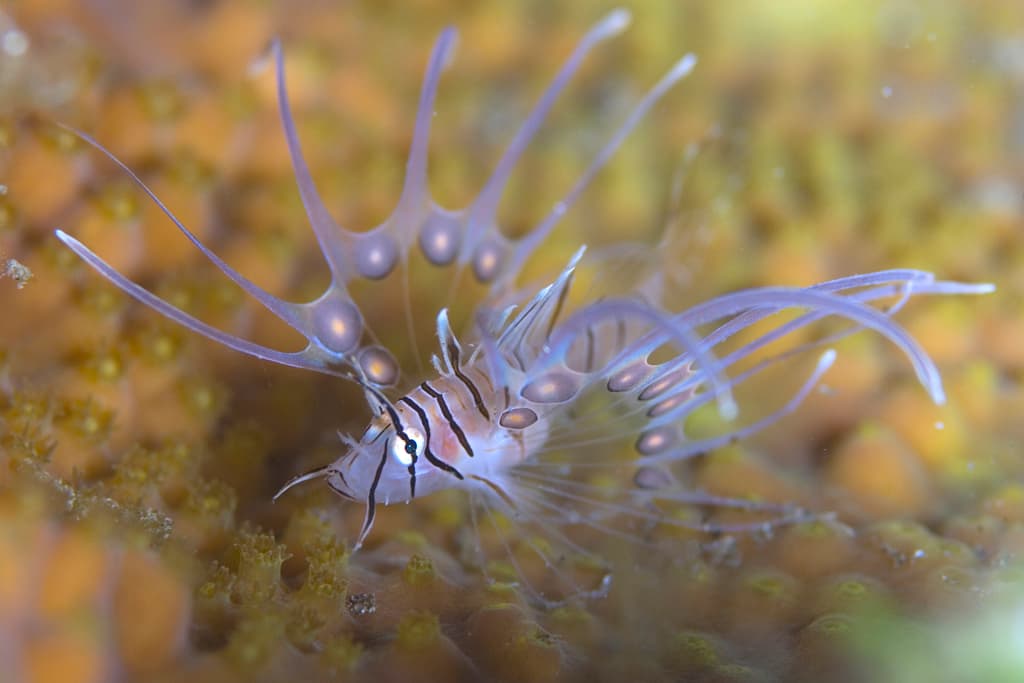
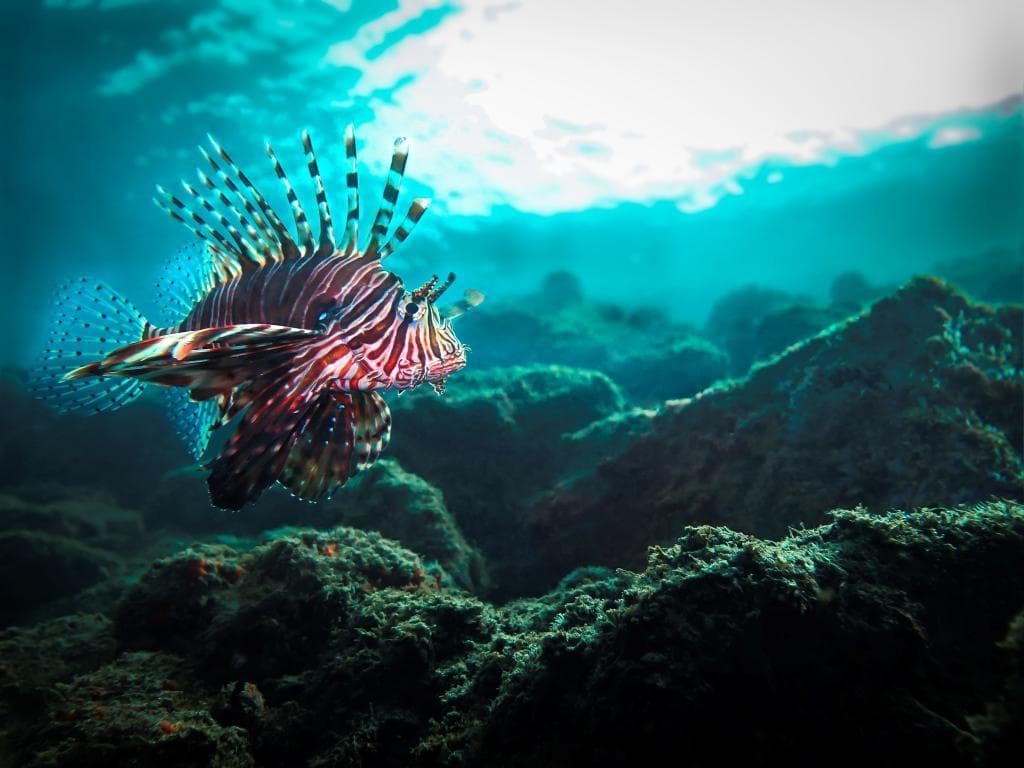
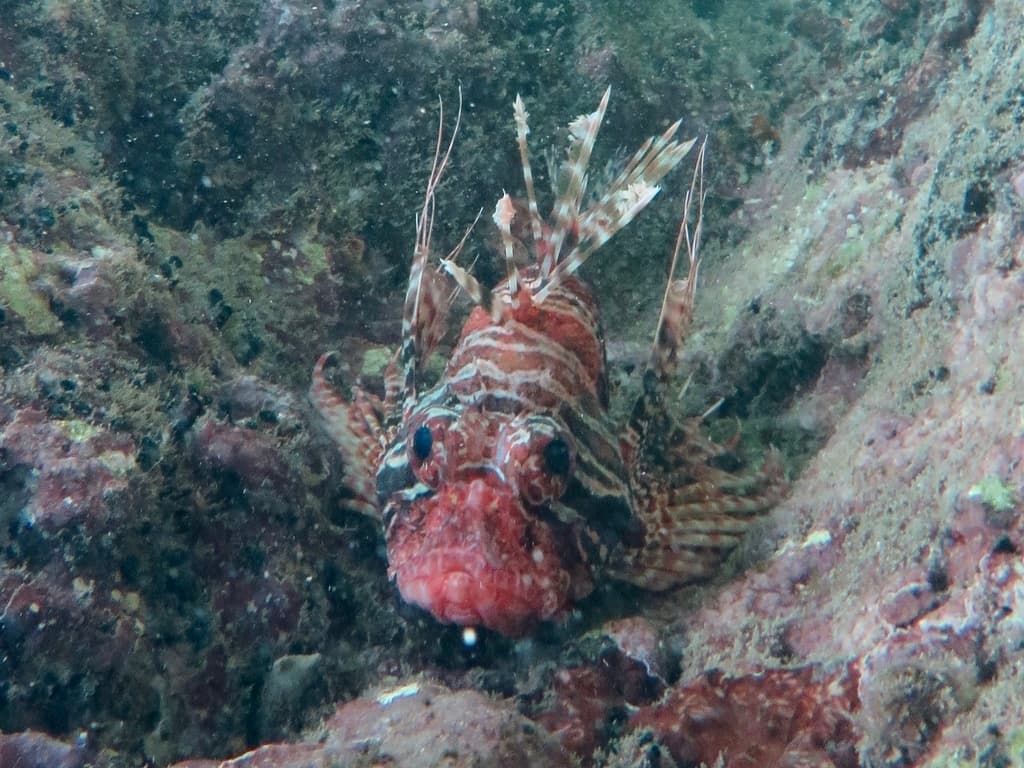
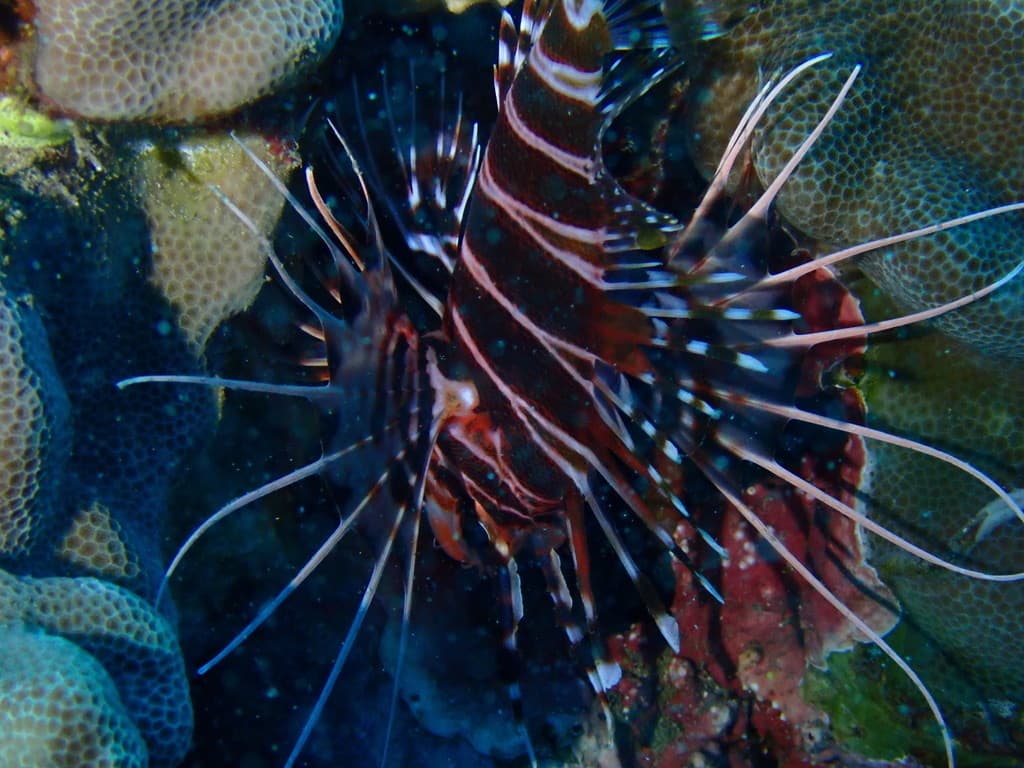
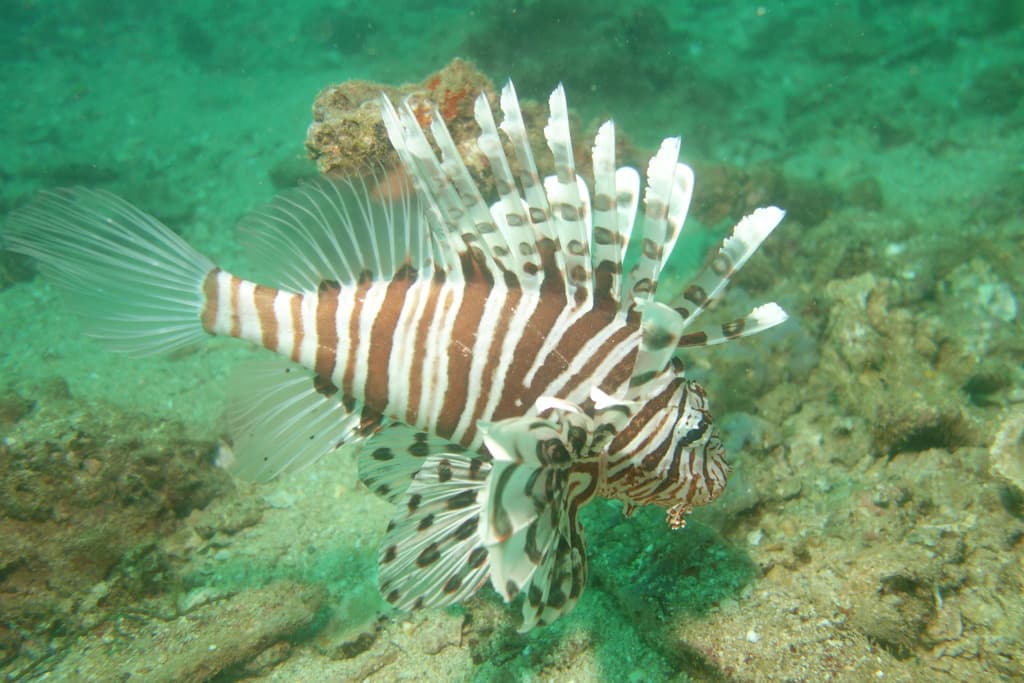
The Russell Lionfish is a large and impressive member of the Pterois genus, closely resembling the well-known Volitan Lionfish but with subtle distinguishing features that set it apart. Pterois russelli displays the classic lionfish architecture of widely fanned pectoral fins and elongated venomous dorsal spines, with body coloration featuring alternating bands of reddish-brown, tan, and white. One distinguishing characteristic is the relatively shorter pectoral fin rays compared to the Volitan Lionfish, and subtle differences in head and body banding patterns. Growing to approximately 12 inches, it is a substantial fish that commands attention in any large marine setup.
In the wild, the Russell Lionfish ranges across the Western Pacific and Indian Ocean, inhabiting coral reefs, rocky ledges, and coastal structures from shallow waters to moderate depths. It is a crepuscular and nocturnal hunter, spending daylight hours hovering motionlessly under ledges and overhangs before emerging at dusk to pursue small fish and crustaceans. Like other Pterois species, it employs its expansive pectoral fins to corner and trap prey before striking with lightning speed.
In the aquarium, the Russell Lionfish is a hardy and rewarding species that adapts well to captive conditions. A minimum of 125 gallons is recommended to accommodate its adult size. It is safe with corals and will not damage reef structures, but any fish or invertebrate small enough to fit in its mouth is at serious risk. As with all lionfish, the venomous spines pose a genuine hazard during tank maintenance, and aquarists should always exercise caution and keep a first aid plan ready. Once weaned to frozen foods, this species typically thrives for many years in captivity.
Feeding & Diet
Carnivore
Russell Lionfish are carnivorous ambush predators. In captivity, offer frozen silversides, large mysis shrimp, krill, squid, and other meaty marine foods. Use feeding tongs to wiggle food near the fish, simulating live prey movement. New specimens may require live ghost shrimp initially before transitioning to frozen foods. Feed every two to three days for adults. Avoid freshwater feeder fish as a staple diet.
Compatibility
reef-safepredatorvenomous-spinesambush-hunterlarge-fish-onlyeats-small-fish
The Russell Lionfish is peaceful toward fish too large to consume but is a highly effective predator of smaller tankmates. Compatible with large tangs, adult angelfish, groupers, triggerfish, and moray eels. Avoid housing with fish under 5 inches in length or with ornamental shrimp of any size. Can coexist with other lionfish species in appropriately sized aquariums with multiple shelter options.
Check CompatibilityBreeding
Difficult
Russell Lionfish breeding follows the typical Pterois reproductive pattern. Males may display slightly darker coloration during courtship. Females release buoyant gelatinous egg masses near the water surface, which the male fertilizes. Larvae are extremely small and pelagic, requiring rotifers and copepod nauplii as initial food. Captive breeding has not been commonly documented for this species in home aquarium settings.
Special Requirements
- VENOMOUS dorsal, pelvic, and anal fin spines - exercise extreme caution
- Large aquarium of 125+ gallons needed for full-grown adults
- Powerful protein skimmer recommended for carnivorous waste output
- Will consume any fish or crustacean small enough to fit in its mouth
- Feeding tongs essential for safe and targeted feeding
- Provide caves and overhangs for daytime resting
Water Parameters
Temperature72–80°F
Specific Gravity1.02–1.026 sg
pH8.1–8.4
Alkalinity8–12 dKH
Coloration
redbrowntanwhitecream
Tags
reef-safepredatorvenomous-spinesambush-hunterlarge-fish-onlyeats-small-fish