IntermediateSemi-AggressiveReef Safe
Miles Lionfish
Pterois miles
Family: Scorpaenidae · Lionfish & Scorpionfish
Also known as: Devil Firefish, Indian Lionfish, Common Lionfish, Soldier Lionfish
(c) brentch, some rights reserved (CC BY-NC)
Max Size
13.8"
Min Tank
125 gal
Lifespan
10-15 years
Origin
Indo-Pacific, Red Sea
Diet
Carnivore
Swims
All
About
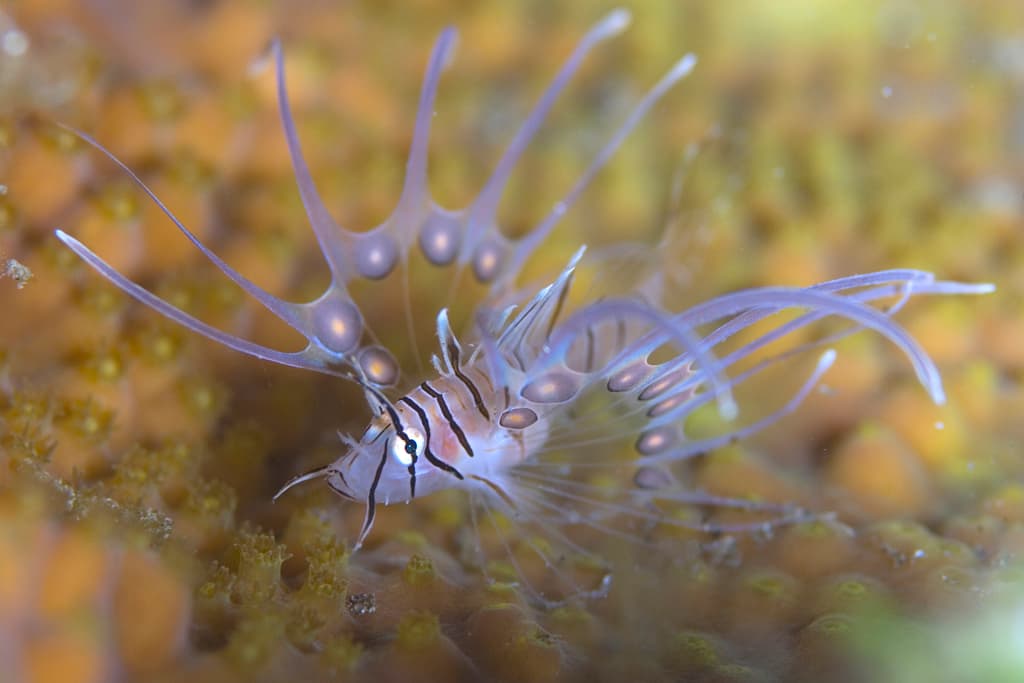
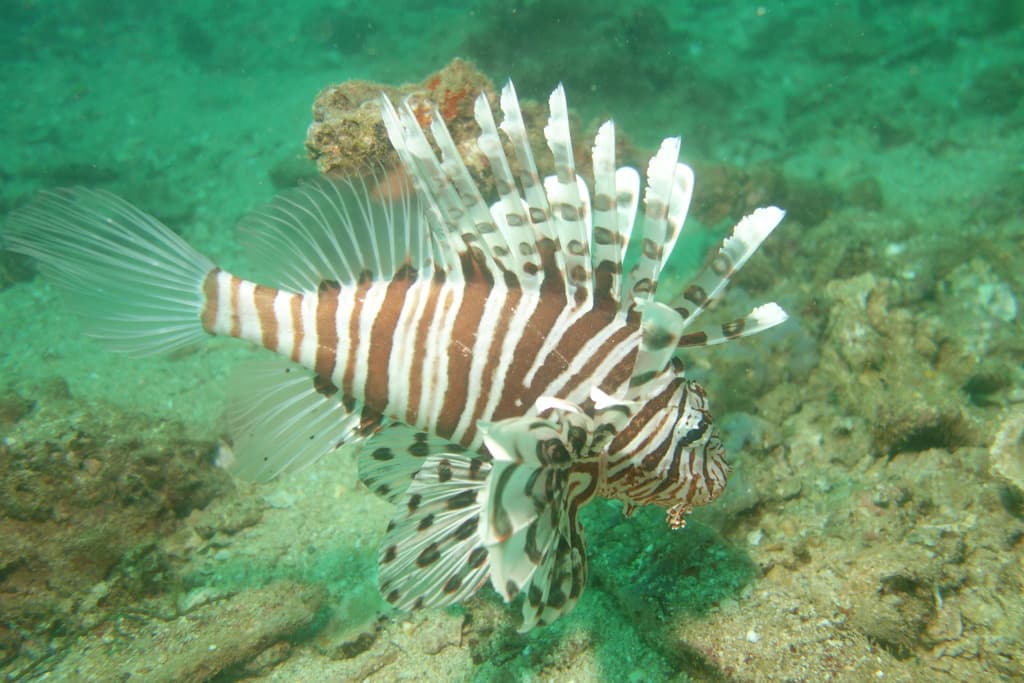
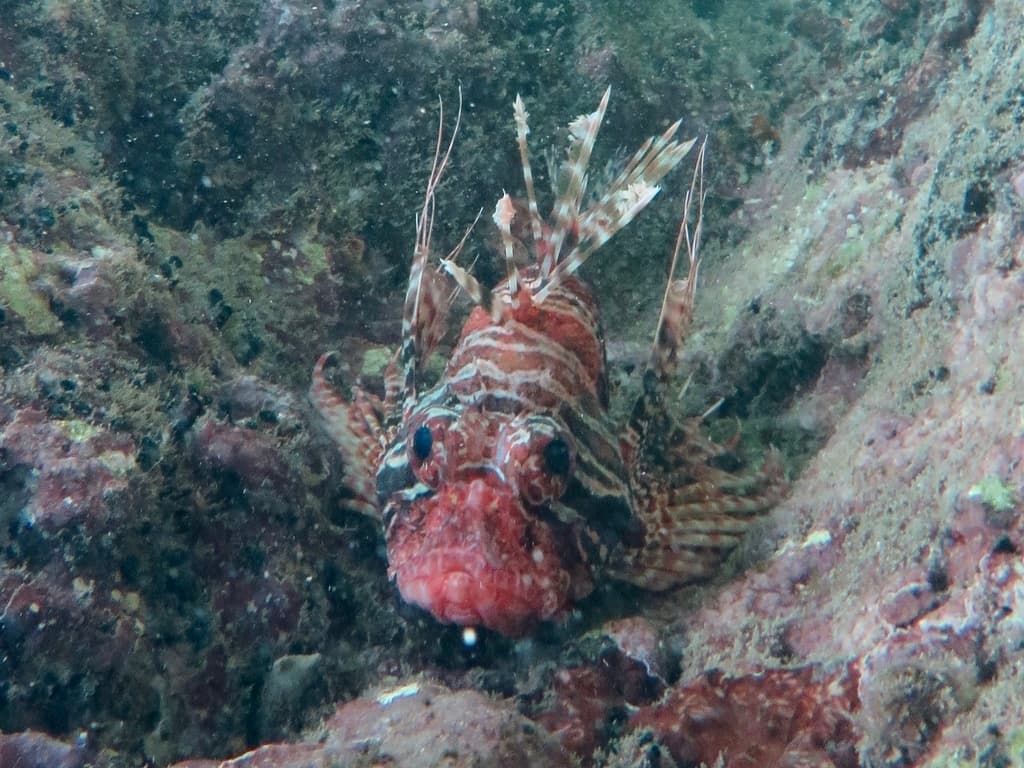
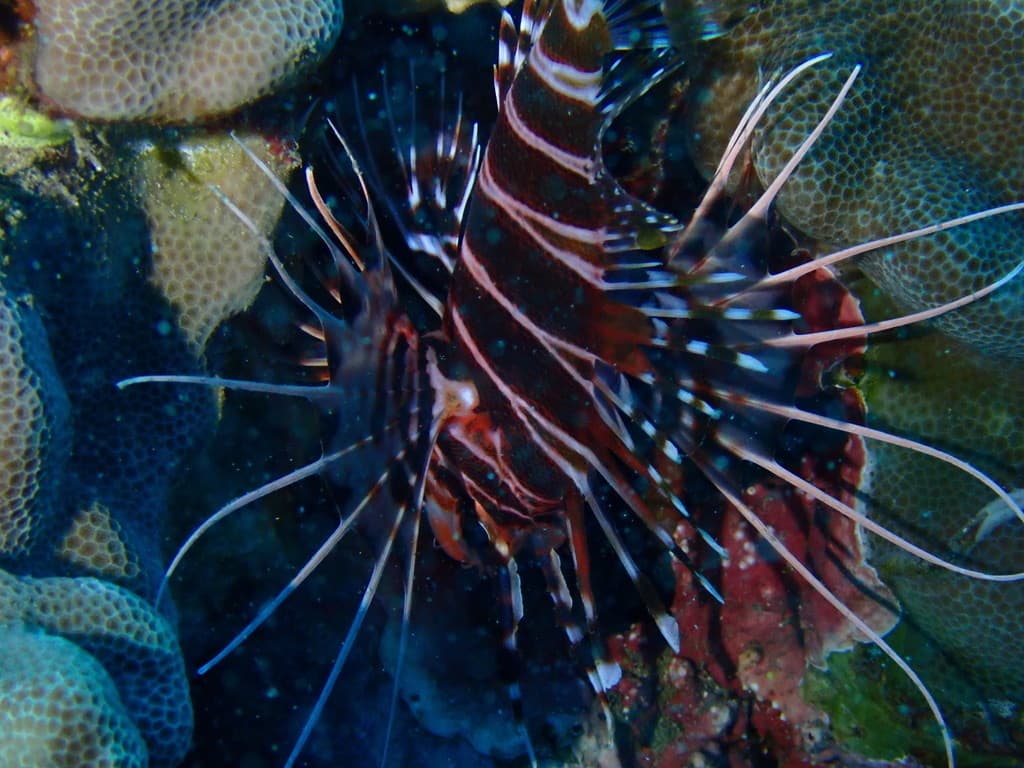
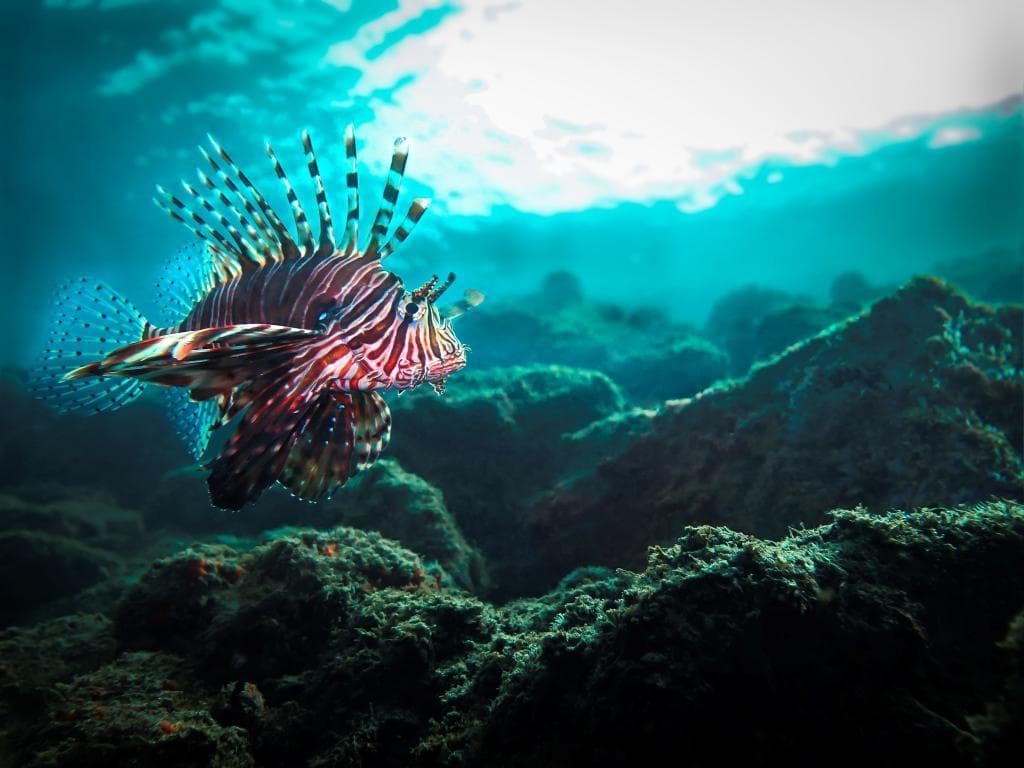
The Miles Lionfish is a large, dramatic lionfish species that is often confused with its close relative, the Volitan Lionfish (Pterois volitans). The two species are so similar in appearance that they were once considered the same species, and distinguishing them requires close examination of specific meristic characters such as dorsal and anal fin ray counts. Pterois miles typically displays bold alternating bands of dark reddish-brown and white across its body, with the characteristic fan-like pectoral fins and elongated, venomous dorsal spines that define the genus. Growing to nearly 14 inches in length, this is one of the largest lionfish species and makes an imposing centerpiece in a spacious marine aquarium.
The Miles Lionfish is the dominant Pterois species in the Red Sea and Indian Ocean, occupying a geographic range that extends from the Red Sea and Persian Gulf across the Indian Ocean to East Africa. In recent years, it has invaded the Mediterranean Sea through the Suez Canal, a process known as Lessepsian migration, where it now poses a growing ecological threat to native fish populations. In the wild, it inhabits coral reefs, rocky outcrops, and shipwrecks, where it rests during the day and actively hunts at dawn, dusk, and nighttime.
In aquarium care, the Miles Lionfish is a hardy and long-lived species that adapts well to captivity when provided with appropriate conditions. A minimum tank of 125 gallons is necessary to accommodate its large adult size. Like all lionfish, its venomous spines demand careful handling, and a sting can cause intense pain requiring medical attention. Once weaned to frozen foods, this species is a reliable and impressive captive that can live for well over a decade with proper care.
Feeding & Diet
Carnivore
Miles Lionfish are voracious ambush predators. In captivity, wean onto frozen silversides, large mysis shrimp, krill, squid, and other marine meats using feeding tongs. Some specimens initially require live ghost shrimp or feeder shrimp to trigger feeding. Feed every two to three days for adults. Avoid long-term use of freshwater feeder fish, which lack essential marine fatty acids and can cause nutritional deficiencies.
Compatibility
reef-safepredatorvenomous-spinesambush-hunterlarge-fish-onlyeats-small-fish
The Miles Lionfish is peaceful toward fish too large to eat but will consume any tankmate that fits in its very large mouth. Compatible with large tangs, adult angelfish, groupers, triggerfish, large wrasses, and moray eels. Avoid keeping with any fish under 5 inches or with ornamental shrimp. Can coexist with other lionfish species in sufficiently large aquariums with multiple hiding spots.
Check CompatibilityBreeding
Difficult
Miles Lionfish reproduce similarly to Volitan Lionfish. Males perform courtship displays, ascending with the female before she releases buoyant gelatinous egg masses containing thousands of eggs. The male fertilizes externally. Larvae are pelagic and very small, requiring rotifers and copepod nauplii. Captive breeding is uncommon in home aquariums. Hybrids between P. miles and P. volitans have been documented in invasive populations.
Special Requirements
- VENOMOUS dorsal, pelvic, and anal fin spines - stings require medical attention
- Large aquarium of 125+ gallons required for adult specimens
- Powerful protein skimmer essential due to messy carnivorous feeding
- Will consume any fish or crustacean small enough to swallow whole
- Feeding tongs necessary for safe, targeted feeding
- NEVER release into the wild - invasive species threat in Mediterranean
Water Parameters
Temperature72–80°F
Specific Gravity1.02–1.026 sg
pH8.1–8.4
Alkalinity8–12 dKH
Coloration
redbrownwhitecreammaroon
Tags
reef-safepredatorvenomous-spinesambush-hunterlarge-fish-onlyeats-small-fish