IntermediateSemi-AggressiveReef Safe with CautionIUCN: Least Concern
Antennata Lionfish
Pterois antennata
Family: Scorpaenidae · Lionfish & Scorpionfish
Also known as: Spotfin Lionfish, Broadbarred Firefish, Ragged-Finned Firefish, Banded Lionfish
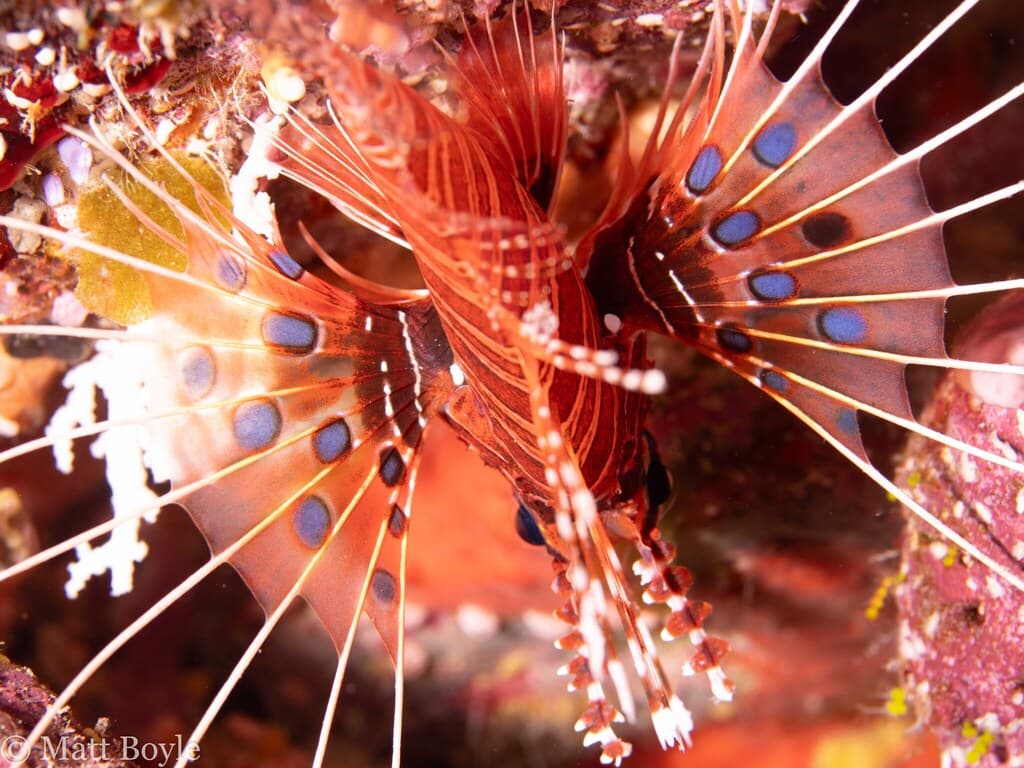
(c) Matt Boyle, all rights reserved
Max Size
8"
Min Tank
75 gal
Lifespan
8-12 years
Origin
Indo-Pacific, Red Sea
Diet
Carnivore
Swims
Middle
Did You Know?
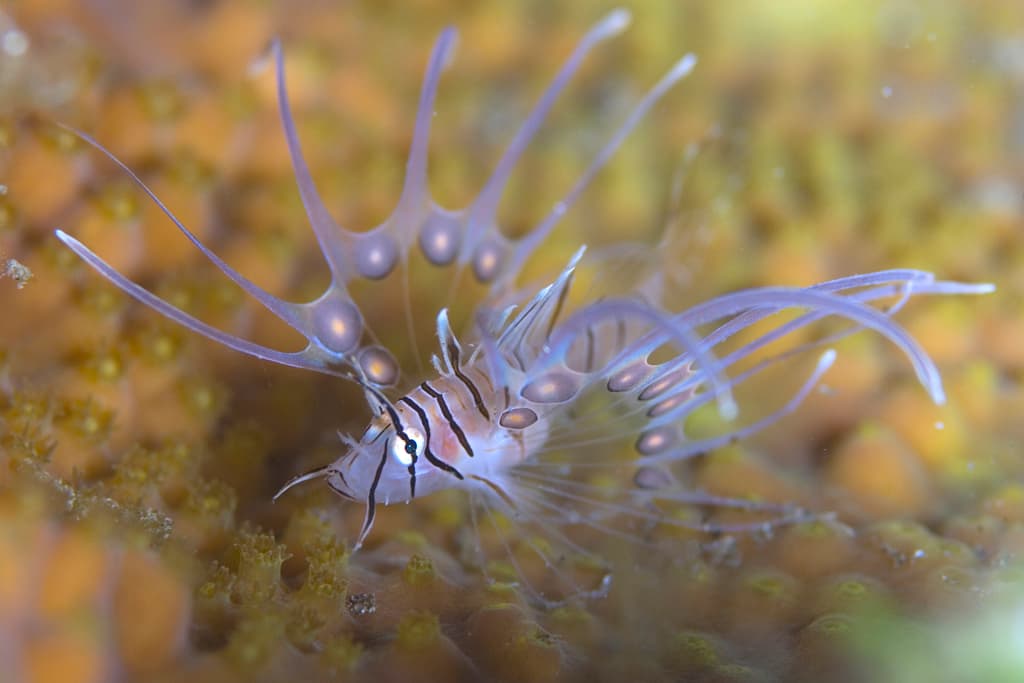
- The elaborate feathery tentacles above the Antennata Lionfish's eyes are thought to help break up the fish's outline and may also serve as lures to attract small prey fish closer to its mouth
- Unlike its close relative the Volitan Lionfish, the Antennata Lionfish has not become an invasive species in the Atlantic, as it tends to inhabit deeper reef environments and has a more limited reproductive output
About
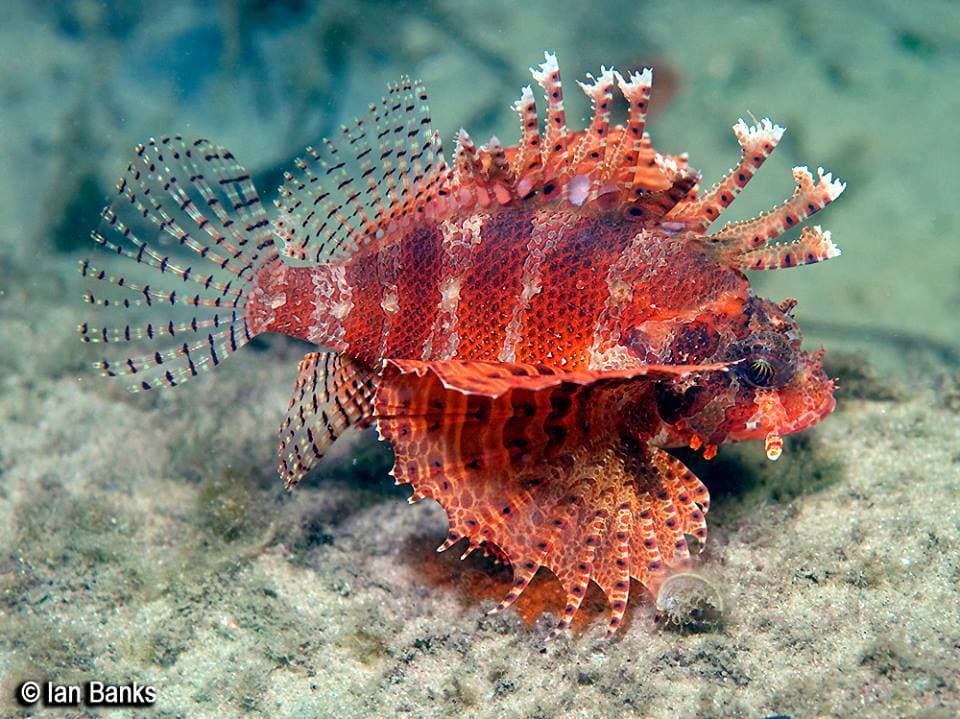
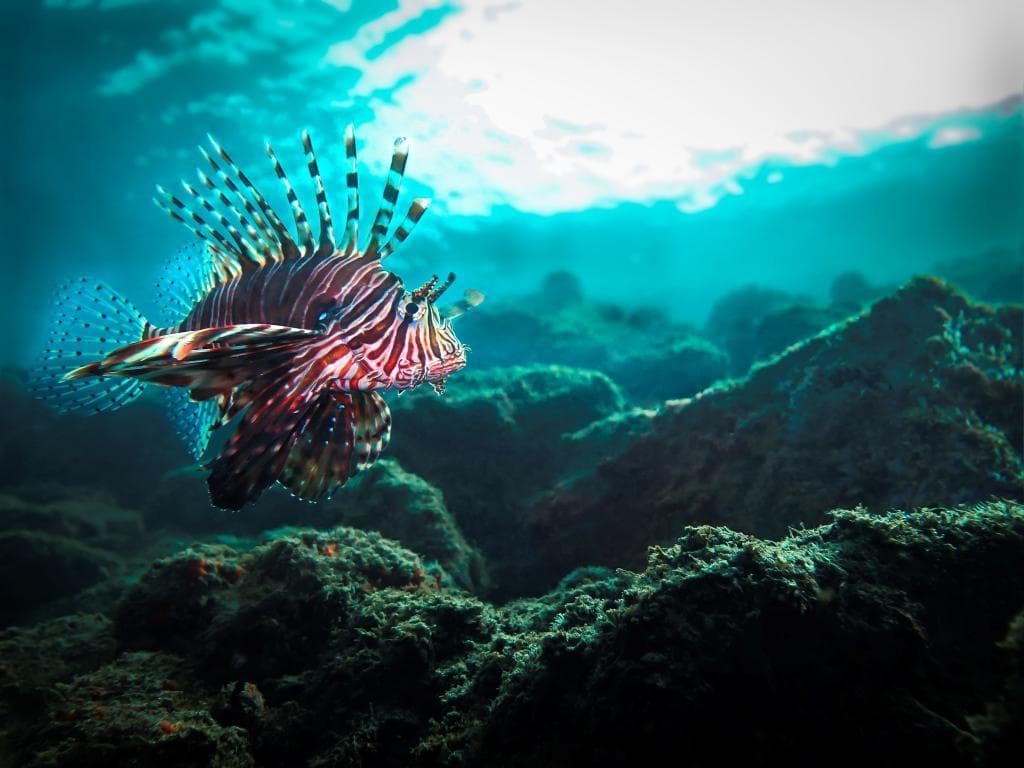
The Antennata Lionfish is a strikingly beautiful and moderately-sized member of the Pterois genus that offers an excellent middle ground between the massive Volitan Lionfish and the diminutive dwarf lionfish species. Its body displays bold alternating bands of reddish-brown and white, while the elongated pectoral fin rays are distinctively banded and connected by delicate membranes only near the base, creating an elegant, open-fan appearance that differs from the more fully-webbed pectorals of the Volitan Lionfish. The most distinctive feature, and the source of its common name, is the pair of elaborate, elongated supraorbital tentacles (antennae) that extend above each eye like ornamental plumes.
In the wild, the Antennata Lionfish is a nocturnal hunter that shelters in caves, crevices, and overhangs during the day, emerging at dusk to hunt small fish and crustaceans along the reef. It uses its expansive pectoral fins to corner and trap prey in crevices before striking with remarkable speed. This crepuscular and nocturnal behavior often carries over into captivity, with newly introduced specimens being shy and reluctant to feed during daylight hours. With patience and consistent feeding schedules, most individuals gradually become more active during the day.
The Antennata Lionfish is a hardy species once established but requires the same respect as all lionfish regarding its venomous fin spines. The dorsal, pelvic, and anal fin spines are equipped with venom glands that deliver an extremely painful sting comparable to a severe wasp sting, with symptoms potentially including intense local pain, swelling, and in rare cases, systemic reactions. Careful use of feeding tongs and long-handled tools during tank maintenance is essential. This species is safe with corals but will consume any fish or crustacean small enough to swallow whole.
Feeding & Diet
Carnivore
Antennata Lionfish are strict carnivores and ambush predators. In captivity, offer frozen silversides, large mysis shrimp, krill, chopped shrimp, and squid. Many specimens initially require live food such as ghost shrimp, grass shrimp, or small feeder fish to trigger a feeding response, but should be weaned onto frozen foods as soon as possible. Use feeding tongs to simulate live prey movement. Feed every other day for adults. Avoid prolonged use of freshwater feeder fish, which lack essential marine nutrients.
Compatibility
reef-cautionpredatorvenomous-spinesambush-huntereats-small-fishnocturnal
The Antennata Lionfish is peaceful toward fish too large to consume but is an effective predator of anything small enough to fit in its mouth. Compatible with tangs, large angelfish, groupers, larger clownfish, and other robust species over 3-4 inches. All ornamental shrimp and small crustaceans are at risk. Safe with corals and will not damage reef structures. Can be housed with other lionfish species in sufficiently large systems, though food competition should be managed.
Check CompatibilityBreeding
Difficult
Antennata Lionfish have been occasionally bred in captivity. Males are generally larger with slightly broader heads. Courtship involves the male performing ascending displays at dusk, rising toward the surface with darkened coloration to attract the female. The female releases a buoyant, gelatinous egg mass containing thousands of eggs. Larvae are pelagic and extremely small, requiring rotifers and copepod nauplii. Rearing larvae to settlement is very challenging in home aquariums.
Special Requirements
- VENOMOUS dorsal, pelvic, and anal fin spines - exercise extreme caution
- Feeding tongs essential for targeted feeding and safety
- May require live food initially before weaning to frozen
- Provide caves and overhangs for daytime shelter
- Low to moderate water flow preferred
- Will consume any fish or shrimp small enough to swallow
- Primarily nocturnal - may be shy initially under bright lighting
Water Parameters
Temperature74–80°F
Specific Gravity1.02–1.026 sg
pH8.1–8.4
Alkalinity8–12 dKH
Coloration
redbrownwhitecreammaroon
Tags
reef-cautionpredatorvenomous-spinesambush-huntereats-small-fishnocturnal