IntermediateAggressiveNot Reef Safe
Blackeye Thicklip Wrasse
Hemigymnus melapterus
Family: Labridae · Wrasses
Also known as: Halfgray Wrasse, Blackeye Thicklip, Half-and-Half Wrasse
(c) Simon Nicholas, some rights reserved (CC BY-NC)
Max Size
35"
Min Tank
400 gal
Lifespan
10-15 years
Origin
Indo-Pacific, Red Sea
Diet
Carnivore
Swims
Middle
About
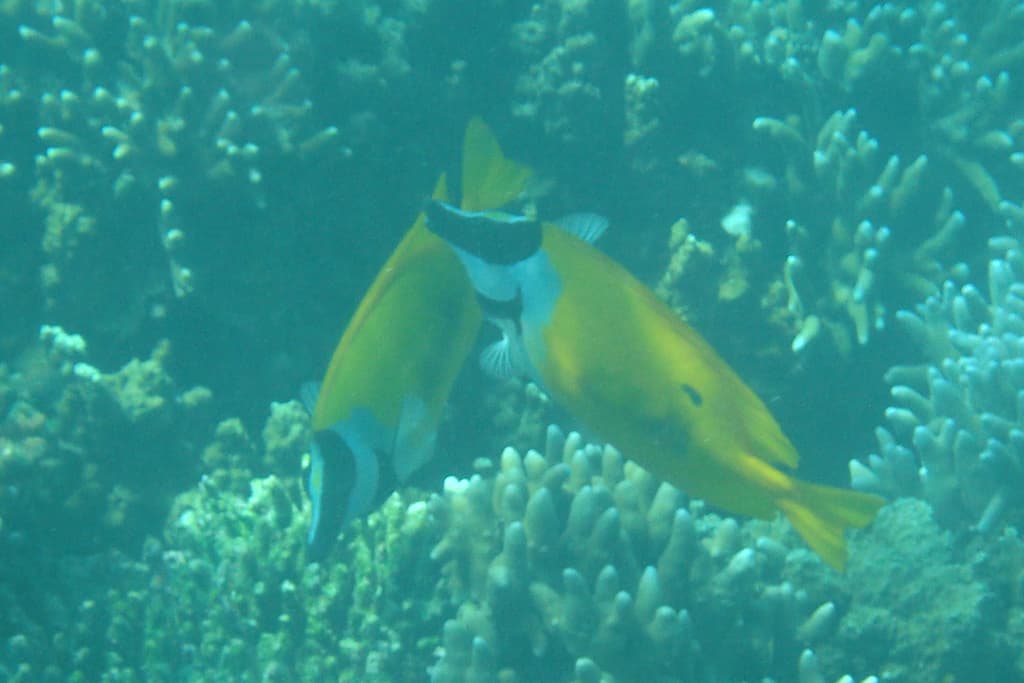
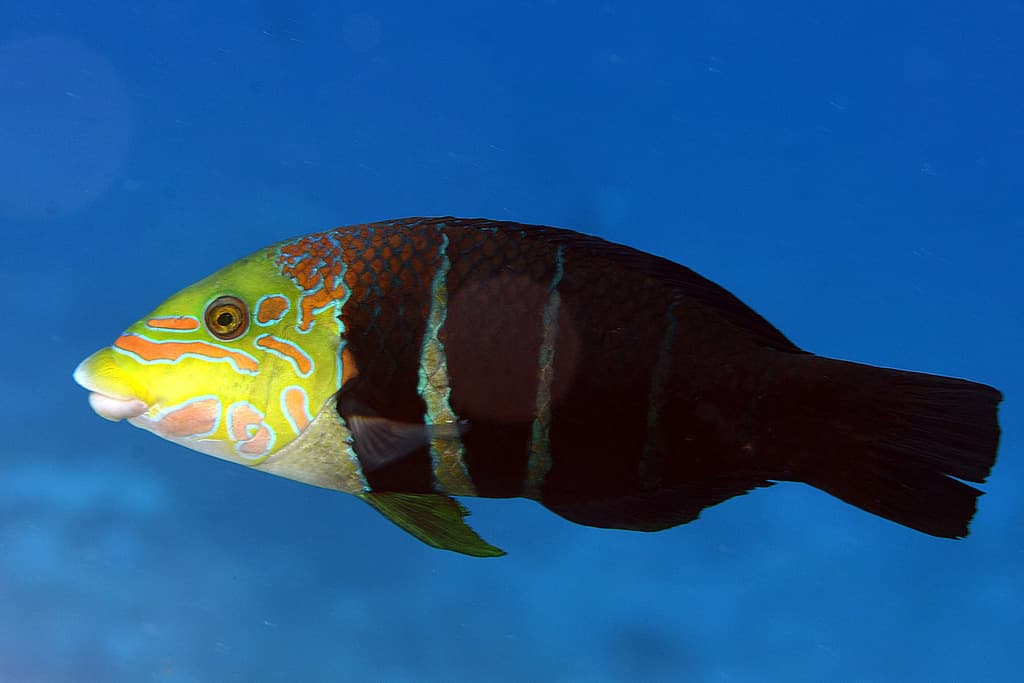
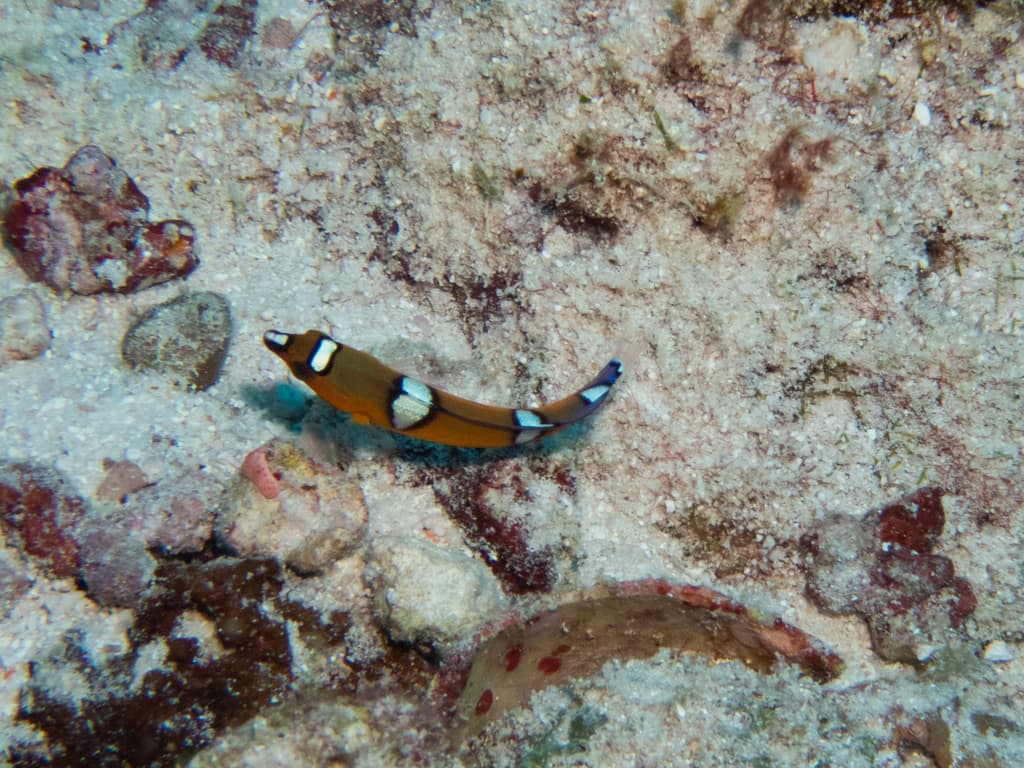
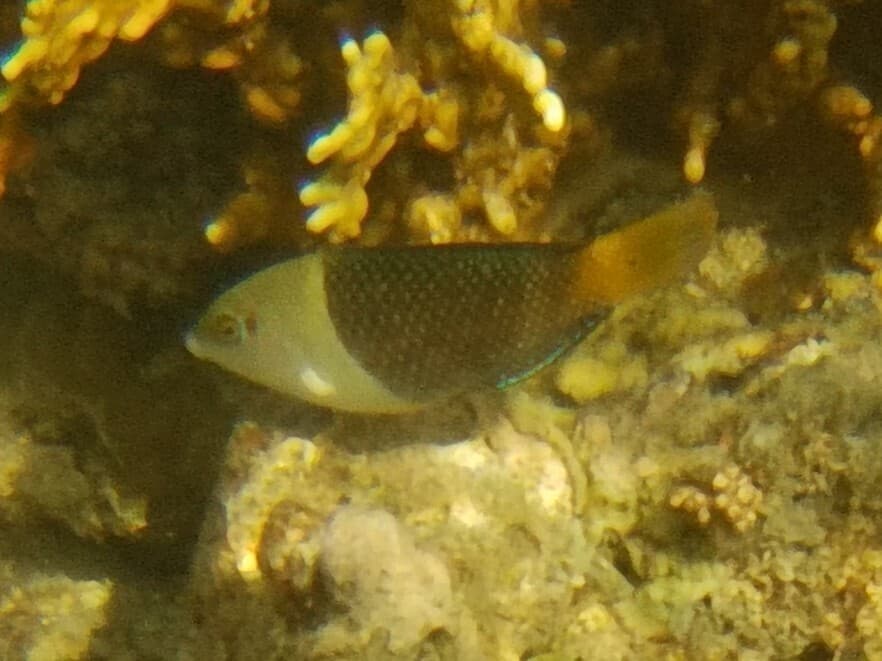
The Blackeye Thicklip Wrasse is one of the largest wrasse species encountered in the aquarium hobby, capable of reaching an enormous 35 inches in the wild. This massive fish features characteristically thick, fleshy lips and a distinctive coloration pattern where the front half of the body is lighter than the posterior, giving it the common name Half-and-Half Wrasse. A dark eye marking is a consistent identifying feature.
Due to its enormous adult size, the Blackeye Thicklip is primarily suitable for public aquariums or exceptionally large private systems of 400 gallons or more. This is an aggressive species that dominates its environment and will consume any invertebrate it can overpower. Juveniles are occasionally offered in the trade and may be attractively colored, but buyers must be prepared for the tremendous growth potential.
Despite the impracticality of housing adult specimens, the Blackeye Thicklip is a hardy and interesting species. It is a bold feeder with a powerful set of pharyngeal teeth capable of crushing hard-shelled prey. Like other Hemigymnus species, it requires a deep sand bed for sleeping and a very secure enclosure.
Feeding & Diet
Carnivore
The Blackeye Thicklip Wrasse is a powerful carnivore feeding on hard-shelled invertebrates, crustaceans, mollusks, and sea urchins. In captivity, offer large chunks of frozen shrimp, squid, clam, mussel, and whole silversides. This species has an enormous appetite and will consume any invertebrate in the aquarium. Feed two to three times daily with generous portions.
Compatibility
fish-onlyaggressivelarge-speciesinvertebrate-eaterpredator-tankpublic-aquarium
The Blackeye Thicklip Wrasse is aggressive and should only be housed with other very large, robust species. It will eat all invertebrates and will bully or injure smaller fish. Suitable only for large predator-style fish-only systems. This species is best kept as the dominant wrasse in the system. Not suitable for home reef aquariums.
Check CompatibilityBreeding
Not bred in captivity
Blackeye Thicklip Wrasses are protogynous hermaphrodites. Due to their enormous size, captive breeding is not practical. All specimens in the trade are wild-caught.
Special Requirements
- Enormous aquarium of 400+ gallons required
- Deep sand bed of 4+ inches for sleeping
- Extremely secure lid - very powerful jumper
- Will eat all invertebrates
- Massive bioload requires industrial-grade filtration
- Primarily suitable for public aquariums
- Juveniles grow rapidly - plan for adult size
Water Parameters
Temperature74–80°F
Specific Gravity1.02–1.026 sg
pH8.1–8.4
Alkalinity8–12 dKH
Coloration
graywhiteblackgreen
Tags
fish-onlyaggressivelarge-speciesinvertebrate-eaterpredator-tankpublic-aquarium