ExpertPeacefulReef Safe
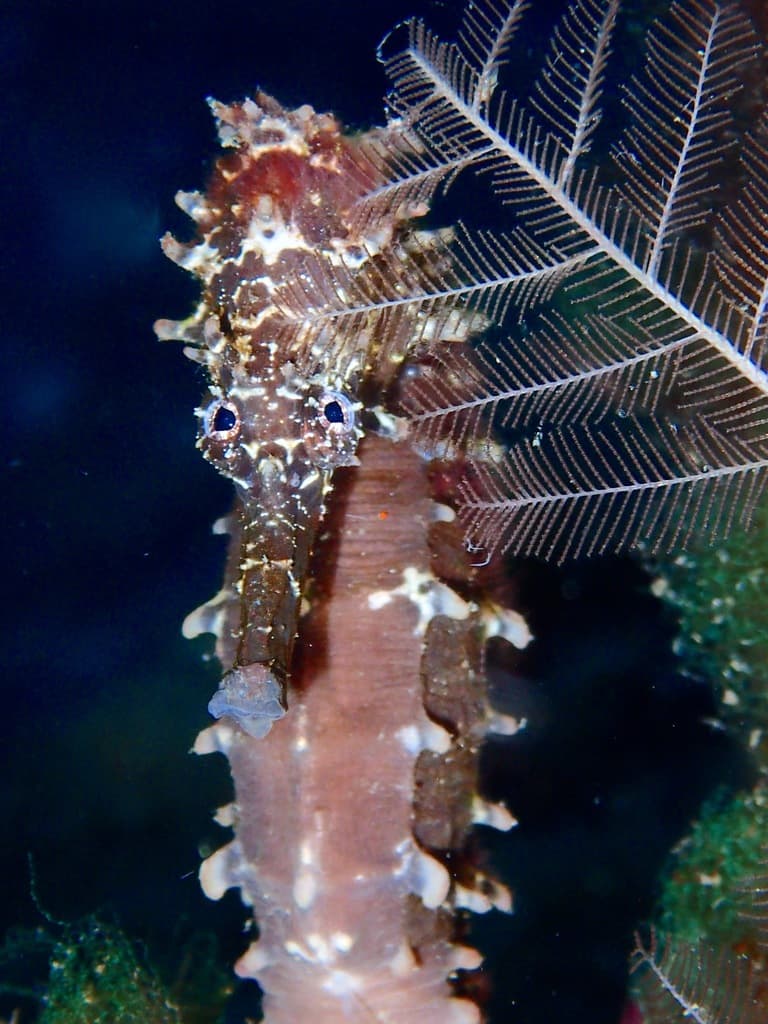
Lined Seahorse
Hippocampus erectus
Family: Syngnathidae · Seahorses & Pipefish
Also known as: Northern Seahorse, Spotted Seahorse
(c) Squidpastry, some rights reserved (CC BY-NC)
Max Size
7"
Min Tank
30 gal
Lifespan
3-5 years
Origin
Western Atlantic, Eastern United States
Diet
Carnivore
Swims
All
About
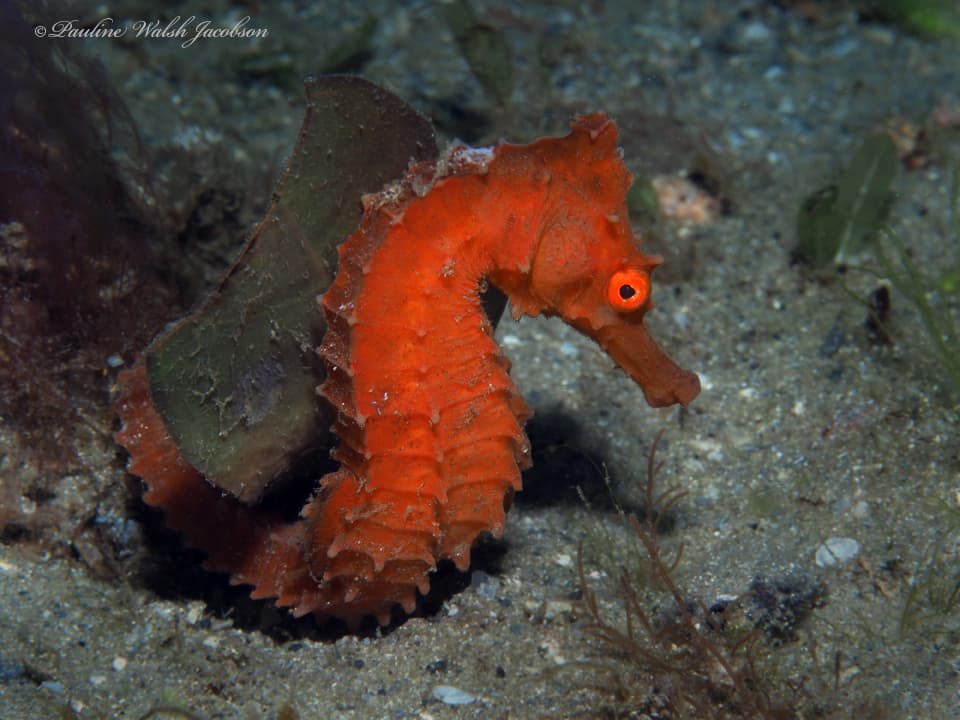
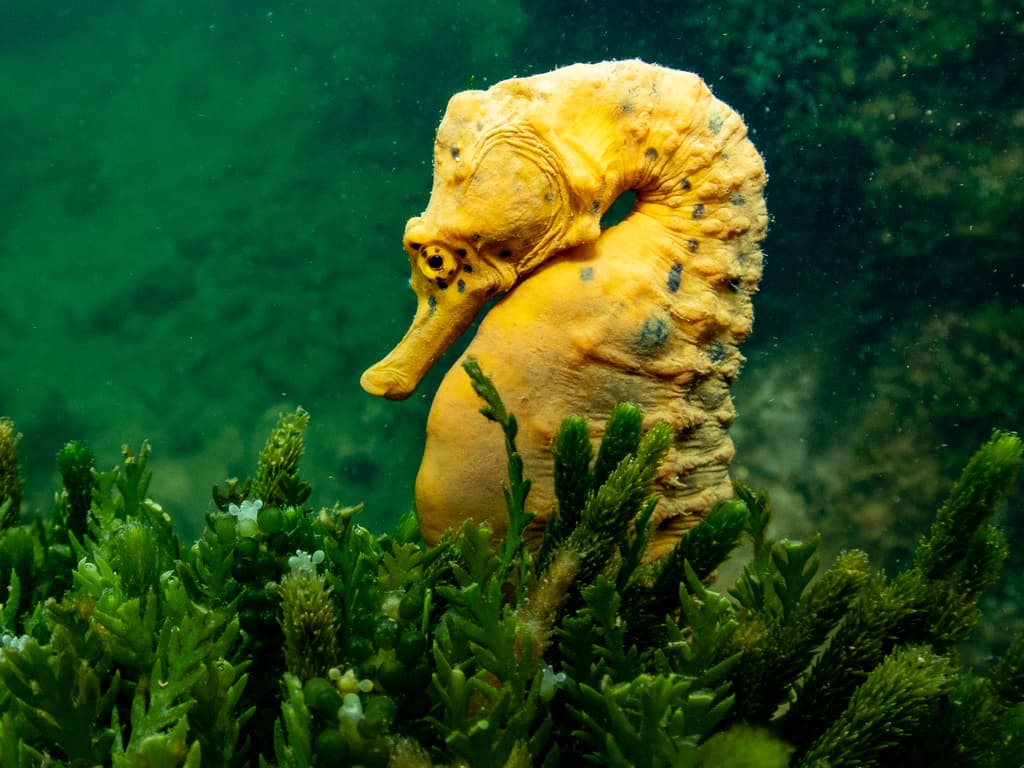
The Lined Seahorse is one of the most widely available seahorse species in the marine aquarium trade, particularly as captive-bred specimens that are far hardier and easier to maintain than their wild-caught counterparts. This species displays a wide range of color variations including black, brown, yellow, orange, red, and even lavender, with the ability to change color gradually over weeks to match their environment. Their horse-like head, prehensile tail, and upright swimming posture make them among the most recognizable marine animals.
Keeping seahorses requires a fundamentally different approach from standard marine fishkeeping. Lined Seahorses are slow, deliberate feeders that cannot compete with typical reef fish for food. They require a species-specific aquarium or a tank with only the most docile, non-competitive tankmates. Water flow must be gentle, as seahorses are weak swimmers that can become exhausted in strong currents. Hitching posts such as gorgonians, macroalgae, and artificial decorations are essential.
Feeding is the greatest challenge in seahorse keeping. Captive-bred Lined Seahorses have been trained to accept frozen mysis shrimp, which is their primary staple food in captivity. They must be fed two to three times daily with enriched frozen mysis. Wild-caught specimens may only accept live foods initially and are far more challenging to maintain. A mature, stable aquarium with excellent water quality is essential, as seahorses are susceptible to bacterial infections and gas bubble disease in suboptimal conditions.
Feeding & Diet
Carnivore
Lined Seahorses are carnivores that feed on small crustaceans including copepods, amphipods, and mysis shrimp. Captive-bred specimens accept frozen mysis shrimp as their primary diet. Enrich mysis with vitamins and HUFA supplements. Feed two to three times daily. Live enriched brine shrimp can supplement the diet. An established refugium producing live copepods is highly beneficial.
Compatibility
reef-safepeacefulspecies-only-preferredslow-feederexpert-only
Lined Seahorses must be kept with extremely peaceful, non-competitive tankmates or ideally in a species-only setup. Suitable companions include pipefish, dragonets, and very small, peaceful gobies. Avoid any fast-moving or aggressive fish that will outcompete seahorses for food. Avoid stinging corals and anemones. Safe with most soft corals and macroalgae.
Check CompatibilityBreeding
Moderate
Lined Seahorses breed readily in captivity. Males possess a brood pouch where females deposit eggs during an elaborate courtship dance. Males carry developing young for 14-21 days before giving birth to fully formed miniature seahorses. Fry can be raised on newly hatched enriched brine shrimp. Captive breeding is well-established for this species.
Special Requirements
- Species-specific aquarium strongly recommended
- Gentle water flow essential - seahorses are weak swimmers
- Provide hitching posts (gorgonians, macroalgae, artificial items)
- Captive-bred specimens strongly recommended
- Cooler water temperatures (68-74°F) preferred
- Pristine water quality critical to prevent bacterial infections
- Multiple daily feedings of enriched frozen mysis required
Water Parameters
Temperature68–74°F
Specific Gravity1.02–1.025 sg
pH8.1–8.4
Alkalinity8–12 dKH
Coloration
blackbrownyelloworangeredlavender
Tags
reef-safepeacefulspecies-only-preferredslow-feederexpert-only