AdvancedPeacefulReef SafeIUCN: VulnerableCaptive-Bred Available
Kuda Seahorse
Hippocampus kuda
Family: Syngnathidae · Seahorses & Pipefish
Also known as: Common Seahorse, Estuary Seahorse, Yellow Seahorse, Spotted Seahorse
(c) n8trlvr, all rights reserved
Max Size
7"
Min Tank
30 gal
Lifespan
3-5 years
Origin
Indo-Pacific, Red Sea
Diet
Carnivore
Swims
All
Did You Know?
- Male Kuda Seahorses are among the only animals in the world where the male becomes truly pregnant, carrying developing embryos in a specialized brood pouch with a placenta-like structure that provides nutrients and oxygen
- Seahorses have no stomach — food passes directly through their digestive system very quickly, which is why they must eat frequently throughout the day to obtain sufficient nutrition
- Kuda Seahorses can independently rotate each eye in different directions simultaneously, allowing them to scan for food and predators in two directions at once without moving their body
About
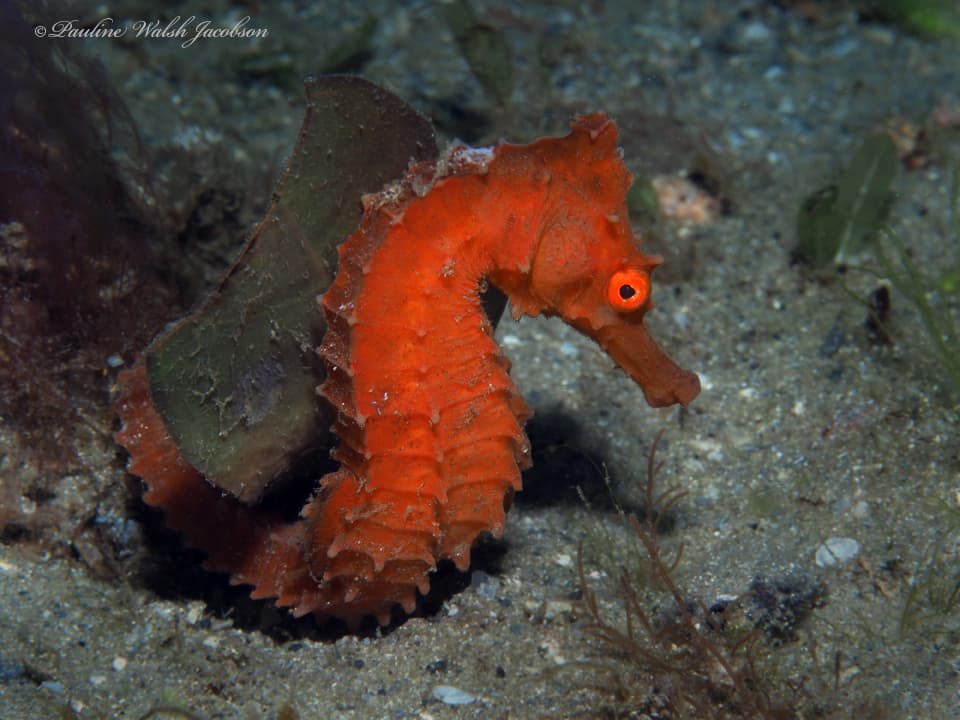
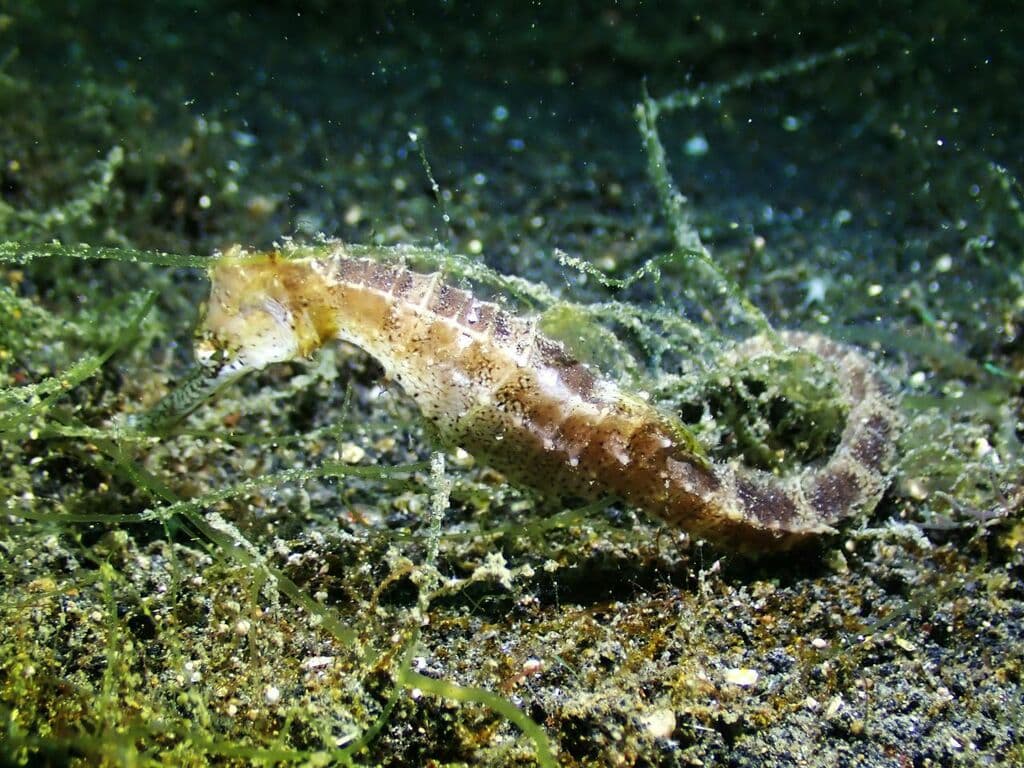
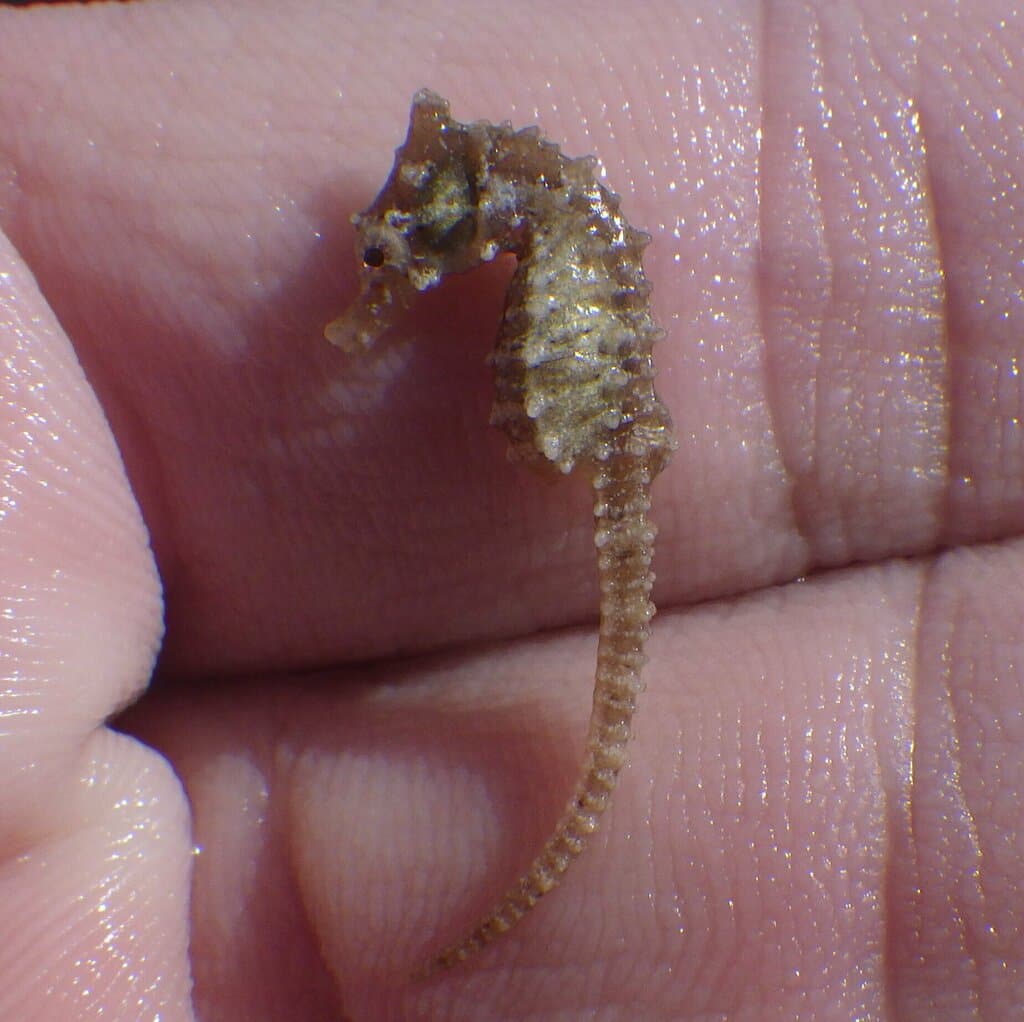
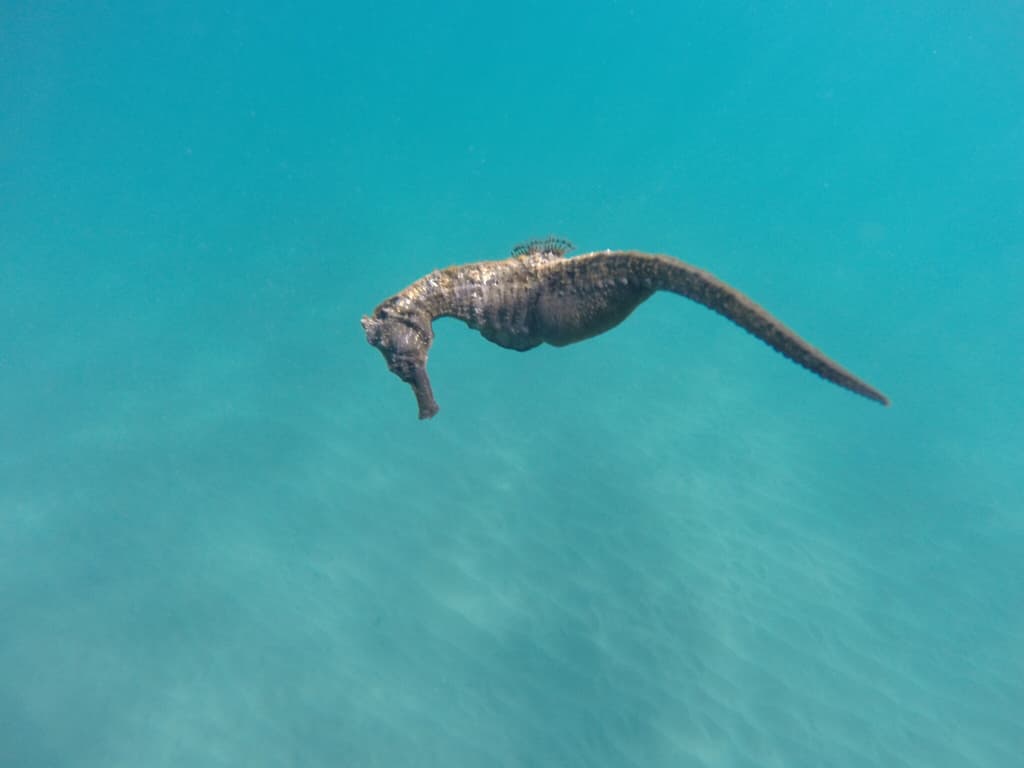
The Kuda Seahorse is one of the most widely distributed seahorse species in the world, found across an enormous range spanning from the Red Sea and East African coast through Southeast Asia to Japan and Australia. It is also one of the most commonly available captive-bred seahorses in the marine aquarium trade, making it a popular entry point for hobbyists drawn to the unique challenge of seahorse keeping. Adults typically display a smooth body with minimal spines and can exhibit a wide range of colors including yellow, brown, black, cream, and occasionally orange or reddish hues.
Like all seahorses, the Kuda Seahorse requires a fundamentally different approach to marine fishkeeping compared to conventional tropical fish. These animals are slow, deliberate feeders that cannot compete for food with typical reef fish. A species-specific aquarium or a carefully curated tank with only the most docile, non-competitive tankmates is essential. Water flow must be gentle to moderate, as seahorses are weak swimmers that will become exhausted in strong currents. An abundance of hitching posts including gorgonians, macroalgae, and artificial holdfasts is necessary, as seahorses spend most of their time anchored by their prehensile tails.
Captive-bred Kuda Seahorses are far superior to wild-caught specimens in every regard. They are trained to accept frozen mysis shrimp, the staple diet of captive seahorses, and are generally hardier and more disease-resistant. Wild-caught specimens may refuse all food except live prey and carry parasites. Water quality must be maintained at pristine levels, as seahorses are highly susceptible to bacterial infections and gas bubble disease. A dedicated, mature aquarium with excellent biological filtration and regular water changes is essential for success.
Feeding & Diet
Carnivore
Kuda Seahorses are carnivores that feed primarily on small crustaceans including copepods, amphipods, and mysis shrimp. Captive-bred specimens readily accept frozen mysis shrimp enriched with vitamins and HUFA supplements, which should form the primary diet. Feed two to three times daily. Supplement with live enriched brine shrimp and copepods. A refugium producing live copepods and amphipods is highly beneficial for supplemental nutrition.
Compatibility
reef-safepeacefulspecies-only-preferredslow-feedercaptive-bred-available
Kuda Seahorses must be kept in a species-specific aquarium or with extremely peaceful, non-competitive tankmates. Suitable companions include pipefish, small dragonets, and very docile gobies. Absolutely avoid any fast-moving, aggressive, or food-competitive fish. Seahorses are safe with most soft corals, LPS corals, and macroalgae, but avoid stinging corals and anemones. Clean-up crew invertebrates such as snails, hermit crabs, and small starfish are generally compatible.
Check CompatibilityBreeding
Moderate
Kuda Seahorses breed readily in captivity and are among the most commonly captive-bred seahorse species. Males possess a specialized brood pouch where females deposit eggs during an elaborate courtship dance involving color changes, synchronized swimming, and tail-holding. Males carry the developing embryos for approximately 14 to 28 days before giving birth to fully formed miniature seahorses. Fry can be raised on newly hatched enriched Artemia nauplii. Dedicated hobbyists regularly breed this species at home.
Special Requirements
- Species-specific aquarium strongly recommended
- Gentle to moderate water flow — seahorses are weak swimmers
- Provide abundant hitching posts such as gorgonians, macroalgae, and artificial holdfasts
- Captive-bred specimens strongly recommended over wild-caught
- Pristine water quality essential to prevent bacterial infections and gas bubble disease
- Multiple daily feedings of vitamin-enriched frozen mysis required
- Avoid stinging corals and large anemones that can injure seahorses
Water Parameters
Temperature72–78°F
Specific Gravity1.02–1.026 sg
pH8–8.4
Alkalinity8–12 dKH
Coloration
yellowbrownblackcreamorange
Tags
reef-safepeacefulspecies-only-preferredslow-feedercaptive-bred-available