AdvancedPeacefulReef Safe
Multibanded Pipefish
Dunckerocampus multiannulatus
Family: Syngnathidae · Pipefish
Also known as: Many-banded Pipefish, Ringed Pipefish, Multi-banded Pipefish
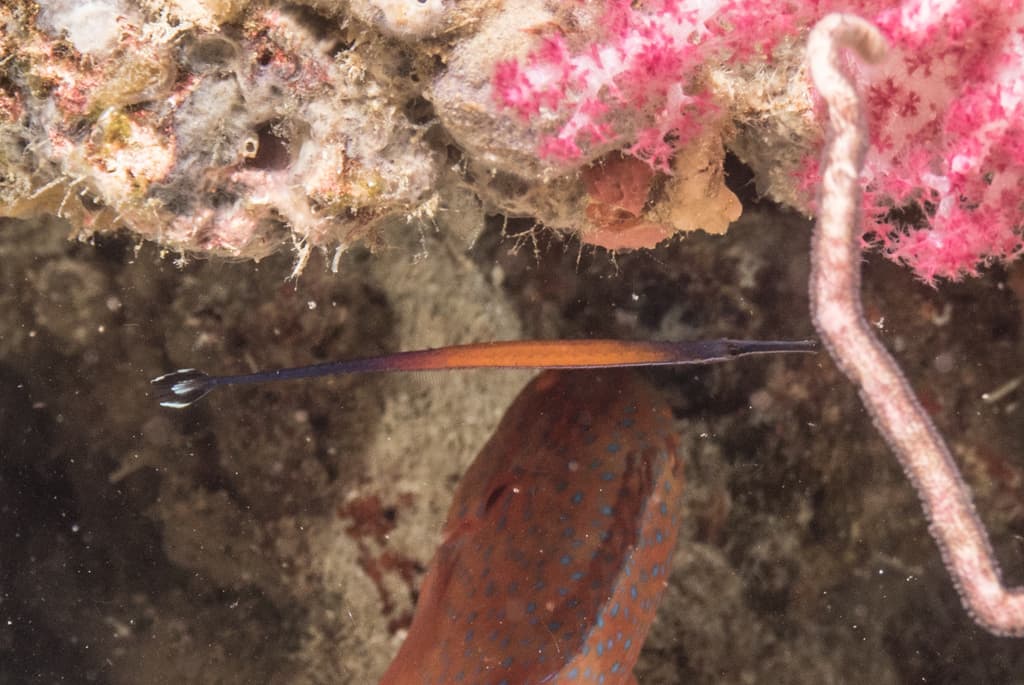
(c) David R, some rights reserved (CC BY-NC)
Max Size
7"
Min Tank
30 gal
Lifespan
4-6 years
Origin
Indian Ocean, East Africa
Diet
Carnivore
Swims
Middle
About
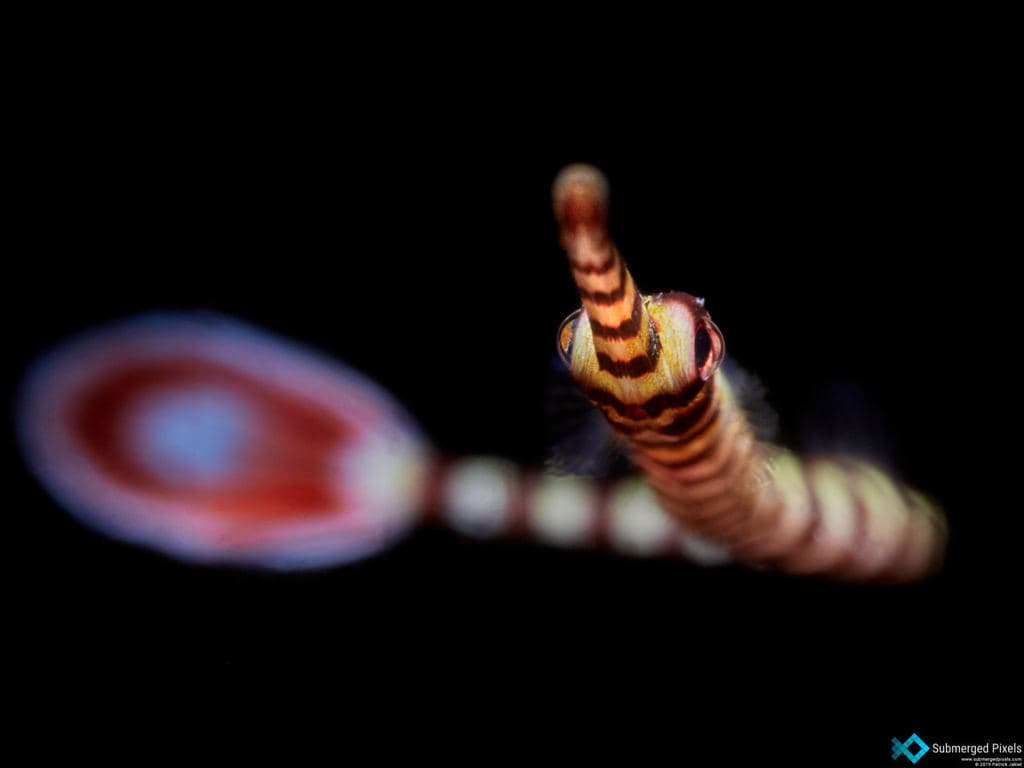
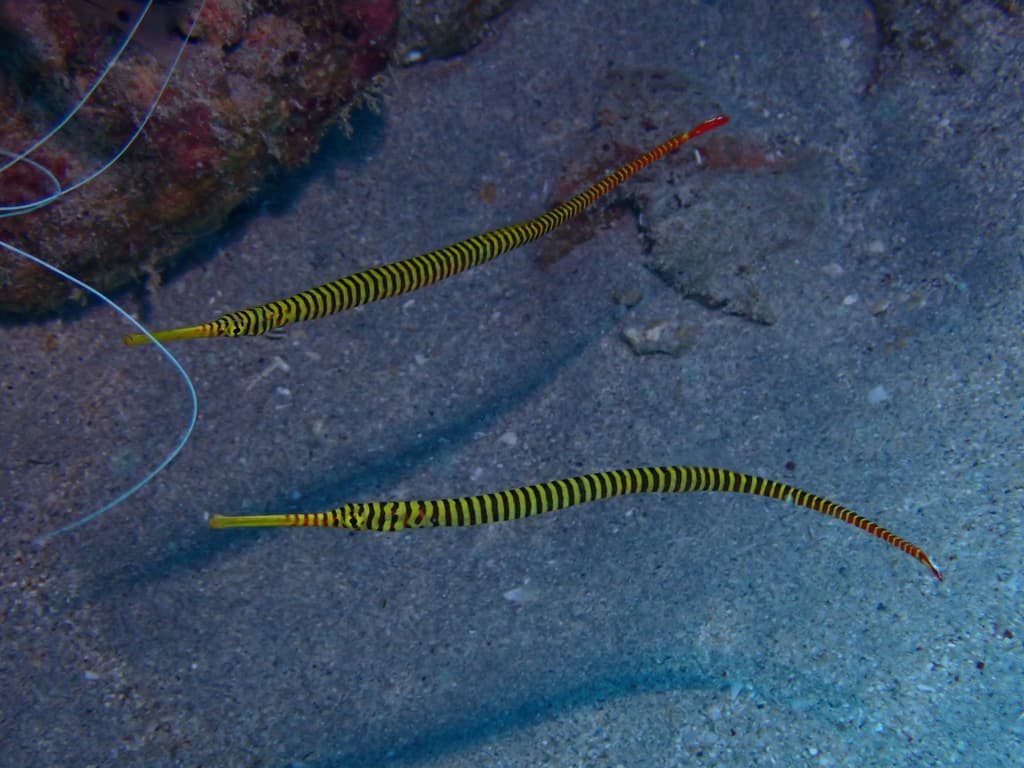
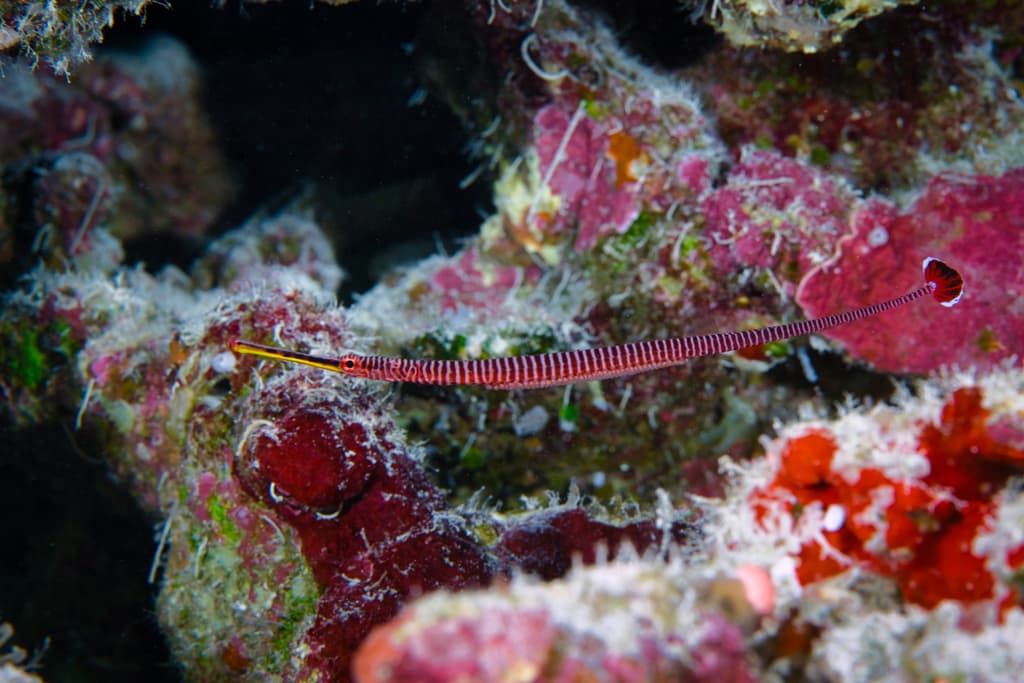
The Multibanded Pipefish is an elegant Indian Ocean species featuring a distinctive pattern of numerous narrow red or reddish-brown bands encircling a white to cream-colored body. The dense, regular banding pattern gives it a strikingly graphic appearance, and its bright red flag-like caudal fin provides a vivid accent at the tail. Reaching approximately 7 inches in length, it is one of the larger commonly kept aquarium pipefish and belongs to the Dunckerocampus genus, which contains some of the hardiest and most aquarium-adaptable pipefish species.
In the wild, Dunckerocampus multiannulatus inhabits reef caves, crevices, and overhangs throughout the Indian Ocean, from the coast of East Africa and Madagascar to the Maldives and Sri Lanka. It is a cryptic species that spends much of its time in the shadows of reef structure, emerging to feed on tiny crustaceans that drift past its territory. Pairs are common and maintain strong bonds, often seen hovering together in cave entrances or along protected reef walls.
The Multibanded Pipefish is considered one of the more adaptable aquarium pipefish, as Dunckerocampus species tend to accept frozen foods more readily than many other syngnathid genera. While it still requires a specialized diet of small crustaceans and cannot compete with fast-moving fish, it is a reasonable choice for dedicated hobbyists willing to provide frequent feedings of frozen mysis shrimp, enriched brine shrimp, and live copepods. A productive refugium greatly enhances long-term success. Keep in pairs in a calm environment with only the most peaceful tankmates.
Feeding & Diet
Carnivore
Multibanded Pipefish are micro-predators feeding on copepods, amphipods, and small mysid shrimp in the wild. Dunckerocampus species are among the more accepting pipefish when it comes to frozen foods. Offer frozen mysis shrimp, enriched brine shrimp, and live copepods. A refugium producing live pods is strongly recommended. Feed multiple small meals throughout the day. These slow, deliberate feeders cannot compete with conventional aquarium fish.
Compatibility
reef-safepeacefulslow-feederspecies-tankpair-bonding
The Multibanded Pipefish must be housed with extremely peaceful, non-competitive tankmates. Ideal companions include seahorses, other pipefish, mandarin dragonets, and small peaceful gobies. Avoid all fast-moving, aggressive, or food-competitive species. A dedicated species tank or a very calm mature reef aquarium is recommended. Completely reef-safe with all corals and invertebrates.
Check CompatibilityBreeding
Moderate
The male Multibanded Pipefish carries eggs in a ventral brood pouch. Pairs form lasting bonds and regularly spawn in captivity when well-maintained. Gestation lasts approximately 2-3 weeks. Released juveniles are fully formed miniature pipefish that can feed on newly hatched brine shrimp and copepod nauplii. Dunckerocampus species are among the most successfully bred pipefish in captivity.
Special Requirements
- Requires small crustaceans as primary diet
- Refugium producing live copepods highly recommended
- Cannot compete with fast-moving fish for food
- Keep in pairs for natural behavior
- Provide caves and overhangs for shelter
- Multiple daily feedings essential
Water Parameters
Temperature72–78°F
Specific Gravity1.02–1.026 sg
pH8.1–8.4
Alkalinity8–12 dKH
Coloration
redwhitecream
Tags
reef-safepeacefulslow-feederspecies-tankpair-bonding