AdvancedPeacefulReef Safe
Tiger Tail Seahorse
Hippocampus comes
Family: Syngnathidae · Seahorses & Pipefish
Also known as: Tiger-tail Seahorse, Tiger Seahorse
(c) Albert Kang, some rights reserved (CC BY-NC)
Max Size
7"
Min Tank
30 gal
Lifespan
3-5 years
Origin
Western Pacific, Philippines
Diet
Carnivore
Swims
Middle
About
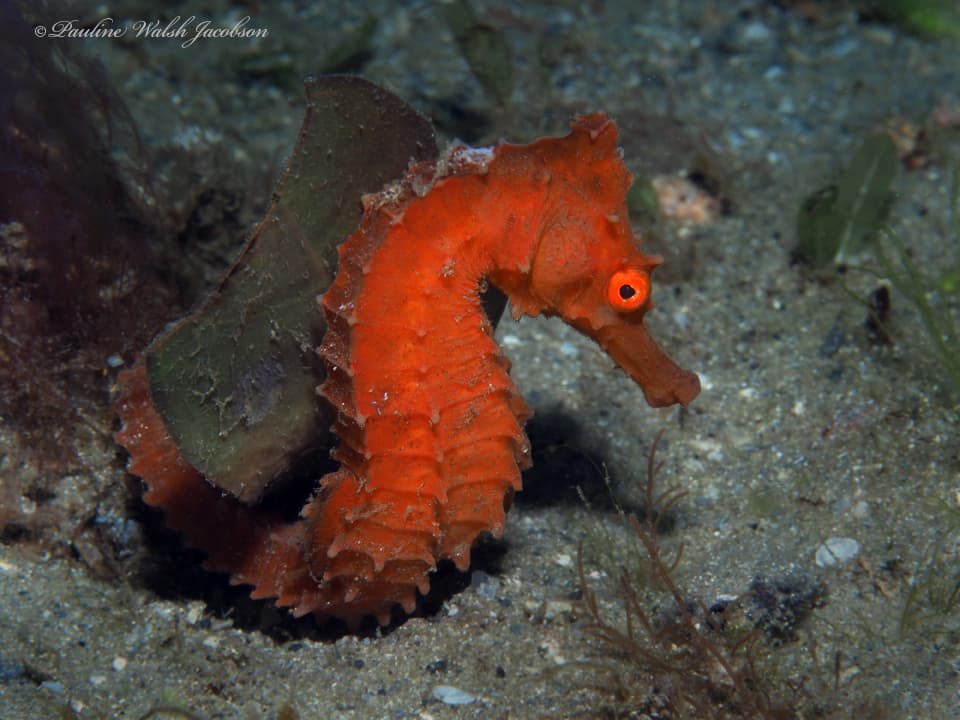
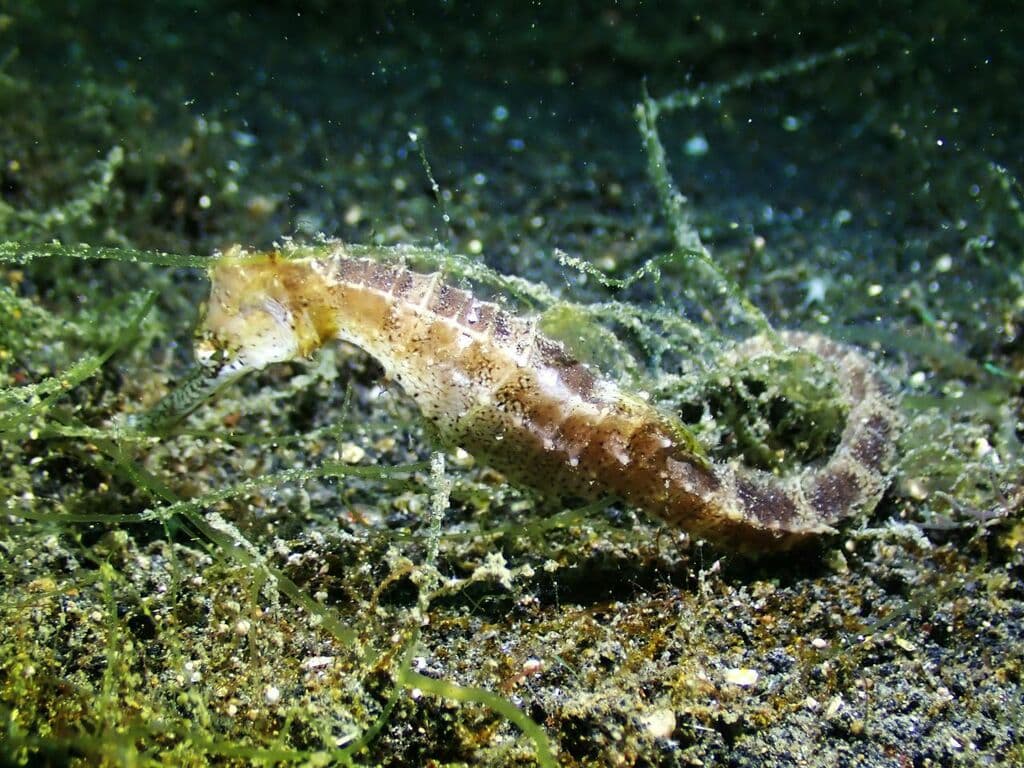
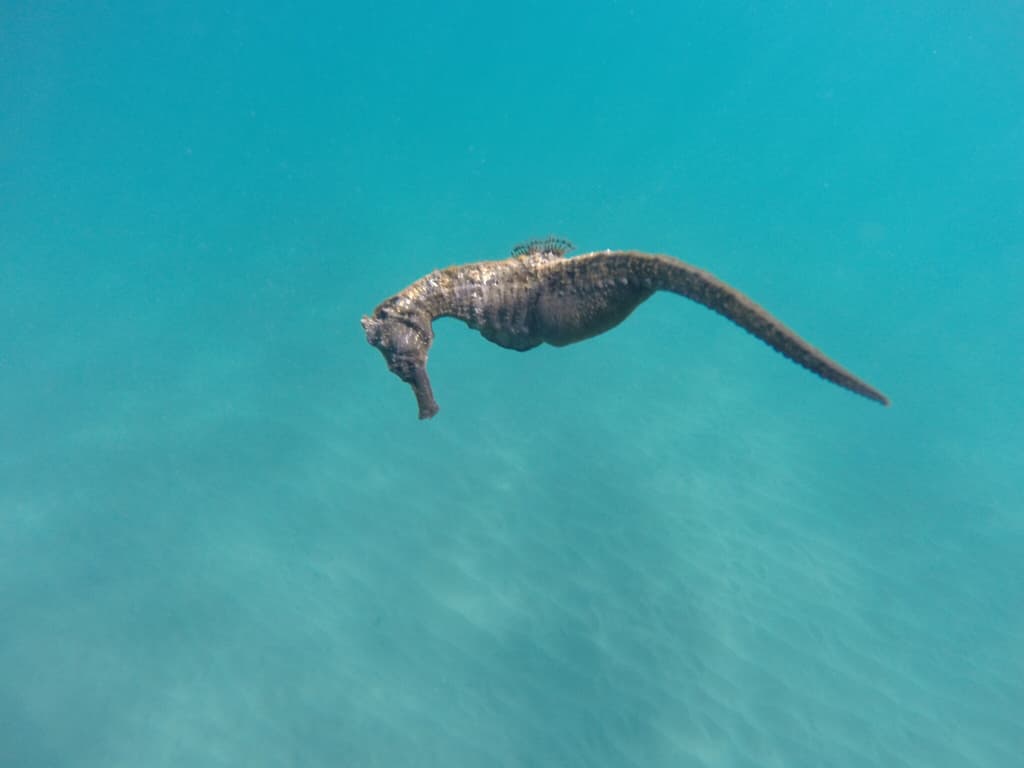
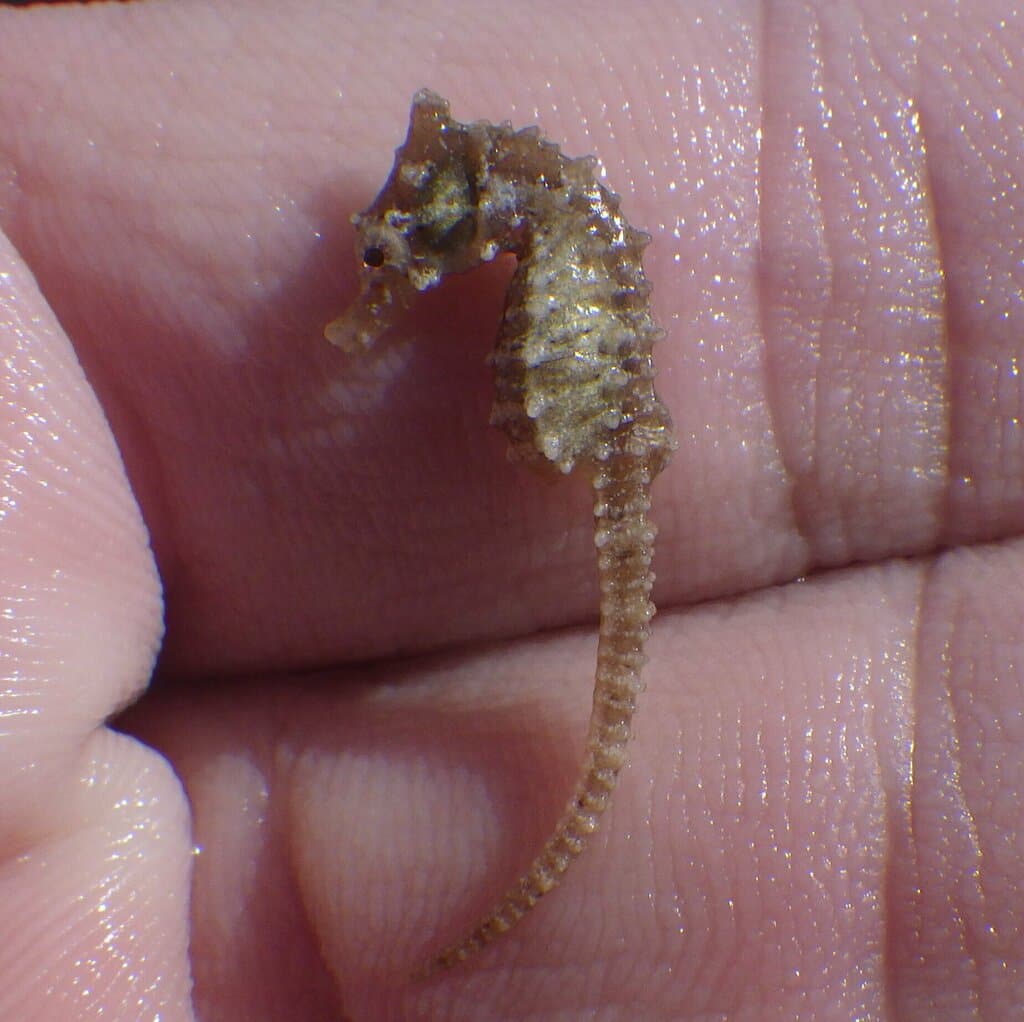
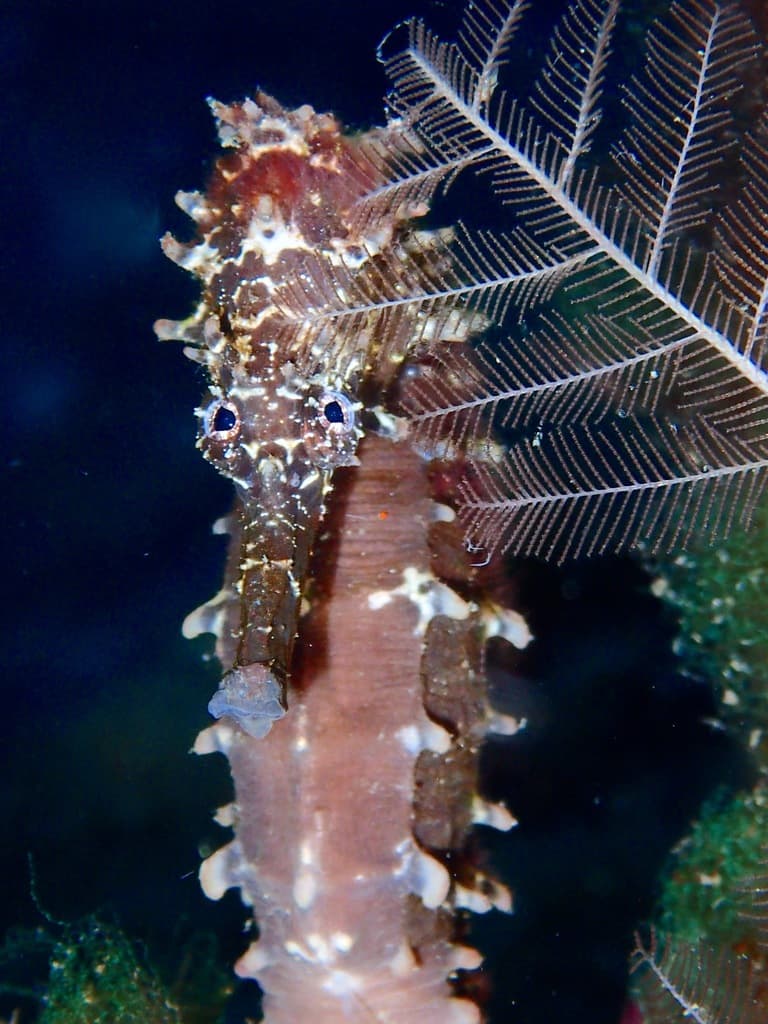
The Tiger Tail Seahorse is a beautiful and charismatic species named for the distinctive alternating dark and light bands on its prehensile tail that resemble tiger stripes. This banding pattern is particularly prominent and gives the species an immediately recognizable appearance among seahorse enthusiasts. The body coloration is highly variable, ranging from yellow and orange to brown and black, often with fine spotting and a pattern of light saddle markings across the trunk segments.
In the wild, Tiger Tail Seahorses are found in the coral-rich waters of the Western Pacific, particularly around the Philippines and neighboring regions. They inhabit seagrass beds, coral rubble, sponges, and gorgonians in shallow coastal waters. This species has faced significant population declines due to habitat loss and heavy collection for traditional Chinese medicine, making it a conservation concern. Captive-bred specimens are the only ethical choice for aquarium keeping and are increasingly available from dedicated seahorse breeders.
The Tiger Tail Seahorse requires the specialized care typical of all seahorse species, including a dedicated low-flow aquarium with numerous hitching posts, pristine water quality, and multiple daily feedings of enriched frozen mysis shrimp. At seven inches maximum length, it is well-suited to a 30-gallon species-specific setup. Captive-bred individuals are significantly hardier than wild-caught specimens and adapt more readily to frozen foods. This species is known for developing strong pair bonds and engaging in elaborate daily greeting rituals with its mate, making it particularly rewarding for breeders.
Feeding & Diet
Carnivore
Tiger Tail Seahorses are carnivores that feed on small crustaceans including copepods, amphipods, and mysis shrimp in the wild. Captive-bred specimens accept frozen mysis shrimp as their primary diet. Enrich mysis with vitamin and HUFA supplements. Feed two to three times daily. Live enriched adult brine shrimp and copepods are valuable dietary supplements. A refugium producing live pods is beneficial for continuous grazing.
Compatibility
reef-safepeacefulspecies-only-preferredslow-feederadvanced-carecaptive-bred-recommended
Tiger Tail Seahorses require an extremely peaceful aquarium environment and should be housed in a species-only setup or with only the most gentle companions. Suitable tankmates include other similarly sized seahorses, pipefish, dragonets, and very small, peaceful gobies. Avoid all aggressive, fast-moving, or food-competitive species. Do not keep with anemones, stinging corals, or large crabs. Safe with soft corals, gorgonians, and macroalgae.
Check CompatibilityBreeding
Moderate
Tiger Tail Seahorses breed readily in captivity when properly maintained. Pairs form strong bonds and perform daily greeting rituals involving color changes and synchronized swimming. Males carry developing young in their brood pouch for approximately 14 to 21 days. Broods range from 50 to 300 fry. Fry require newly hatched enriched brine shrimp as a first food. Captive breeding is well-established and supports conservation by reducing demand for wild-caught individuals.
Special Requirements
- Species-specific aquarium strongly recommended
- Gentle water flow essential - seahorses are weak swimmers
- Provide numerous hitching posts (gorgonians, macroalgae, artificial items)
- Only purchase captive-bred specimens - wild populations are declining
- Multiple daily feedings of enriched frozen mysis required
- Pristine water quality critical to prevent bacterial infections
- Cooler tropical temperatures preferred (72-76 F)
- Strong pair bonds form - keep in pairs for best results
Water Parameters
Temperature72–76°F
Specific Gravity1.02–1.025 sg
pH8.1–8.4
Alkalinity8–12 dKH
Coloration
yelloworangebrownblackwhite
Tags
reef-safepeacefulspecies-only-preferredslow-feederadvanced-carecaptive-bred-recommended