AdvancedPeacefulReef Safe
Yellow-banded Pipefish
Dunckerocampus pessuliferus
Family: Syngnathidae · Pipefish
Also known as: Yellowbanded Pipefish, Yellow Banded Pipefish, Pest Pipefish
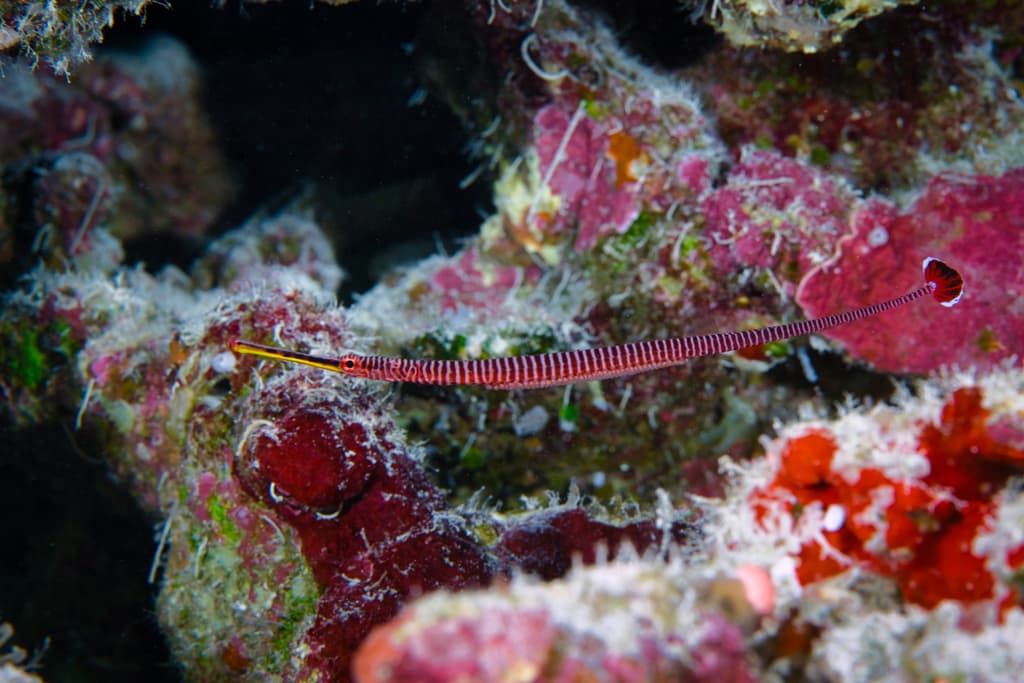
(c) Ania Kossowska, some rights reserved (CC BY-NC)
Max Size
6"
Min Tank
30 gal
Lifespan
4-6 years
Origin
Western Pacific, Indonesia
Diet
Carnivore
Swims
Middle
About
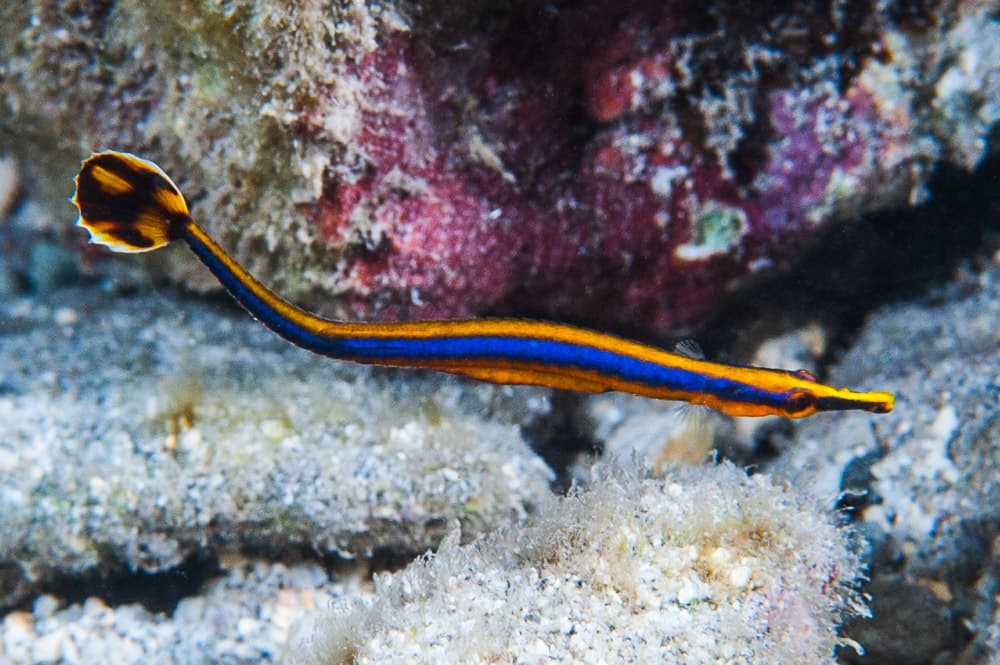
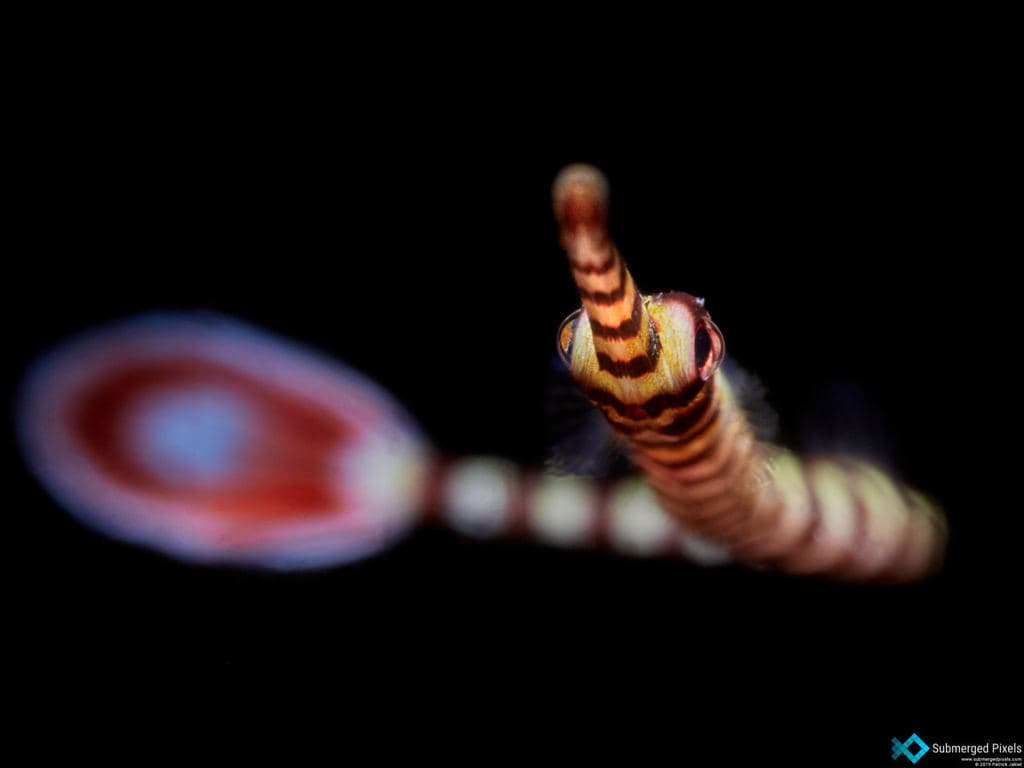
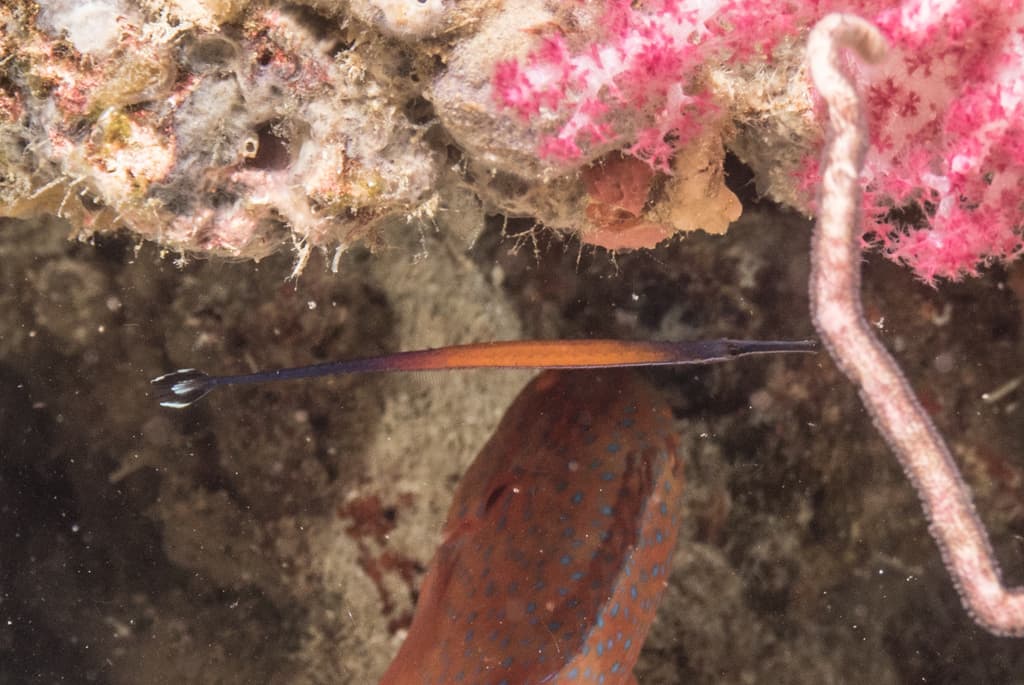
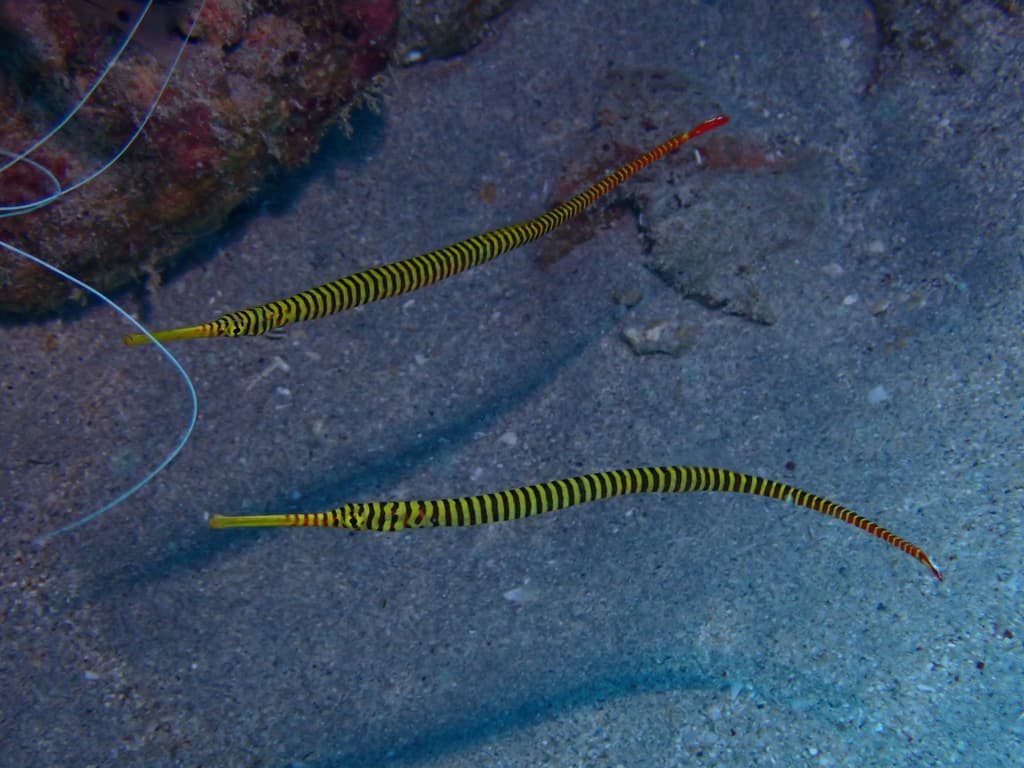
The Yellow-banded Pipefish is a beautifully marked member of the Dunckerocampus genus, featuring bold alternating bands of deep red and bright yellow encircling its elongated, rigid body. The vivid color contrast between the red and yellow bands creates a visually striking pattern that makes this species one of the most attractive pipefish available in the aquarium trade. A bright red flag-like caudal fin completes the colorful ensemble. At approximately 6 inches in length, it provides excellent visual presence in a dedicated syngnathid aquarium.
In the wild, Dunckerocampus pessuliferus inhabits caves, overhangs, and protected reef crevices throughout the Western Pacific. Like other members of its genus, it is typically found in pairs that maintain a shared territory within protected reef structure. The species is somewhat secretive, spending much of its time in the shadows of caves and ledges, emerging to feed on tiny crustaceans that drift past in the current. Its bold banding pattern, which seems conspicuous in the open, actually serves as effective disruptive camouflage in the dappled light of cave interiors.
The Yellow-banded Pipefish is among the hardier aquarium pipefish, as Dunckerocampus species have a reputation for adapting better to captive conditions than many other genera. While it still requires the specialized feeding regimen essential for all syngnathids, it tends to accept frozen mysis shrimp and enriched brine shrimp with less difficulty than more delicate species. A mature reef aquarium with a productive refugium provides the ideal environment, and keeping a bonded pair showcases the species' most engaging social behaviors. As with all pipefish, only the gentlest, most non-competitive tankmates are appropriate.
Feeding & Diet
Carnivore
Yellow-banded Pipefish feed on tiny crustaceans including copepods, amphipods, and mysid shrimp in the wild. Among the more accepting Dunckerocampus species regarding frozen foods, they typically adapt to frozen mysis shrimp, enriched brine shrimp, and live copepods. A productive refugium generating live pods is strongly recommended for long-term success. Feed multiple small meals throughout the day. They cannot compete with fast-moving fish for food.
Compatibility
reef-safepeacefulslow-feederspecies-tankpair-bonding
The Yellow-banded Pipefish should be housed only with extremely peaceful, non-competitive tankmates. Ideal companions include seahorses, other pipefish, mandarin dragonets, and small peaceful gobies. Avoid all fast-moving, aggressive, or food-competitive species. Best kept as a pair in a dedicated species tank or a mature, calm reef aquarium. Completely reef-safe with all corals and invertebrates.
Check CompatibilityBreeding
Moderate
The male Yellow-banded Pipefish carries fertilized eggs in a ventral brood pouch. Well-bonded pairs spawn regularly in captivity when maintained in good condition with adequate food. Gestation lasts approximately 2-3 weeks. Released juveniles are fully formed miniature pipefish that can feed on newly hatched brine shrimp and copepod nauplii. Dunckerocampus species are considered among the most breedable pipefish in home aquaria.
Special Requirements
- Requires small crustaceans as primary diet
- Refugium producing live copepods highly recommended
- Cannot compete with fast-moving fish for food
- Keep in pairs for natural behavior
- Provide caves and overhangs for shelter
- Multiple daily feedings essential
Water Parameters
Temperature72–78°F
Specific Gravity1.02–1.026 sg
pH8.1–8.4
Alkalinity8–12 dKH
Coloration
redyellow
Tags
reef-safepeacefulslow-feederspecies-tankpair-bonding