ExpertPeacefulReef Safe
Ringed Pipefish
Doryrhamphus melanopleura
Family: Syngnathidae · Pipefish
Also known as: Blackside Pipefish, Banded Pipefish
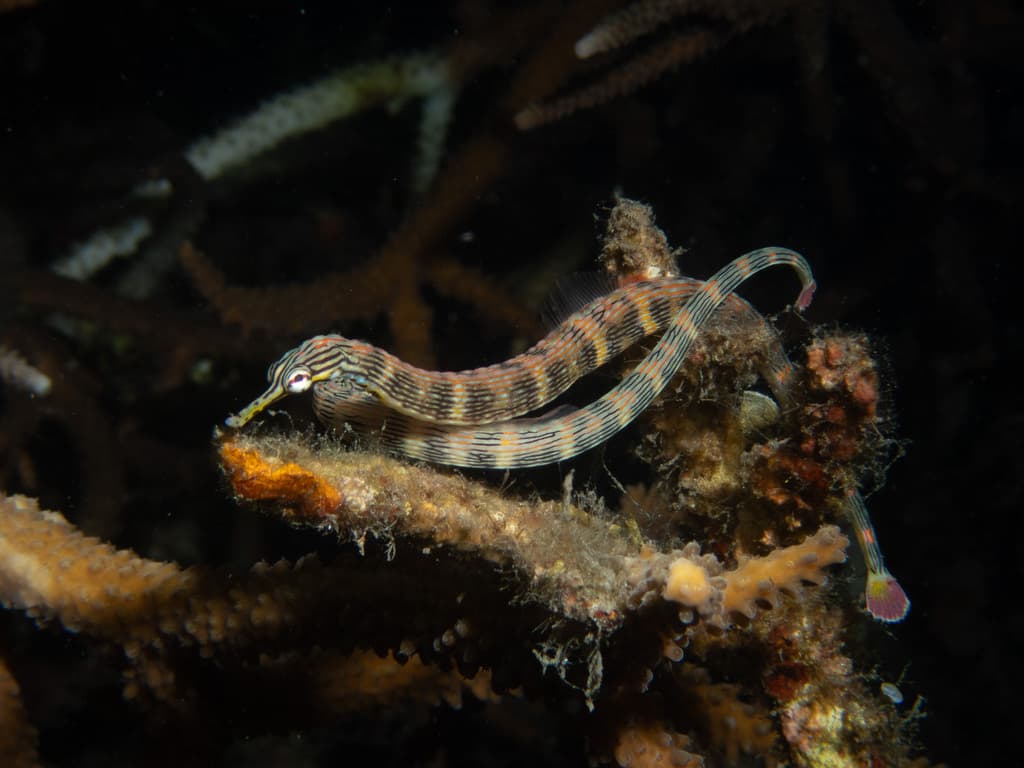
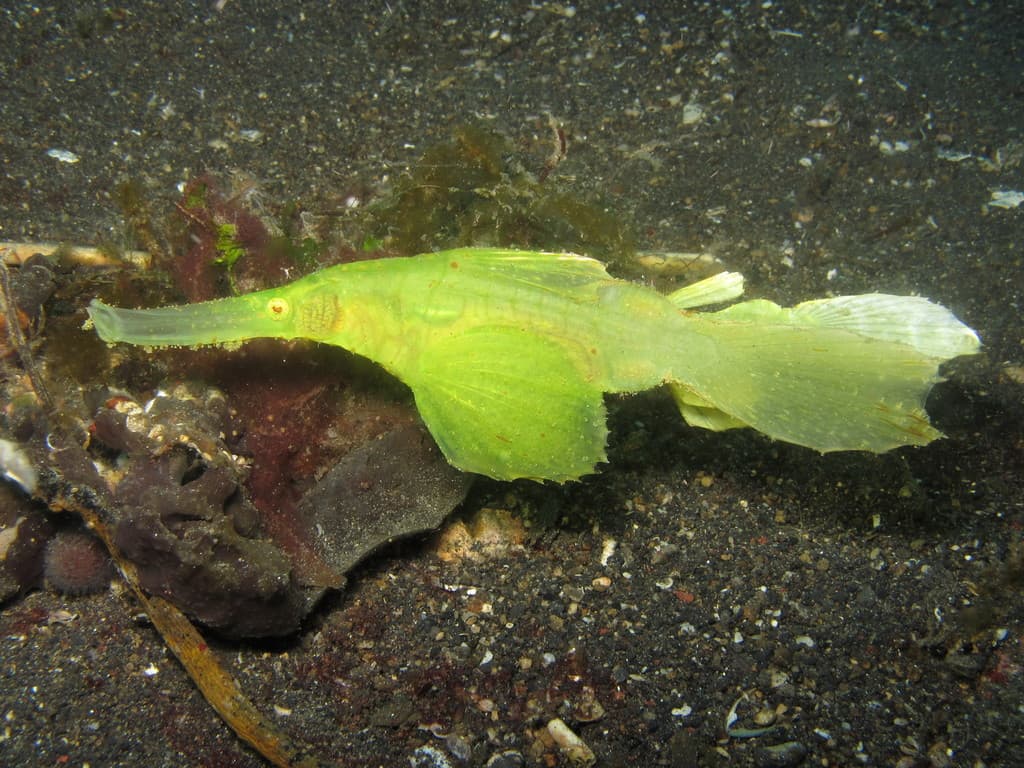
(c) Daniel González-Suárez, some rights reserved (CC BY-NC)
Max Size
3"
Min Tank
20 gal
Lifespan
2-4 years
Origin
Western Pacific, Indonesia
Diet
Carnivore
Swims
Middle
About
The Ringed Pipefish is a tiny and strikingly patterned species that features distinctive dark rings or bands encircling its slender, rigid body. At just 3 inches in maximum length, this is one of the smallest pipefish species available in the aquarium trade. The body coloration typically consists of alternating bands of dark brown or black and lighter cream or white, with a characteristically flagged caudal fin in red or orange that provides a vivid splash of color. The overall effect is reminiscent of a miniature banded sea snake, making this an eye-catching species despite its diminutive size.
In the wild, Doryrhamphus melanopleura is found across the Western Pacific, from Japanese waters southward through Indonesia, the Philippines, and Papua New Guinea. It inhabits reef caves, crevices, and overhangs, often found hovering upside-down on cave ceilings or alongside vertical rock walls in pairs or small groups. Like other Doryrhamphus species, it may exhibit cleaning behavior, picking parasites from the skin of larger reef fish. Pairs typically maintain a small territory centered on their preferred cave or overhang.
Keeping the Ringed Pipefish is an expert-level endeavor due to its tiny size and extremely specialized feeding requirements. This species feeds exclusively on microscopic copepods and other tiny crustaceans, and its minute mouth limits it to the very smallest food items. A productive refugium and a well-established aquarium with a thriving microfauna population are non-negotiable requirements. The 20-gallon minimum tank should provide caves and overhangs for natural behavior, and tankmates must be limited to the most peaceful, non-competitive species available. Despite its challenges, this diminutive pipefish is deeply rewarding for the experienced syngnathid keeper.
Feeding & Diet
Carnivore
Ringed Pipefish feed on the tiniest copepods and other micro-crustaceans. Their very small mouth size limits them to the smallest food items. A productive refugium and established live rock with a thriving pod population are essential. Some specimens may accept frozen cyclops or baby brine shrimp, but live copepods should be the dietary staple. Feed multiple small meals throughout the day. Live Tisbe and Tigriopus copepod cultures are excellent supplemental food sources.
Compatibility
reef-safepeacefulslow-feederspecies-tanknano-fish
The Ringed Pipefish must be housed with only the most peaceful and non-competitive tankmates. Its tiny size makes it vulnerable to predation by even moderately sized fish. Ideal companions include seahorses, other small pipefish species, and tiny peaceful gobies. Best kept as a pair in a dedicated nano species tank or an extremely calm mature reef. Completely reef-safe with all corals and invertebrates.
Check CompatibilityBreeding
Moderate
The male Ringed Pipefish carries fertilized eggs in a ventral brood pouch. Pairs form strong bonds and engage in courtship displays before egg transfer. Gestation lasts approximately 2 to 3 weeks. Fully formed miniature pipefish are released and can feed on copepod nauplii. This species has been successfully bred in captivity, and its small brood size makes rearing manageable for dedicated hobbyists with live food cultures.
Special Requirements
- Expert-level species - extremely small and delicate
- Productive refugium essential for sustaining copepod supply
- Very small mouth limits food to the tiniest copepods
- Provide caves and overhangs for natural upside-down hovering
- Best kept in pairs in a dedicated species tank
- Cannot compete with any food-aggressive species
Water Parameters
Temperature72–80°F
Specific Gravity1.02–1.026 sg
pH8.1–8.4
Alkalinity8–12 dKH
Coloration
brownblackcreamwhiteredorange
Tags
reef-safepeacefulslow-feederspecies-tanknano-fish