ExpertPeacefulReef Safe
Robust Ghost Pipefish
Solenostomus cyanopterus
Family: Solenostomidae · Pipefish
Also known as: Blue-finned Ghost Pipefish, Robust Ghostpipefish
(c) Franco Colnago, some rights reserved (CC BY-NC)
Max Size
6.7"
Min Tank
55 gal
Lifespan
1-2 years
Origin
Indo-West Pacific, Red Sea
Diet
Carnivore
Swims
Middle
About
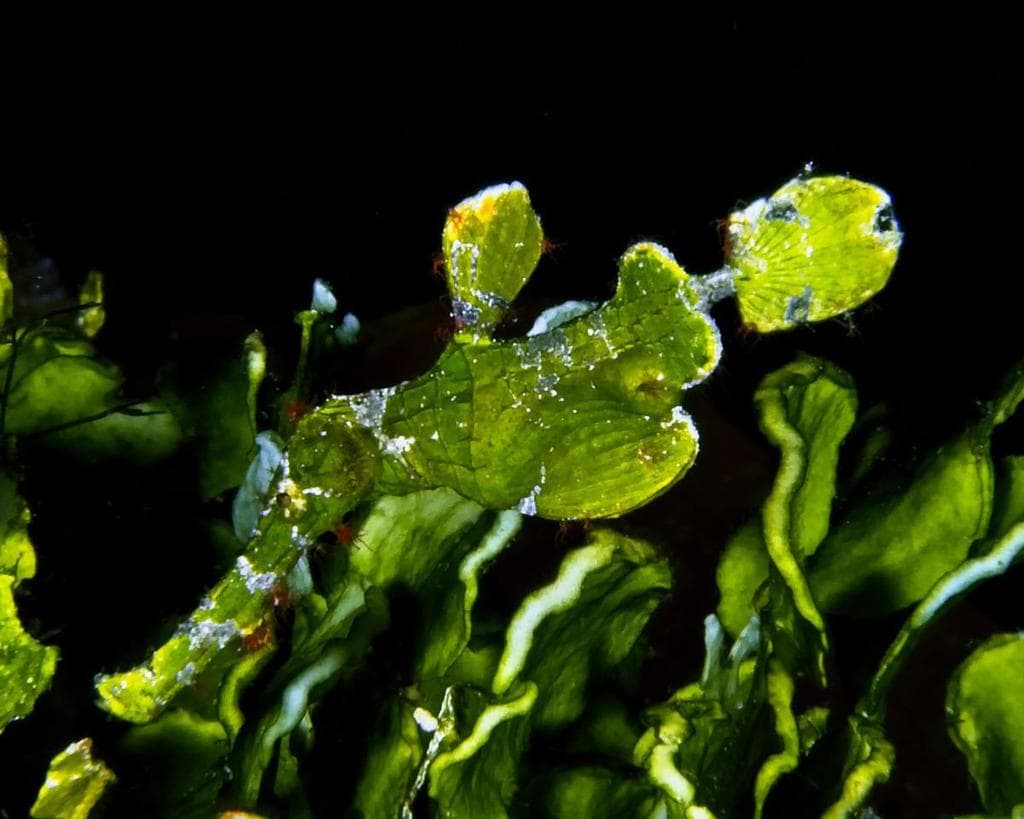
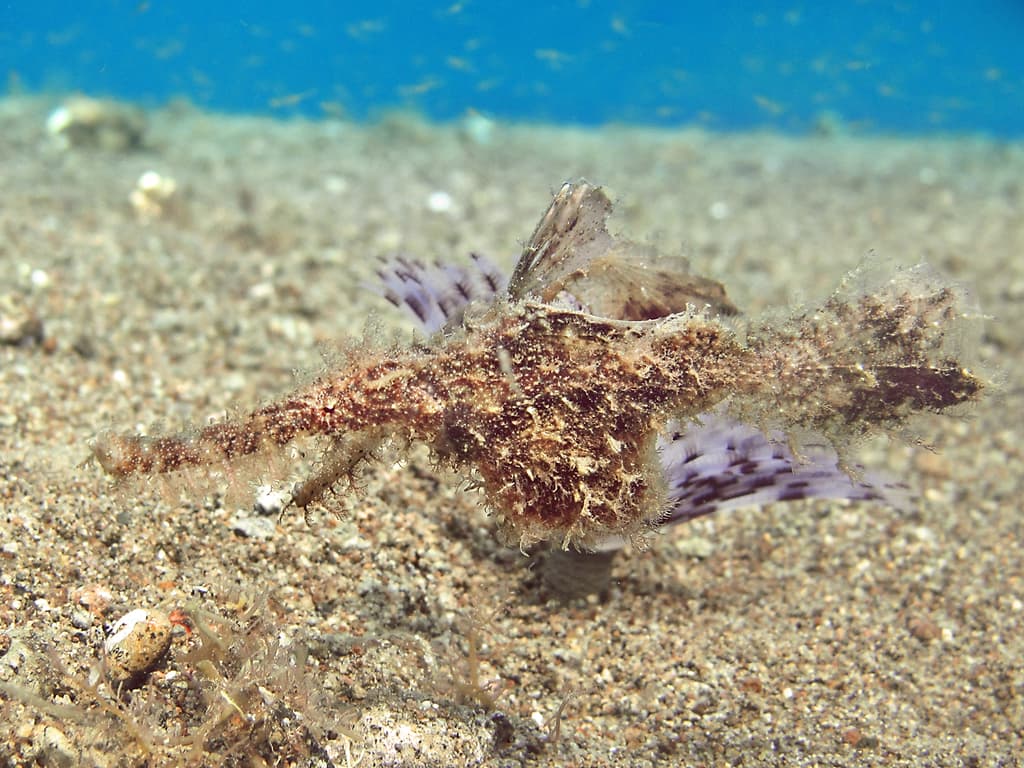
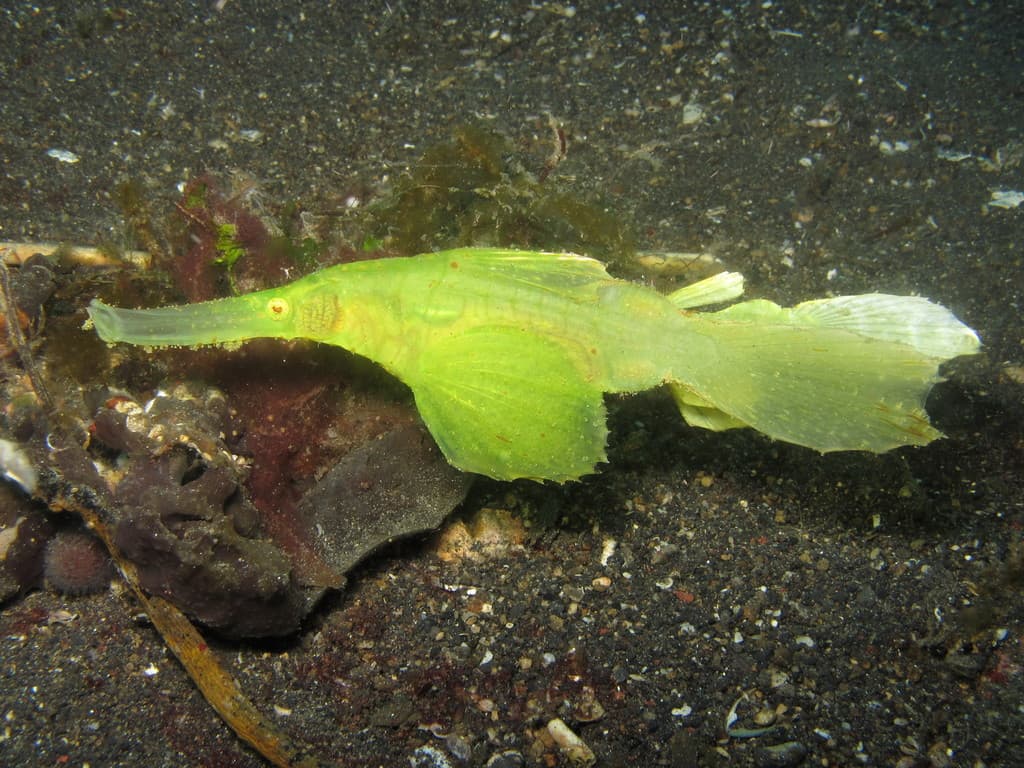
The Robust Ghost Pipefish is the largest member of the ghost pipefish family Solenostomidae, reaching an impressive 6.7 inches in length. Its body is broader and more heavily built than its ornate relative, with a coloration that typically ranges from mottled green and brown to gray, perfectly matching the seagrass beds and algal-covered rubble where it lives. The pectoral and pelvic fins are noticeably large, often displaying blue or green tints that give it one of its alternate names, the Blue-finned Ghost Pipefish.
In the wild, Solenostomus cyanopterus is widely distributed across the Indo-West Pacific, from the Red Sea to Japan and the Great Barrier Reef. It is most commonly found drifting head-down among seagrass beds, floating debris, and algae-covered surfaces, where its cryptic coloration provides excellent camouflage. Unlike the Ornate Ghost Pipefish, which mimics crinoids and gorgonians, the Robust Ghost Pipefish specializes in blending with plant-like structures. Pairs are commonly found together, drifting in close proximity.
As with all ghost pipefish, keeping the Robust Ghost Pipefish in captivity is an expert-level undertaking. Its larger size compared to other Solenostomus species means it requires a somewhat larger aquarium, but the fundamental challenges remain the same: an almost exclusive dependence on live micro-crustaceans, the inability to compete with any conventional aquarium fish for food, and a tendency toward short captive lifespans. A mature system with an exceptionally productive refugium is the minimum requirement. Providing seagrass or macroalgae for the fish to camouflage among adds enrichment and reduces stress.
Feeding & Diet
Carnivore
Robust Ghost Pipefish feed on tiny crustaceans including copepods, amphipods, and mysid shrimp in the wild. Like other ghost pipefish, they almost exclusively require live foods and rarely accept frozen diets. A highly productive refugium generating live copepods and amphipods is absolutely essential. Enriched live baby brine shrimp can supplement the diet. Multiple continuous feedings throughout the day are necessary. Their larger size relative to other ghost pipefish means slightly higher food demands.
Compatibility
reef-safepeacefulslow-feederspecies-tankexpert-only
The Robust Ghost Pipefish must be housed only with the most peaceful, non-competitive species. Seahorses and other ghost pipefish are the only truly appropriate companions. Any fish that could compete for food or cause stress should be avoided entirely. A dedicated species-only system with live macroalgae and seagrass provides the best environment. Completely reef-safe and ignores all corals and invertebrates.
Check CompatibilityBreeding
Expert
As with all ghost pipefish, the female Robust Ghost Pipefish carries the eggs in a brood pouch formed by her enlarged pelvic fins. The female is noticeably larger than the male. Pairs engage in subtle courtship behaviors before egg transfer. Gestation lasts several weeks. Juveniles are extremely small and require microscopic live foods. Captive breeding of this species has not been reliably documented in home aquaria.
Special Requirements
- Expert-only species - largest ghost pipefish
- Almost exclusively requires live foods
- Highly productive refugium absolutely essential
- Provide seagrass or macroalgae for camouflage behavior
- Keep in pairs in a dedicated species tank
- Very low water flow preferred
- Short captive lifespan even under optimal conditions
Water Parameters
Temperature74–78°F
Specific Gravity1.023–1.026 sg
pH8.1–8.4
Alkalinity8–12 dKH
Coloration
greenbrowngrayblue
Tags
reef-safepeacefulslow-feederspecies-tankexpert-only