ExpertPeacefulReef Safe
Dragon-faced Pipefish
Corythoichthys haematopterus
Family: Syngnathidae · Pipefish
Also known as: Messmate Pipefish, Reef-Top Pipefish, Network Pipefish
no rights reserved
Max Size
7"
Min Tank
30 gal
Lifespan
3-5 years
Origin
Indo-Pacific, Indonesia
Diet
Carnivore
Swims
Bottom
About
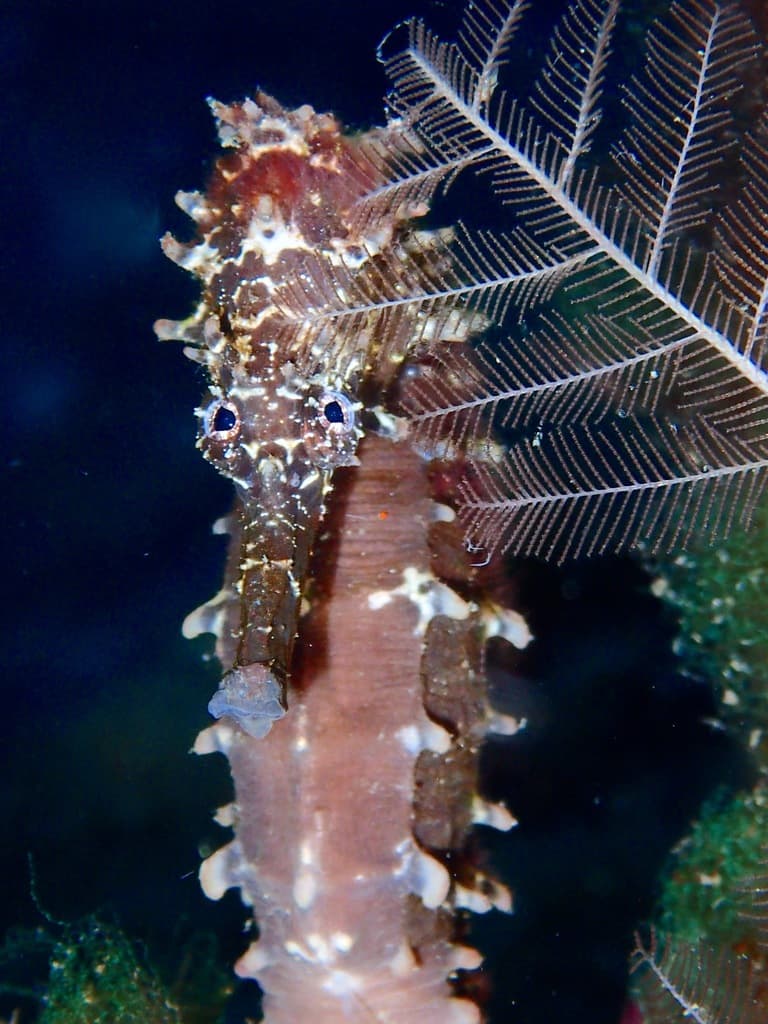
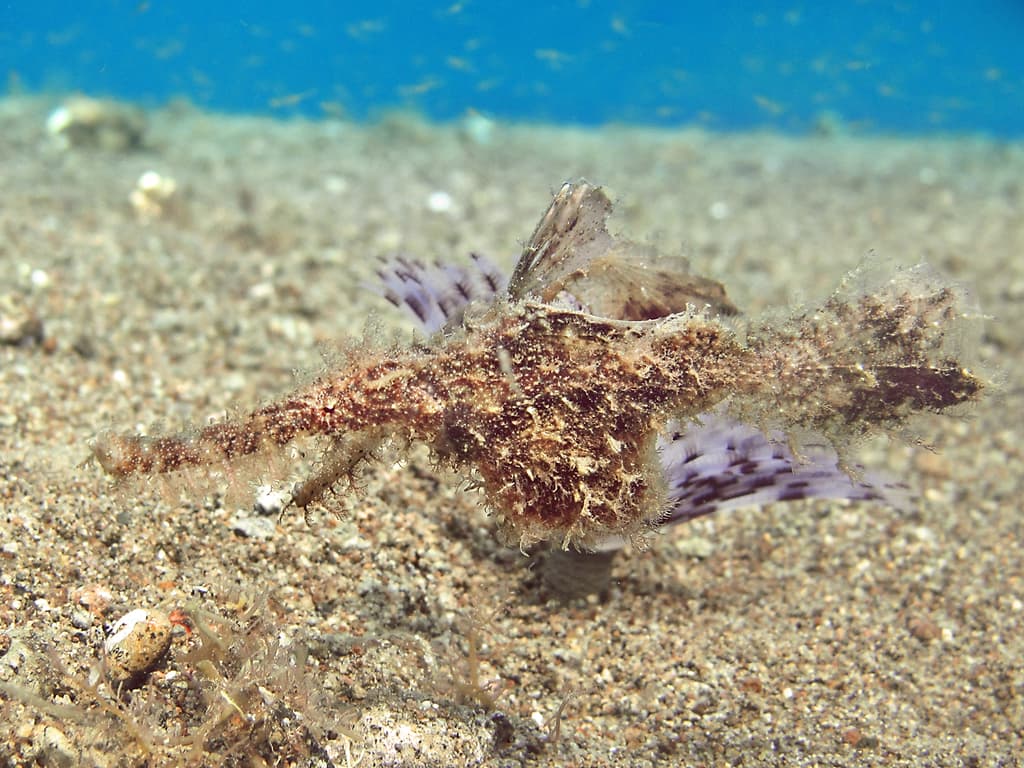
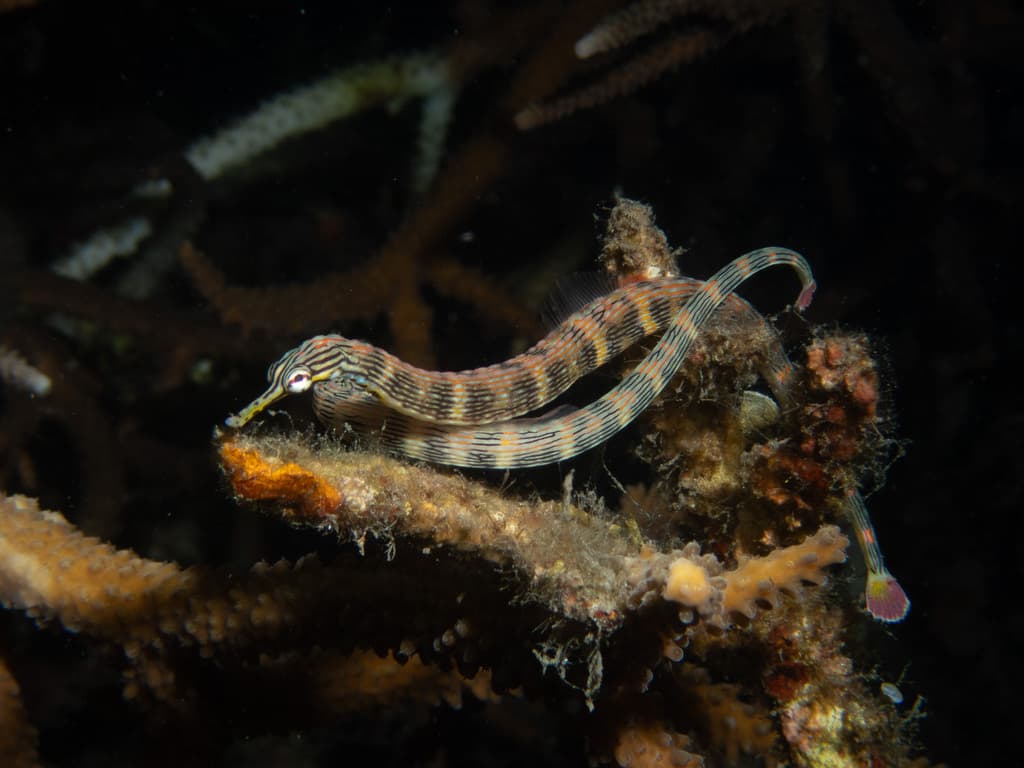
The Dragon-faced Pipefish is a captivating species named for its elongated, dragon-like snout and intricate facial markings that give it a distinctly mythical appearance. Its slender, rigid body is covered in bony armor plates and displays variable coloration ranging from reddish-brown to tan with a complex network of darker lines and markings. At approximately 7 inches, this is a moderately sized pipefish that commands attention with its unusual appearance and deliberate, searching movements along the substrate and live rock surfaces.
In the wild, Corythoichthys haematopterus is one of the most widely distributed pipefish species, found across the Indo-Pacific from the Red Sea to Australia and throughout Indonesia and the Philippines. It inhabits shallow reef flats, lagoons, and rubble areas, where it moves slowly across the bottom, constantly probing crevices and surfaces with its tubular snout in search of tiny copepods and other microfauna. Unlike the Doryrhamphus pipefish that tend to hover in mid-water near cave overhangs, this species is primarily a bottom-dwelling forager.
Keeping the Dragon-faced Pipefish is an expert-level endeavor due to its extremely specialized feeding requirements. Like all pipefish, it feeds exclusively on tiny live crustaceans, primarily copepods and amphipods, which it sucks up through its tubular snout. An established aquarium of at least 30 gallons with extensive live rock and a productive refugium is essential to maintain the microfauna population needed to sustain this delicate feeder. It must be housed only with extremely peaceful, non-competitive tankmates, as even moderately active fish will outcompete it for food. The reward for meeting these demands is an endlessly fascinating species with behavior unlike anything else in the aquarium hobby.
Feeding & Diet
Carnivore
Dragon-faced Pipefish are specialized micro-predators that feed exclusively on tiny copepods, amphipods, and other benthic crustaceans. A well-established aquarium with a dense, self-sustaining pod population is essential. A refugium producing a constant supply of copepods is highly recommended. Some specimens may learn to accept frozen cyclops or baby brine shrimp, but live microfauna should remain the dietary foundation. Feed multiple times daily if accepting any prepared foods.
Compatibility
reef-safepeacefulslow-feederspecies-tankexpert-only
The Dragon-faced Pipefish must be housed with extremely peaceful, non-competitive tankmates. It cannot compete for food with virtually any active fish species. Ideal companions include seahorses, other pipefish, mandarin dragonets, and very small peaceful gobies. Best kept as a pair in a dedicated species tank or a very calm, mature reef aquarium. Completely reef-safe with all corals and invertebrates.
Check CompatibilityBreeding
Moderate
The male Dragon-faced Pipefish carries fertilized eggs on his ventral surface in a brood area rather than an enclosed pouch. Pairs form bonds and engage in courtship displays before egg transfer. Gestation lasts approximately 2 to 3 weeks. Juveniles are released as fully formed miniature pipefish capable of feeding on copepod nauplii and newly hatched brine shrimp. This species has been bred in captivity by dedicated hobbyists.
Special Requirements
- Expert-level species requiring specialized live food diet
- Productive refugium essential to sustain copepod populations
- Cannot compete with any food-aggressive tankmates
- Established aquarium with abundant live rock required
- Bottom-dwelling forager - provide varied substrate terrain
- Dragon-like snout used to probe crevices for microfauna
Water Parameters
Temperature72–80°F
Specific Gravity1.02–1.026 sg
pH8.1–8.4
Alkalinity8–12 dKH
Coloration
brownredtancream
Tags
reef-safepeacefulslow-feederspecies-tankexpert-only