IntermediatePeacefulReef Safe with Caution
Fu Manchu Lionfish
Dendrochirus biocellatus
Family: Scorpaenidae · Lionfish & Scorpionfish
Also known as: Twinspot Lionfish, Ocellated Lionfish, Two-spot Turkeyfish
(c) François Libert, some rights reserved (CC BY-NC-SA)
Max Size
5"
Min Tank
55 gal
Lifespan
8-12 years
Origin
Indo-Pacific, Western Pacific
Diet
Carnivore
Swims
Bottom
About
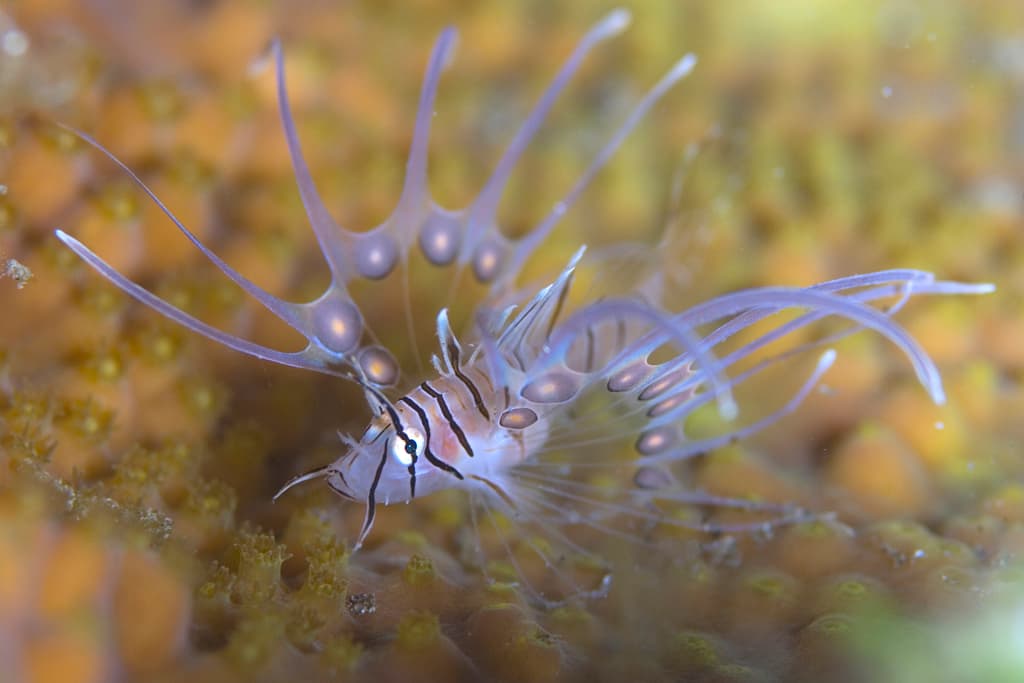
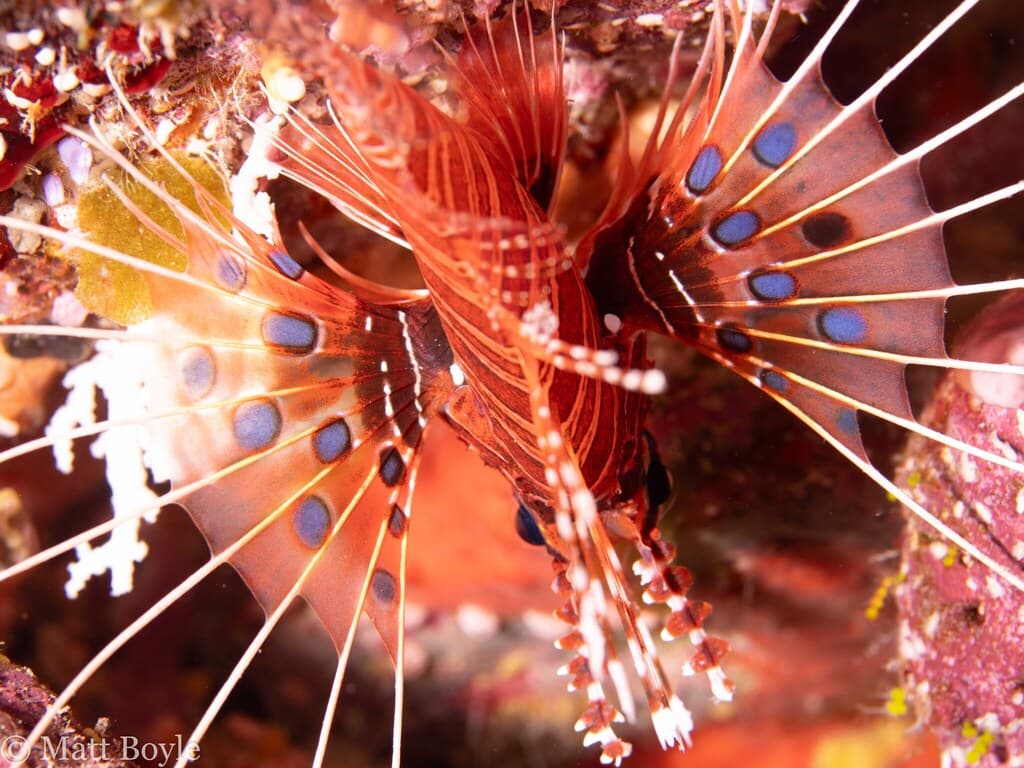
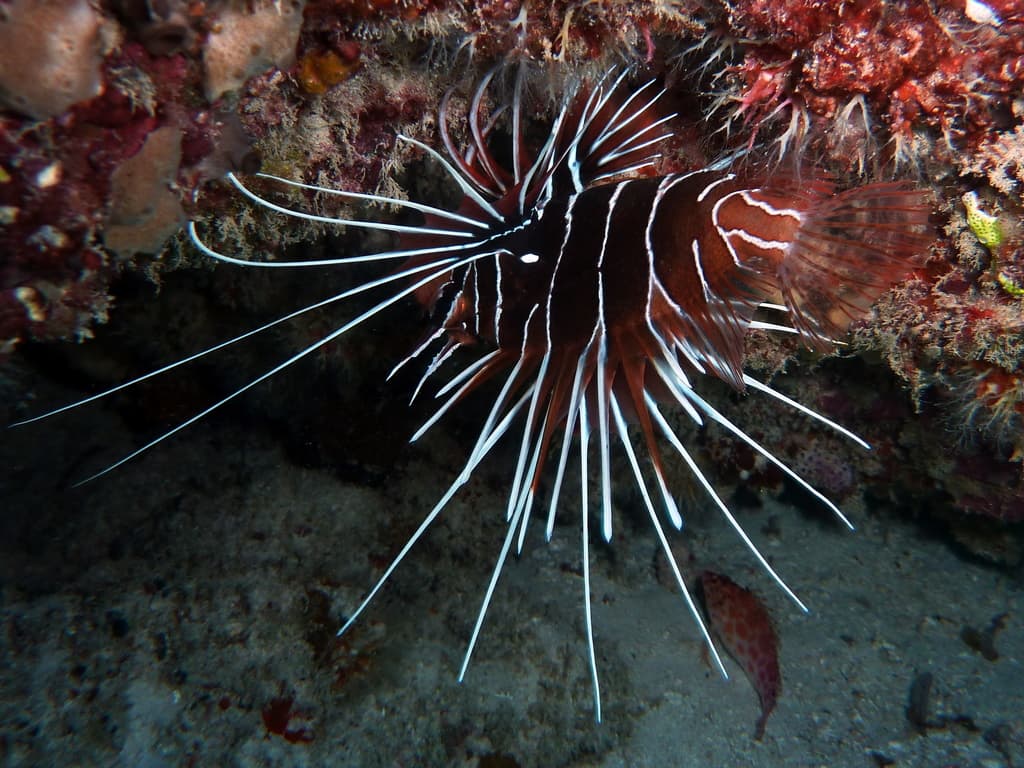
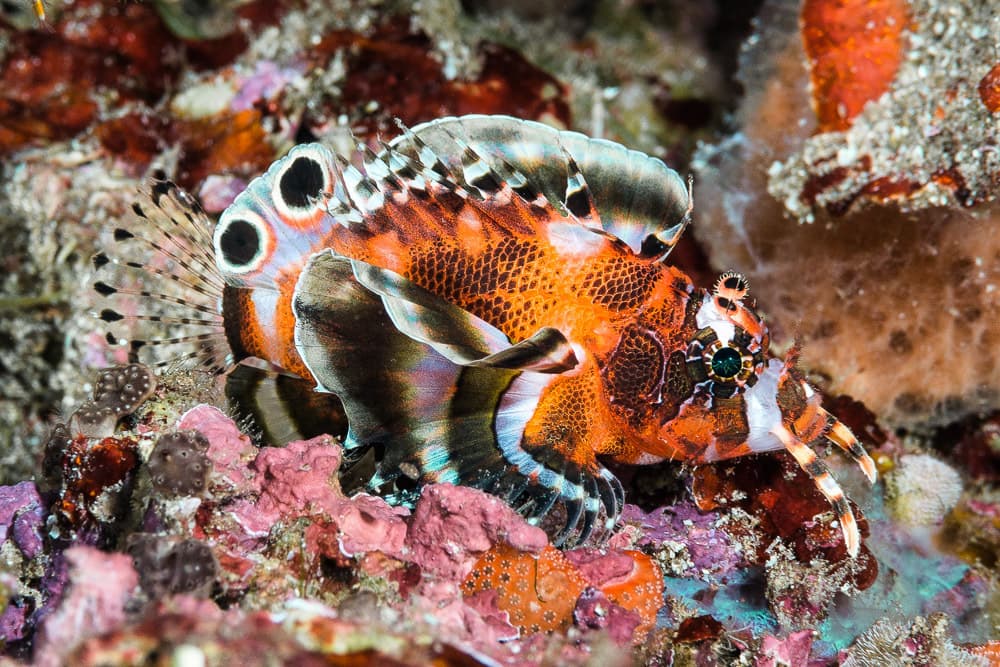
The Fu Manchu Lionfish is one of the most unusual and sought-after dwarf lionfish species, named for the pair of distinctive whisker-like appendages that extend from its lower jaw, reminiscent of a Fu Manchu mustache. These fleshy tentacles, called mental tentacles, are used to lure small prey within striking distance. The body displays a complex pattern of reddish-brown and white bands, and two prominent ocelli (eye spots) are located on the soft dorsal fin, serving as false eyespots to confuse predators.
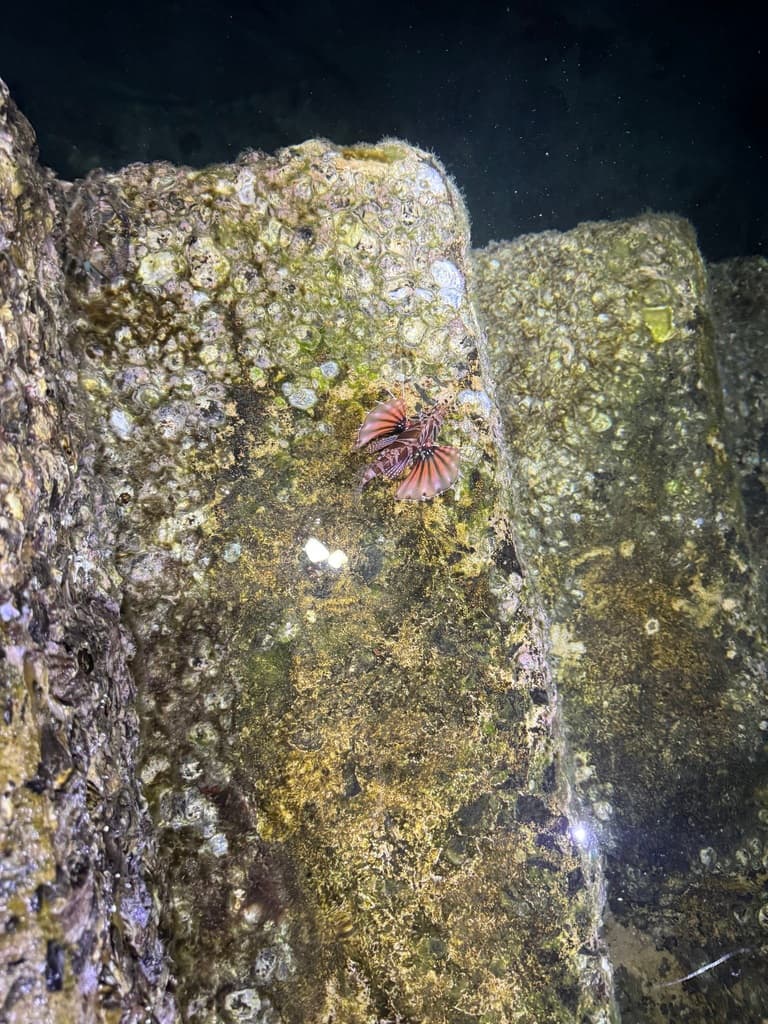
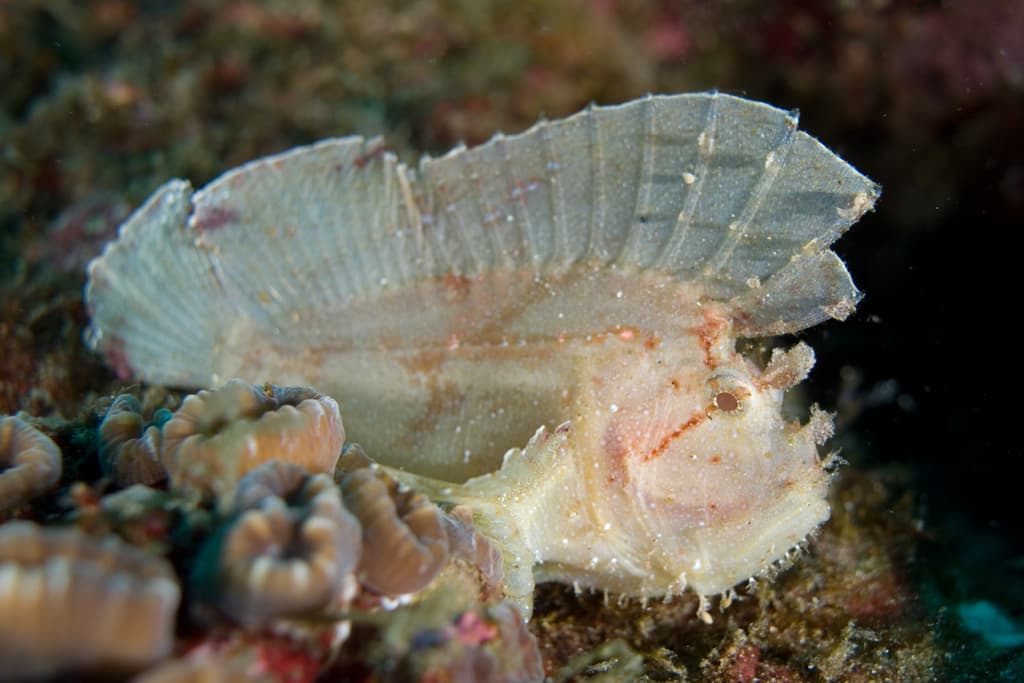
This species is a master of camouflage and ambush hunting, spending most of its time motionless among rockwork, rubble, and crevices, waiting for unsuspecting prey to venture close. Its cryptic coloration and still demeanor make it easy to overlook in a well-decorated aquarium. The Fu Manchu Lionfish is primarily nocturnal and becomes most active during twilight and nighttime hours when it emerges to hunt.
Keeping the Fu Manchu Lionfish presents a moderate challenge, primarily centered around feeding. Many specimens are reluctant to accept non-living foods and may require extended weaning from live ghost shrimp and small fish to frozen alternatives. Patience and feeding tongs are essential tools for success. Like all lionfish, its dorsal spines are venomous and can deliver a painful sting. Despite its predatory nature, it is peaceful toward fish too large to swallow and can be kept with other similarly-sized lionfish species.
Feeding & Diet
Carnivore
Fu Manchu Lionfish are strict carnivores that ambush small fish and crustaceans. In captivity, offer frozen silversides, mysis shrimp, krill, and ghost shrimp. Many specimens initially require live foods and must be weaned onto frozen alternatives using feeding tongs. Feed every other day once established. Avoid long-term use of freshwater feeder fish.
Compatibility
reef-cautionpeacefulpredatorvenomous-spinesambush-hunternocturnal
The Fu Manchu Lionfish is peaceful toward fish too large to consume but will readily eat any fish or crustacean that fits in its mouth. Compatible with medium to large community fish and other dwarf lionfish species. Avoid housing with small gobies, blennies, or ornamental shrimp. Its slow, sedentary nature means it should not be housed with aggressive food competitors.
Check CompatibilityBreeding
Difficult
Fu Manchu Lionfish can spawn in captivity under optimal conditions. The female releases a buoyant gelatinous egg mass that is fertilized by the male. Larvae are extremely small and planktonic, requiring rotifers and copepod nauplii as first foods. Captive breeding has been achieved but remains challenging and uncommon.
Special Requirements
- VENOMOUS dorsal spines - exercise extreme caution during maintenance
- May require live food initially before weaning to frozen
- Provide dim lighting and numerous hiding caves
- Will eat any fish or shrimp small enough to swallow
- Feeding tongs recommended for targeted feeding
- Primarily nocturnal - most active at twilight
Water Parameters
Temperature74–80°F
Specific Gravity1.02–1.026 sg
pH8.1–8.4
Alkalinity8–12 dKH
Coloration
redbrownwhitetan
Tags
reef-cautionpeacefulpredatorvenomous-spinesambush-hunternocturnal