IntermediateSemi-AggressiveReef Safe
African Lionfish
Pterois mombasae
Family: Scorpaenidae · Lionfish & Scorpionfish
Also known as: Mombasa Lionfish, Deepwater Lionfish, Frillfin Turkeyfish
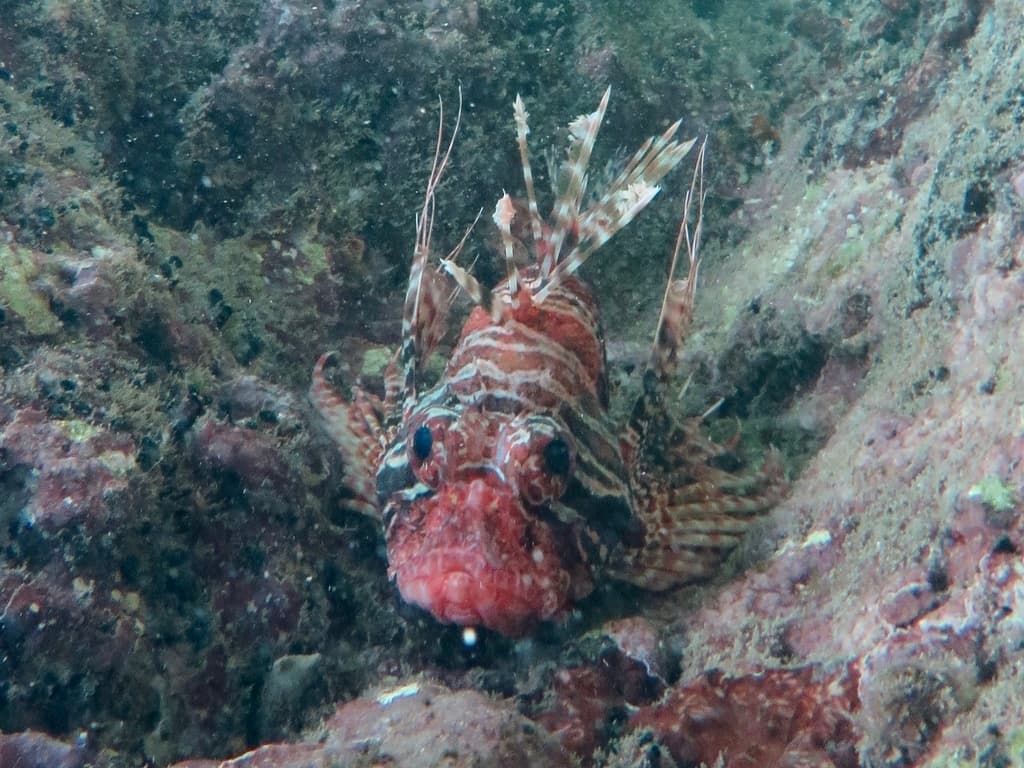
(c) seasav, some rights reserved (CC BY-NC-ND)
Max Size
8"
Min Tank
75 gal
Lifespan
8-12 years
Origin
Western Indian Ocean, East Africa
Diet
Carnivore
Swims
All
About
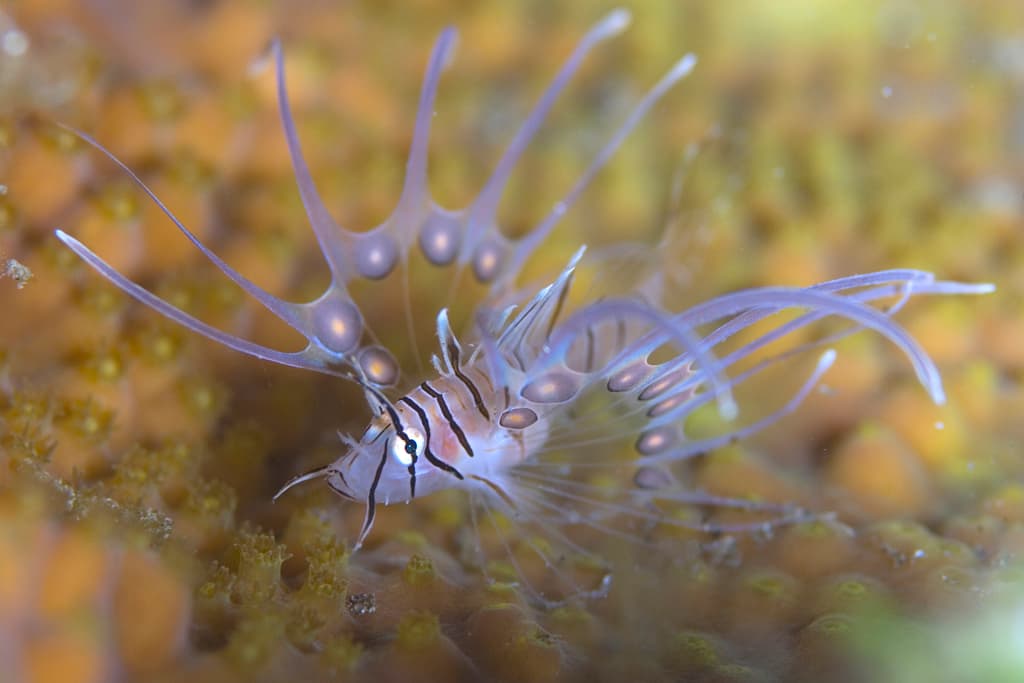
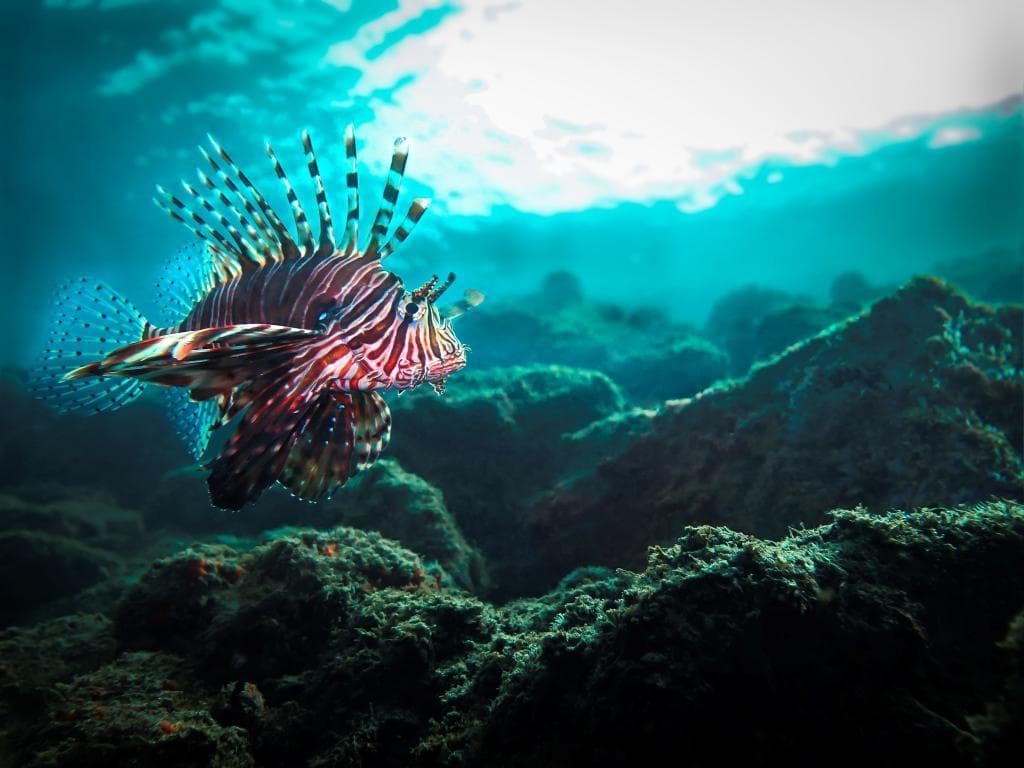
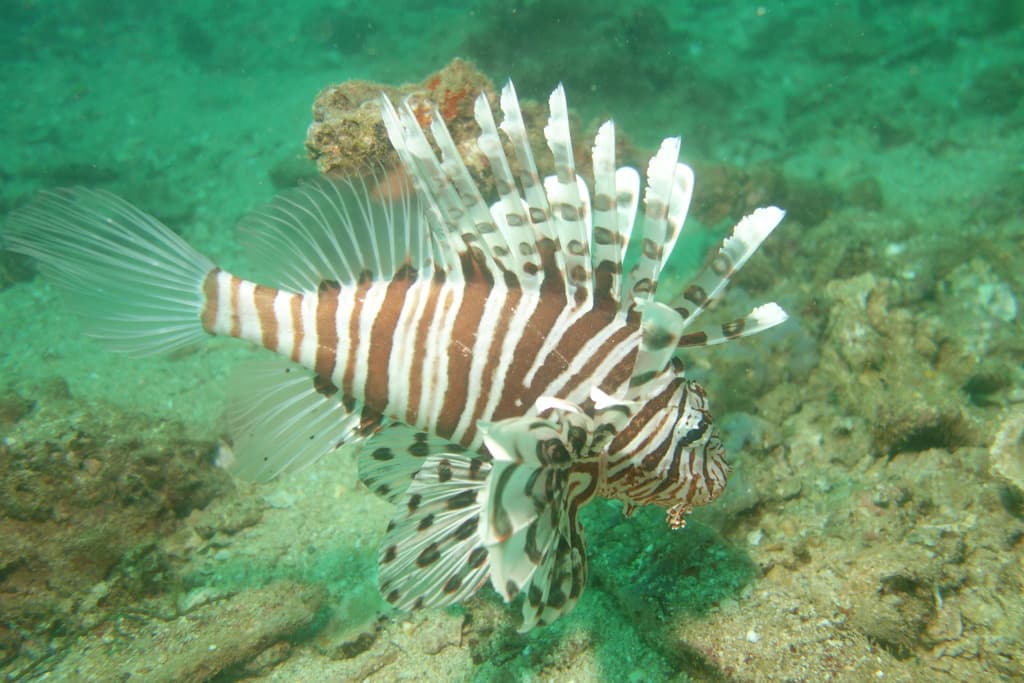
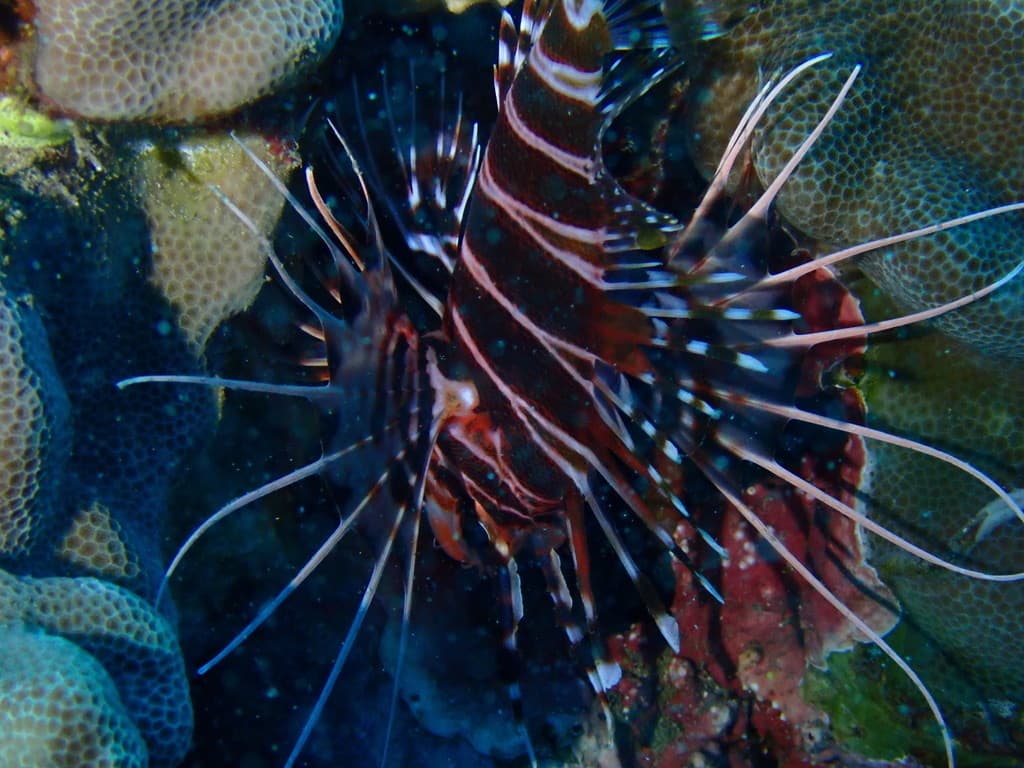
The African Lionfish is a striking and somewhat uncommon lionfish species hailing from the warm coastal waters of the Western Indian Ocean. Distinguished from its more commonly kept relatives by its slightly smaller size and subtly different fin proportions, Pterois mombasae features the classic lionfish silhouette of fanned pectoral fins and elongated dorsal spines. Its body displays alternating bands of reddish-brown and white, often with a slightly more muted tone compared to the bold coloration of the Volitan Lionfish. The pectoral fin membranes extend further between the rays, giving this species a particularly elegant, wing-like appearance when fully spread.
In the wild, the African Lionfish is found along the eastern coast of Africa from Kenya and Mozambique south to South Africa, and extending to Madagascar and nearby island groups. It inhabits rocky reefs, coral outcrops, and ledge overhangs at moderate depths, typically resting motionless during the day and becoming more active at dawn and dusk when it hunts small fish and crustaceans. Like all Pterois species, it uses its expansive pectoral fins to corner and herd prey before striking with remarkable speed.
In the home aquarium, the African Lionfish requires the same cautious respect as all lionfish due to its venomous dorsal, pelvic, and anal fin spines. It is a hardy and adaptable species once established, readily accepting frozen meaty foods after an initial weaning period. A minimum tank size of 75 gallons is recommended, with plenty of rockwork providing caves and overhangs for daytime resting. This species is generally peaceful toward fish too large to eat, but any tankmate small enough to fit in its mouth will eventually be consumed.
Feeding & Diet
Carnivore
African Lionfish are ambush predators that feed on small fish and crustaceans in the wild. In captivity, wean onto frozen silversides, mysis shrimp, krill, and squid using feeding tongs to simulate live prey. Some specimens may require live ghost shrimp or feeder shrimp initially. Feed every two to three days for adults. Avoid relying on freshwater feeder fish long-term as they lack essential marine nutrients.
Compatibility
reef-safepredatorvenomous-spinesambush-huntereats-small-fish
The African Lionfish is peaceful toward fish too large to consume but will readily eat any tankmate small enough to fit in its mouth. Compatible with similarly sized or larger fish including tangs, large angelfish, groupers, and moray eels. Avoid housing with small gobies, blennies, chromis, or ornamental shrimp. Can coexist with other lionfish species in sufficiently large systems.
Check CompatibilityBreeding
Difficult
African Lionfish breeding follows the typical Pterois pattern. Males are slightly larger and may display darker coloration during courtship. The female releases buoyant gelatinous egg masses near the surface, which the male fertilizes externally. Larvae are pelagic and extremely small, requiring rotifers and copepod nauplii as first foods. Captive breeding has rarely been achieved for this species in home aquariums.
Special Requirements
- VENOMOUS dorsal, pelvic, and anal fin spines - use extreme caution during maintenance
- Provide caves and overhangs for daytime resting spots
- Feeding tongs essential for safe, targeted feeding
- Will consume any fish or shrimp small enough to swallow
- Powerful protein skimmer recommended due to high-protein diet
Water Parameters
Temperature72–80°F
Specific Gravity1.02–1.026 sg
pH8.1–8.4
Alkalinity8–12 dKH
Coloration
redbrownwhitecream
Tags
reef-safepredatorvenomous-spinesambush-huntereats-small-fish