IntermediatePeacefulReef Safe with Caution
Leaf Scorpionfish
Taenianotus triacanthus
Family: Scorpaenidae · Lionfish & Scorpionfish
Also known as: Leaf Fish, Paper Scorpionfish, Paperfish
(c) Shigeru Harazaki, all rights reserved
Max Size
4"
Min Tank
30 gal
Lifespan
5-10 years
Origin
Indo-Pacific, Red Sea
Diet
Carnivore
Swims
Bottom
About
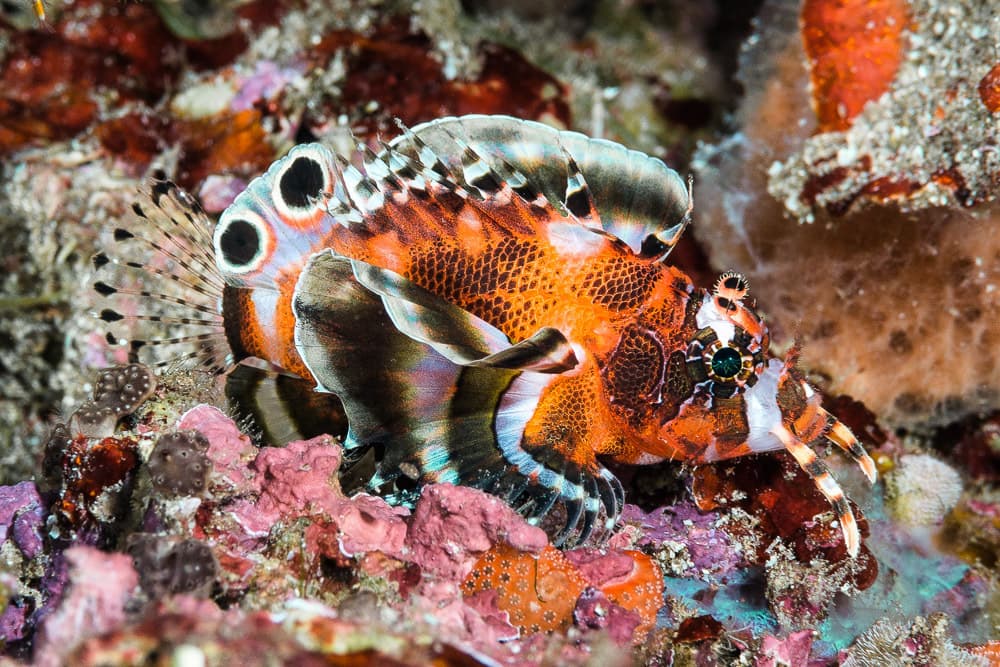
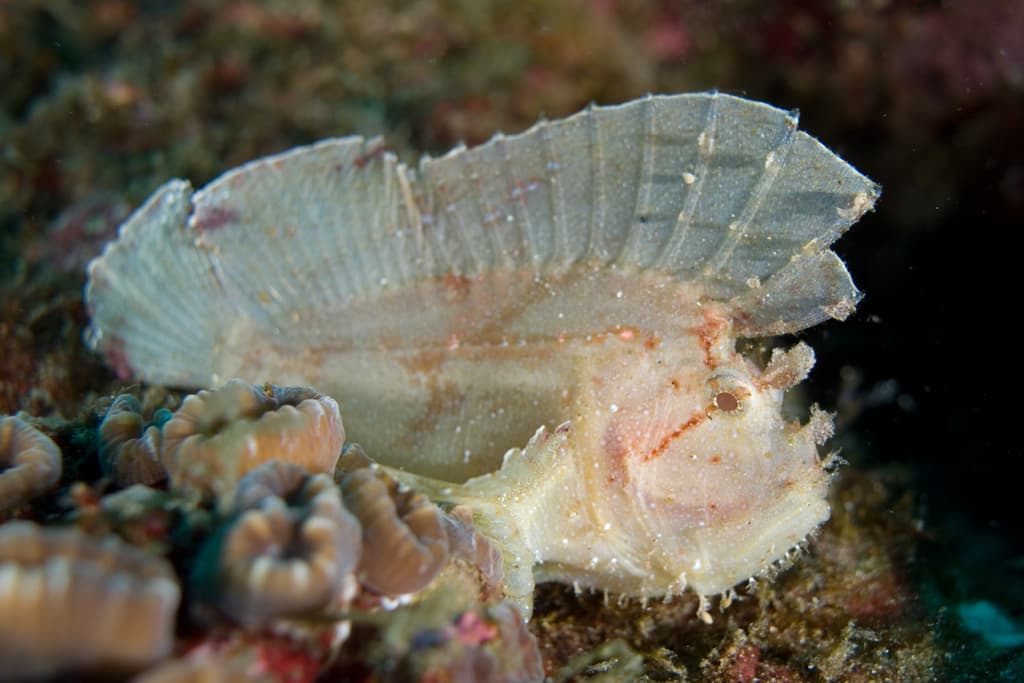
The Leaf Scorpionfish is one of the most remarkable examples of camouflage in the marine world. Its highly compressed, leaf-shaped body is adorned with frilly skin appendages and irregular edges that perfectly mimic a dead leaf or piece of algae-covered debris. This species comes in a stunning variety of color morphs including white, yellow, pink, red, brown, green, and black, and individual fish can slowly change color over weeks or months, often shifting dramatically after a periodic skin shed.
In the wild and in the aquarium, the Leaf Scorpionfish employs a fascinating hunting strategy. It perches on rocks or coral rubble and sways gently back and forth, mimicking a piece of debris rocking in the current. Small fish and shrimp that venture too close, mistaking the scorpionfish for harmless detritus, are engulfed in a lightning-fast strike. This rocking behavior is mesmerizing to observe and is one of the species' most endearing traits.
The Leaf Scorpionfish is a relatively easy species to maintain provided its dietary needs are met. Like other scorpaenidae, it possesses venomous dorsal spines, though they are less potent than those of true lionfish. The primary challenge is feeding, as most specimens initially require live foods such as ghost shrimp or small feeder fish. With patience, many can be weaned onto frozen foods presented with feeding tongs. Its small size makes it suitable for nano predator setups, but care must be taken to avoid housing it with any fish or shrimp small enough to become prey.
Feeding & Diet
Carnivore
Leaf Scorpionfish are ambush predators that feed on small fish and crustaceans. In captivity, offer live ghost shrimp initially, then wean onto frozen mysis shrimp, silversides, and krill using feeding tongs. Wiggle food to simulate live prey movement. Feed two to three times per week once established. Avoid overfeeding.
Compatibility
reef-cautionpeacefulpredatorvenomous-spinesambush-huntercamouflage
The Leaf Scorpionfish is completely peaceful toward fish too large to consume but will ambush and swallow surprisingly large prey relative to its body size. Avoid housing with small gobies, blennies, dartfish, or ornamental shrimp. Compatible with other scorpionfish, dwarf lionfish, and medium-sized peaceful species. Its sedentary nature means it should not compete with aggressive feeders.
Check CompatibilityBreeding
Difficult
Leaf Scorpionfish have been spawned in captivity on rare occasions. Females release a gelatinous egg mass that floats near the surface. Larvae are planktonic and extremely small, requiring specialized first foods. Captive breeding is uncommon and documentation is limited.
Special Requirements
- VENOMOUS dorsal spines - exercise caution during maintenance
- May require live food initially before weaning to frozen
- Low to moderate water flow preferred
- Will eat any fish or shrimp small enough to swallow
- Periodically sheds skin - this is normal behavior
- May change color over weeks or months
- Feeding tongs recommended
Water Parameters
Temperature74–80°F
Specific Gravity1.02–1.026 sg
pH8.1–8.4
Alkalinity8–12 dKH
Coloration
whiteyellowpinkredbrowngreenblack
Tags
reef-cautionpeacefulpredatorvenomous-spinesambush-huntercamouflage