IntermediatePeacefulReef Safe
Saddleback Hogfish
Bodianus bilunulatus
Family: Labridae · Hogfish
Also known as: Tarry Hogfish, Saddleback Wrasse, Hawaiian Hogfish
(c) Itai Grisaru, some rights reserved (CC BY-NC)
Max Size
20"
Min Tank
180 gal
Lifespan
8-15 years
Origin
Indo-Pacific, Hawaii
Diet
Carnivore
Swims
All
About
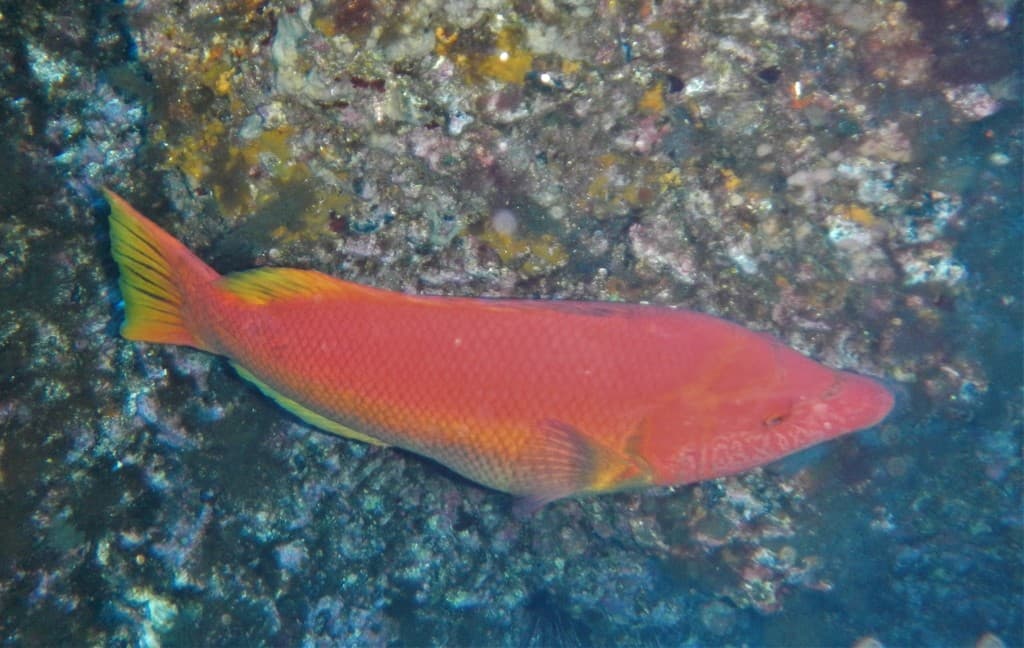
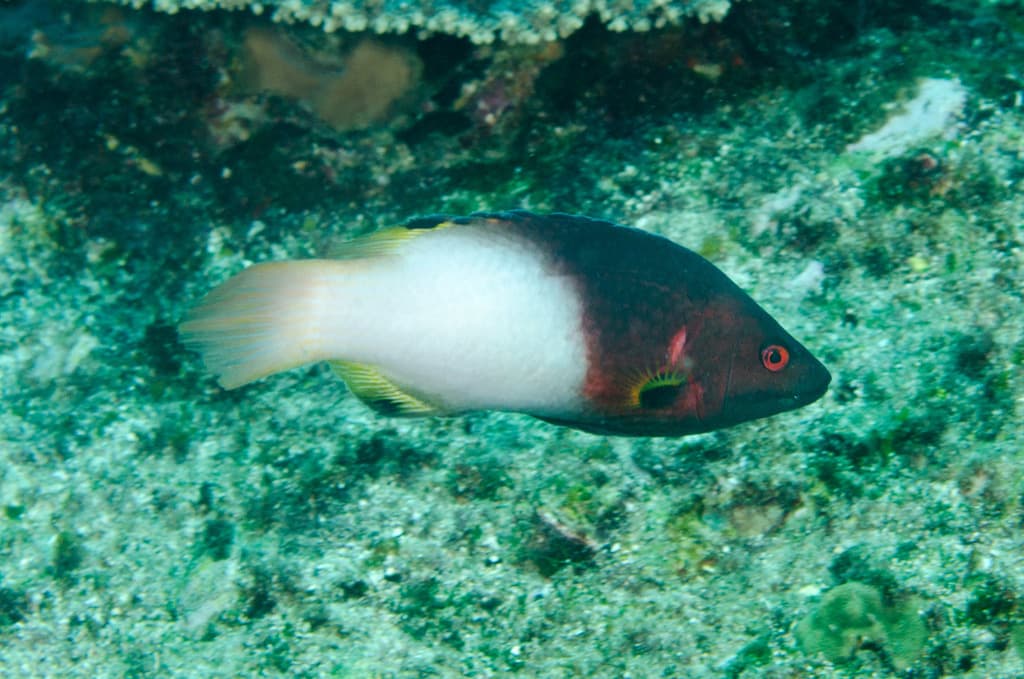
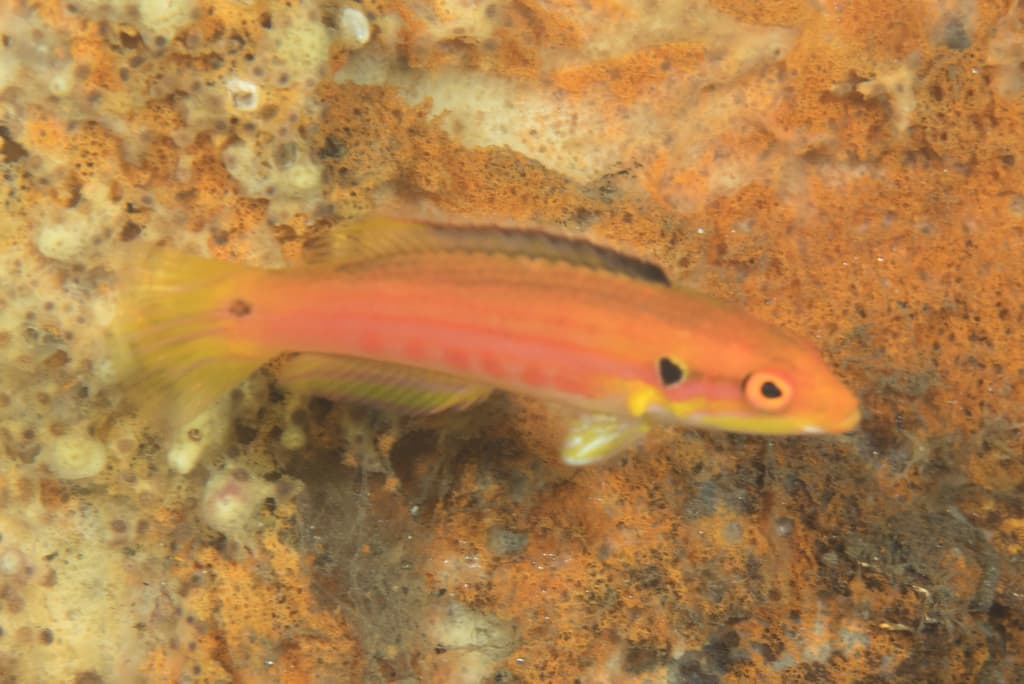
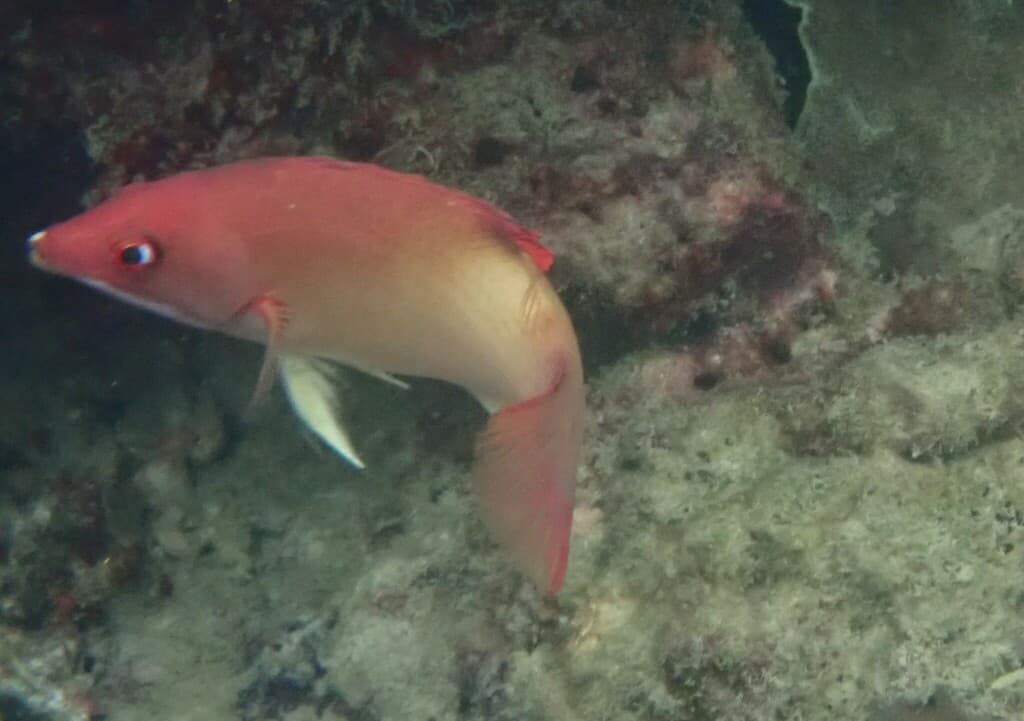
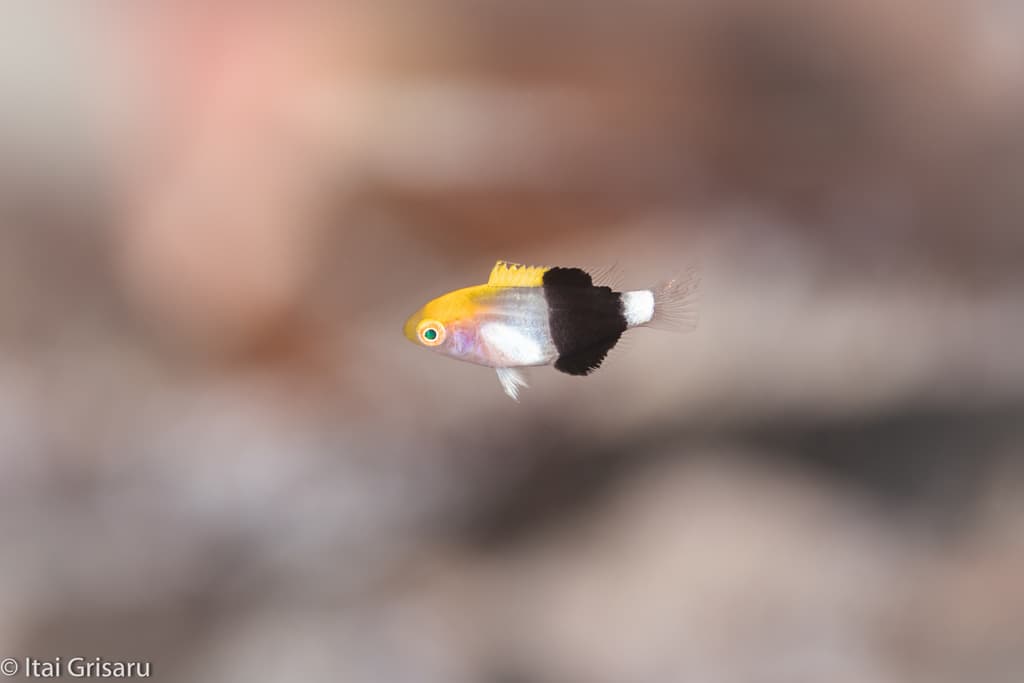
The Saddleback Hogfish is a large and handsome member of the Bodianus genus, named for the two distinctive dark saddle-shaped markings on its dorsal area. Adults display a cream to white body with bold black saddle patches and a striking yellow or gold tail, creating an elegant and instantly recognizable appearance. This species undergoes significant color changes from juvenile to adult, with juveniles showing a predominantly dark body.
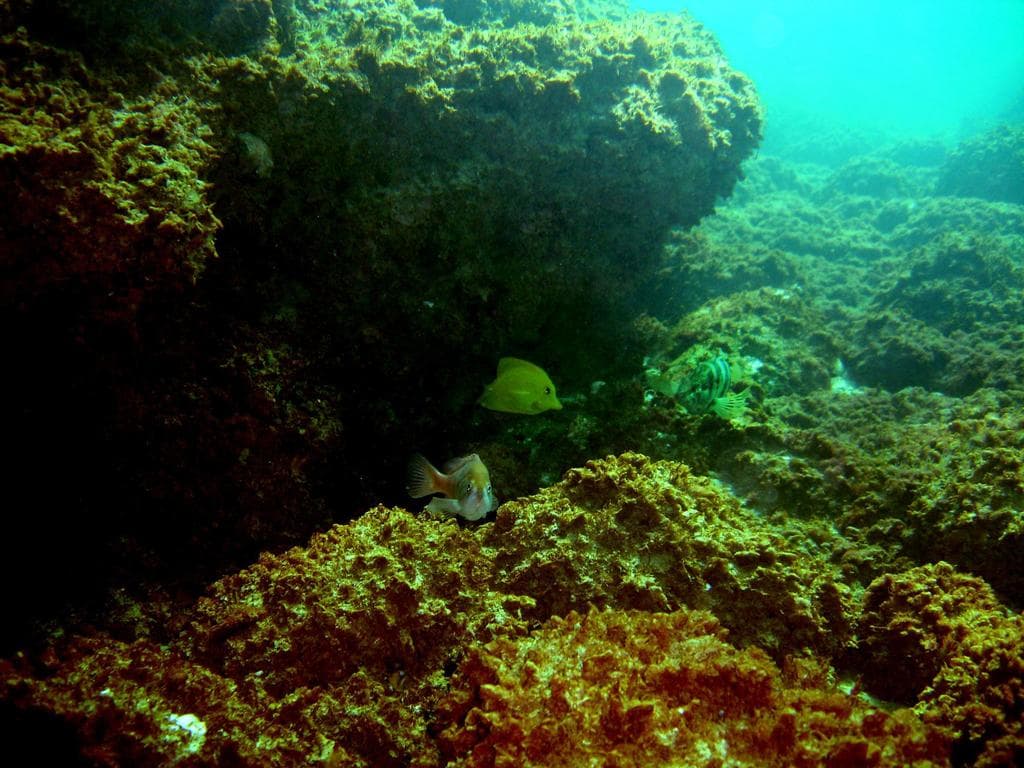
In the wild, Saddleback Hogfish are found on coral reefs and rocky slopes throughout the Indo-Pacific, including the Hawaiian Islands, at depths of 3 to 60 meters. They are active foragers that patrol reef structures in search of crustaceans, mollusks, and other invertebrates. Their strong jaws allow them to crush hard-shelled prey with ease. They are typically solitary or found in small haremic groups.
In captivity, the Saddleback Hogfish is a hardy and long-lived species that adapts well to aquarium life. Growing to around 20 inches, it requires a spacious tank of at least 180 gallons. Despite its size, it is generally peaceful toward other fish, making it a good candidate for large community FOWLR or reef setups where its natural grace and striking pattern can be fully appreciated.
Feeding & Diet
Carnivore
A carnivore that feeds on crustaceans, mollusks, and worms. In captivity, offer frozen mysis shrimp, krill, chopped seafood, and quality marine pellets. Will also consume pest bristle worms. Feed twice daily to maintain health and coloration.
Compatibility
reef-safecommunity-compatiblepeacefullarge-wrassehardy
Despite its size, the Saddleback Hogfish is one of the more peaceful large hogfish species. It coexists well with tangs, angelfish, clownfish, and other community species. May occasionally eat very small ornamental shrimp but generally leaves corals and larger invertebrates alone.
Check CompatibilityBreeding
Not bred in captivity
Saddleback Hogfish are protogynous hermaphrodites that form small haremic groups in the wild. Captive breeding has not been achieved due to the difficulty of raising their pelagic larvae.
Special Requirements
- Requires a large tank of at least 180 gallons due to adult size
- Provide ample rockwork with caves for sleeping and shelter
- Generally reef-safe but may pick at very small ornamental shrimp
- Secure lid essential as this species can jump
- Hardy and disease-resistant once acclimated to aquarium conditions
Water Parameters
Temperature72–80°F
Specific Gravity1.02–1.026 sg
pH8.1–8.4
Alkalinity8–12 dKH
Coloration
whitecreamblack saddlesyellow tailgold
Tags
reef-safecommunity-compatiblepeacefullarge-wrassehardy