BeginnerSemi-AggressiveNot Reef Safe
Golden Stripe Grouper
Grammistes sexlineatus
Family: Serranidae · Groupers & Basslets
Also known as: Sixline Soapfish, Six-striped Soapfish, Golden-striped Grouper, Skunk Grouper
(c) Sonya, all rights reserved
Max Size
12"
Min Tank
75 gal
Lifespan
10-15 years
Origin
Indo-Pacific, Red Sea
Diet
Carnivore
Swims
Bottom
About
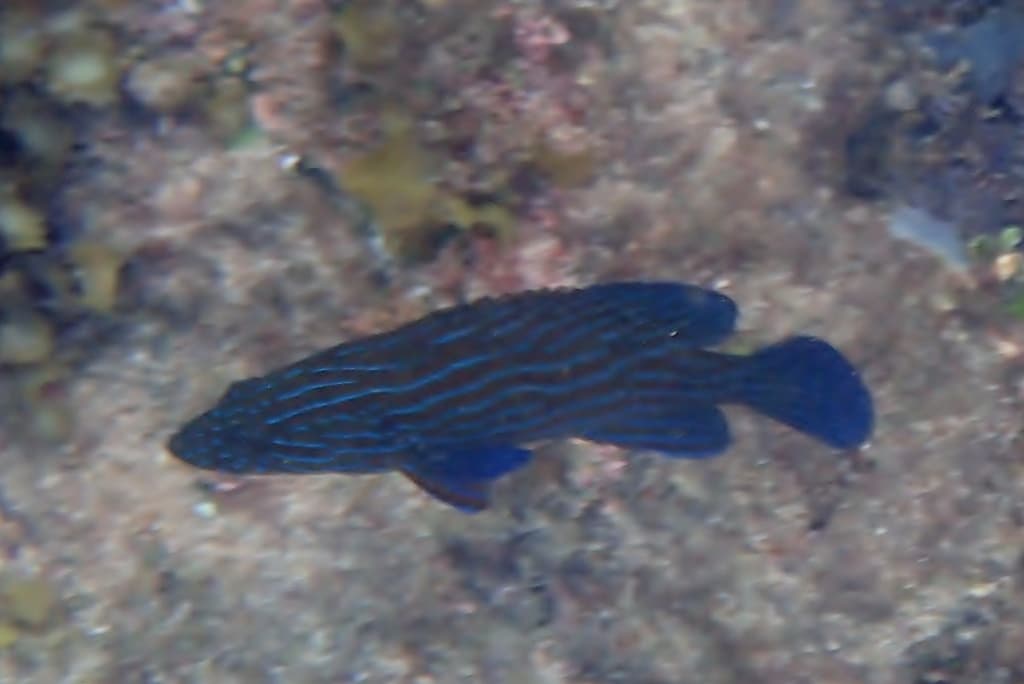
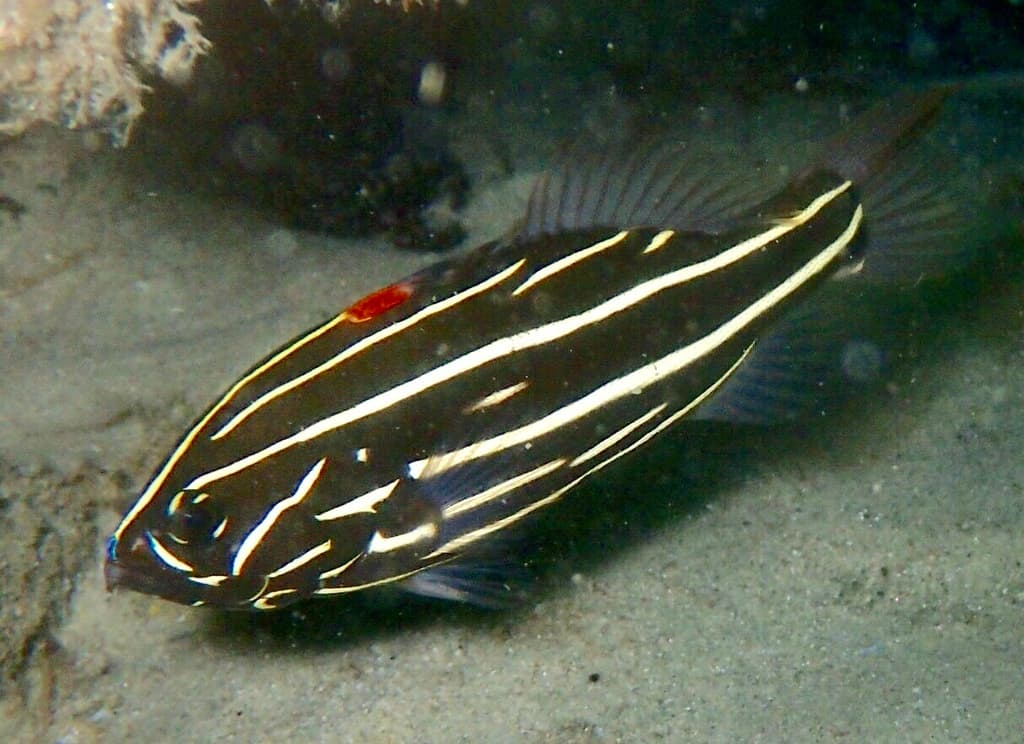
The Golden Stripe Grouper, more commonly known as the Sixline Soapfish, is a distinctive species recognized by its dark brown to black body adorned with bright golden-yellow horizontal stripes. What makes this grouper truly unique is its ability to secrete a skin toxin called grammistin when stressed, which can be harmful or lethal to other fish in an enclosed aquarium system.
In the wild, Golden Stripe Groupers are found across a vast range throughout the Indo-Pacific, inhabiting coral reefs, rocky areas, and lagoons at depths of 1 to 40 meters. Their toxic skin secretion serves as an effective defense mechanism against predators, and their bold striping pattern serves as warning coloration.
In captivity, this species is surprisingly hardy and relatively easy to care for, making it suitable for beginners with appropriately sized tanks. At 12 inches maximum, a 75-gallon tank is sufficient. However, the skin toxin poses a serious risk to tankmates, particularly in smaller systems or during transport. Careful tank management and awareness of this trait are essential for successful keeping.
Feeding & Diet
Carnivore
A carnivorous predator that feeds on small fish and crustaceans. Readily accepts frozen silversides, krill, shrimp, and carnivore pellets. One of the easier groupers to feed in captivity. Feed every other day for adults and daily for juveniles. Avoid overfeeding.
Compatibility
predatorlarge-fish-onlyFOWLRtoxic-defense
The Golden Stripe Grouper requires careful consideration due to its toxic skin secretion. While generally semi-aggressive, the grammistin toxin it releases when stressed can kill tankmates in enclosed systems. Best kept with larger, robust species in well-filtered tanks. Avoid small fish, ornamental shrimp, and situations that may cause stress leading to toxin release.
Check CompatibilityBreeding
Not bred in captivity
Golden Stripe Groupers are believed to be protogynous hermaphrodites like most groupers. Their reproductive behavior in the wild is not well documented. Captive breeding has not been achieved.
Special Requirements
- Releases grammistin skin toxin when stressed that can harm or kill tankmates
- Use caution during transport and acclimation to minimize stress-induced toxin release
- Strong filtration with activated carbon recommended to absorb potential toxin release
- Will consume any fish small enough to swallow
- Never house in an enclosed system without adequate filtration
Water Parameters
Temperature72–78°F
Specific Gravity1.02–1.025 sg
pH8.1–8.4
Alkalinity8–12 dKH
Coloration
blackdark browngolden yellow stripes
Tags
predatorlarge-fish-onlyFOWLRtoxic-defense