IntermediateSemi-AggressiveNot Reef Safe
Lyretail Grouper
Variola louti
Family: Serranidae · Groupers & Basslets
Also known as: Lyretail Anthias Grouper, Coronation Grouper, Lunar-tail Grouper, Moon-tail Rockcod
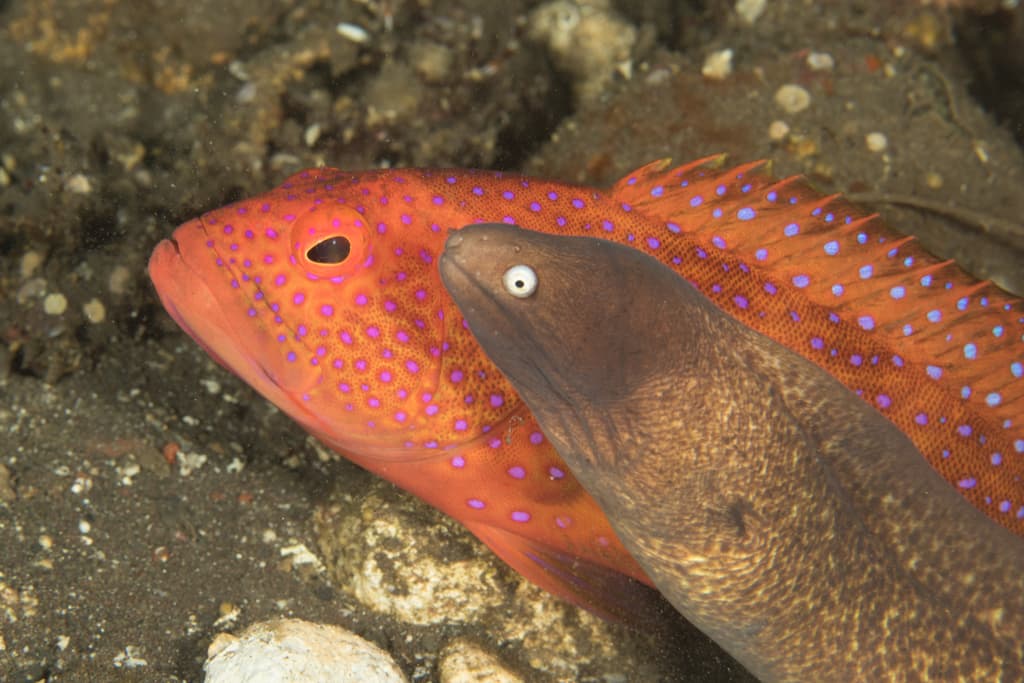
(c) Mark Rosenstein, some rights reserved (CC BY-NC)
Max Size
32"
Min Tank
300 gal
Lifespan
15-25 years
Origin
Indo-Pacific, Red Sea
Diet
Carnivore
Swims
Middle
About
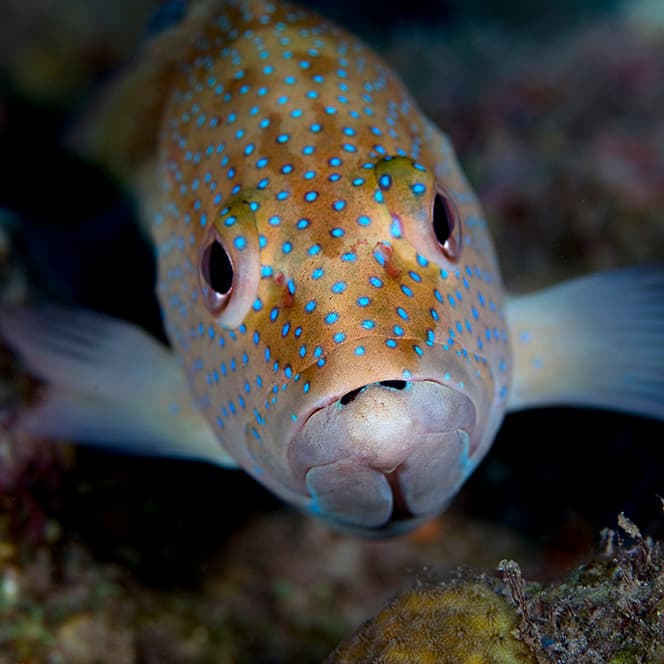
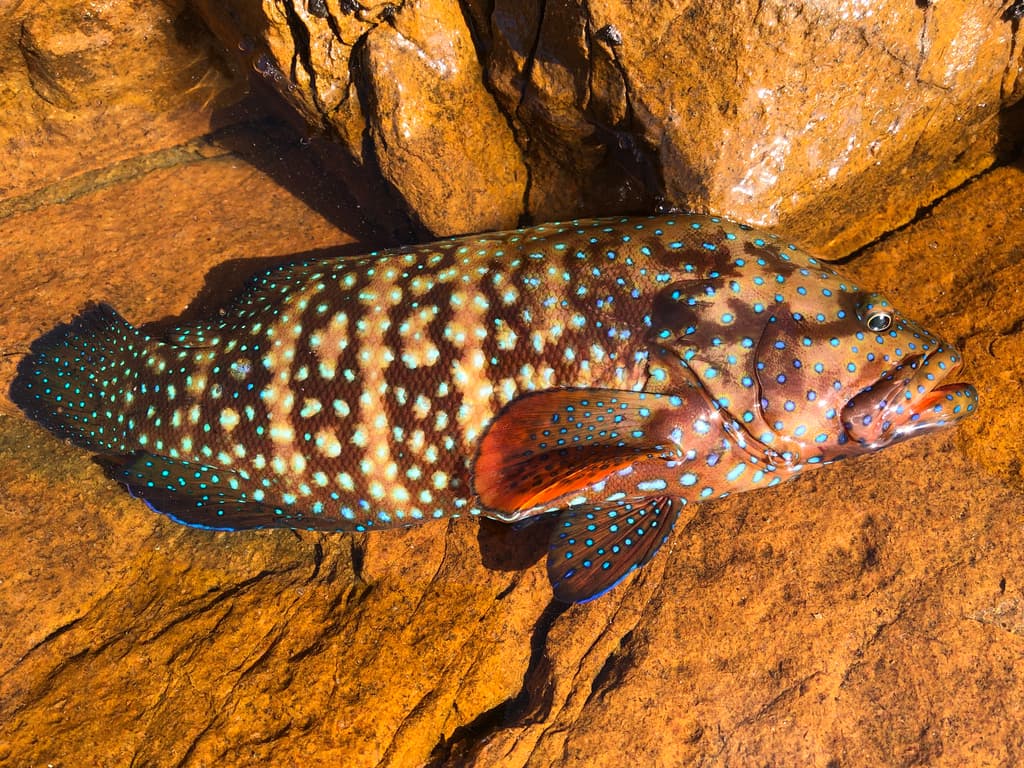
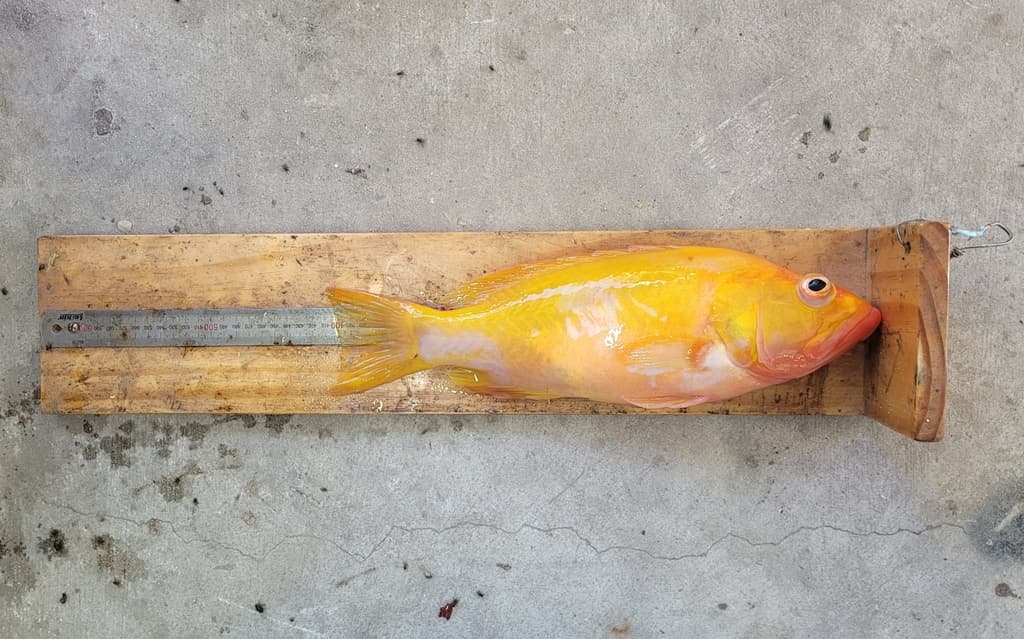
The Lyretail Grouper is a large, spectacularly colored predatory fish named for its distinctive crescent-shaped or lyre-shaped tail fin. Adults display a vivid red to orange-red body liberally sprinkled with small blue or purple spots, while the trailing edges of the caudal fin are elongated into graceful, sweeping points that give the species its common name. Juveniles tend to be more orange-yellow and develop their brilliant adult coloration as they grow. At a potential size of 32 inches, this is among the largest grouper species available to aquarists.
In the wild, Variola louti is widely distributed throughout the Indo-Pacific, from the Red Sea and East Africa to the Western Pacific and Australia. It is a reef-associated species found along steep outer reef slopes and drop-offs, typically at depths of 3 to 250 meters. It is a powerful, fast-swimming predator that actively hunts smaller fish, unlike the more sedentary ambush style of many other grouper species. Its speed and agility make it one of the more active members of the grouper family.
In the aquarium, the Lyretail Grouper is a commanding presence that requires a very large system of at least 300 gallons to accommodate its substantial adult size. Despite its predatory nature, it is generally less aggressive toward tankmates than many other large groupers, provided companions are too large to be eaten. It acclimates well to captivity, readily accepting frozen and prepared foods. However, its rapid growth rate and eventual massive size mean that most home aquariums are ultimately too small, and this species is best suited for public aquaria or exceptionally large custom installations.
Feeding & Diet
Carnivore
The Lyretail Grouper is a carnivore that actively hunts smaller fish in the wild. In captivity, offer a varied diet of frozen silversides, lance fish, squid, raw shrimp, krill, and high-quality carnivore pellets. Unlike many groupers, this species is an active hunter rather than a sit-and-wait predator, and it feeds enthusiastically. Feed every other day for adults and daily for growing juveniles. Avoid fatty, low-quality foods to prevent liver disease.
Compatibility
predatorlarge-fish-onlyFOWLRhigh-bioload
The Lyretail Grouper is semi-aggressive and will eat any tankmate it can overpower and swallow. However, it is less territorial than many other large grouper species and can coexist with similarly sized or larger robust fish. Suitable companions include large tangs, adult angelfish, moray eels, and other large groupers in appropriately sized systems. Not safe with any small to medium-sized fish, ornamental shrimp, or invertebrates.
Check CompatibilityBreeding
Not bred in captivity
Lyretail Groupers are protogynous hermaphrodites, beginning life as females and transitioning to males at larger sizes. They are pelagic spawners, releasing eggs into the water column during group spawning events. Captive breeding has not been accomplished due to the species' enormous adult size and the complexity of its reproductive biology.
Special Requirements
- Requires a very large tank of 300+ gallons — grows to 32 inches
- Active swimmer that needs ample open swimming space
- Heavy bioload — requires robust filtration and frequent water changes
- Will eat any fish small enough to swallow
- Fast growth rate — ensure adequate long-term housing
- Best suited for experienced aquarists with very large systems
Water Parameters
Temperature72–78°F
Specific Gravity1.02–1.025 sg
pH8.1–8.4
Alkalinity8–12 dKH
Coloration
redorangeblue spotspurple spots
Tags
predatorlarge-fish-onlyFOWLRhigh-bioload