IntermediateSemi-AggressiveNot Reef Safe
Blue-line Grouper
Cephalopholis formosa
Family: Serranidae · Groupers & Basslets
Also known as: Bluelined Hind, Blue-lined Rockcod, Formosa Grouper
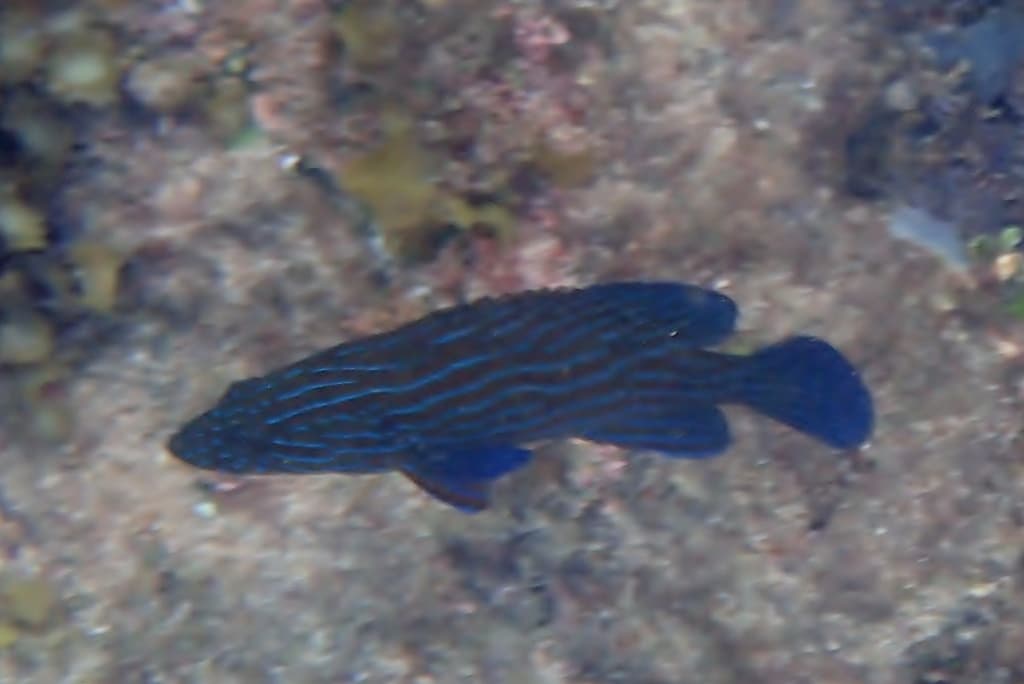
(c) Nicola Crockford, some rights reserved (CC BY)
Max Size
13"
Min Tank
125 gal
Lifespan
10-15 years
Origin
Indo-Pacific, Indian Ocean
Diet
Carnivore
Swims
Bottom
About
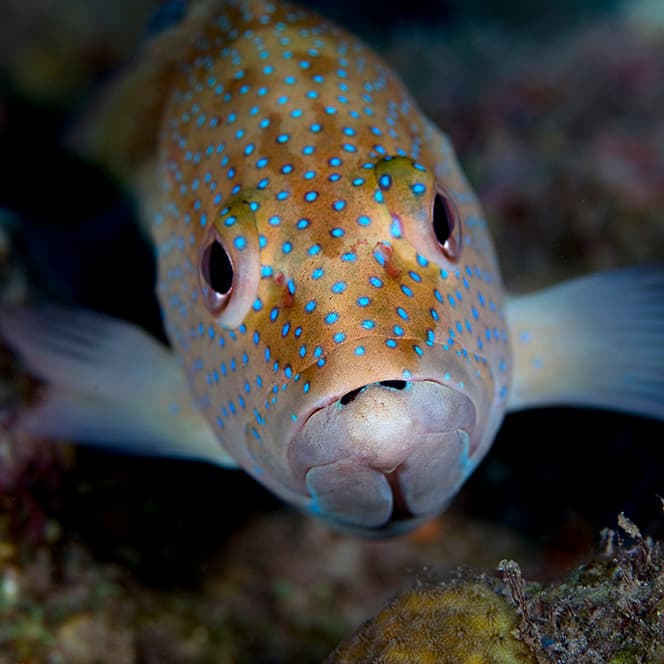
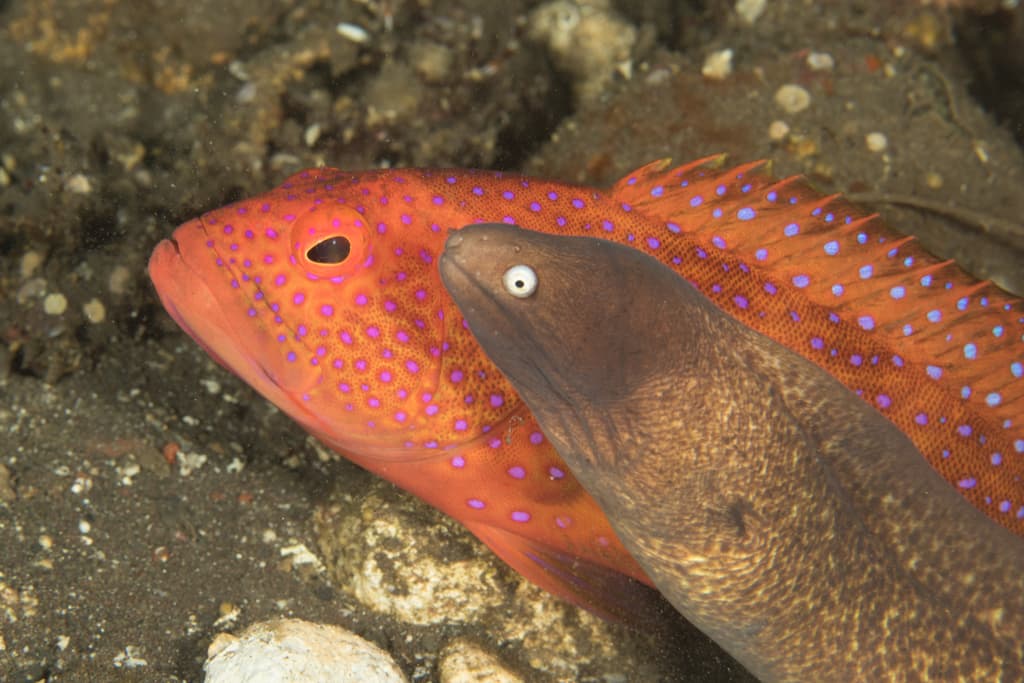
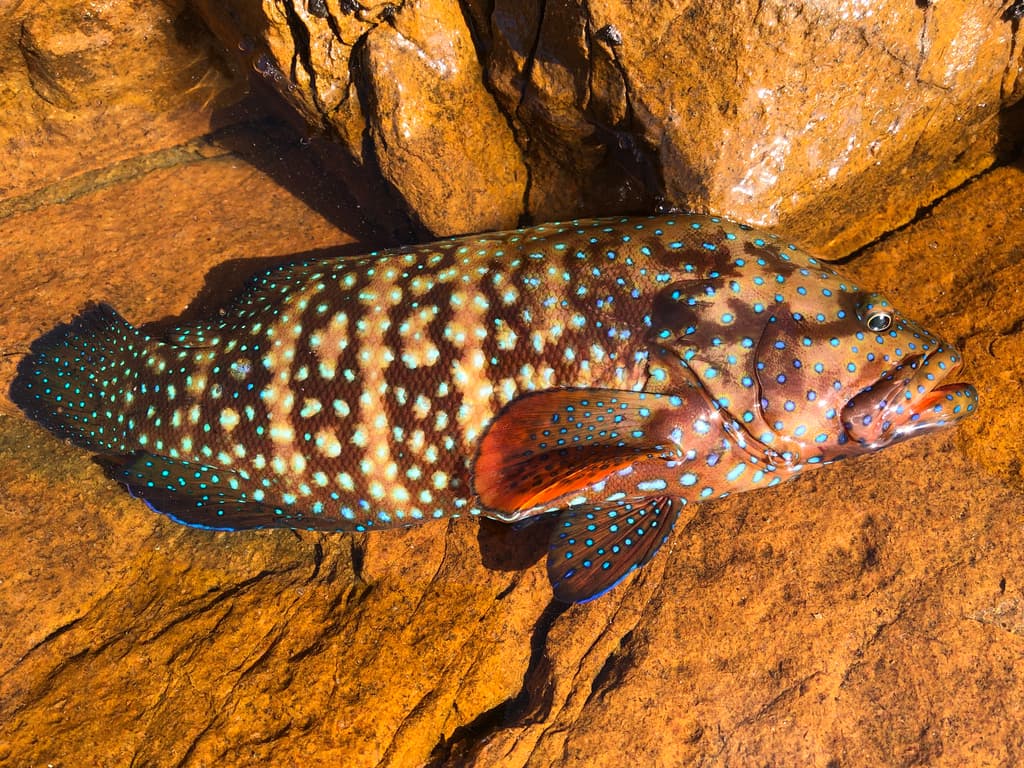
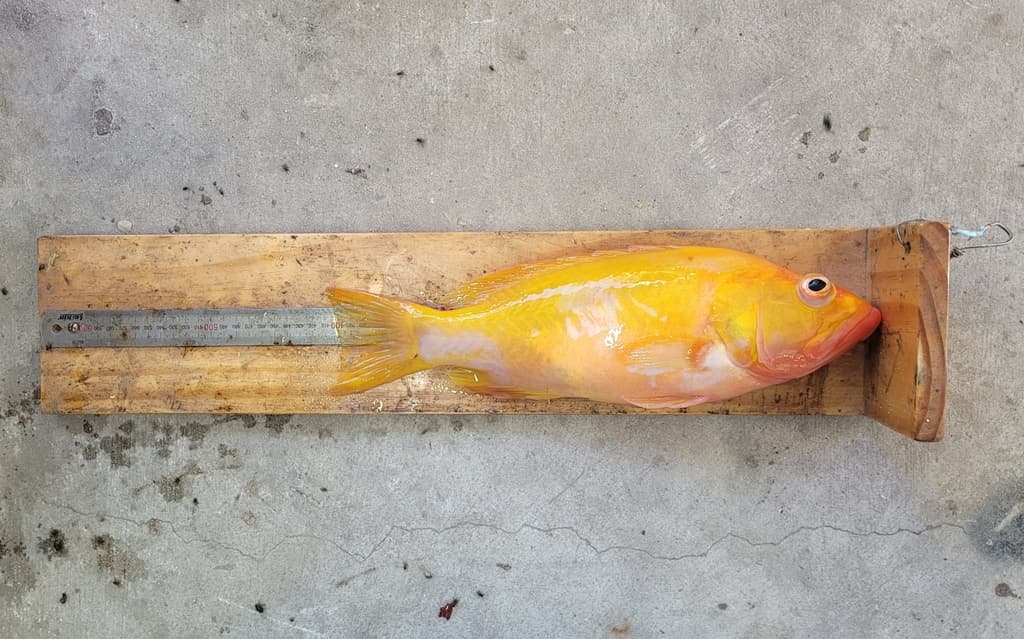
The Blue-line Grouper is an attractive and moderately sized member of the Cephalopholis genus, distinguished by its warm brown to olive body adorned with striking blue spots and fine blue lines that trace across the head and body. The pattern of blue markings varies between individuals and becomes more pronounced as the fish matures, giving each specimen a unique and handsome appearance. At a maximum size of around 13 inches, it falls into the mid-range of aquarium grouper sizes.
In the wild, Cephalopholis formosa inhabits coral reefs, rocky slopes, and reef flats throughout the Indo-Pacific region, from the eastern Indian Ocean to the Western Pacific. It is typically found at moderate depths of 10 to 40 meters, where it establishes territories among coral formations and rocky overhangs. Like other members of its genus, it is an ambush predator that feeds primarily on small fish and crustaceans, using its large mouth and explosive acceleration to capture prey that ventures too close.
In the aquarium, the Blue-line Grouper is a hardy and adaptable species that adjusts well to captive conditions once properly acclimated. It requires a minimum tank size of 125 gallons with plenty of rockwork arranged to create caves and overhangs for territorial establishment. While it is generally peaceful toward fish too large to eat, it is decidedly not reef-safe and will readily consume ornamental shrimp, crabs, and small fish. It makes an excellent centerpiece for a fish-only or FOWLR predator community tank.
Feeding & Diet
Carnivore
The Blue-line Grouper is a carnivore that feeds on smaller fish and crustaceans in the wild. In captivity, offer a varied diet of frozen silversides, krill, raw shrimp, squid, and high-quality carnivore pellets. Feed every other day for adults and daily for juveniles. Avoid overfeeding, as groupers are susceptible to fatty liver disease from excessive or nutritionally poor diets.
Compatibility
predatorlarge-fish-onlyFOWLRterritorial
The Blue-line Grouper is semi-aggressive and territorial, particularly toward fish of similar size and shape. It will consume any tankmate small enough to swallow. Best kept with similarly sized or larger robust species such as tangs, large angelfish, triggerfish, and other groupers in a large system. Not safe with small fish, ornamental shrimp, or most invertebrates. Provide plenty of territory to minimize aggression.
Check CompatibilityBreeding
Not bred in captivity
Blue-line Groupers are protogynous hermaphrodites, starting life as females and transitioning to males as they grow larger and more dominant. Captive breeding has not been accomplished due to the species' size requirements and complex courtship behaviors involving pelagic egg release in open water.
Special Requirements
- Requires a tank of 125+ gallons with ample rockwork and caves
- Will eat any fish or shrimp small enough to fit in its mouth
- Provide strong filtration to handle heavy bioload
- Feed a varied, high-quality protein diet to prevent fatty liver disease
- Territorial — provide distinct hiding areas to reduce aggression
Water Parameters
Temperature72–78°F
Specific Gravity1.02–1.025 sg
pH8.1–8.4
Alkalinity8–12 dKH
Coloration
brownoliveblue spotsblue lines
Tags
predatorlarge-fish-onlyFOWLRterritorial