AdvancedSemi-AggressiveNot Reef SafeIUCN: Least Concern
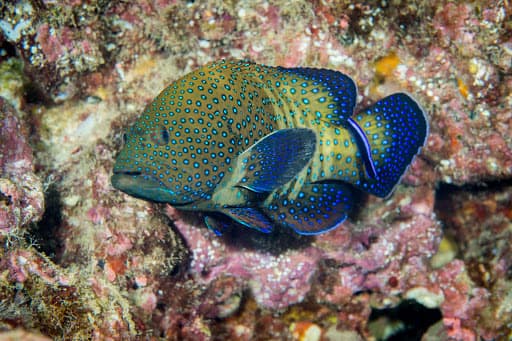
Blue Dot Grouper
Cephalopholis argus
Family: Serranidae · Groupers & Basslets
Also known as: Peacock Hind, Peacock Grouper, Argus Grouper, Blue-Spotted Grouper
(c) David R, some rights reserved (CC BY-NC)
Max Size
24"
Min Tank
180 gal
Lifespan
15-20 years
Origin
Indo-Pacific, Red Sea
Diet
Carnivore
Swims
Middle
Did You Know?
- Blue Dot Groupers were intentionally introduced to Hawaiian waters in the 1950s for sport fishing and have since become an invasive species
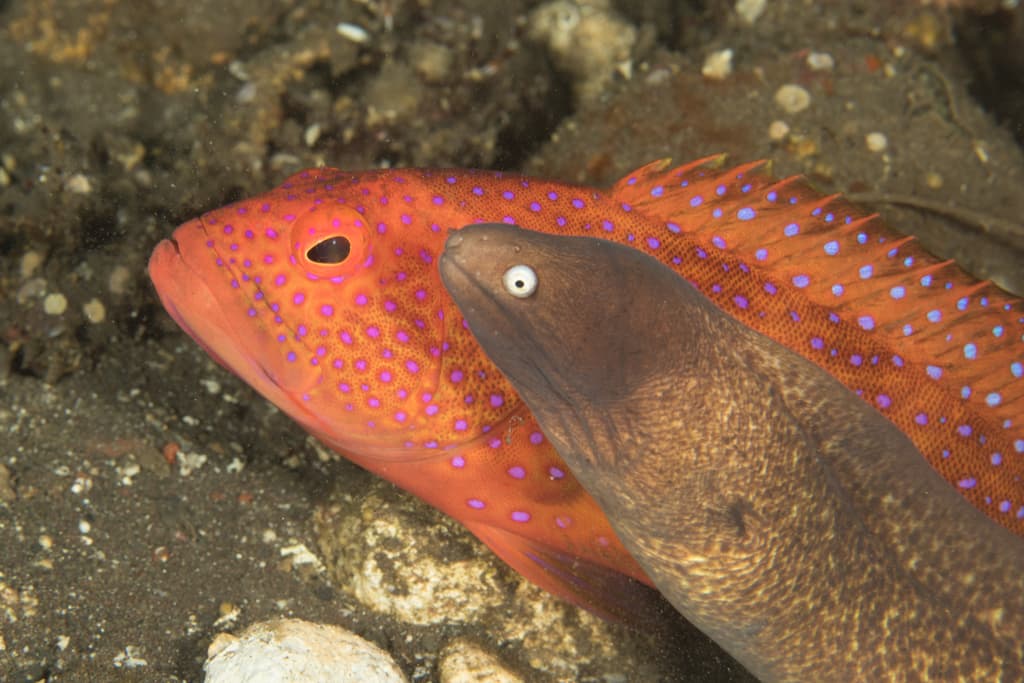
- They are known to follow octopuses and moray eels during hunts, catching fish that flee from the other predator
- Despite their spots looking decorative, each ocellus may serve as a false eye to confuse predators about which end is the head
About
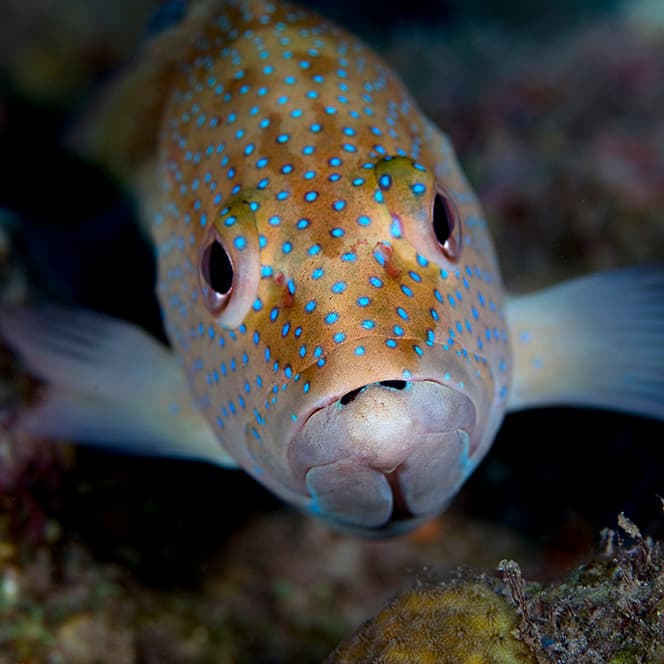
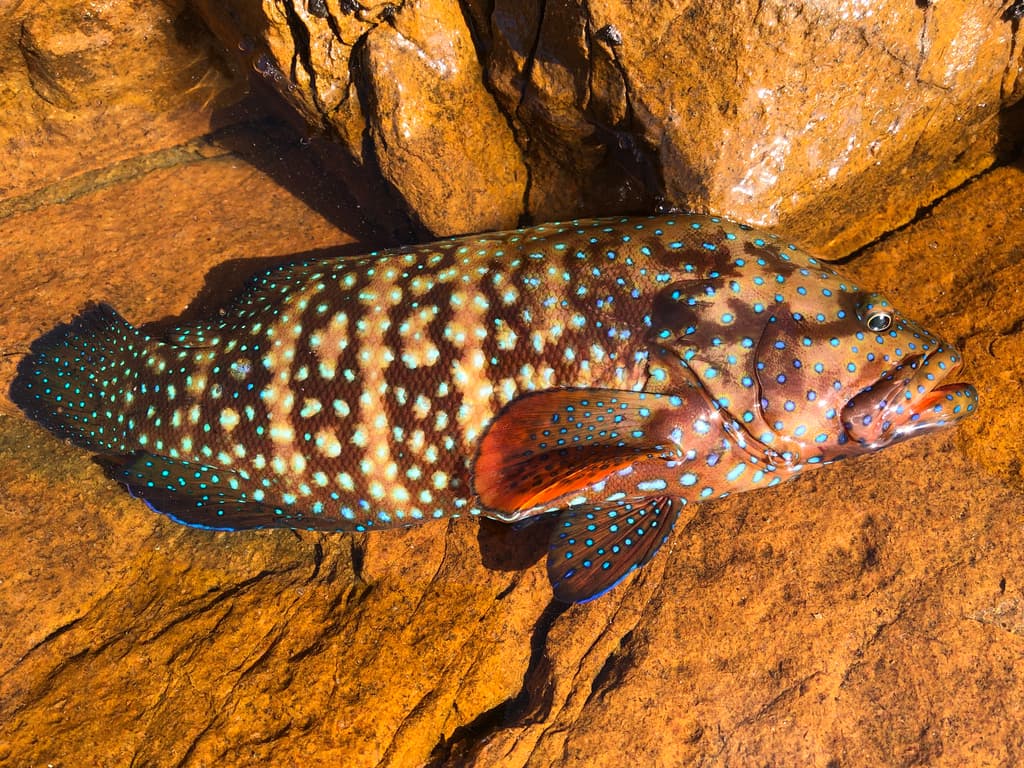
The Blue Dot Grouper, also known as the Peacock Hind, is a large and robust predatory fish distinguished by its dark brown body covered in vivid blue-rimmed ocelli (eye-spots). This species is one of the most widespread groupers in the Indo-Pacific, found from the Red Sea to the Hawaiian Islands.
In the wild, Blue Dot Groupers are apex predators on coral reefs, primarily hunting smaller reef fish and crustaceans during dawn and dusk. They are known for their intelligence and territorial behavior, often claiming specific sections of reef as their own and defending them vigorously against conspecifics.
In the home aquarium, this is strictly an advanced-level fish due to its large adult size (up to 24 inches), aggressive temperament, and substantial space requirements. A minimum tank size of 180 gallons is essential, with larger being better. They are not reef-safe and will consume any fish or crustacean small enough to eat. However, their intelligence, personality, and striking appearance make them rewarding pets for experienced aquarists with appropriately sized systems.
Feeding & Diet
Carnivore
A voracious carnivore that requires a diet of meaty foods. Offer frozen silversides, lance fish, squid, shrimp, and high-quality carnivore pellets. Juveniles should be fed daily; adults can be fed every 2-3 days. Vary the diet to prevent nutritional deficiencies and avoid feeding live freshwater feeder fish.
Compatibility
predatorlarge-fish-onlyFOWLRhigh-bioloadaggressive-feeder
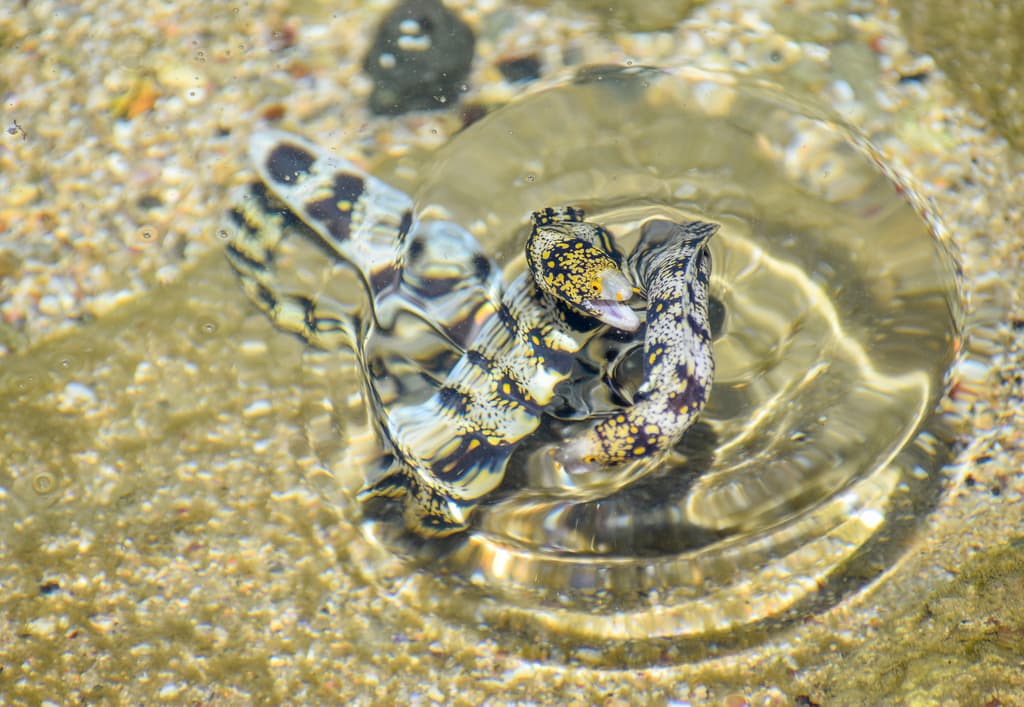
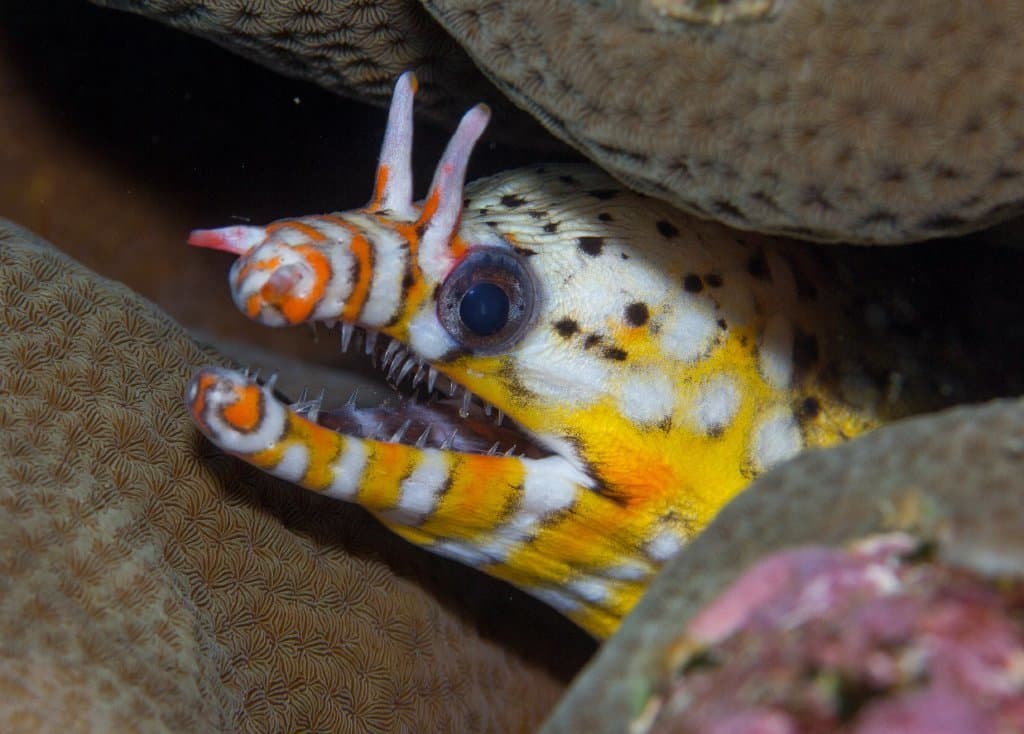
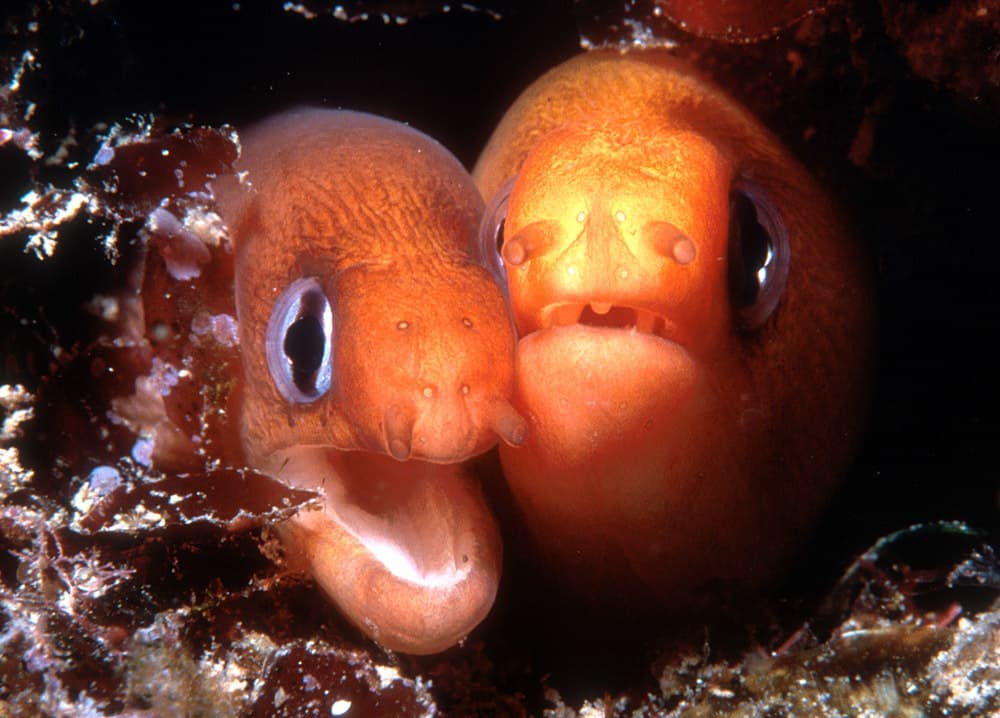
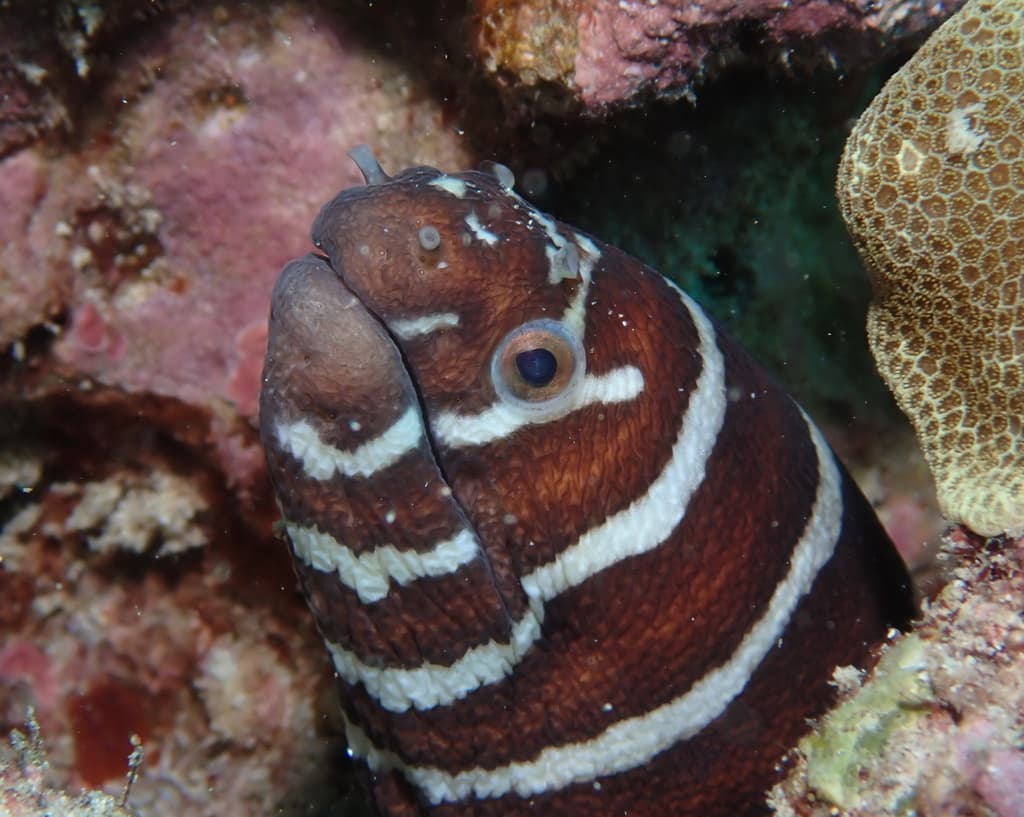
Blue Dot Groupers are aggressive predators best kept with large, robust tankmates. Suitable companions include large tangs, triggerfish, large angelfish, moray eels, and other similarly sized groupers. Never house with small fish, ornamental shrimp, or delicate species. Best suited for large predator FOWLR systems.
Check CompatibilityBreeding
Not bred in captivity
Like other members of the Cephalopholis genus, this species is a protogynous hermaphrodite. Spawning involves pelagic egg release in open water and has not been replicated in captive settings due to the species' large size and complex reproductive requirements.
Special Requirements
- Requires a very large aquarium (180+ gallons minimum)
- Powerful filtration needed due to heavy bioload from carnivorous diet
- Secure tank lid — can jump when startled
- Will eat any fish or invertebrate small enough to swallow
Water Parameters
Temperature72–78°F
Specific Gravity1.02–1.025 sg
pH8.1–8.4
Alkalinity8–12 dKH
Coloration
brownblue spotsdark
Tags
predatorlarge-fish-onlyFOWLRhigh-bioloadaggressive-feeder
Scientific Resources & Research
Best Tank Mates
Sources & References
- [1]FishBase: Cephalopholis argusFishBase
- [2]IUCN Red List: Cephalopholis argusIUCN