BeginnerPeacefulReef Safe
Sharptail Eel
Myrichthys breviceps
Family: Ophichthidae · Eels
Also known as: Sharptail Snake Eel, Eagle-Spotted Snake Eel
(c) flapack, some rights reserved (CC BY-NC)
Max Size
36"
Min Tank
125 gal
Lifespan
10-15 years
Origin
Indo-Pacific, Caribbean
Diet
Carnivore
Swims
Bottom
About
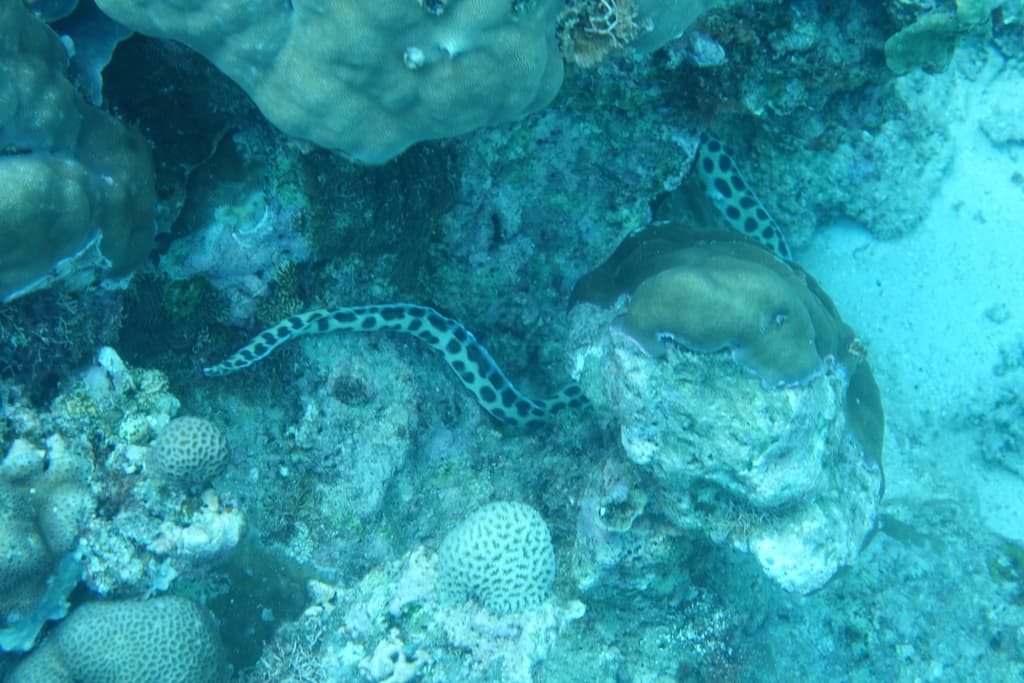
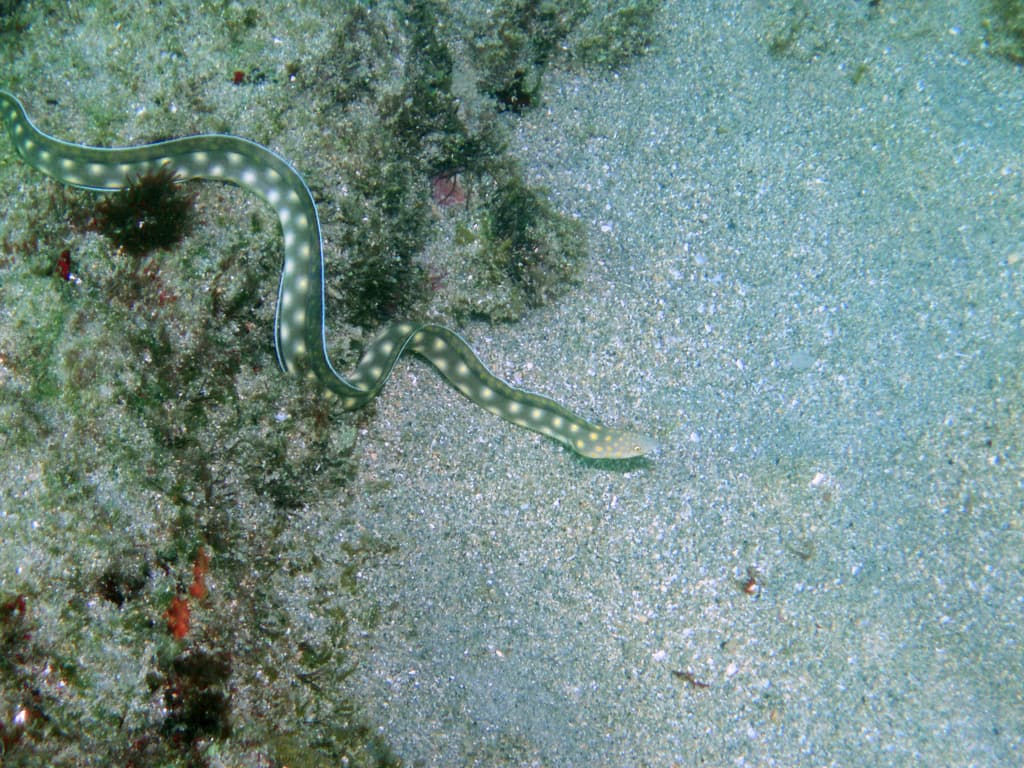
The Sharptail Eel is one of the most peaceful and reef-friendly eel species available to marine aquarists. Unlike the often intimidating moray eels, this snake eel has a gentle, inquisitive disposition and a slender, elongated body covered in an attractive pattern of dark spots and pale cream to white base coloration. Its pointed tail, which gives the species its common name, is used to burrow tail-first into sandy substrates, a characteristic behavior of the Ophichthidae family of snake eels.
In the wild, Sharptail Eels are found in sandy and rubble zones near coral reefs throughout the Indo-Pacific and Western Atlantic. They spend much of the day buried in the sand with only their head protruding, emerging primarily at night to hunt for small crustaceans, worms, and mollusks in the substrate. This burrowing lifestyle means they require a deep sand bed of at least four inches in the home aquarium to accommodate their natural behavior. Without adequate sand depth, they may become stressed and attempt to escape.
In the home aquarium, the Sharptail Eel is surprisingly easy to care for and is one of the few eel species that can be considered truly reef-safe. It poses no threat to fish tankmates that are too large to swallow, and its diet of invertebrates found within the sand bed means it generally leaves ornamental corals and most decorative invertebrates alone. A secure lid is still necessary as all eels are potential escape artists. Its peaceful nature and interesting burrowing behavior make it a unique and engaging addition to a reef aquarium with a deep sand bed.
Feeding & Diet
Carnivore
The Sharptail Eel feeds on small crustaceans, worms, and mollusks found in sandy substrates in the wild. In captivity, offer frozen shrimp, silversides, squid, and chopped clam. Use feeding tongs to present food near its burrow. Feed every two to three days.
Compatibility
reef-safepeacefulsand-dwellercommunity-compatiblebeginner-friendly
The Sharptail Eel is one of the most peaceful eel species and is compatible with most community reef fish. It generally ignores fish tankmates too large to swallow. May consume very small ornamental shrimp. Compatible with tangs, clownfish, wrasses, and other peaceful to semi-aggressive community fish.
Check CompatibilityBreeding
Not bred in captivity
Sharptail Eels have not been successfully bred in home aquariums. In the wild, they produce pelagic eggs that develop into transparent leptocephalus larvae, which undergo an extended planktonic phase before settling and metamorphosing into juvenile eels.
Special Requirements
- Deep sand bed of at least 4 inches required for burrowing
- Secure tight-fitting lid essential to prevent escape
- Use feeding tongs to present food near the eel
- Peaceful but may consume very small crustaceans
- Provide calm areas of substrate away from strong flow
Water Parameters
Temperature72–80°F
Specific Gravity1.02–1.026 sg
pH8.1–8.4
Alkalinity8–12 dKH
Coloration
creamwhitebrownspotted
Tags
reef-safepeacefulsand-dwellercommunity-compatiblebeginner-friendly