IntermediateSemi-AggressiveReef Safe with Caution
Harlequin Tuskfish
Choerodon fasciatus
Family: Labridae · Wrasses
Also known as: Harlequin Tusk, Tuskfish
(c) Sascha Schulz, some rights reserved (CC BY-NC)
Max Size
12"
Min Tank
125 gal
Lifespan
8-12 years
Origin
Western Pacific, Australia
Diet
Carnivore
Swims
Middle
About
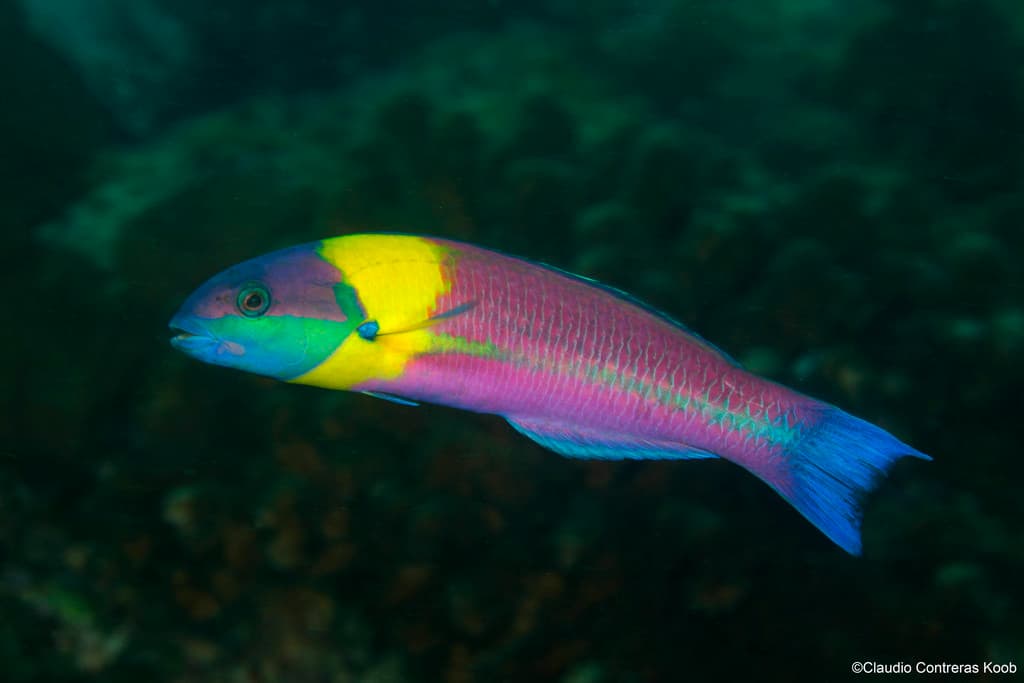
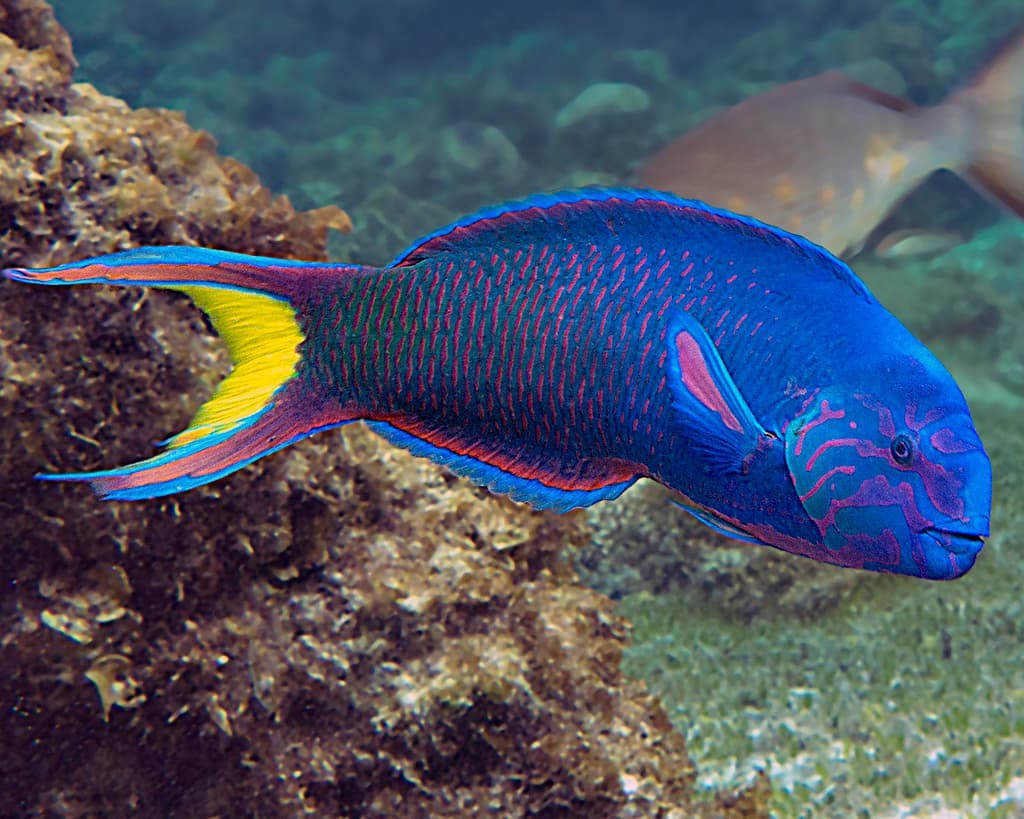
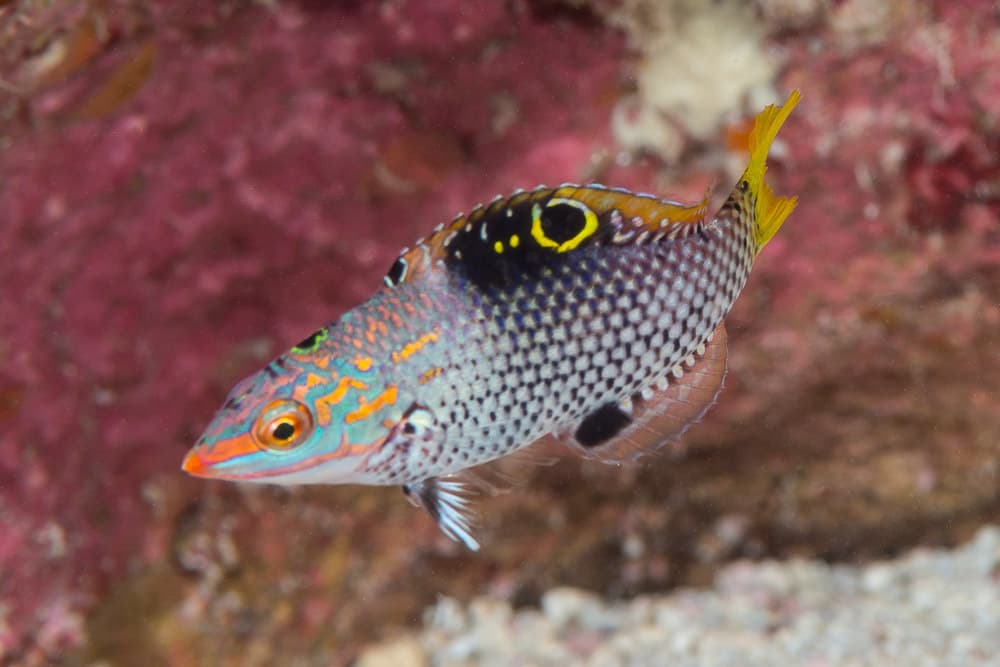
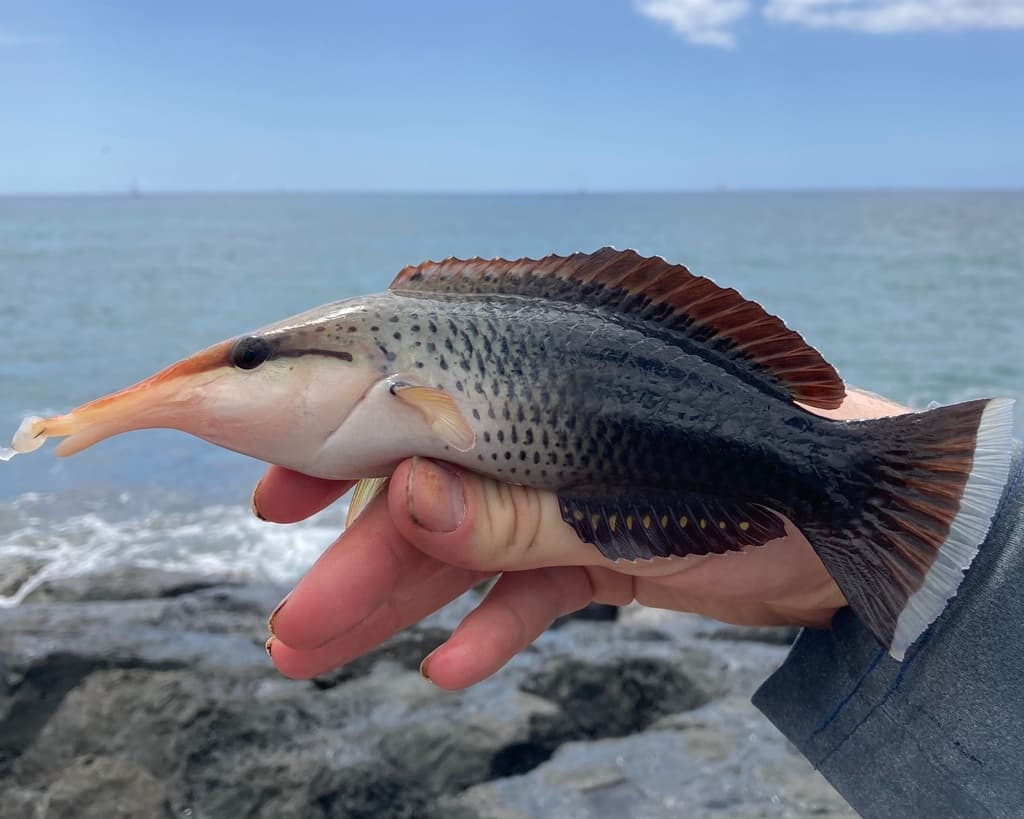
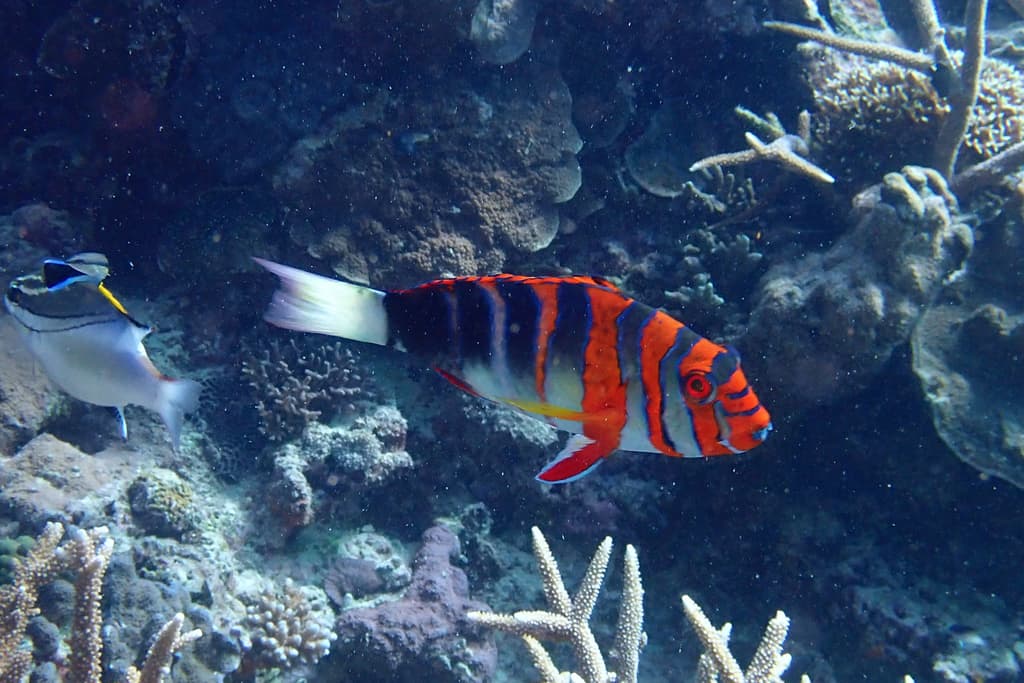
The Harlequin Tuskfish is one of the most visually striking and charismatic wrasses in the marine aquarium hobby. It features bold vertical bands of blue, orange, and red across the body, complemented by prominent blue tusk-like teeth that protrude from the jaw and give the species its name. Australian specimens are particularly prized for their more vivid blue coloration compared to their Indonesian counterparts.
Despite its large size and semi-aggressive nature, the Harlequin Tuskfish is a perennial favorite among marine aquarists for its bold personality and stunning appearance. It is an active, confident swimmer that quickly becomes the centerpiece of any aquarium. While it uses its tusks to crush hard-shelled invertebrates in the wild, it is generally well-behaved toward fish tankmates, though it should not be kept with very small or timid species.
The Harlequin Tuskfish requires a large aquarium with robust filtration and plenty of swimming space. It is a hardy species that adapts well to captivity and is considered moderately easy to maintain despite its size. While it will eat ornamental shrimp and small invertebrates, it typically leaves corals alone, making it conditionally reef-compatible. A well-secured lid is recommended, as this powerful fish can jump when startled.
Feeding & Diet
Carnivore
Harlequin Tuskfish are carnivores that use their powerful tusks to crush hard-shelled prey. In captivity, feed meaty foods including chopped shrimp, squid, clams, mussels, and quality marine pellets. They relish crustaceans and will eat ornamental shrimp. Feed once or twice daily.
Compatibility
caution-with-invertebratessemi-aggressivelarge-fish-compatiblecoral-safepredator
The Harlequin Tuskfish is semi-aggressive and should be kept with similarly sized, robust tankmates. It will eat ornamental shrimp and small invertebrates but typically ignores corals. Avoid housing with very small or timid fish. Good companions include tangs, large angelfish, and other assertive species.
Check CompatibilityBreeding
Not bred in captivity
Harlequin Tuskfish have not been bred in captivity. They are protogynous hermaphrodites that form harems in the wild. The large size, territorial nature, and pelagic spawning habits make captive breeding extremely challenging. All specimens in the trade are wild-caught.
Special Requirements
- Large aquarium of 125+ gallons required due to adult size
- Will eat ornamental shrimp and small crustaceans
- Australian specimens more colorful but also more expensive
- Secure lid recommended - can jump when startled
- Needs ample open swimming space and strong filtration
Water Parameters
Temperature74–80°F
Specific Gravity1.02–1.026 sg
pH8.1–8.4
Alkalinity8–12 dKH
Coloration
blueorangeredwhitegreen
Tags
caution-with-invertebratessemi-aggressivelarge-fish-compatiblecoral-safepredator