BeginnerSemi-AggressiveReef Safe
Fiji Blue Devil Damselfish
Chrysiptera taupou
Family: Pomacentridae · Damselfish
Also known as: South Seas Devil Damselfish, Fiji Devil Damsel, Taupou Damselfish, Village Belle Damselfish
(c) momaz, some rights reserved (CC BY-NC)
Max Size
3"
Min Tank
30 gal
Lifespan
5-8 years
Origin
Fiji, Tonga
Diet
Omnivore
Swims
Middle
About
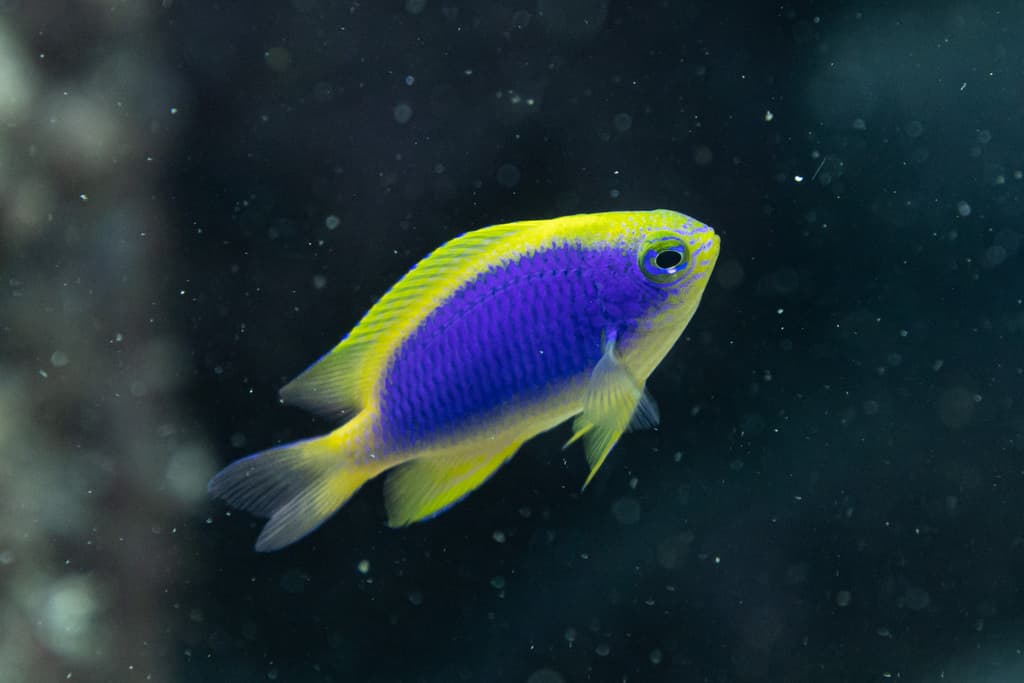
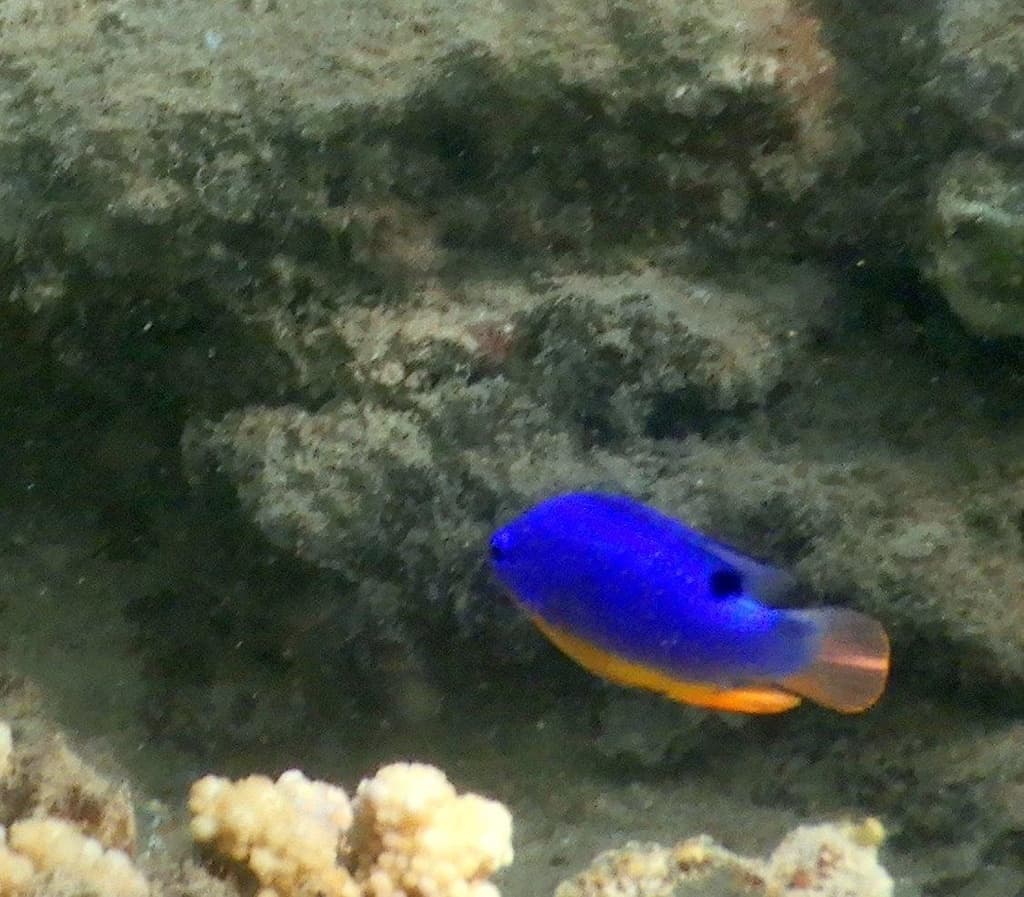
The Fiji Blue Devil Damselfish is a brilliantly colored South Pacific endemic that displays an intense electric blue coloration rivaling the more widely available Blue Devil Damsel. What distinguishes this species is its geographic origin from the Fiji and Tonga region, along with a slightly different body shape and temperament that many aquarists find more manageable than its more aggressive relatives. Males often display a striking yellow or orange coloration on the belly and anal fin area, creating an attractive two-toned appearance.
In the wild, Chrysiptera taupou inhabits shallow reef environments in Fiji, Tonga, and Samoa, where it is found among rubble zones, coral heads, and rocky outcrops at relatively shallow depths. Like other Chrysiptera species, it is a small, territorial species that defends a home range centered on a preferred hiding spot. However, compared to the intensely aggressive Chrysiptera cyanea (Blue Devil), the Fiji Blue Devil tends to be somewhat less combative, making it a better candidate for community aquariums.
In the aquarium, the Fiji Blue Devil Damselfish is an outstanding choice for aquarists who desire the stunning blue coloration of a devil damselfish with a slightly more tolerant disposition. At only 3 inches maximum size, it is suitable for aquariums as small as 30 gallons, provided adequate rockwork and hiding spots are available. While it will still defend its territory, the level of aggression is generally manageable when housed with appropriately sized community fish. The species is completely reef-safe, extremely hardy, and eagerly accepts all standard aquarium foods.
Feeding & Diet
Omnivore
Fiji Blue Devil Damselfish are omnivores that feed on zooplankton, algae, and small benthic organisms in the wild. In captivity, they eagerly accept marine flakes, micro-pellets, frozen mysis shrimp, enriched brine shrimp, cyclops, and finely chopped seafood. Include algae-based foods such as Spirulina flakes for balanced nutrition. Feed small amounts two to three times daily.
Compatibility
reef-safesemi-aggressiveterritorialhardybeginner-friendly
The Fiji Blue Devil Damselfish is semi-aggressive and less combative than the common Blue Devil Damsel, making it more suitable for community tanks. It coexists reasonably well with clownfish, wrasses, tangs, and other moderately assertive species. Avoid housing with very small or extremely passive fish such as firefish or dartfish. Best kept singly to avoid intraspecific aggression. Completely reef-safe with all corals and invertebrates.
Check CompatibilityBreeding
Moderate
Fiji Blue Devil Damselfish are sexually dimorphic, with males typically displaying more intense blue coloration and yellow-orange ventral markings. They are substrate spawners that lay adhesive eggs on hard surfaces. The male guards the nest until hatching, approximately 3-4 days. Larvae are tiny and pelagic, requiring rotifers and microalgae as first foods. Breeding has been observed in captivity.
Special Requirements
- Less aggressive than the common Blue Devil Damsel
- Provide rockwork with crevices and hiding spots
- Males display attractive yellow-orange belly coloration
- Hardy and tolerant of varying conditions
- Best kept singly unless in a large aquarium
Water Parameters
Temperature72–82°F
Specific Gravity1.02–1.026 sg
pH8.1–8.4
Alkalinity8–12 dKH
Coloration
electric blueblueyelloworange
Tags
reef-safesemi-aggressiveterritorialhardybeginner-friendly