IntermediateSemi-AggressiveReef Safe with Caution
Flame Angelfish
Centropyge loricula
Family: Pomacanthidae · Dwarf Angelfish
Verified against 2 scientific databases· Last checked Feb 24, 2026Also known as: Flame Angel, Japanese Pygmy Angelfish
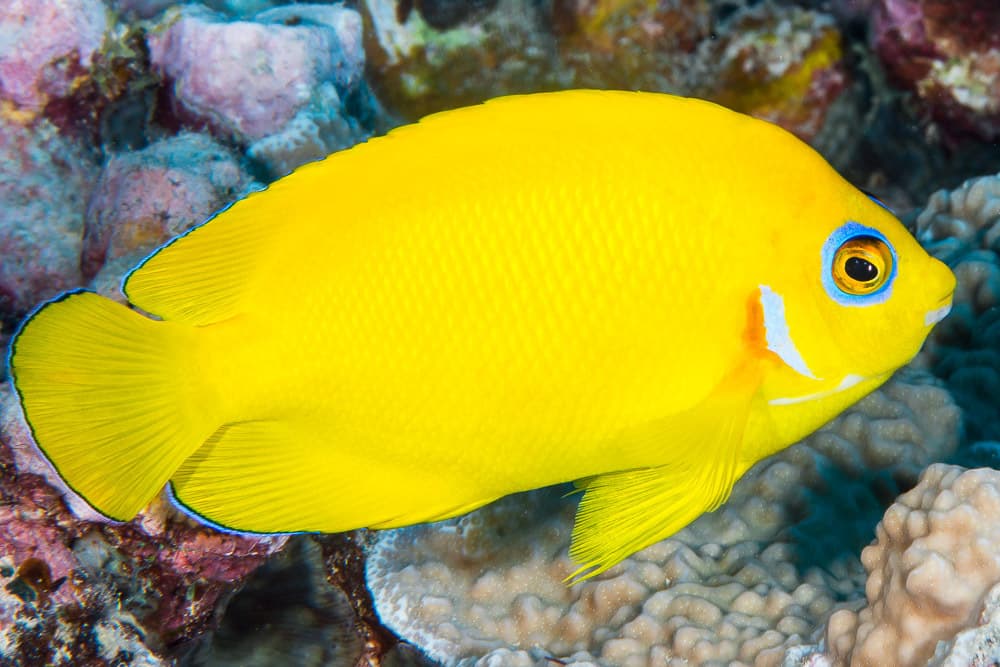
(c) uwkwaj, some rights reserved (CC BY-NC)
Max Size
4"
Min Tank
55 gal
Lifespan
5-7 years
Origin
Central Pacific, Hawaii
Diet
Omnivore
Swims
Middle
Did You Know?
- The Flame Angelfish's brilliant red-orange coloration varies by geographic origin — specimens from Hawaii tend to be more intensely red
- Like all dwarf angelfish, Flame Angels are protogynous hermaphrodites — dominant females can change sex to male
About
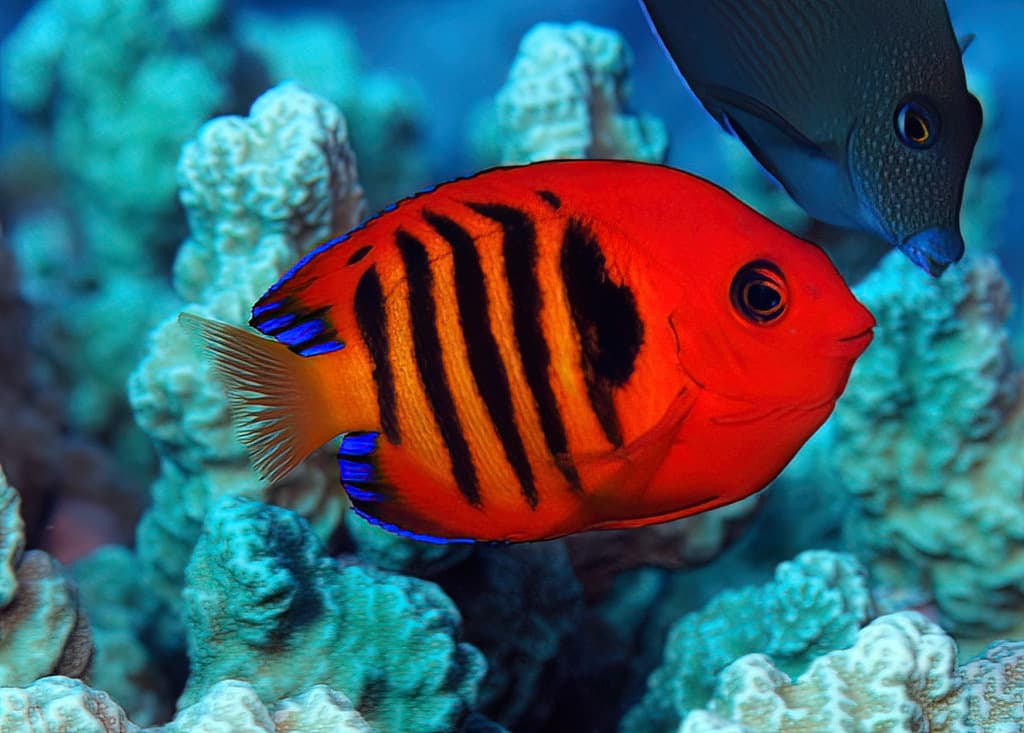
The Flame Angelfish is widely considered the crown jewel of the dwarf angelfish group, captivating aquarists with its brilliant red-orange body adorned with vertical black bars and electric blue-tipped dorsal and anal fins. Found across the Central Pacific, with the most prized specimens originating from the Marshall Islands and Hawaii, this species reaches a modest 4 inches in length, making it suitable for medium-sized aquariums. Its bold coloration and active behavior make it a standout centerpiece fish.
In the wild, Flame Angelfish inhabit lagoon and outer reef slopes at depths of 15 to 60 meters, typically found in harems of one male and several females. Like many marine angelfish, they are protogynous hermaphrodites, with the dominant female in a group transitioning to male if the existing male is removed. They feed primarily on algae and small invertebrates in their natural habitat, constantly picking at live rock surfaces throughout the day.
While the Flame Angelfish is considered reef-compatible with caution, individual specimens may develop a taste for coral polyps, particularly LPS corals, zoanthids, and clam mantles. This nipping behavior varies greatly between individuals and is somewhat unpredictable. Well-fed specimens in established tanks with abundant live rock for grazing are less likely to bother corals. The risk can be mitigated by keeping the fish well-fed with a varied diet and providing plenty of natural grazing surfaces. Despite this caveat, the Flame Angelfish remains one of the most popular marine aquarium fish due to its unmatched beauty and generally hardy constitution.
Feeding & Diet
Omnivore
Flame Angelfish are omnivores that require a varied diet. Offer high-quality angelfish preparations containing sponge matter, Spirulina-enriched flakes or pellets, frozen mysis shrimp, and enriched brine shrimp. Supplement with nori seaweed and ensure plenty of live rock for natural algae grazing. Feed two to three times daily in small quantities. A well-fed Flame Angel is less likely to nip at corals.
Compatibility
reef-cautiondwarf-angel-territorialcommunity-compatiblecoral-nipper-risk
Flame Angelfish can be territorial toward other dwarf angelfish and similarly colored fish. Only one Centropyge species should be kept per tank unless the system is very large (125+ gallons) with abundant rockwork. They generally coexist well with clownfish, tangs, wrasses, gobies, and other community reef fish. Avoid keeping with overly aggressive species that may bully them.
Check CompatibilityBreeding
Very Difficult
Flame Angelfish are pelagic spawners that perform courtship displays at dusk, with the male rising in the water column alongside the female to release gametes. While spawning can occur in captivity, raising the tiny pelagic larvae is extremely challenging and requires specialized larval-rearing facilities. Some limited success has been reported by research institutions and dedicated breeders, but captive-bred specimens are rarely available commercially.
Special Requirements
- Established aquarium with mature live rock for grazing
- May nip at LPS corals, zoanthids, and clam mantles
- Only one dwarf angelfish per tank unless very large system
- Provide multiple hiding spots and caves
- Hawaiian and Marshall Island specimens command premium prices
Water Parameters
Temperature72–80°F
Specific Gravity1.02–1.026 sg
pH8–8.4
Alkalinity8–12 dKH
Coloration
redorangeblackblue
Tags
reef-cautiondwarf-angel-territorialcommunity-compatiblecoral-nipper-risk