IntermediateSemi-AggressiveReef SafeIUCN: Least Concern
Wide-band Clownfish
Amphiprion latezonatus
Family: Pomacentridae · Clownfish
Also known as: Wide-band Anemonefish, Blue-lipped Anemonefish, Lord Howe Clownfish
(c) Brenton Prigge, some rights reserved (CC BY-NC)
Max Size
5"
Min Tank
30 gal
Lifespan
10-15 years
Origin
Australia, Lord Howe Island
Diet
Omnivore
Swims
Middle
Did You Know?
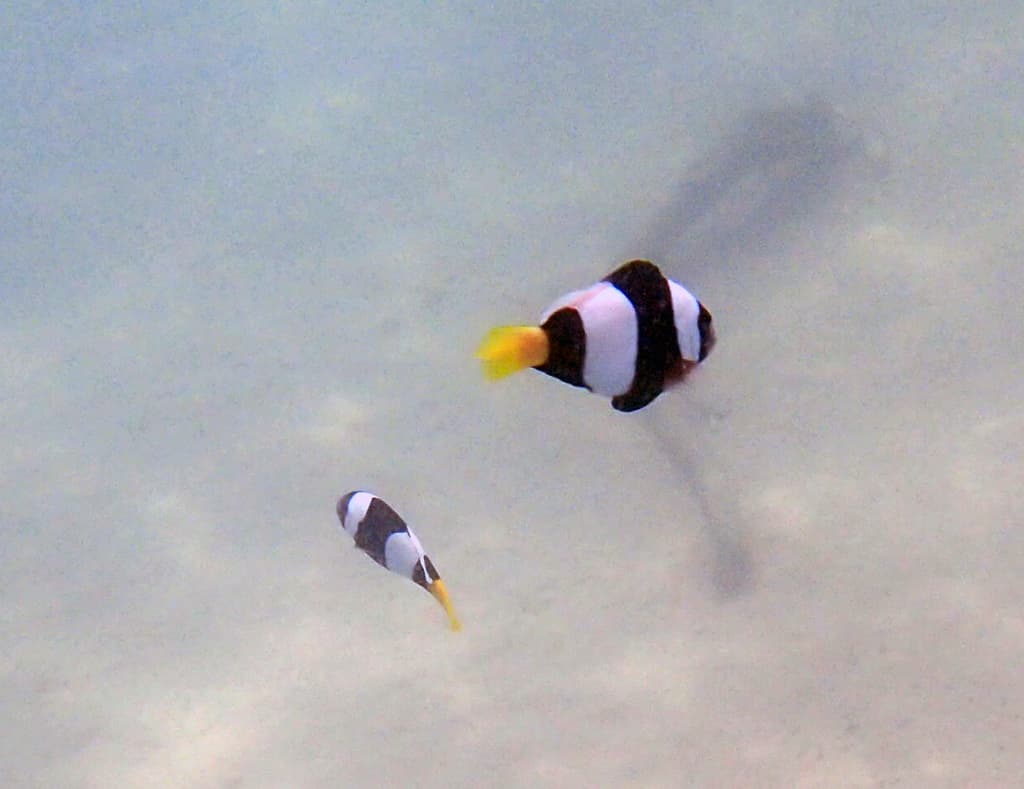
- The Wide-band Clownfish's middle white bar is so broad that it covers nearly one-third of the fish's body, making it the widest bar of any clownfish species
- This species can tolerate water temperatures as low as 64°F in winter, making it one of the most cold-tolerant clownfish in the world
- The distinctive blue-purple coloration on the lips of the Wide-band Clownfish is unique among all 30 clownfish species and may play a role in species recognition
About
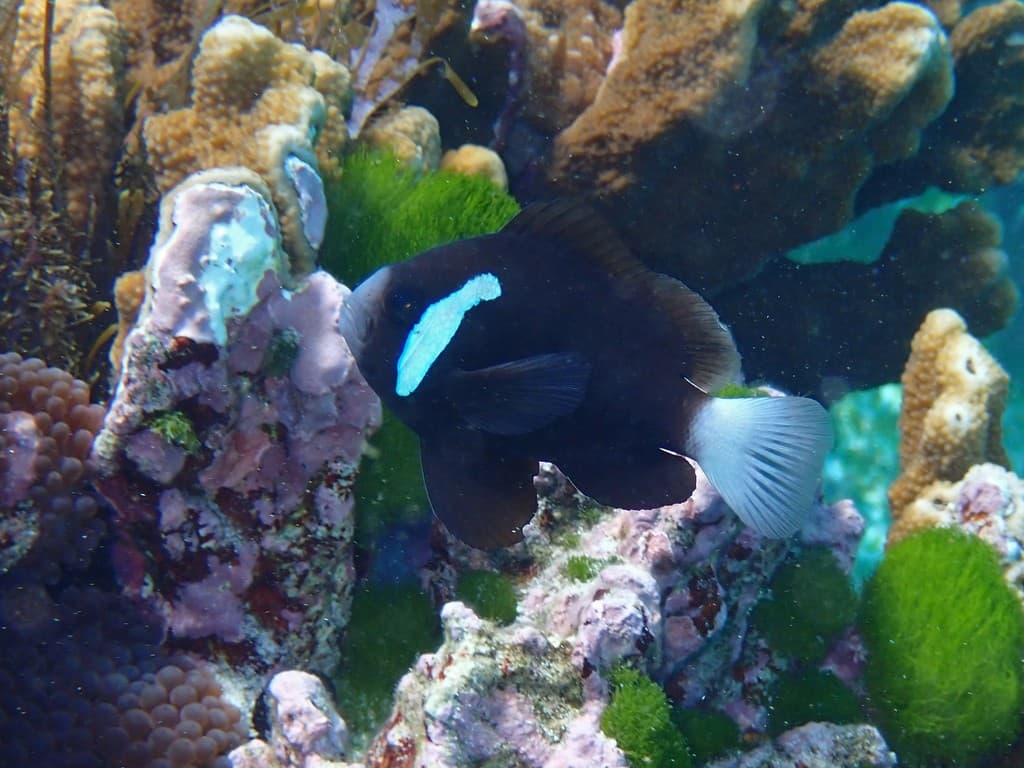
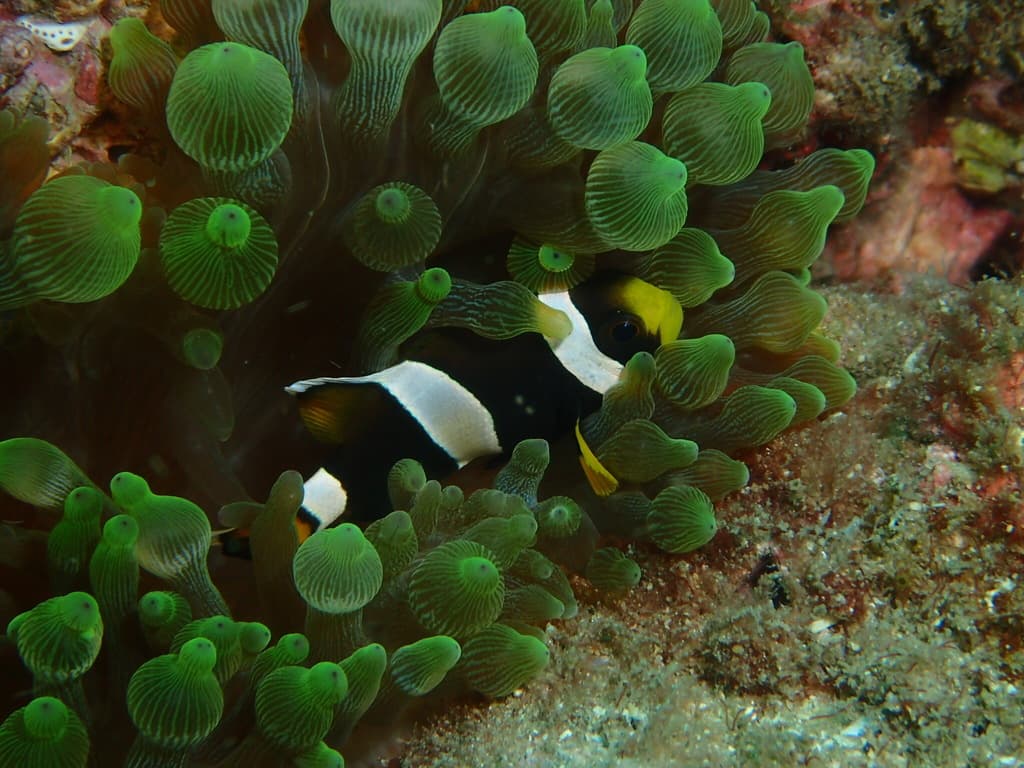
The Wide-band Clownfish is one of the rarest and most visually distinctive clownfish species in the world, found only in the subtropical waters of eastern Australia, primarily around Lord Howe Island and parts of the New South Wales coast. Its most striking feature is an unusually broad white middle bar that extends across the entire mid-section of the body, significantly wider than the bars found on any other clownfish species. The body is dark brown to black, with a standard-width white bar behind the eye and a third white bar at the base of the tail. The lips often display a distinctive blue or purple hue that gives rise to one of its common names.
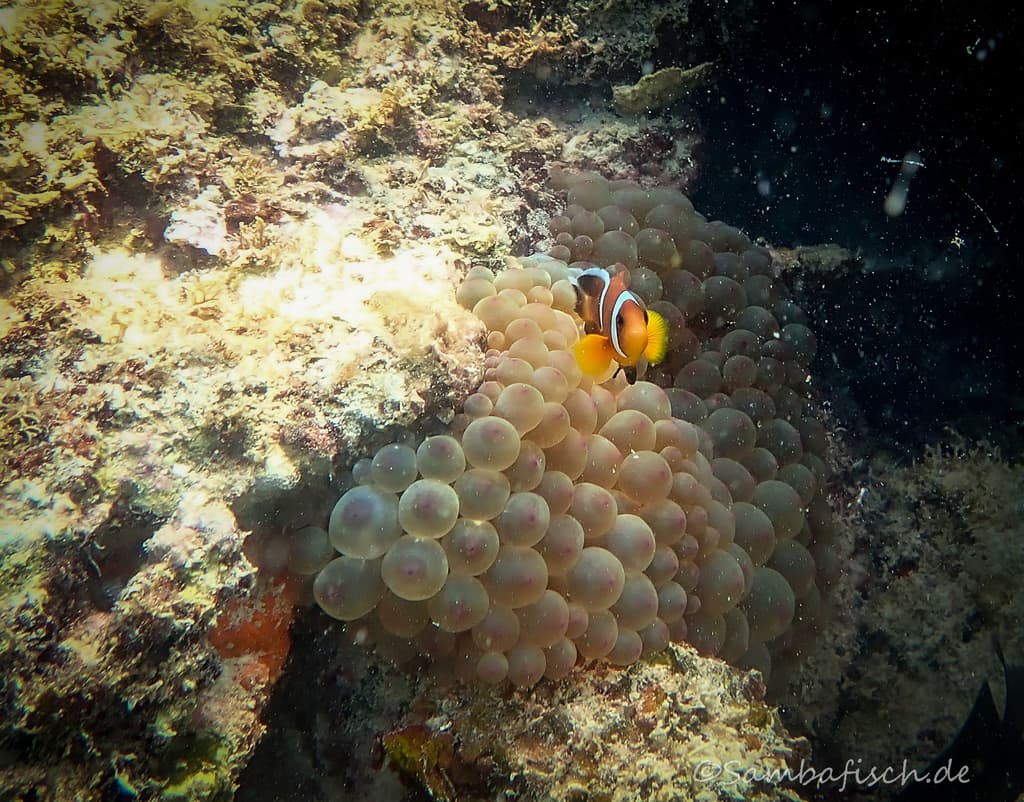
In the wild, the Wide-band Clownfish inhabits the subtropical reef environments of eastern Australia, where it hosts with Bubble Tip Anemones (Entacmaea quadricolor). The cool, temperate waters at Lord Howe Island represent the extreme southern limit of clownfish distribution, and the Wide-band Clownfish has adapted to water temperatures that would be too cold for most tropical clownfish species. Its extremely limited range, combined with the protected status of Lord Howe Island as a UNESCO World Heritage Site, makes wild-caught specimens virtually unavailable in the aquarium trade.
The Wide-band Clownfish requires intermediate-level care primarily due to its rarity and preference for slightly cooler water temperatures than standard tropical reef tanks. Captive-bred specimens are the only ethical and practical source for aquarists and are available from a small number of specialized Australian breeders. Once acclimated, the species is hardy and long-lived, displaying the typical semi-aggressive clownfish temperament. Its dramatic appearance and conservation story make it one of the most prized clownfish among serious collectors.
Feeding & Diet
Omnivore
The Wide-band Clownfish is an omnivore that accepts a variety of prepared aquarium foods including marine pellets, flakes, frozen mysis shrimp, enriched brine shrimp, and chopped seafood. A varied diet with both meaty and algae-based components promotes optimal health. Vitamin-enriched preparations help maintain the immune system and coloration. Feed two to three times daily in small portions.
Compatibility
reef-safesemi-aggressiveterritorialpairs-wellrare-species
The Wide-band Clownfish is semi-aggressive with typical clownfish territorial behavior centered around its host or nesting area. Should not be kept with other clownfish species. Compatible with tangs, wrasses, gobies, and other moderately assertive community fish that tolerate similar cooler water temperatures. Completely reef-safe with all corals and invertebrates.
Check CompatibilityBreeding
Moderate
The Wide-band Clownfish has been successfully bred in captivity by specialist Australian breeders. Mated pairs spawn on flat surfaces near their host anemone, with the male guarding eggs until hatching in 9-11 days. Slightly cooler water temperatures may result in longer incubation times compared to tropical species. Larvae require rotifers as first food. Captive breeding is of significant conservation importance for this range-restricted species.
Special Requirements
- Rare species - captive-bred specimens are the only ethical source
- Prefers cooler water than most tropical clownfish (68-78°F)
- Best kept as a mated pair or single specimen
- Hosts exclusively with Bubble Tip Anemones in the wild
- May need a slightly cooler tank than standard tropical reef setups
- Maintain stable water parameters for long-term health
Water Parameters
Temperature68–78°F
Specific Gravity1.02–1.026 sg
pH8–8.4
Alkalinity8–12 dKH
Coloration
blackwhitebrownblue
Tags
reef-safesemi-aggressiveterritorialpairs-wellrare-species