ExpertPeacefulReef SafeCaptive-Bred Available
Mandarin Dragonet
Synchiropus splendidus
Family: Callionymidae · Dragonets & Mandarinfish
Also known as: Mandarin Goby, Mandarin Fish, Green Mandarin, Psychedelic Fish, Striped Mandarinfish
(c) François Libert, some rights reserved (CC BY-NC-SA)
Max Size
4"
Min Tank
30 gal
Lifespan
5-10 years
Origin
Western Pacific, Philippines
Diet
Carnivore
Swims
Bottom
Did You Know?
- The Mandarin Dragonet is one of only two fish species known to produce blue pigment — most 'blue' fish create the color through light reflection off crystal structures
- Their toxic, foul-tasting mucus coating makes them almost immune to marine ich and velvet — diseases that devastate most other species
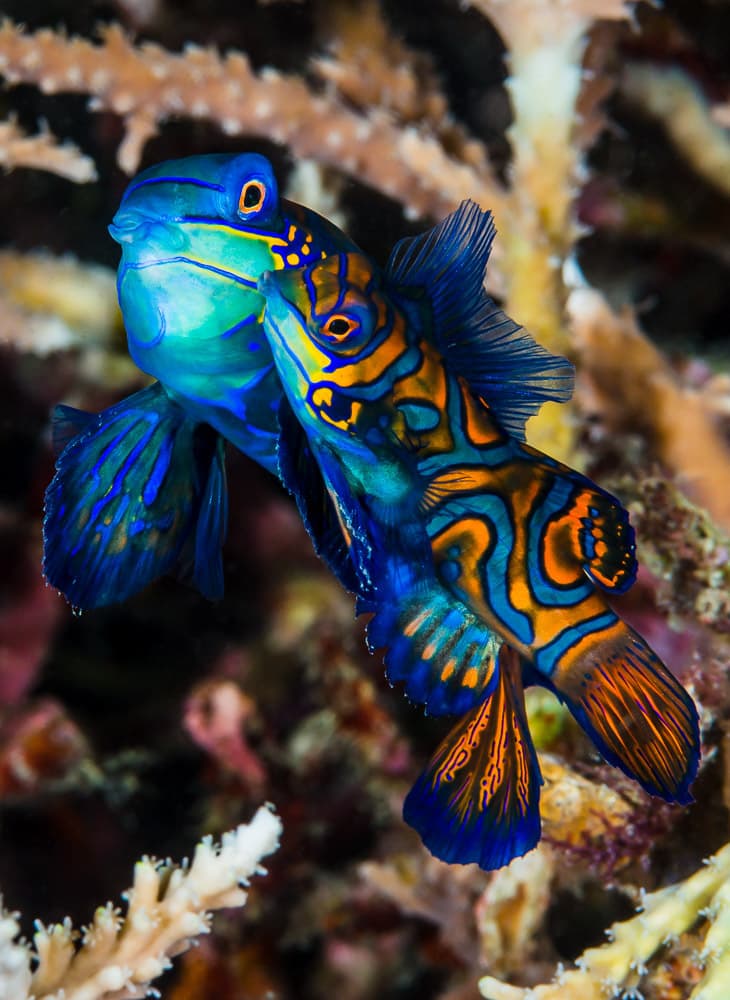
- Mated pairs perform a magical spawning dance at dusk, rising belly-to-belly from the reef to release eggs at the peak of their ascent
About
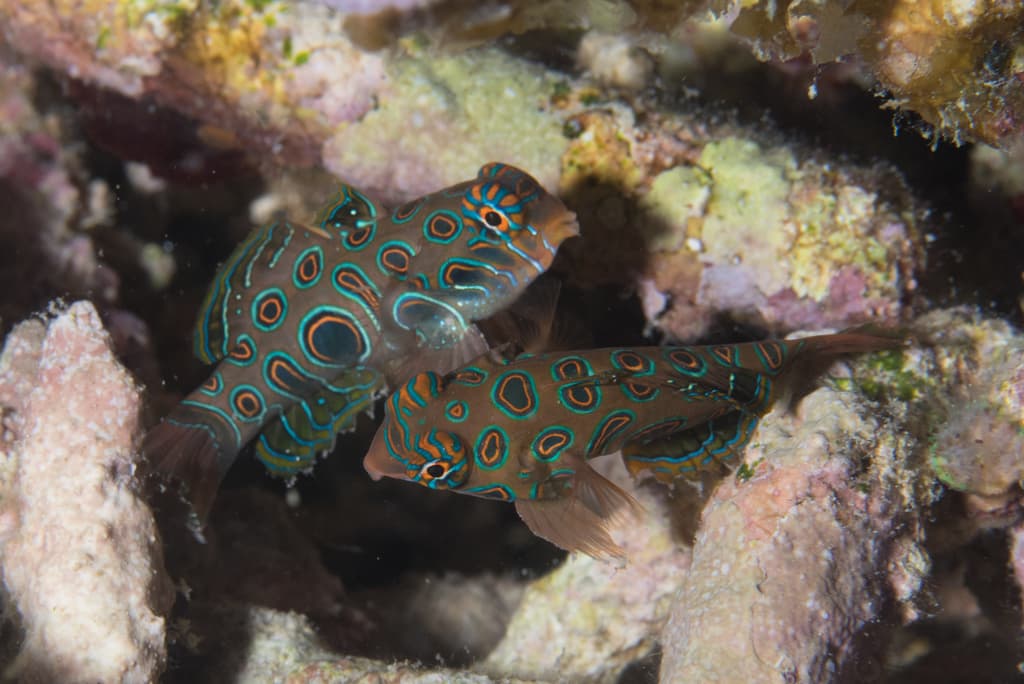
The Mandarin Dragonet is widely regarded as one of the most beautiful fish in the ocean, adorned with an extraordinary psychedelic pattern of wavy blue, orange, green, and yellow lines that make it look more like a living painting than a fish. Its name derives from its resemblance to the ornate robes worn by Imperial Chinese mandarins. Unlike most marine fish that rely on scales for protection, the Mandarin Dragonet secretes a thick, foul-tasting mucus coating that deters predators and provides remarkable resistance to common marine diseases such as ich and velvet.
Despite its breathtaking beauty, the Mandarin Dragonet is considered an expert-level fish due to its extremely specialized feeding requirements. In the wild, these fish spend their entire day methodically hunting tiny copepods and amphipods from the surface of live rock and rubble. They are notoriously reluctant to accept prepared foods, and the majority of specimens require a thriving, self-sustaining population of live copepods and amphipods to survive. An established aquarium of at least 6 months to a year with abundant live rock (minimum 75 pounds in a 30-gallon tank) is typically necessary to support the microfauna population needed to sustain a single Mandarin Dragonet.
In recent years, captive-bred Mandarin Dragonets have become available, and these specimens are far more likely to accept frozen and prepared foods than their wild-caught counterparts. ORA (Oceans, Reefs & Aquariums) and Biota Marine Life are among the facilities that have successfully bred this species. If choosing a wild-caught specimen, observe it eating at the fish store before purchasing, and be prepared to maintain a refugium to supplement copepod populations. Mandarin Dragonets are slow, deliberate feeders and should not be housed with aggressive eaters that will outcompete them for food. A mated pair performing their nightly spawning dance, rising together in the water column at dusk, is one of the most magical sights in the marine aquarium hobby.
Feeding & Diet
Carnivore
Mandarin Dragonets are specialized micro-predators that feed almost exclusively on tiny live copepods and amphipods in the wild. An established tank with abundant live rock and a healthy pod population is essential. Supplement with live copepod cultures (Tisbe, Tigriopus) added regularly. Captive-bred specimens may accept frozen cyclops, small mysis shrimp, and specialty dragonet pellets. A connected refugium producing a steady supply of copepods greatly increases long-term success. Feed multiple times daily if accepting prepared foods.
Compatibility
reef-safepeacefulexpert-onlylive-food-requireddisease-resistantcaptive-bred-available
Mandarin Dragonets are among the most peaceful marine fish and pose no threat to any tankmates, corals, or invertebrates. However, males are fiercely territorial toward other male Mandarin Dragonets and will fight, so only one male should be kept per tank unless the system is very large. A male-female pair can coexist harmoniously. Avoid housing with aggressive feeders such as dottybacks, six line wrasses, or active damsels that will outcompete the Mandarin for food. Ideal tankmates include other slow, peaceful species.
Check CompatibilityBreeding
Moderate
Mandarin Dragonets perform a spectacular mating ritual at dusk. The male courts the female with raised fins and color displays. When ready, the pair rises together from the substrate into the water column, where they release eggs and sperm simultaneously at the apex of their ascent. Eggs are pelagic and hatch within 24-36 hours. Larvae are tiny and require phytoplankton-enriched rotifers for their first 2 weeks. Captive breeding has been achieved by several facilities, and dedicated hobbyists have also raised this species successfully.
Special Requirements
- Requires mature, well-established aquarium (6+ months old) with abundant live rock
- Thriving copepod and amphipod population is essential for survival
- Refugium strongly recommended to sustain live food supply
- Captive-bred specimens strongly preferred - more likely to eat prepared foods
- Only one male per tank - males will fight to the death
- Slow feeder - avoid housing with aggressive eaters
- Mucus coating provides natural disease resistance
Water Parameters
Temperature72–80°F
Specific Gravity1.02–1.026 sg
pH8–8.4
Alkalinity8–12 dKH
Coloration
blueorangegreenyellow
Tags
reef-safepeacefulexpert-onlylive-food-requireddisease-resistantcaptive-bred-available