BeginnerSemi-AggressiveReef Safe
Maldive Clownfish
Amphiprion nigripes
Family: Pomacentridae · Clownfish
Also known as: Blackfinned Anemonefish, Maldives Anemonefish, Black-Footed Clownfish
(c) Lesley Clements, some rights reserved (CC BY-NC)
Max Size
4.5"
Min Tank
30 gal
Lifespan
8-12 years
Origin
Maldives, Sri Lanka
Diet
Omnivore
Swims
Middle
About
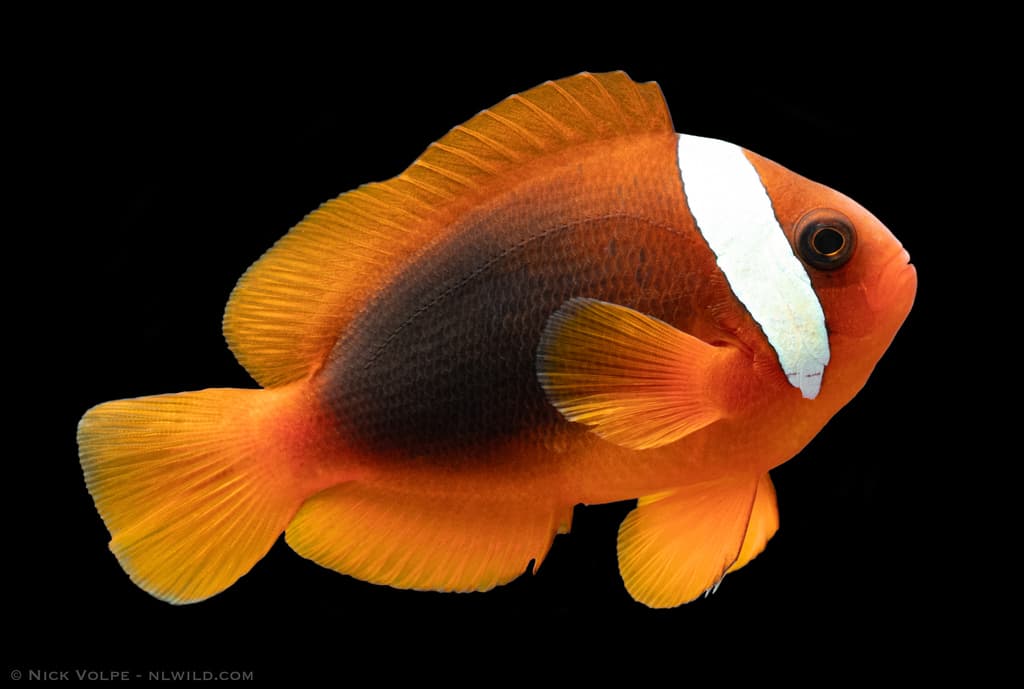
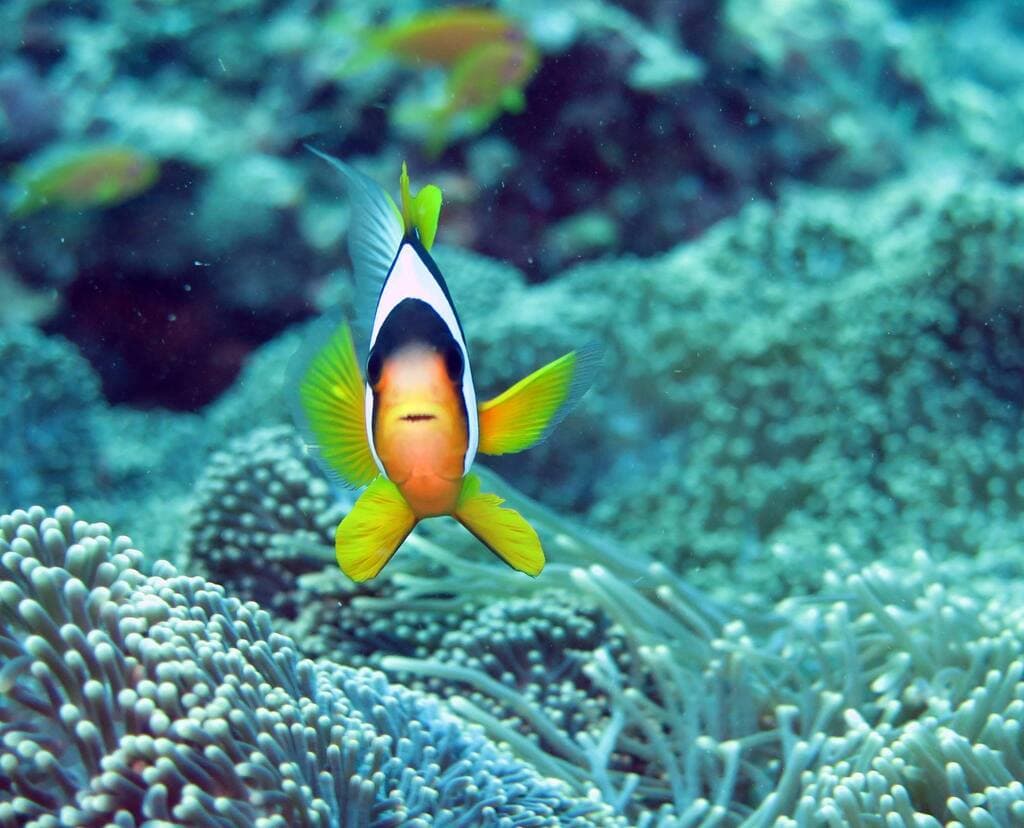
The Maldive Clownfish is a beautiful and geographically restricted species found primarily in the Maldives and Sri Lanka. Its most distinctive feature is the combination of a warm orange body with jet-black pelvic and anal fins, which gives it the alternate name Blackfinned Anemonefish. A single white bar behind the eye completes its elegant color scheme, creating a clean and striking appearance that distinguishes it from other clownfish species.
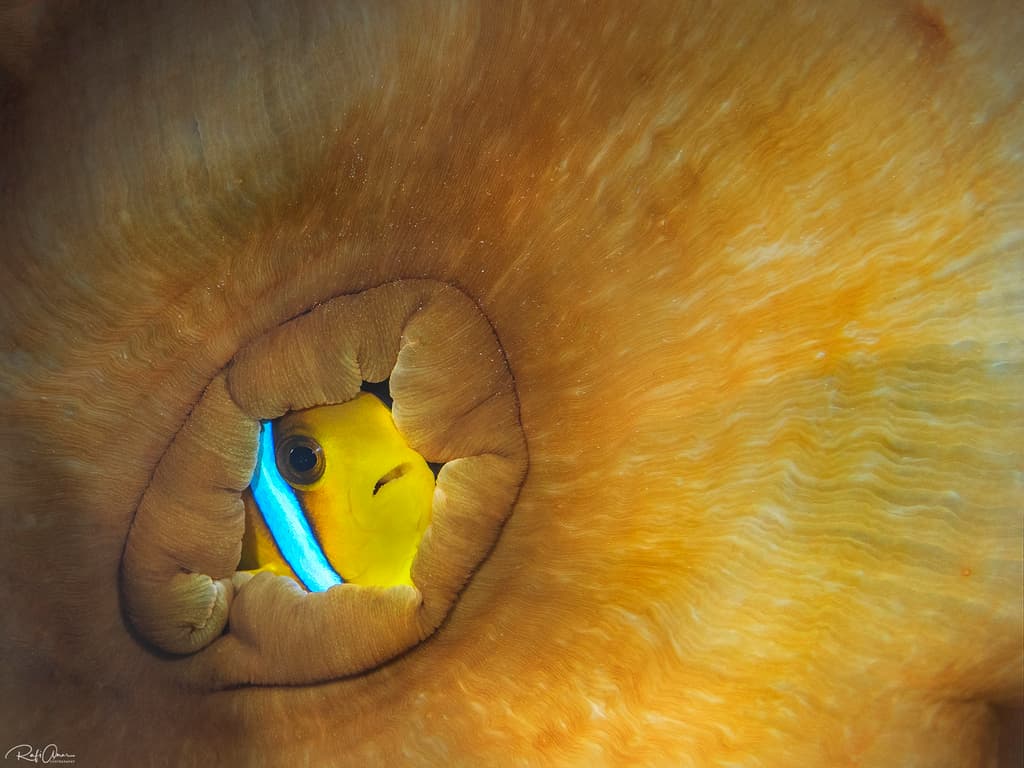
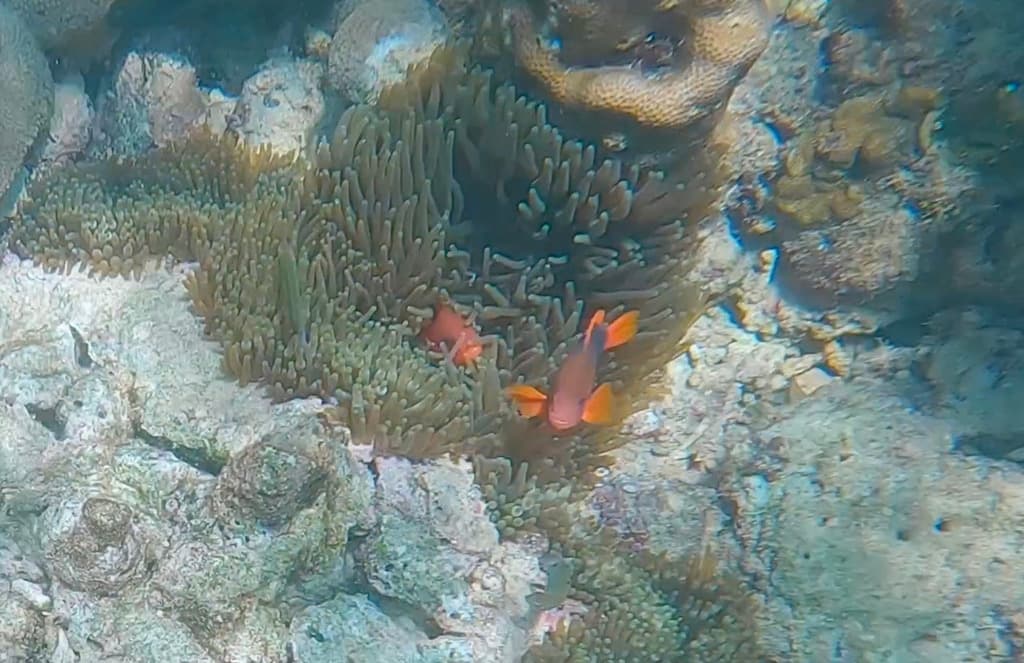
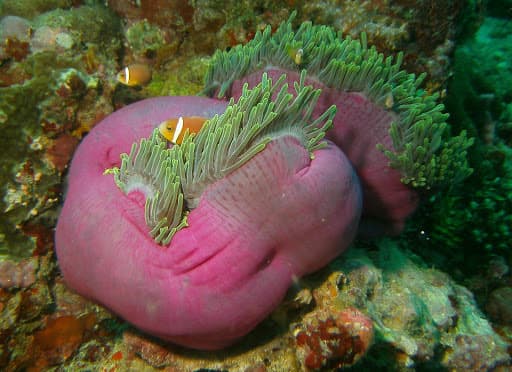
In its natural habitat, the Maldive Clownfish exclusively associates with the magnificent sea anemone (Heteractis magnifica), forming a highly specific symbiotic relationship. This tight host association means that in the wild, its distribution closely follows that of its preferred anemone. Pairs and small groups cluster around individual anemones on Maldivian reef slopes, fiercely guarding their home from all comers.
In the aquarium, the Maldive Clownfish is a hardy species that adapts well to captive conditions. It is beginner-friendly and readily accepts a wide variety of prepared and frozen foods. While a host anemone is appreciated and creates a natural display, it is not strictly required. The species is semi-aggressive, typical for clownfish, and defends its chosen territory with vigor. Its unique coloration, endemic status, and engaging personality make it a wonderful choice for aquarists seeking something different from the common orange-and-white clownfish pattern.
Feeding & Diet
Omnivore
Maldive Clownfish are omnivores that feed on algae, zooplankton, and small invertebrates in the wild. In captivity, they readily accept marine pellets, flake food, frozen mysis shrimp, brine shrimp, and vitamin-enriched preparations. Feed two to three times daily in small portions.
Compatibility
reef-safesemi-aggressivepairs-wellcommunity-safeendemic-species
The Maldive Clownfish is semi-aggressive and territorial around its chosen area but compatible with most community reef fish. Should not be housed with other clownfish species to avoid aggression. Generally peaceful toward non-clownfish tankmates that do not intrude on its territory.
Check CompatibilityBreeding
Moderate
Maldive Clownfish are protandrous hermaphrodites that can be bred in captivity. Mated pairs lay eggs on flat surfaces and guard them attentively. Eggs hatch in 7-10 days. Larvae require rotifers as first foods before transitioning to baby brine shrimp.
Special Requirements
- Best kept as a mated pair or single specimen
- Naturally associates with Heteractis magnifica anemone
- Host anemone appreciated but not required
- Maldives endemic — availability may be limited
- Avoid housing with other clownfish species
Water Parameters
Temperature72–80°F
Specific Gravity1.02–1.026 sg
pH8.1–8.4
Alkalinity8–12 dKH
Coloration
orangeblackwhite
Tags
reef-safesemi-aggressivepairs-wellcommunity-safeendemic-species