IntermediateSemi-AggressiveNot Reef Safe
Red Coris Wrasse
Coris gaimard
Family: Labridae · Wrasses
Also known as: Yellowtail Coris, Clown Wrasse, Gaimard's Wrasse
(c) Sara Thiebaud, some rights reserved (CC BY-NC)
Max Size
14"
Min Tank
150 gal
Lifespan
8-12 years
Origin
Indo-Pacific, Hawaii
Diet
Carnivore
Swims
All
About
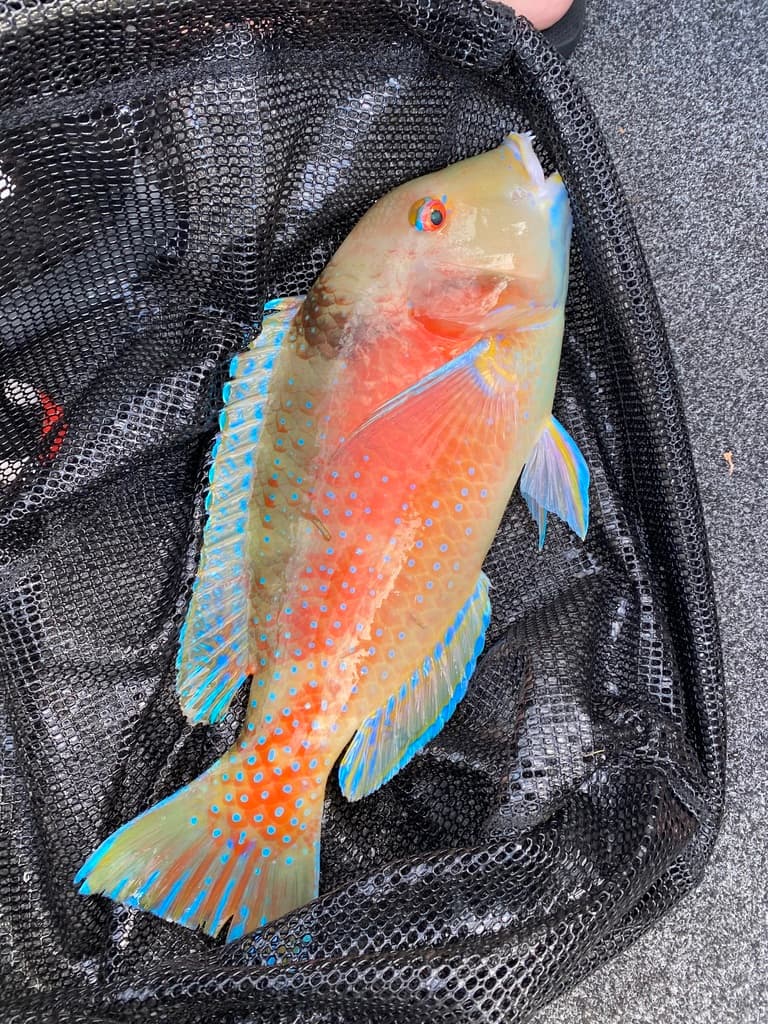
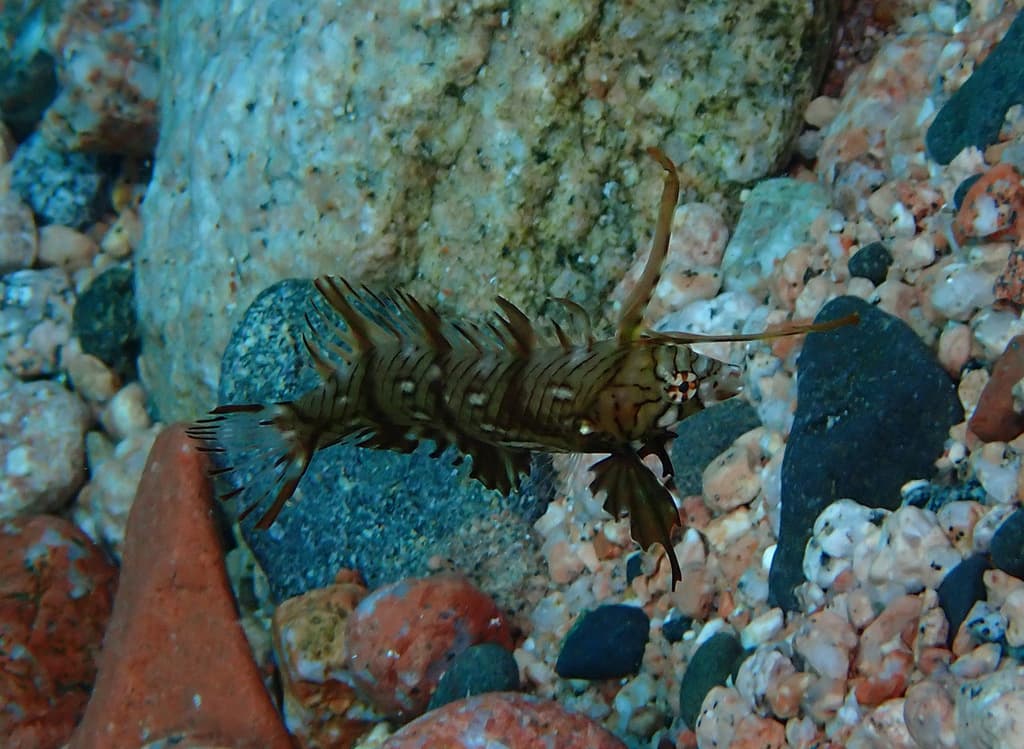
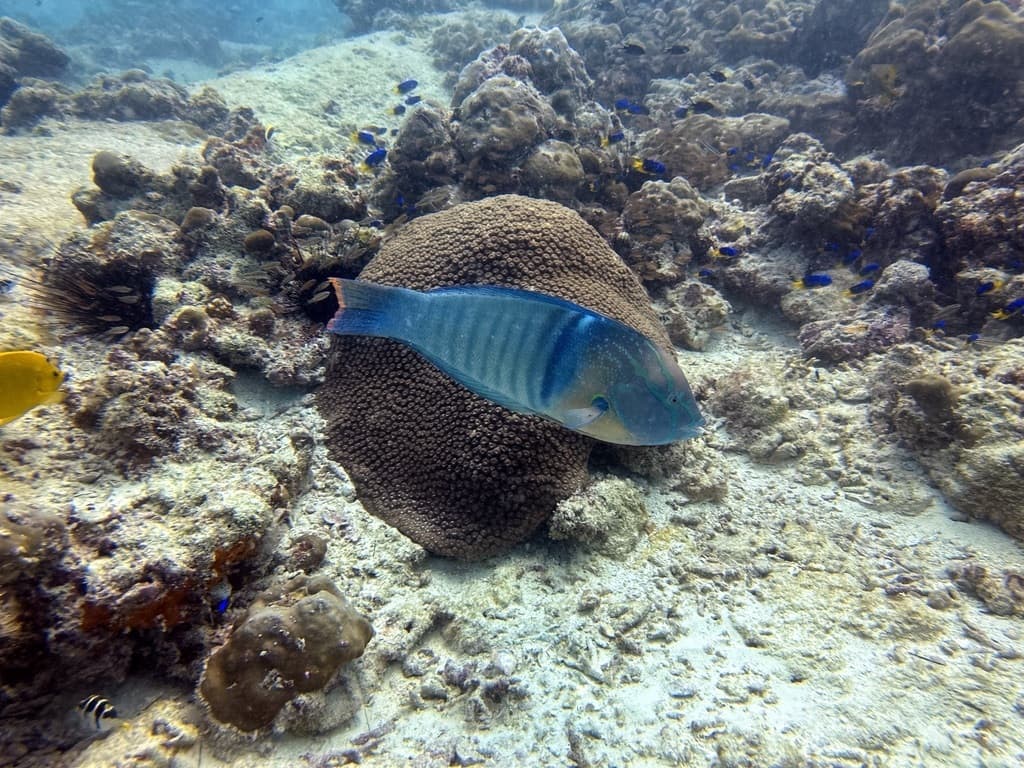
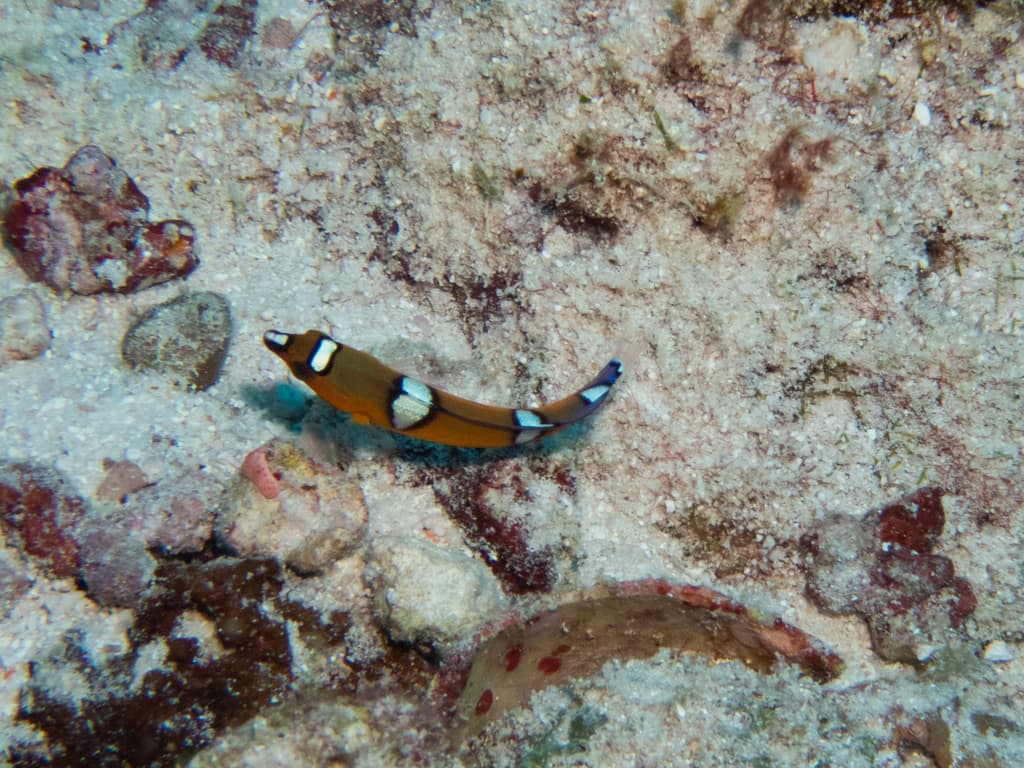
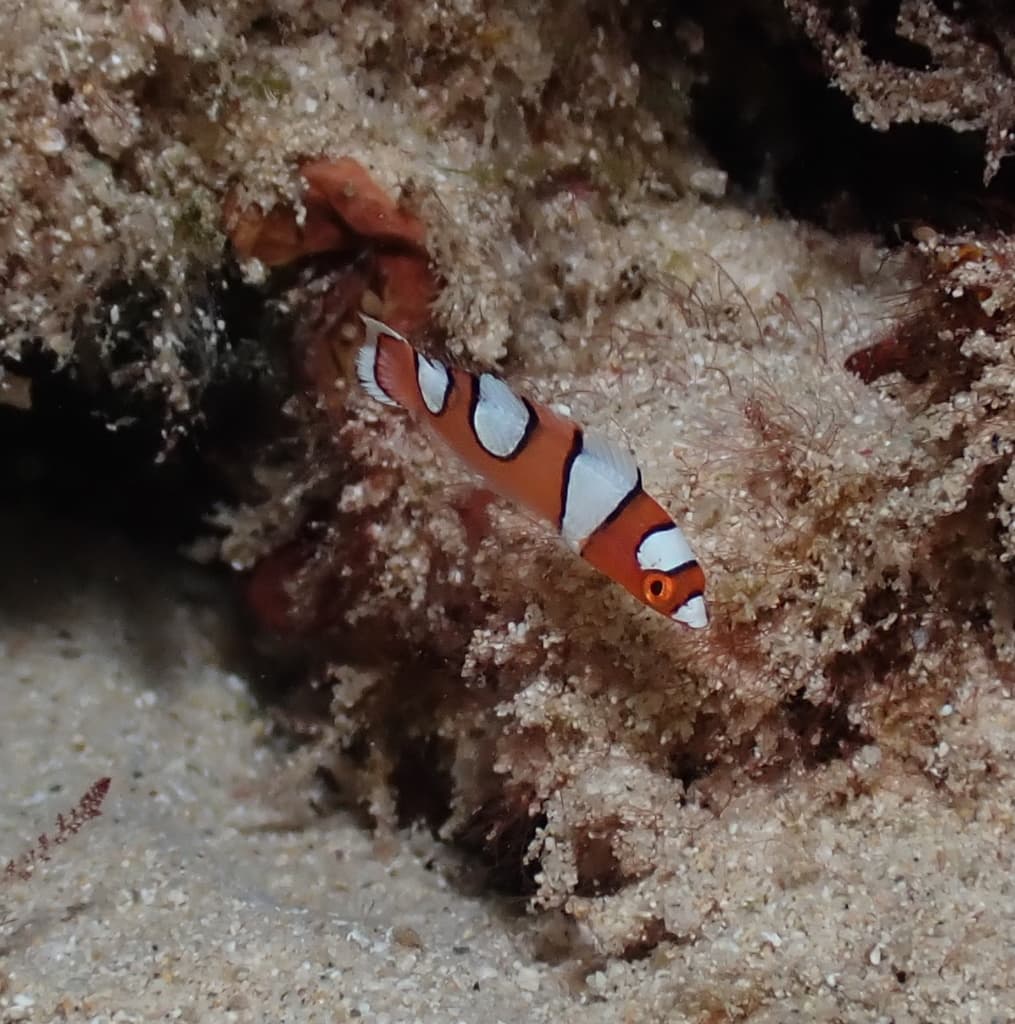
The Red Coris Wrasse undergoes one of the most dramatic color transformations of any marine fish. Juveniles are bright orange-red with bold white spots outlined in black, resembling a completely different species from the adults. Adult terminal-phase males develop a dark blue-green body with vivid blue spots on the face, a bright yellow tail, and striking blue facial markings. This radical transformation is a major draw for aquarists.
This is a large, active wrasse that reaches up to fourteen inches in captivity, making it one of the bigger wrasses commonly available. It requires a spacious aquarium with a deep sand bed, as it buries itself completely at night to sleep. The Red Coris Wrasse is a powerful swimmer with a strong personality and will become the dominant presence in most aquariums.
While the juvenile form is temptingly small and colorful, potential keepers must plan for the large adult size. The Red Coris Wrasse is not reef-safe, as it actively hunts and consumes invertebrates including snails, hermit crabs, shrimp, sea urchins, and even small starfish. It is best suited for large fish-only aquariums or fish-only-with-live-rock setups. Despite its aggressive feeding habits, it is moderately peaceful toward fish tankmates of similar size.
Feeding & Diet
Carnivore
Red Coris Wrasses are voracious carnivores that eat a wide range of invertebrates. In captivity, feed meaty foods including chopped shrimp, squid, clams, mussels, marine pellets, and frozen preparations. They will consume snails, hermit crabs, shrimp, and urchins. Feed two to three times daily.
Compatibility
not-reef-safesemi-aggressivelarge-fish-compatibleinvertebrate-eatersand-sleeper
The Red Coris Wrasse is not reef-safe and will consume invertebrates including snails, hermit crabs, shrimp, and urchins. It is best kept in fish-only systems. Moderately peaceful toward fish tankmates of similar size but may bully very small fish. Compatible with tangs, large angelfish, and other robust species.
Check CompatibilityBreeding
Not bred in captivity
Red Coris Wrasses are protogynous hermaphrodites with dramatic sexual dimorphism. Males maintain territories with harems. Pelagic eggs are released during dusk spawning. Captive breeding has not been achieved due to the large size and pelagic larval requirements.
Special Requirements
- Very large aquarium of 150+ gallons required for adult size
- Deep sand bed of 3-4 inches essential for sleeping
- Secure lid necessary - powerful jumper
- Not reef-safe - will eat invertebrates including snails, crabs, and shrimp
- Dramatic juvenile to adult color transformation
Water Parameters
Temperature74–80°F
Specific Gravity1.02–1.026 sg
pH8.1–8.4
Alkalinity8–12 dKH
Coloration
bluegreenyelloworangered
Tags
not-reef-safesemi-aggressivelarge-fish-compatibleinvertebrate-eatersand-sleeper