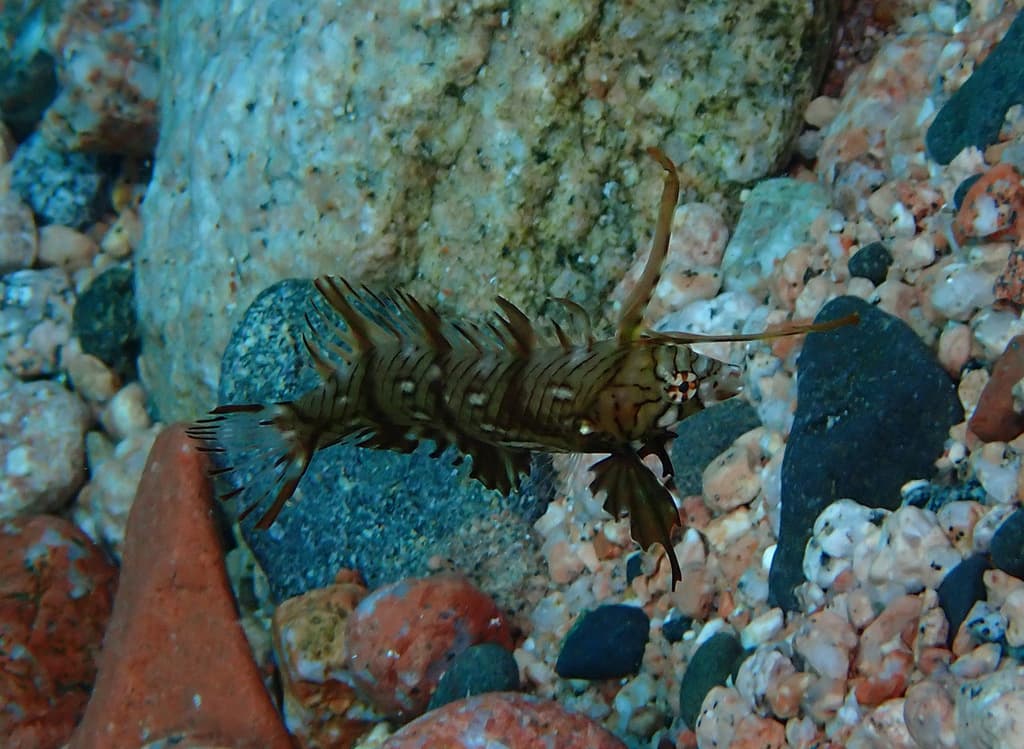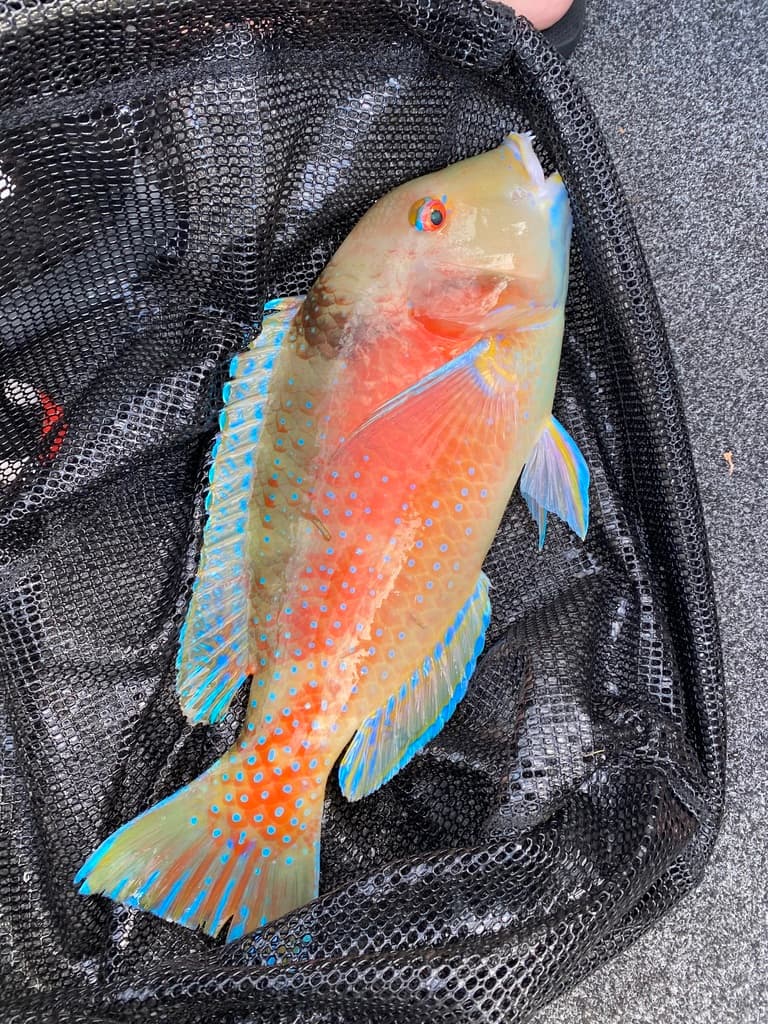
IntermediateSemi-AggressiveNot Reef Safe
Australian Harlequin Tusk
Choerodon venustus
Family: Labridae · Wrasses
Also known as: Australian Tuskfish, Venus Tusk, Venustus Tuskfish
(c) Harry Foster, all rights reserved
Max Size
12"
Min Tank
125 gal
Lifespan
8-12 years
Origin
Australia, Great Barrier Reef
Diet
Carnivore
Swims
Middle
About
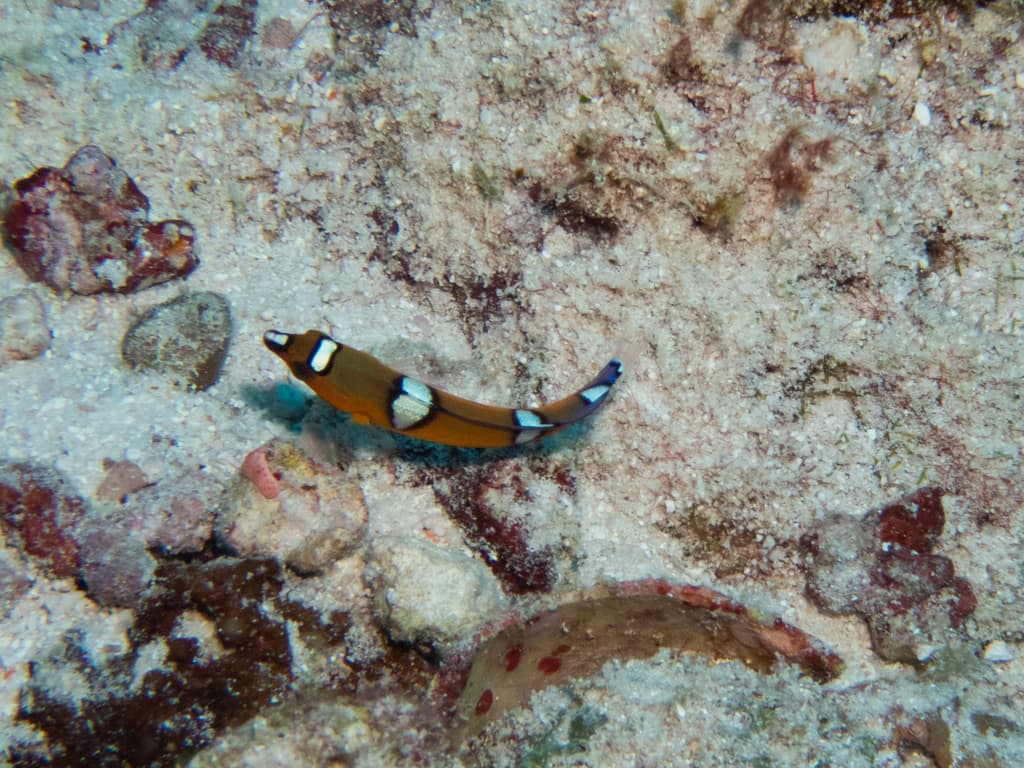
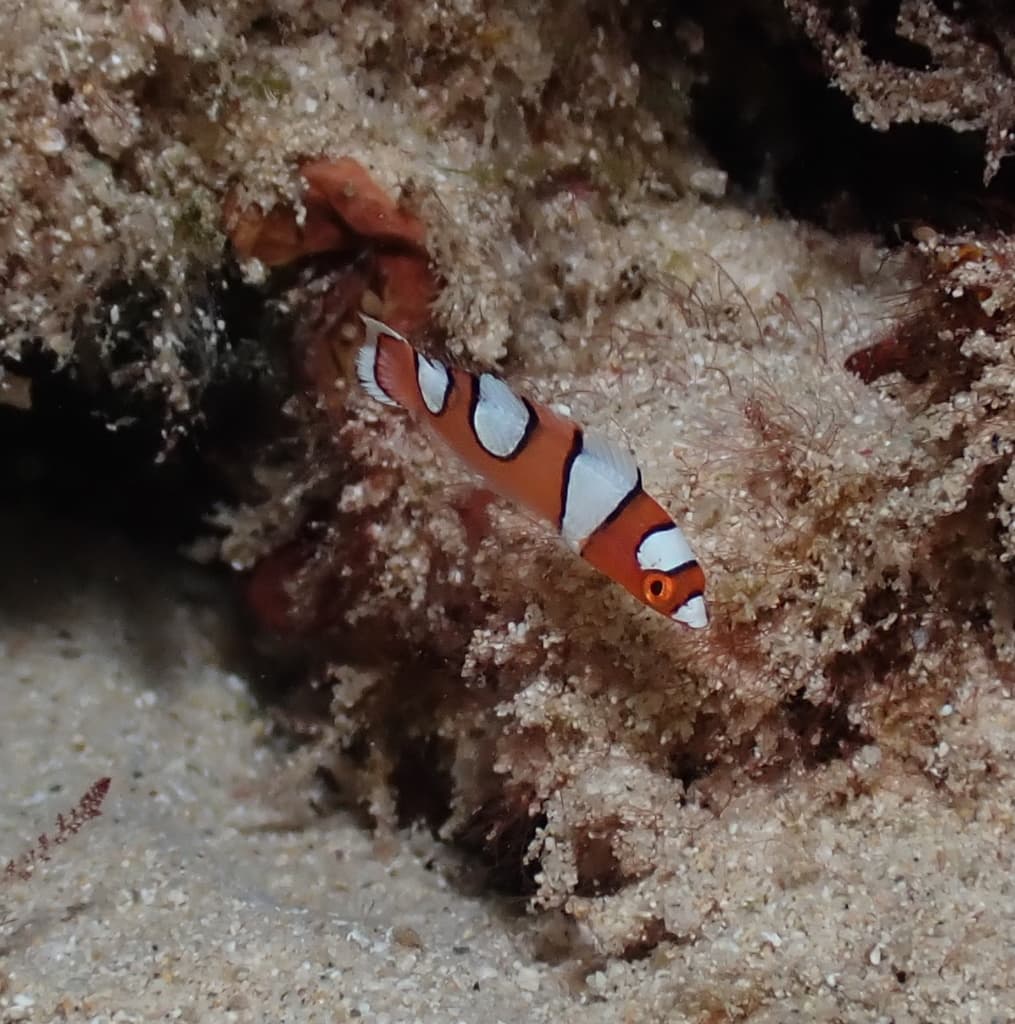
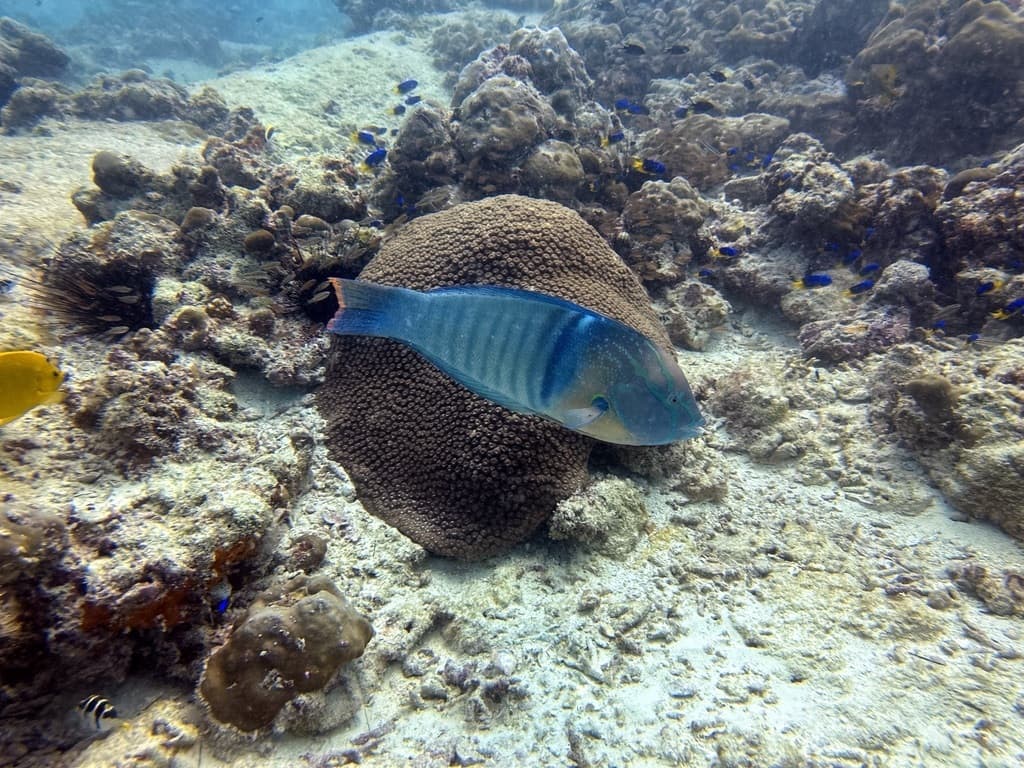
The Australian Harlequin Tusk is a stunningly beautiful wrasse prized for its bold coloration of blue, orange, and red stripes combined with prominent blue tusks protruding from its jaws. This Australian variant is highly sought after for its more vivid coloration compared to the standard Indian Ocean Harlequin Tuskfish, typically displaying brighter oranges and more intense blue markings.
This is a moderately large wrasse that reaches around 12 inches in captivity and requires a spacious aquarium. Despite its impressive tusks, the Australian Harlequin Tusk is not as aggressive as its appearance suggests, though it will readily consume ornamental invertebrates including shrimp, crabs, and snails. This makes it unsuitable for reef aquariums with invertebrate populations.
The Australian Harlequin Tusk is a hardy and personable species that often develops a strong bond with its keeper, learning to recognize feeding times and individuals. It is a bold feeder that accepts a wide variety of meaty foods. A sand bed and tight-fitting lid are essential, as with most wrasses.
Feeding & Diet
Carnivore
The Australian Harlequin Tusk feeds on hard-shelled invertebrates using its powerful tusks to crush prey. In captivity, offer frozen shrimp, squid, clam, mussel, and other meaty seafood. High-quality marine pellets are also accepted. This species uses its tusks to pry invertebrates from rockwork. Feed two to three times daily.
Compatibility
fish-onlysemi-aggressiveinvertebrate-eaterpersonable
The Australian Harlequin Tusk is semi-aggressive but can be housed with other moderately aggressive species of similar size. It will eat ornamental invertebrates but generally ignores corals. It may bully smaller, timid species. Best kept with other robust fish in a fish-only or carefully planned mixed system. Only one tuskfish per tank.
Check CompatibilityBreeding
Not bred in captivity
Australian Harlequin Tuskfish are protogynous hermaphrodites. Captive breeding has not been achieved for this species due to size requirements and complex reproductive behavior. All specimens in the trade are wild-caught from Australian waters.
Special Requirements
- Sand substrate of 2+ inches for sleeping
- Tight-fitting lid essential - known jumper
- Caves and overhangs for retreating
- Will eat ornamental invertebrates including shrimp and crabs
- More vivid coloration than Indian Ocean variant
- Premium pricing due to Australian collection
Water Parameters
Temperature74–80°F
Specific Gravity1.02–1.026 sg
pH8.1–8.4
Alkalinity8–12 dKH
Coloration
blueorangeredwhitegreen
Tags
fish-onlysemi-aggressiveinvertebrate-eaterpersonable