BeginnerSemi-AggressiveReef Safe with Caution
Marble Wrasse
Halichoeres hortulanus
Family: Labridae · Wrasses
Also known as: Checkerboard Wrasse, Hortulanus Wrasse
(c) Francois Libert, some rights reserved (CC BY-NC)
Max Size
12"
Min Tank
100 gal
Lifespan
8-12 years
Origin
Indo-Pacific, Red Sea
Diet
Carnivore
Swims
All
About
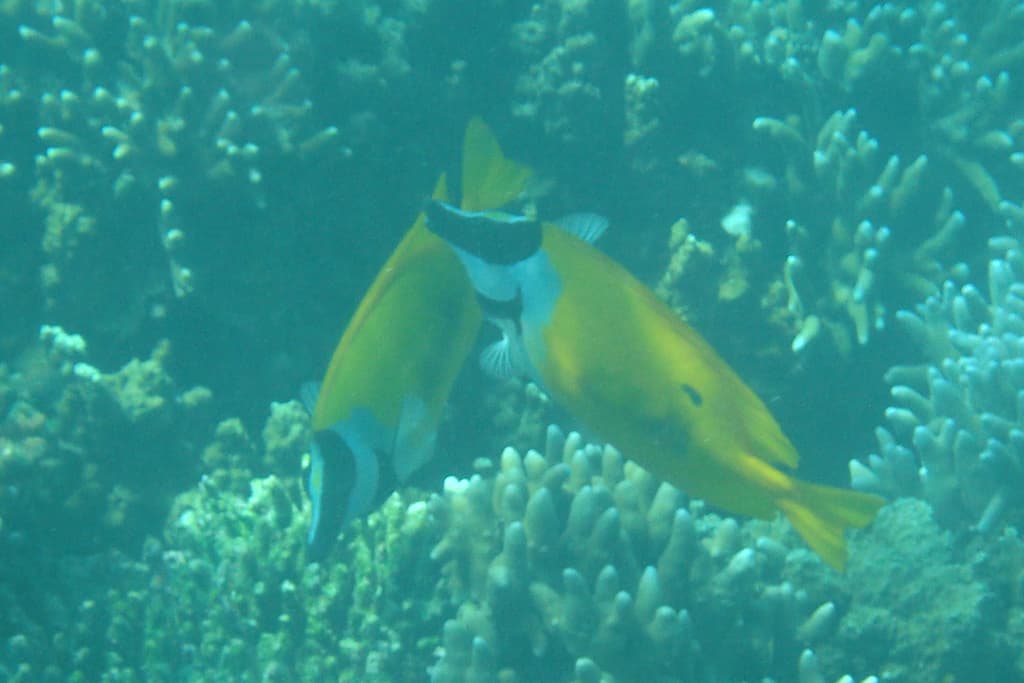
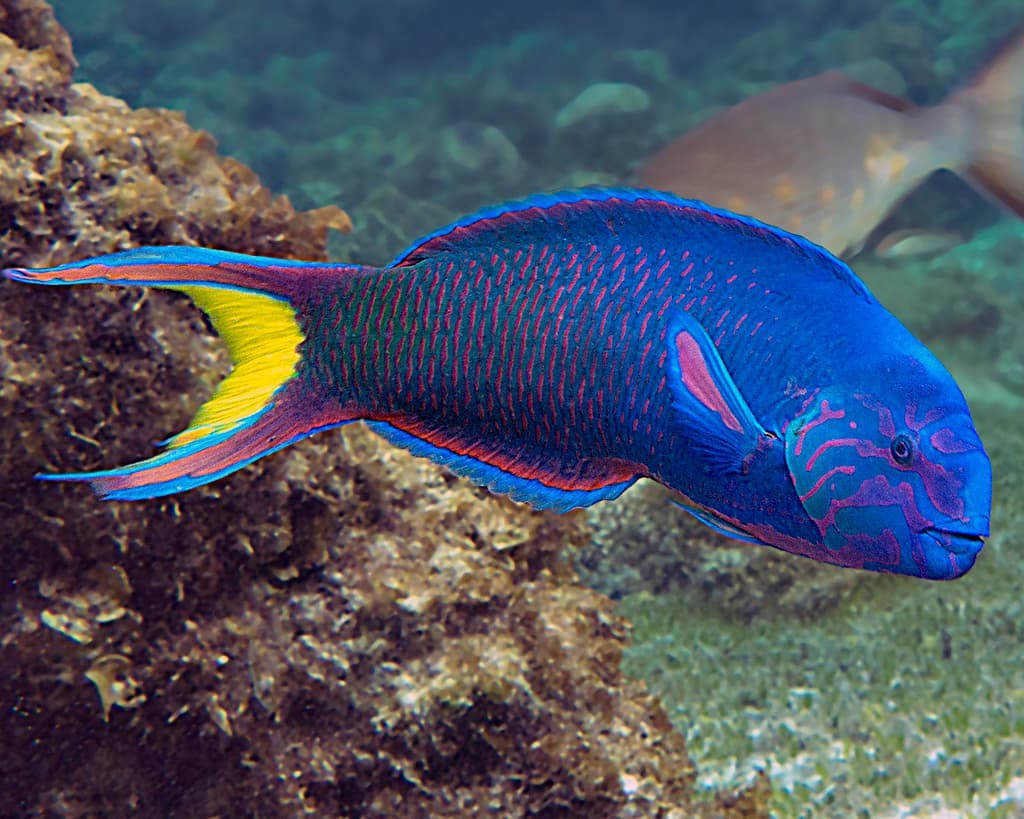
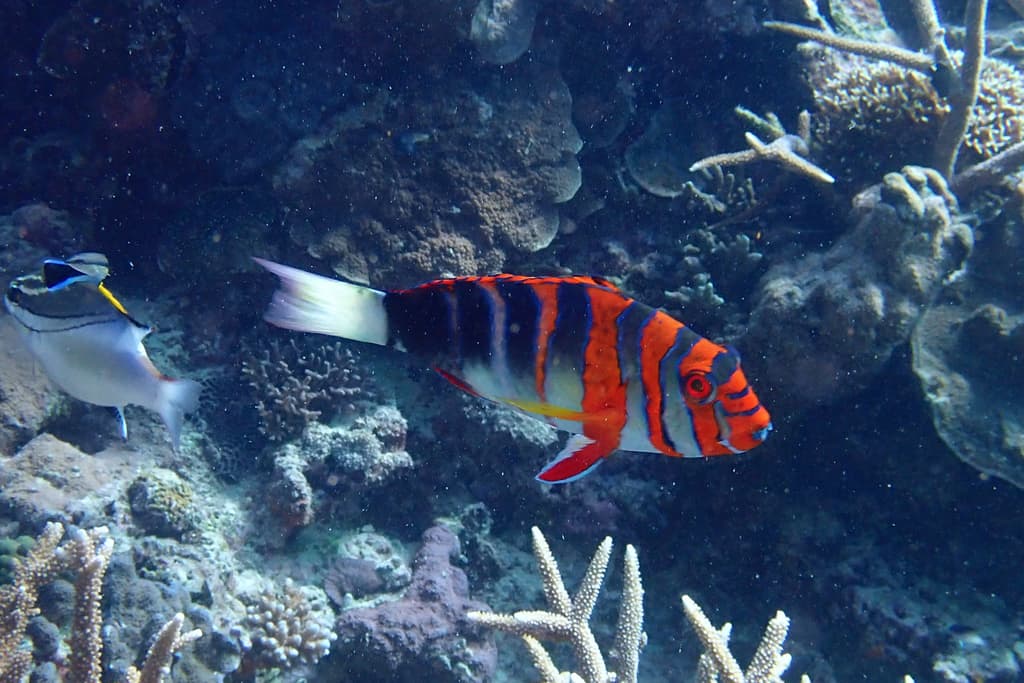
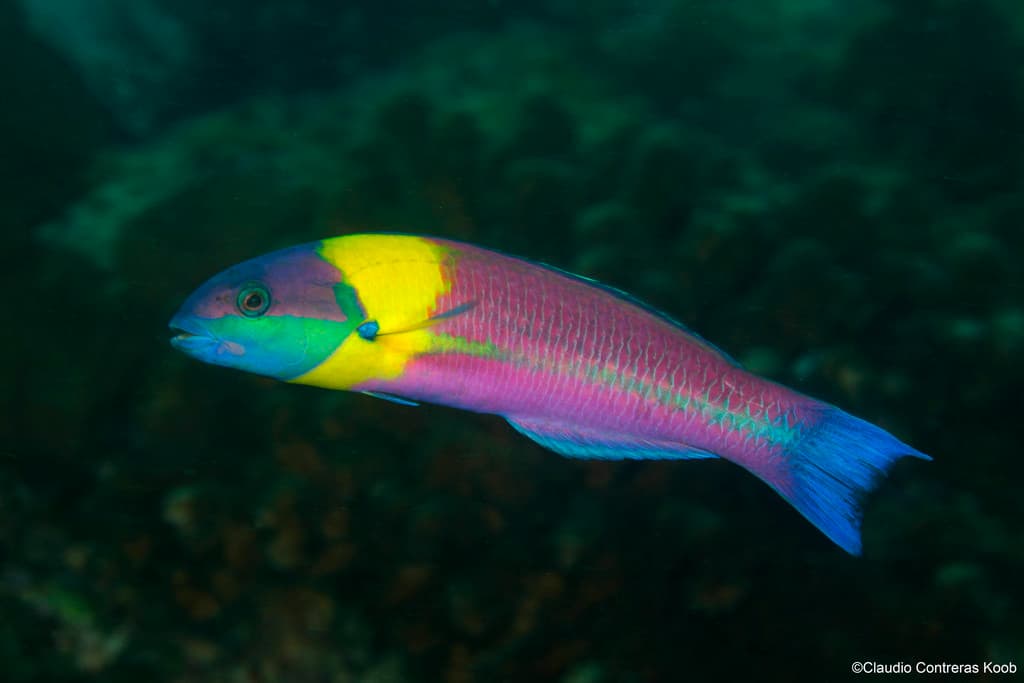
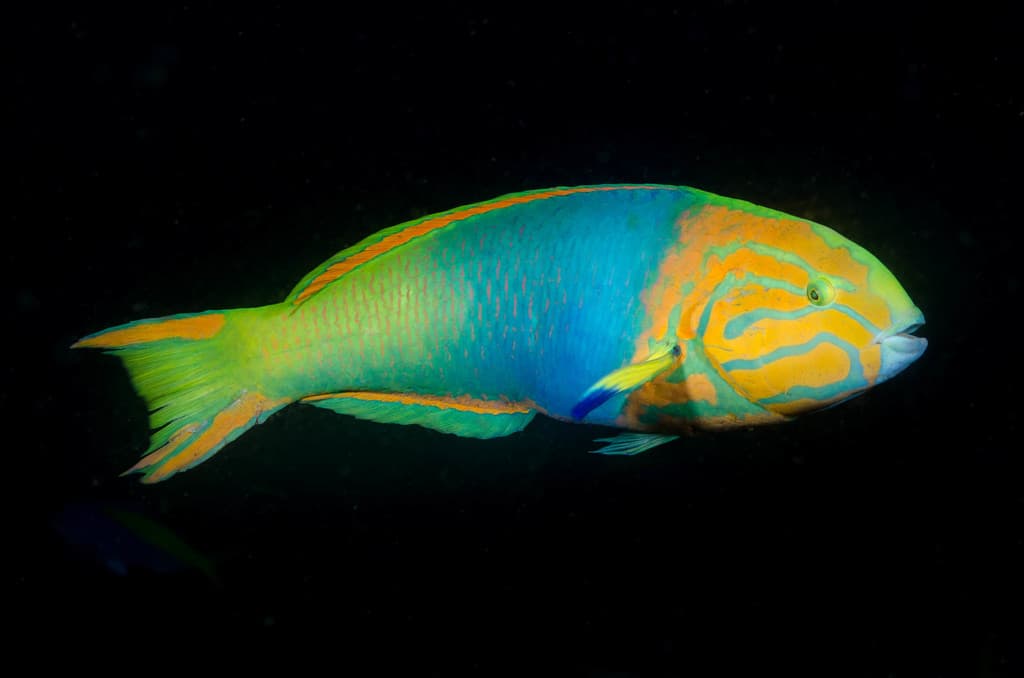
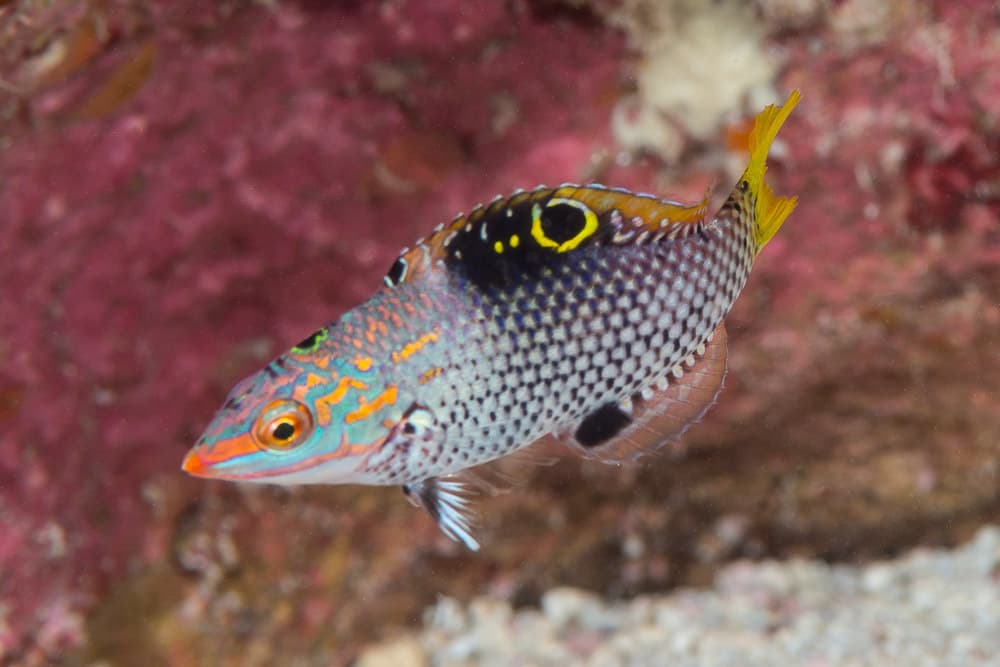
The Marble Wrasse undergoes one of the most dramatic transformations in the wrasse family as it matures. Juveniles display a stunning black and white checkerboard pattern that is remarkably different from the adult coloration. As the fish grows, it transitions to a green-blue body with pink and orange accents and horizontal markings. Terminal-phase males develop particularly vivid coloration with bold facial markings.
This is a large, active wrasse that reaches up to twelve inches in captivity, requiring a spacious aquarium with plenty of swimming room. The Marble Wrasse is a hardy and adaptable species that thrives in captivity, making it an excellent choice for larger fish-only or semi-aggressive community setups. It has a bold, curious personality and quickly becomes a prominent feature of any tank.
While the Marble Wrasse is semi-aggressive and will eat small invertebrates, it generally leaves corals alone. It sleeps buried in the sand bed, so a sand substrate of at least three inches is essential. A secure lid is necessary as well, since this energetic swimmer can jump. The species is widely available and reasonably priced, making it accessible for hobbyists with appropriately large systems.
Feeding & Diet
Carnivore
Marble Wrasses are carnivores that feed on small invertebrates, worms, and crustaceans. In captivity, offer frozen mysis shrimp, brine shrimp, chopped shrimp, clams, marine pellets, and flake food. They will hunt small invertebrates in the tank. Feed two to three times daily.
Compatibility
semi-aggressivecaution-with-invertebrateslarge-fish-compatiblecoral-safesand-sleeper
The Marble Wrasse is semi-aggressive and best kept with robust tankmates. It will eat small invertebrates including shrimp and small crabs but generally leaves corals alone. Avoid housing with very small or timid fish. Compatible with tangs, large angelfish, triggerfish, and other assertive community species.
Check CompatibilityBreeding
Not bred in captivity
Marble Wrasses are protogynous hermaphrodites. Males maintain territories with harems of females. Spawning involves pelagic egg release at dusk. Captive breeding has not been achieved due to the species' large size and pelagic larval stage.
Special Requirements
- Large aquarium of 100+ gallons required due to adult size
- Sand substrate of 3+ inches required for sleeping
- Secure lid essential - can jump when startled
- Will eat small ornamental invertebrates
- Dramatic juvenile to adult color transformation
Water Parameters
Temperature74–82°F
Specific Gravity1.02–1.026 sg
pH8.1–8.4
Alkalinity8–12 dKH
Coloration
greenbluepinkorangewhiteblack
Tags
semi-aggressivecaution-with-invertebrateslarge-fish-compatiblecoral-safesand-sleeper