BeginnerSemi-AggressiveReef Safe with Caution
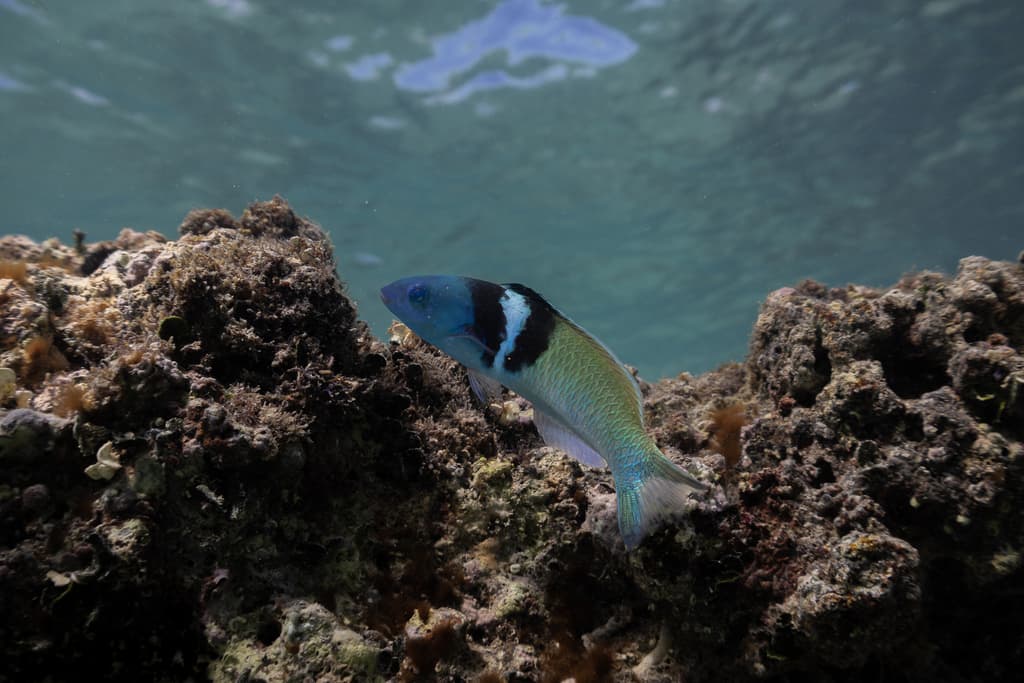
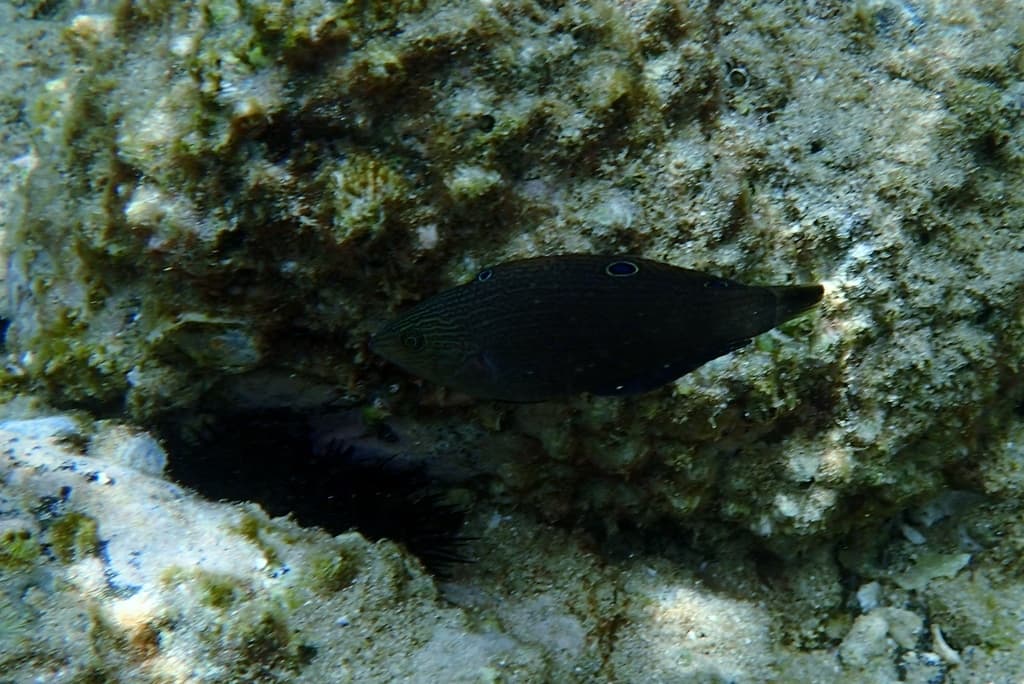
Dusky Wrasse
Halichoeres marginatus
Family: Labridae · Wrasses
Also known as: Dusky Pencil Wrasse, Marginatus Wrasse, Bordered Wrasse
(c) Nicola Crockford, some rights reserved (CC BY)
Max Size
7"
Min Tank
75 gal
Lifespan
6-8 years
Origin
Indo-Pacific, Indonesia
Diet
Carnivore
Swims
Middle
About
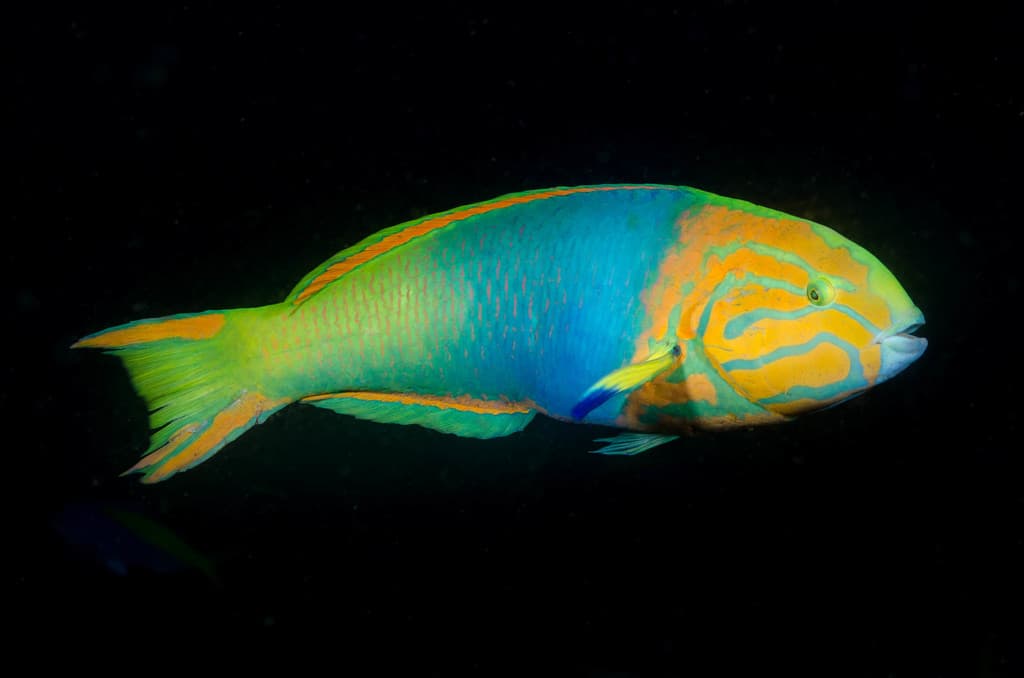
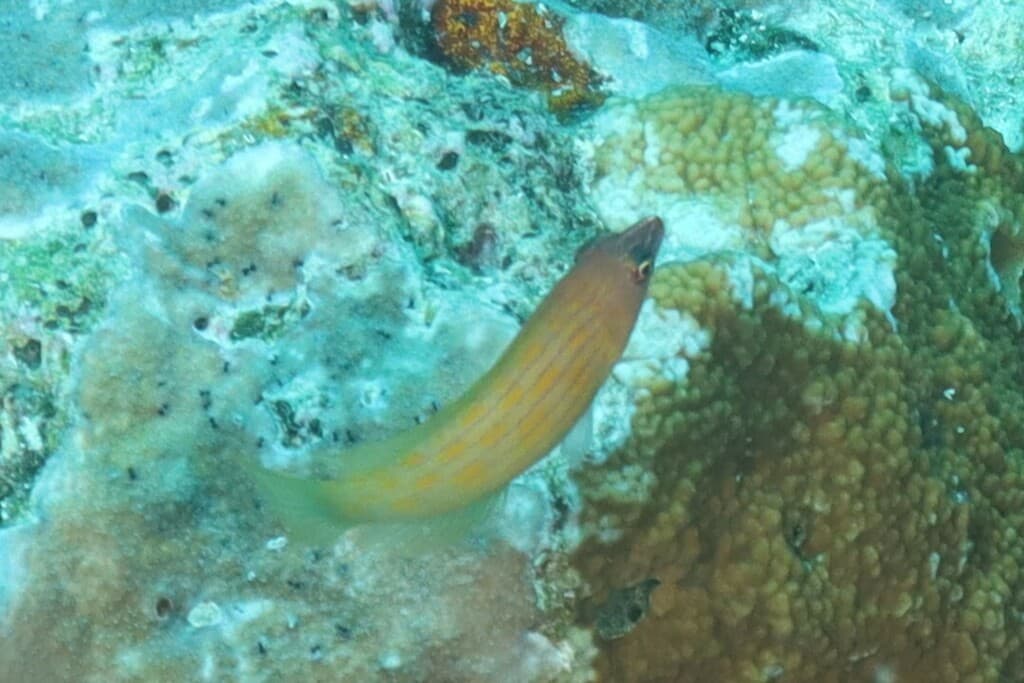
The Dusky Wrasse is a hardy, active, and attractively colored member of the Halichoeres genus that has earned a loyal following among marine aquarists for its resilience and pest-control abilities. Males display a gorgeous green body with orange-red horizontal lines, a prominent blue facial marking, and a distinctive dark spot on the dorsal fin, while females are more muted with a brownish body, lighter belly, and a dark lateral stripe. Like many wrasses in this genus, the color transformation during sex change is dramatic and rewarding to observe.
In the wild, Halichoeres marginatus is widely distributed throughout the Indo-Pacific, from Japan and the Philippines to Australia and Micronesia. It inhabits shallow coral reefs, lagoons, and rubble areas at depths of 1 to 20 meters, where it actively forages across the reef substrate for small crustaceans, worms, gastropods, and other benthic invertebrates. Its constant activity and quick movements make it one of the more visible fish on the reef.
In the aquarium, the Dusky Wrasse is an excellent choice for aquarists seeking a hardy, active wrasse that provides effective pest control. It readily consumes bristleworms, flatworms, pyramidellid snails, and other nuisance invertebrates. This species adapts quickly to captive life and accepts prepared foods almost immediately. A 75-gallon aquarium with a tight-fitting lid, a sand bed for sleeping, and ample rockwork for foraging provides the ideal setup.
Feeding & Diet
Carnivore
Dusky Wrasses are active carnivores that feed on a wide range of small invertebrates in the wild. In captivity, they readily accept frozen mysis shrimp, enriched brine shrimp, chopped krill, cyclops, and high-quality marine pellets and flakes. They will also consume nuisance organisms like bristleworms and flatworms from the live rock. Feed two to three times daily to support their active metabolism.
Compatibility
semi-aggressivecommunity-safepest-controllerjumperbeginner-friendly
The Dusky Wrasse is semi-aggressive and can be assertive toward smaller or newly introduced fish. It does well with similarly sized, robust species such as clownfish, tangs, angelfish, and other hardy wrasses. May harass very small or timid fish. It may consume small decorative shrimp but is generally safe with larger invertebrates and corals.
Check CompatibilityBreeding
Not bred in captivity
Dusky Wrasses are protogynous hermaphrodites, with the dominant female in a group changing sex to male. Males court females with color displays and rapid swimming. Spawning occurs at dusk with pelagic egg release. Captive breeding has not been achieved due to the difficulty of rearing the small pelagic larvae.
Special Requirements
- Sand bed required for sleeping - buries itself at night
- Tight-fitting lid essential to prevent jumping
- May consume small ornamental shrimp and delicate invertebrates
- Provide plenty of rockwork for natural foraging behavior
- Best added to established aquariums with mature biological filtration
Water Parameters
Temperature72–82°F
Specific Gravity1.02–1.026 sg
pH8.1–8.4
Alkalinity8–12 dKH
Coloration
greenorangeredbluebrown
Tags
semi-aggressivecommunity-safepest-controllerjumperbeginner-friendly