IntermediateSemi-AggressiveReef Safe with Caution
Bluehead Wrasse
Thalassoma bifasciatum
Family: Labridae · Wrasses
Also known as: Blue-Headed Wrasse, Bluehead
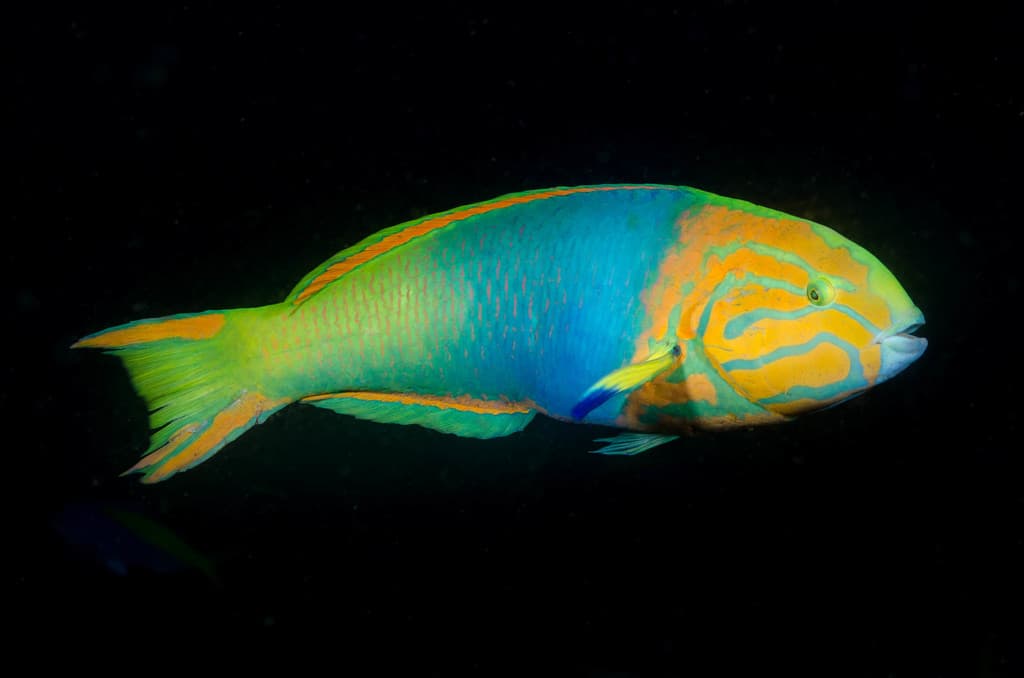
(c) thomaslavorel, some rights reserved (CC BY-NC)
Max Size
6"
Min Tank
75 gal
Lifespan
5-8 years
Origin
Caribbean, Western Atlantic
Diet
Carnivore
Swims
Middle
About
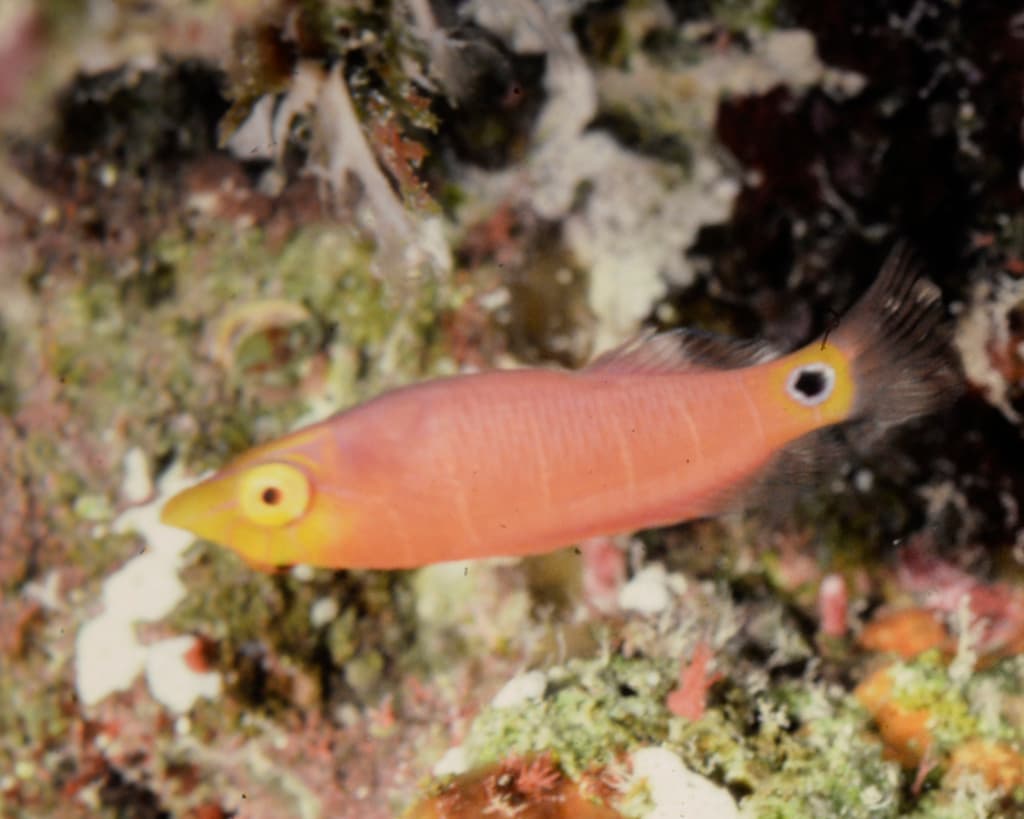
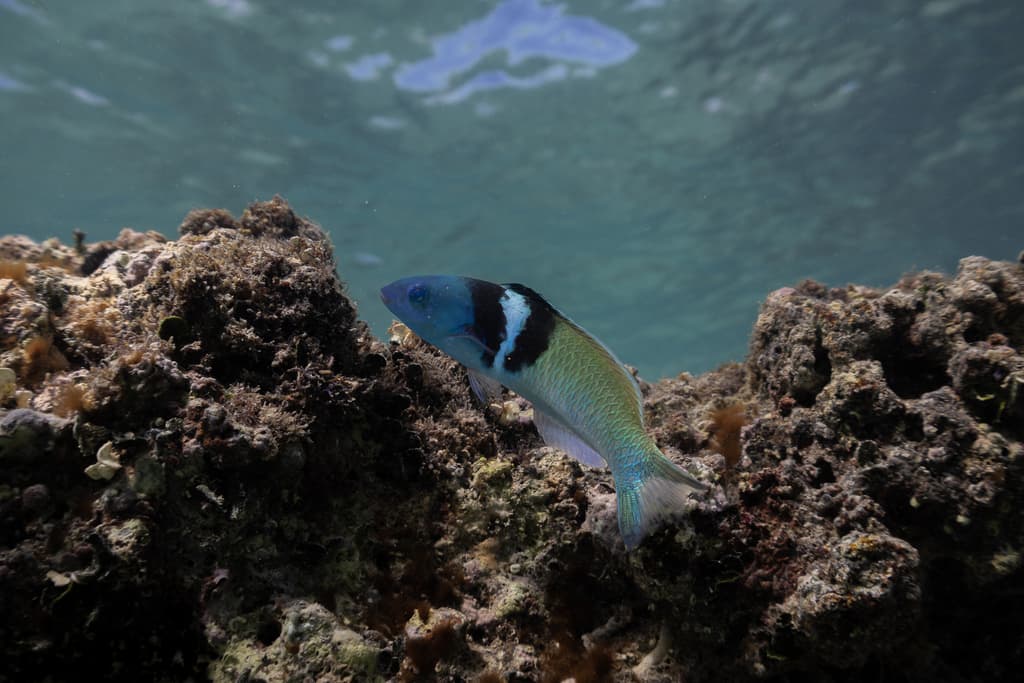
The Bluehead Wrasse is one of the most abundant and scientifically studied reef fish in the Caribbean, widely recognized for its dramatic terminal-phase male coloration. Supermales display a brilliant blue head separated from a green body by two bold black bands bordered in white, creating one of the most iconic color patterns found on Caribbean reefs. Females and initial-phase males are far more understated, exhibiting a yellowish body with a dark lateral stripe and a pale belly, looking so different that early naturalists classified them as separate species.
In the wild, Thalassoma bifasciatum is found throughout the Western Atlantic, from Bermuda and Florida southward through the Caribbean to northern South America. It inhabits virtually every type of reef habitat, from shallow patch reefs and seagrass beds to deep outer reef walls, making it one of the most ecologically versatile wrasse species. Bluehead Wrasses form complex social hierarchies with a single supermale presiding over a territory containing multiple females.
In the aquarium, the Bluehead Wrasse is a moderately hardy species that adapts well to captive conditions with proper care. It is an active and fast swimmer that requires a minimum of 75 gallons with open swimming space and a secure lid. While it will not harm corals, it readily consumes small crustaceans and invertebrates, so caution is advised in reef systems with ornamental shrimp. This species makes an excellent addition to Caribbean-themed fish-only or mixed reef aquariums.
Feeding & Diet
Carnivore
Bluehead Wrasses are opportunistic carnivores that feed on a wide variety of small invertebrates, zooplankton, and ectoparasites from other fish. In captivity, they readily accept frozen mysis shrimp, enriched brine shrimp, chopped seafood, cyclops, and high-quality marine pellets and flakes. They are enthusiastic eaters and rarely present feeding difficulties. Feed two to three times daily.
Compatibility
semi-aggressivecommunity-safejumperreef-safepest-controller
The Bluehead Wrasse is semi-aggressive and does best with similarly sized, robust tankmates. It can be territorial toward other wrasses and may bully smaller, timid species. Compatible with tangs, angelfish, clownfish, and other bold reef fish. Avoid housing with delicate species like seahorses, pipefish, or mandarin dragonets.
Check CompatibilityBreeding
Not bred in captivity
Bluehead Wrasses have one of the best-studied reproductive systems of any reef fish. They are protogynous hermaphrodites with two male types: terminal-phase supermales that pair spawn, and initial-phase males that participate in group spawning. Despite extensive scientific research, commercial captive breeding has not been achieved due to the difficulty of rearing pelagic larvae.
Special Requirements
- Minimum 75-gallon aquarium with open swimming space
- Secure tight-fitting lid required - prone to jumping
- Will consume small ornamental shrimp and crustaceans
- Provide rockwork with caves for sleeping and retreat
- Best kept as a single specimen unless tank is very large
Water Parameters
Temperature74–82°F
Specific Gravity1.02–1.026 sg
pH8.1–8.4
Alkalinity8–12 dKH
Coloration
bluegreenyellowblackwhite
Tags
semi-aggressivecommunity-safejumperreef-safepest-controller