IntermediateSemi-AggressiveReef Safe
Mystery Wrasse
Pseudocheilinus ocellatus
Family: Labridae · Wrasses
Also known as: Five-Barred Wrasse, Ocellate Wrasse
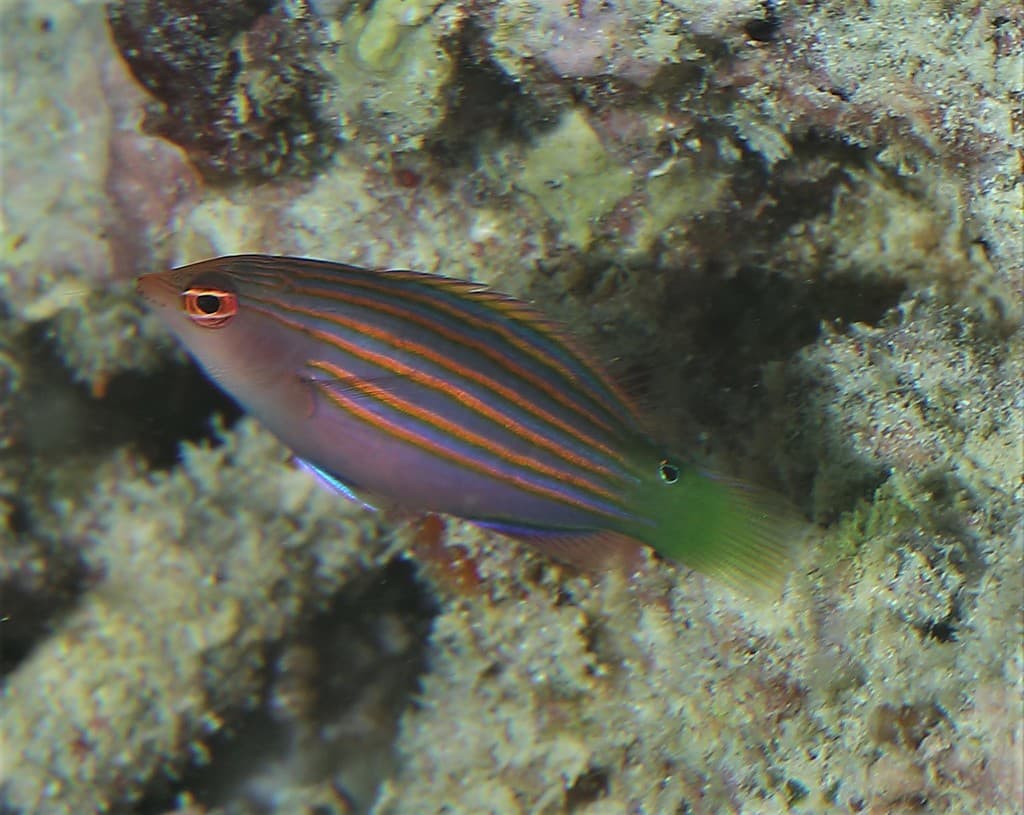
(c) Roger Rittmaster, some rights reserved (CC BY)
Max Size
5"
Min Tank
30 gal
Lifespan
5-8 years
Origin
Central Pacific, Western Pacific
Diet
Carnivore
Swims
Middle
About
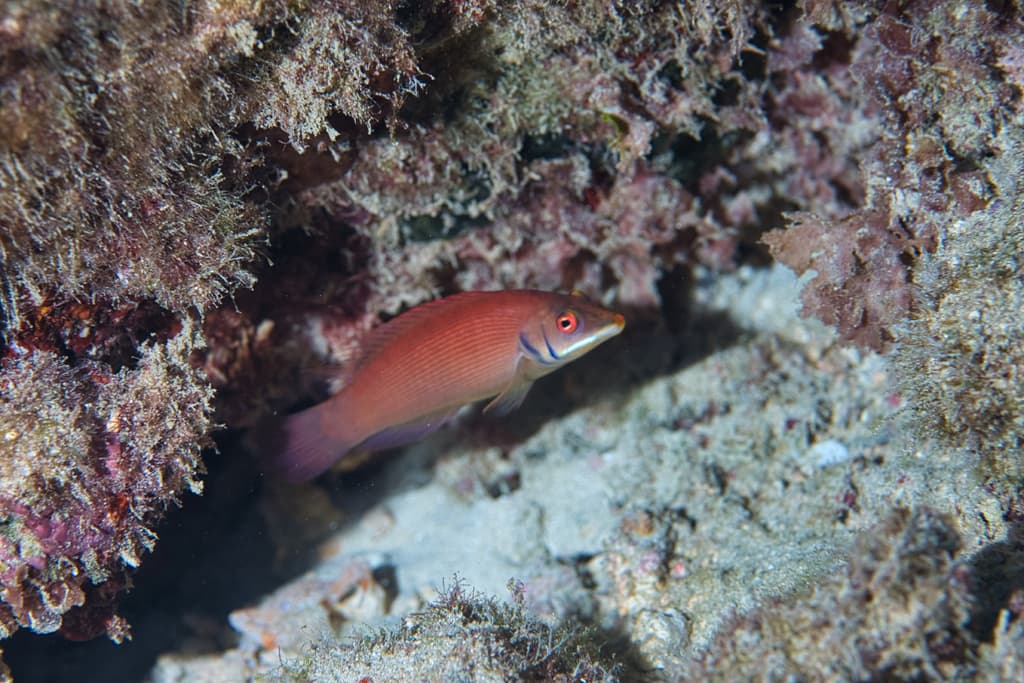
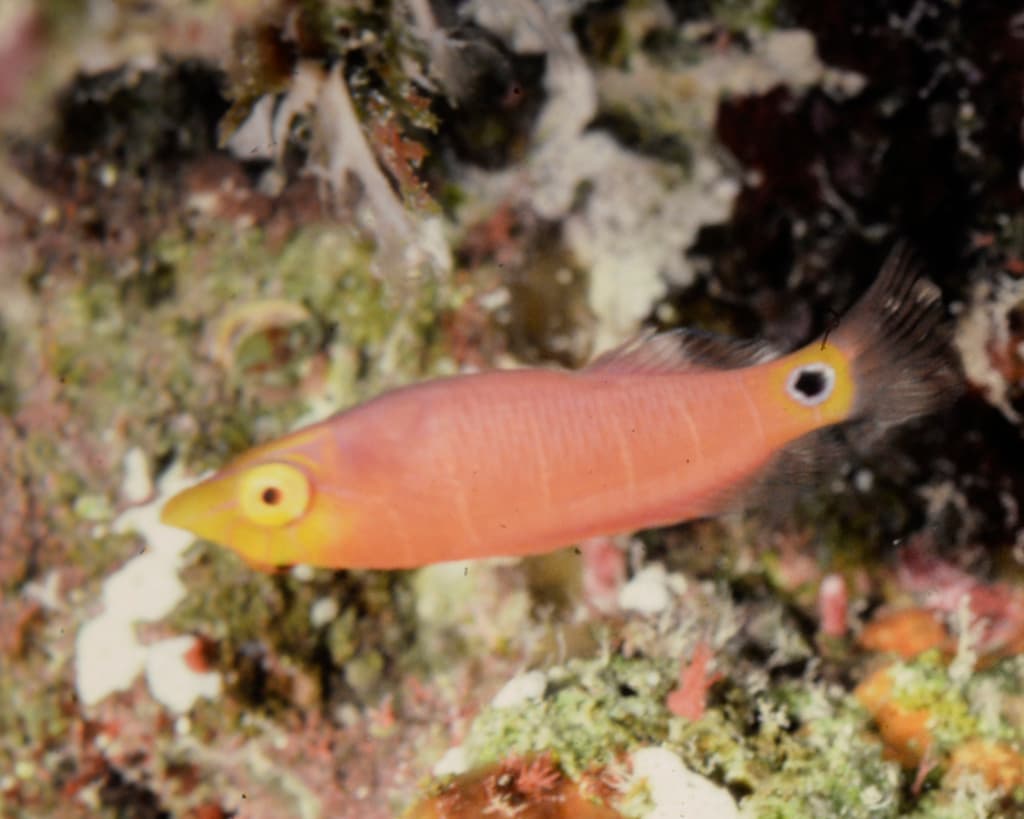
The Mystery Wrasse is one of the most visually stunning small wrasses available in the marine aquarium hobby, prized for its striking coloration of vivid purple to magenta bars alternating with brilliant blue-white interspaces across a compact, torpedo-shaped body. A distinctive white-ringed black eyespot (ocellus) adorns the caudal peduncle, and the tail fin often displays vibrant yellow-orange hues. This combination of colors and patterns makes it one of the most sought-after wrasses among reef aquarium enthusiasts, though it commands a premium price due to its relatively uncommon availability.
In the wild, the Mystery Wrasse inhabits rubble zones and coral-rich reef slopes at moderate depths, where it darts among crevices in search of small invertebrate prey. It is a secretive species by nature, and newly introduced specimens will often hide extensively among rockwork for the first several days or even weeks. Patience is key during this acclimation period, as the fish will gradually become bolder and more visible once it establishes a territory and recognizes feeding times. Providing an abundance of live rock with caves and crevices is essential to help this species feel secure.
Despite its initially shy demeanor, the Mystery Wrasse is a hardy and disease-resistant species once established in the aquarium. It belongs to the same genus as the popular Six Line Wrasse and shares that species' tendency to become territorial over time, particularly toward other wrasses and newly introduced fish. However, the Mystery Wrasse is generally less aggressive than its six-lined cousin. It is completely reef-safe and will not bother corals or sessile invertebrates, though it may prey on very small ornamental shrimp. Like other Pseudocheilinus wrasses, it is also an effective hunter of small flatworms and other invertebrate pests.
Feeding & Diet
Carnivore
Mystery Wrasses are carnivores that feed on small crustaceans, zooplankton, and tiny invertebrates in the wild. In captivity, offer a varied diet of frozen mysis shrimp, enriched brine shrimp, cyclops, and finely chopped seafood. They will also accept high-quality marine pellets and flake foods once acclimated. Their natural foraging behavior supplements their diet with small bristleworms and copepods from live rock. Feed two to three times daily.
Compatibility
reef-safesemi-aggressivepest-controllermay-bully-timid-fishactive-swimmer
The Mystery Wrasse can become territorial toward other wrasses, newly introduced fish, and small timid species, though it is generally less aggressive than the closely related Six Line Wrasse. It is best housed with moderately peaceful to semi-aggressive tankmates such as clownfish, tangs, dwarf angelfish, and hawkfish. Avoid keeping with other Pseudocheilinus wrasses unless the tank is very large. Completely reef-safe with corals and most invertebrates.
Check CompatibilityBreeding
Not bred in captivity
Mystery Wrasses are protogynous hermaphrodites, meaning all individuals start as female and the dominant fish transitions to male. They are pelagic spawners that release eggs into the water column at dusk. Captive breeding has not been achieved for this species, and all specimens available in the trade are wild-caught, primarily from the Marshall Islands and other Central Pacific locations.
Special Requirements
- Abundant live rock with caves and crevices for hiding
- Will be shy and reclusive when first introduced - patience required
- Add before more aggressive species but after very timid fish
- Tight-fitting lid essential - known to jump
- May prey on very small ornamental shrimp
- Effective pest controller for flatworms and bristleworms
Water Parameters
Temperature74–80°F
Specific Gravity1.02–1.026 sg
pH8.1–8.4
Alkalinity8–12 dKH
Coloration
purplemagentabluewhiteyelloworange
Tags
reef-safesemi-aggressivepest-controllermay-bully-timid-fishactive-swimmer