BeginnerPeacefulReef Safe
Fairy Wrasse (Lubbock's)
Cirrhilabrus lubbocki
Family: Labridae · Fairy & Flasher Wrasses
Also known as: Lubbock's Fairy Wrasse, Lubbock's Wrasse, Multicolor Fairy Wrasse
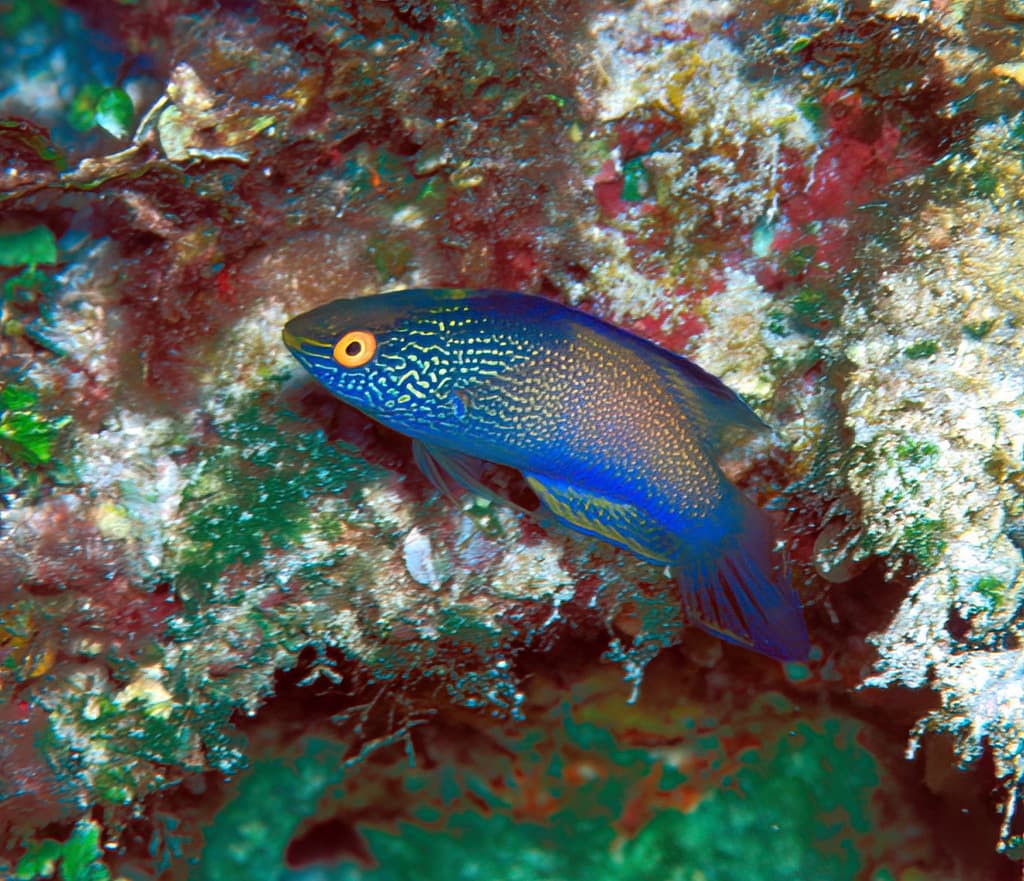
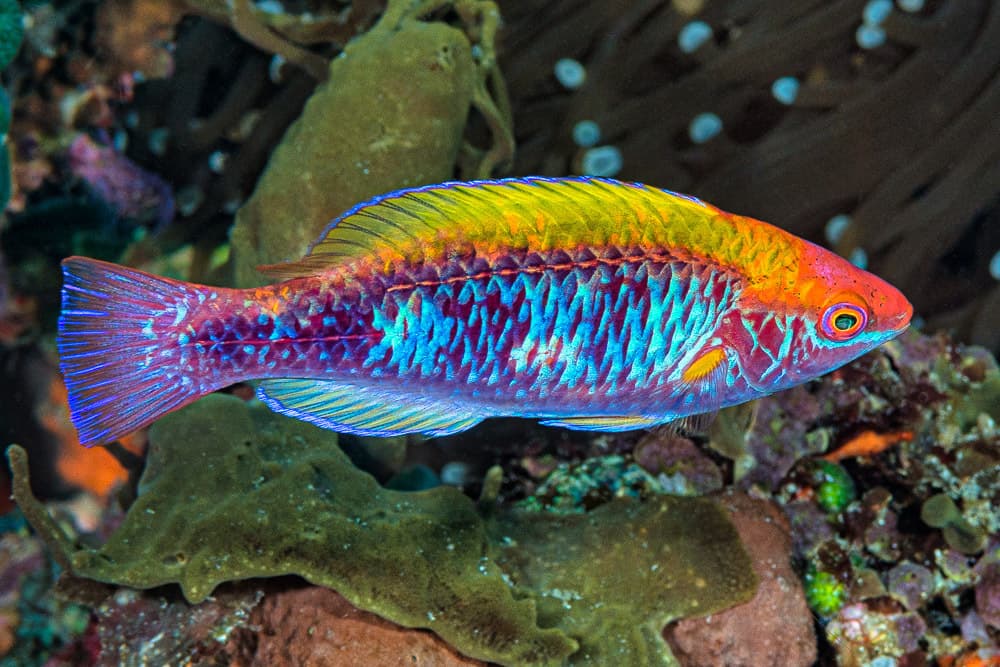
(c) François Libert, some rights reserved (CC BY-NC-SA)
Max Size
3"
Min Tank
55 gal
Lifespan
5-7 years
Origin
Western Pacific, Indonesia
Diet
Carnivore
Swims
Middle
About
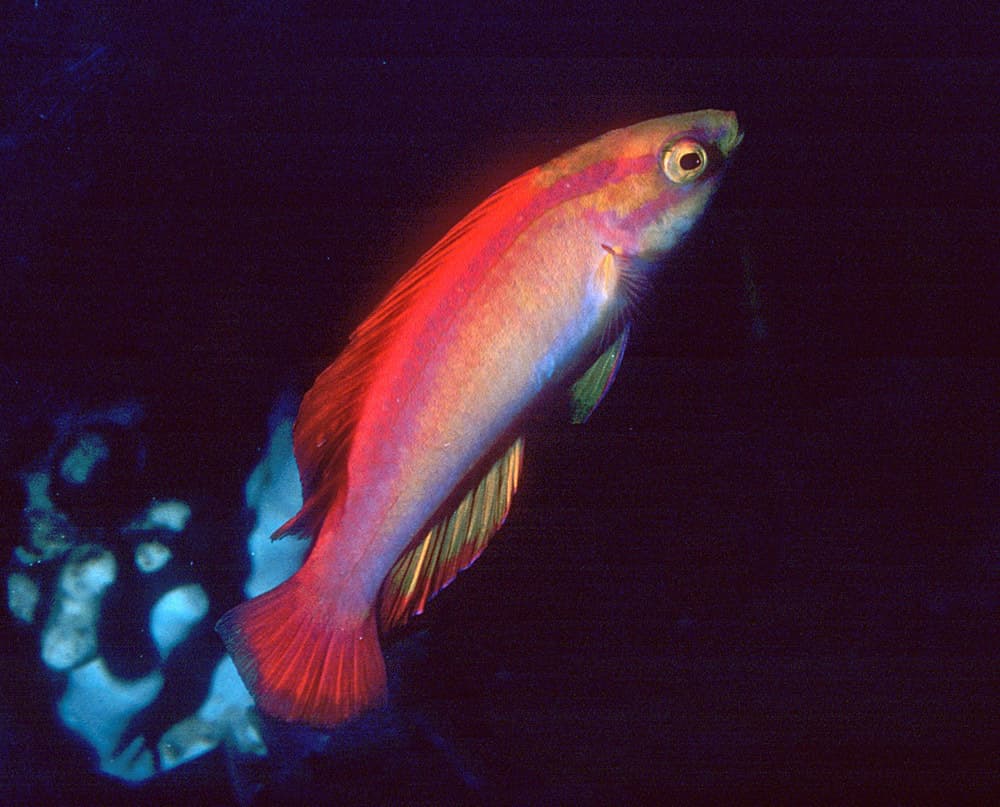
Lubbock's Fairy Wrasse is a delightful small fairy wrasse prized for its rich pink to reddish-orange coloration and manageable size. Males display a warm rosy-pink body overlaid with subtle yellow highlights, particularly along the belly and lower flanks, while a distinctive blue streak extends behind the eye. The dorsal fin is edged in blue-violet, and the overall appearance becomes significantly more vivid during courtship displays. Females are somewhat more muted with a pinkish hue and less defined markings, but they remain attractive fish in their own right.
In the wild, Cirrhilabrus lubbocki is found throughout the western Pacific, inhabiting rubble zones and reef slopes at moderate depths. It tends to form small harems with a single dominant male presiding over several females. These groups hover just above the reef substrate, darting out to pick passing zooplankton from the water column. The species is named after the ichthyologist Roger Lubbock, who made significant contributions to the study of labrid fishes.
Lubbock's Fairy Wrasse is one of the most beginner-friendly fairy wrasses available. Its small adult size of around 3 inches makes it suitable for moderate-sized reef aquariums, and its hardy constitution means it adapts quickly to captive conditions. It is completely reef-safe and poses no threat to corals or invertebrates. As with all fairy wrasses, a well-sealed lid is essential to prevent jumping. Provide a varied diet of meaty frozen foods offered multiple times per day for best results.
Feeding & Diet
Carnivore
Lubbock's Fairy Wrasses are carnivores that feed primarily on zooplankton in the wild. In captivity, offer frozen mysis shrimp, enriched brine shrimp, cyclops, and high-quality marine pellets. They readily accept most prepared foods. Feed two to three times daily in small portions to maintain body condition and coloration.
Compatibility
reef-safepeacefulcommunity-safecarnivorenano-friendly
Lubbock's Fairy Wrasse is one of the most peaceful fairy wrasses and gets along with virtually all tankmates. Males may display toward other Cirrhilabrus species but rarely cause harm. Excellent community fish that coexists well with clownfish, tangs, gobies, blennies, anthias, and most other reef inhabitants. Completely reef-safe with all corals and invertebrates.
Check CompatibilityBreeding
Not bred in captivity
Lubbock's Fairy Wrasses are protogynous hermaphrodites. In the absence of a dominant male, the largest female will transition to male. Males perform courtship displays at dusk, rapidly flashing colors and flaring fins before the pair rises to release pelagic eggs. Captive breeding has not been successfully achieved due to the extremely small larval size and specialized planktonic food requirements.
Special Requirements
- Tight-fitting lid essential - notorious jumper
- Multiple small feedings per day recommended
- Open swimming space in the middle water column
- Moderate water flow preferred
- Best kept as the only Cirrhilabrus species in smaller tanks
Water Parameters
Temperature74–80°F
Specific Gravity1.02–1.026 sg
pH8.1–8.4
Alkalinity8–12 dKH
Coloration
pinkredyellowblueviolet
Tags
reef-safepeacefulcommunity-safecarnivorenano-friendly