BeginnerAggressiveReef Safe
Black Durgeon
Melichthys niger
Family: Balistidae · Triggerfish
Also known as: Black Triggerfish, Black Durgon, Hawaiian Black Triggerfish
(c) Sébastien Lhoumeau, all rights reserved
Max Size
14"
Min Tank
180 gal
Lifespan
10-15 years
Origin
Circumtropical, Hawaii
Diet
Omnivore
Swims
All
About
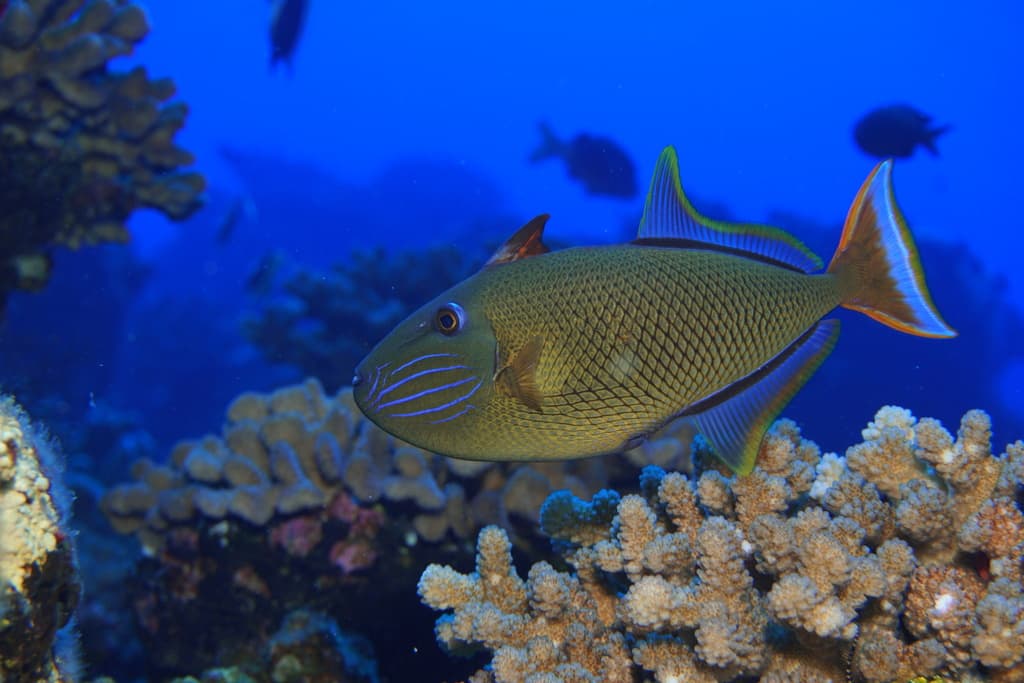
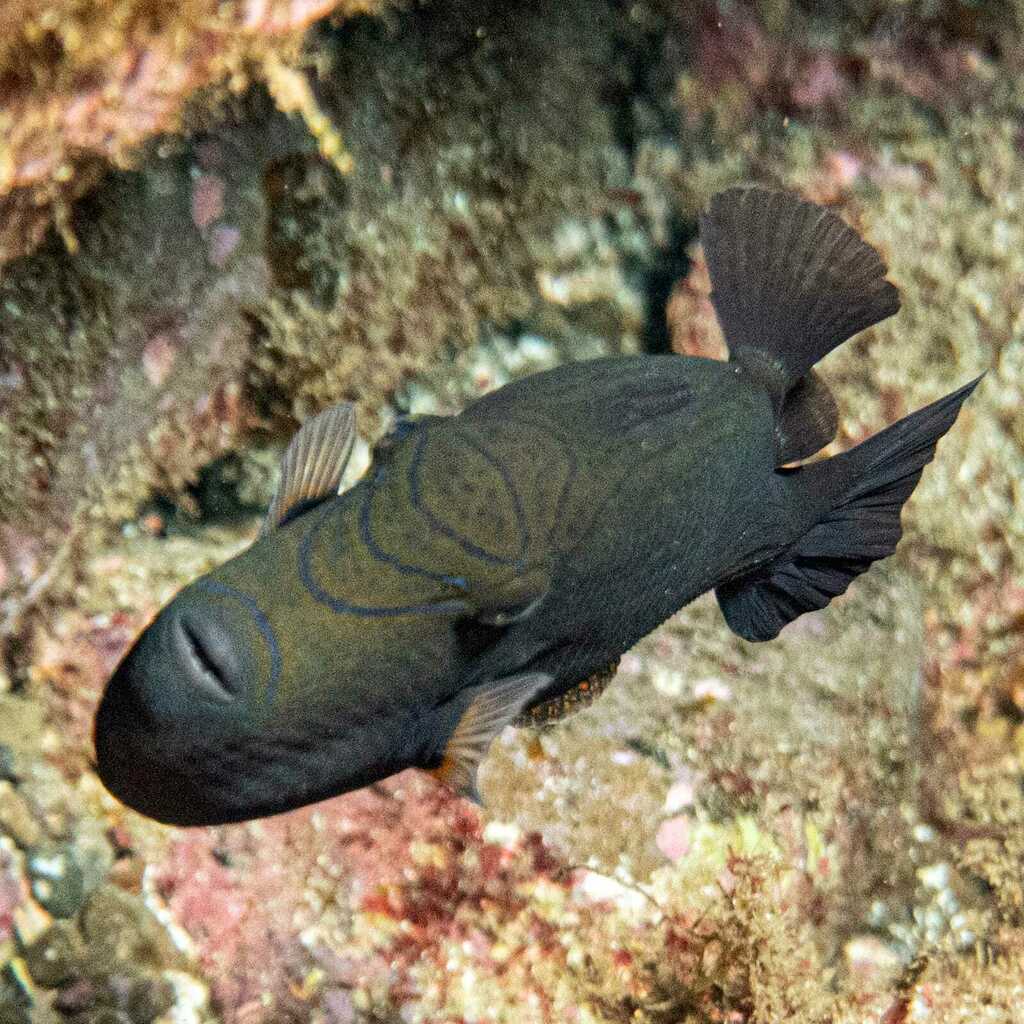
The Black Durgeon is a striking triggerfish species distinguished by its solid jet-black body with subtle blue or green iridescence visible under aquarium lighting. White lines run along the bases of the dorsal and anal fins, providing an elegant contrast against the dark body. This species is found across all tropical oceans, making it one of the most widely distributed triggerfish in the world.
Unlike many triggerfish that are notorious invertebrate predators, the Black Durgeon is considered one of the most reef-safe members of its family. In the wild, it feeds primarily on zooplankton, algae, and drifting organic matter rather than benthic invertebrates. This planktivorous feeding habit makes it far less likely to harass corals, clams, or ornamental crustaceans compared to other triggerfish, though it may still occasionally sample small shrimp or snails.
Despite its reef-safe reputation, the Black Durgeon can be quite aggressive toward other fish, particularly in confined aquariums. It establishes territories vigorously and will chase or nip at tankmates that encroach on its space. A minimum tank size of 180 gallons is recommended to provide adequate swimming room and reduce territorial conflicts. This species is remarkably hardy and adapts well to captivity, making it an excellent choice for aquarists seeking a unique triggerfish that can coexist with corals.
Feeding & Diet
Omnivore
Black Durgeons are primarily planktivores in the wild, feeding on zooplankton, algae, and drifting organic matter. In captivity, offer a varied diet of frozen mysis shrimp, enriched brine shrimp, marine pellets, Spirulina flakes, and nori seaweed sheets. Feed two to three times daily.
Compatibility
reef-safeaggressiveplanktivorefish-only-compatiblehardy
The Black Durgeon is aggressive toward other fish, especially in smaller tanks or when defending territory. It coexists best with large, robust species such as tangs, large wrasses, and other triggerfish in very large systems. Despite its fish aggression, it is considered reef-safe and generally leaves corals and most invertebrates alone due to its planktivorous diet.
Check CompatibilityBreeding
Not bred in captivity
Black Durgeons have not been bred in home aquariums. In the wild, they are group spawners that release eggs and sperm into the water column. The pelagic larval stage is lengthy and has not been successfully replicated in captivity.
Special Requirements
- Tight-fitting lid essential as triggerfish are known jumpers
- Provide ample open swimming space in a large aquarium
- Strong filtration needed for heavy bioload
- Reef-safe but monitor around small ornamental shrimp
- Can be aggressive toward other fish despite reef compatibility
Water Parameters
Temperature72–80°F
Specific Gravity1.02–1.026 sg
pH8.1–8.4
Alkalinity8–12 dKH
Coloration
blackbluegreenwhite
Tags
reef-safeaggressiveplanktivorefish-only-compatiblehardy