BeginnerAggressiveNot Reef Safe
Bursa Triggerfish
Rhinecanthus verrucosus
Family: Balistidae · Triggerfish
Also known as: Blackbelly Triggerfish, Warty Triggerfish, Humuhumu
(c) uwkwaj, some rights reserved (CC BY-NC)
Max Size
9"
Min Tank
125 gal
Lifespan
10-15 years
Origin
Indo-Pacific, Western Pacific
Diet
Carnivore
Swims
All
About
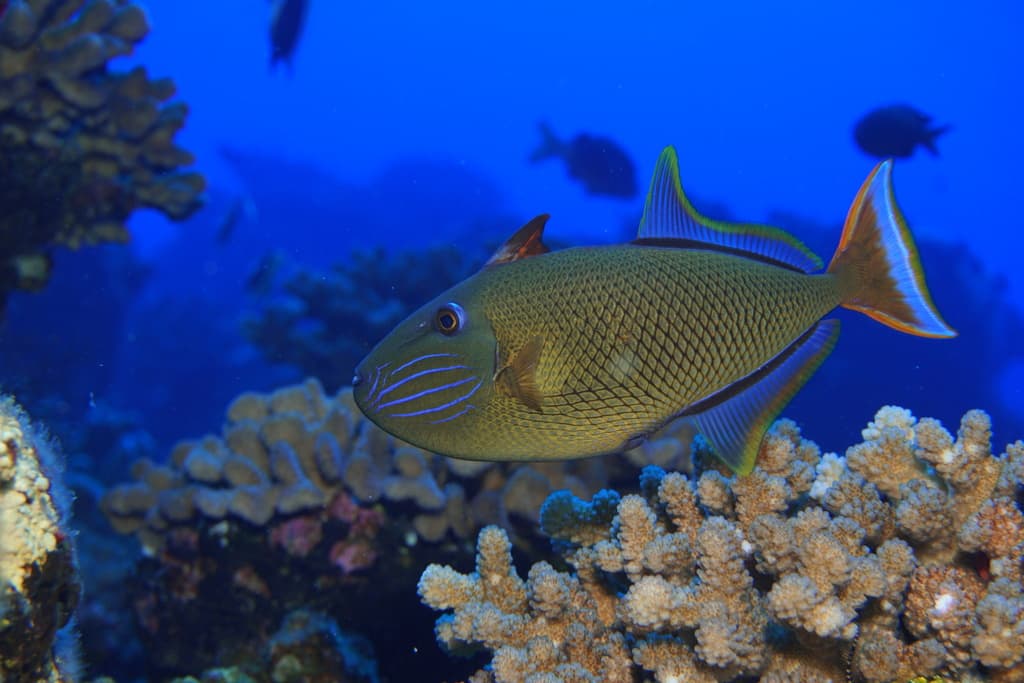
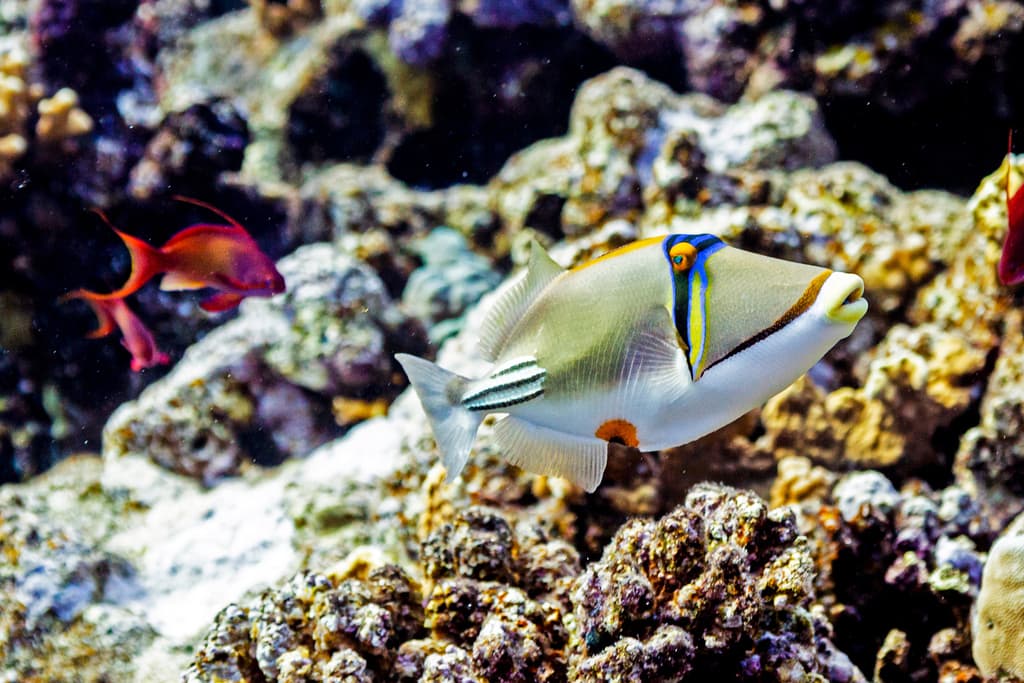
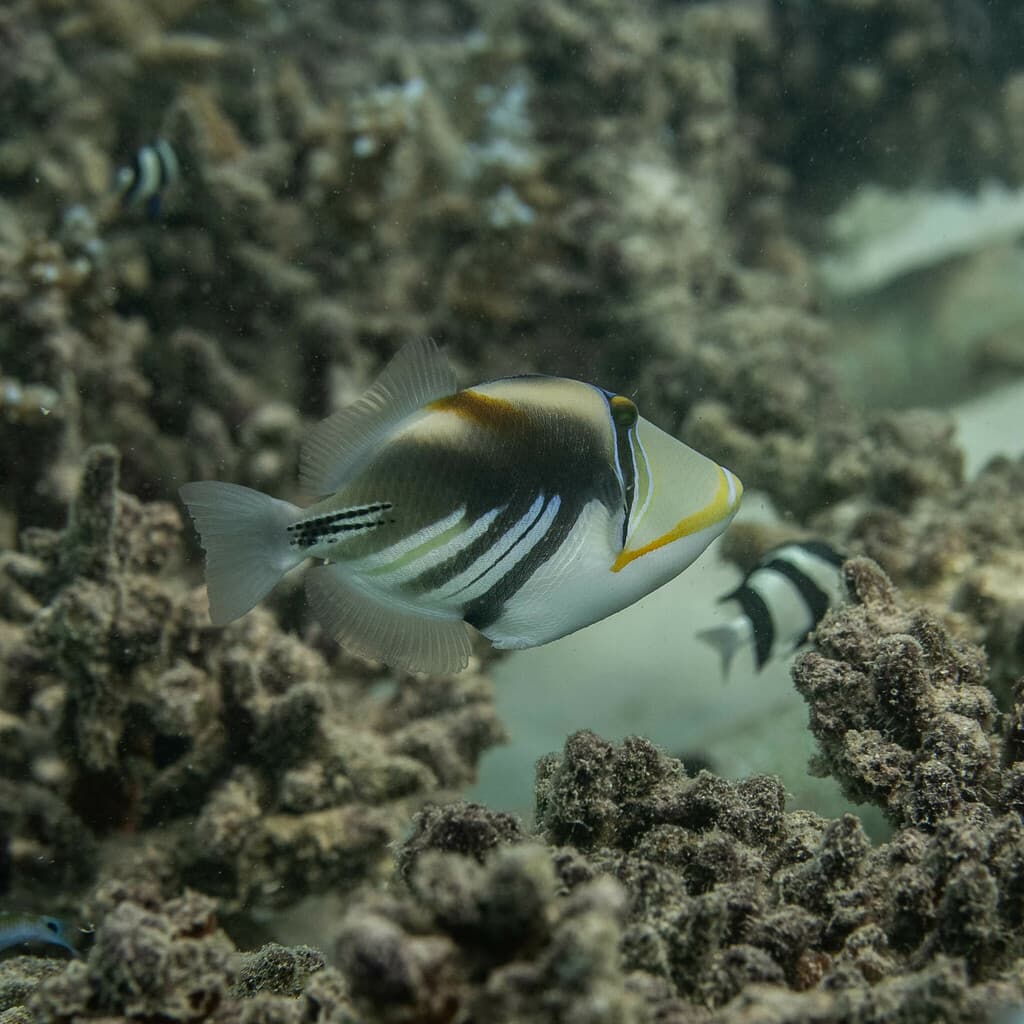
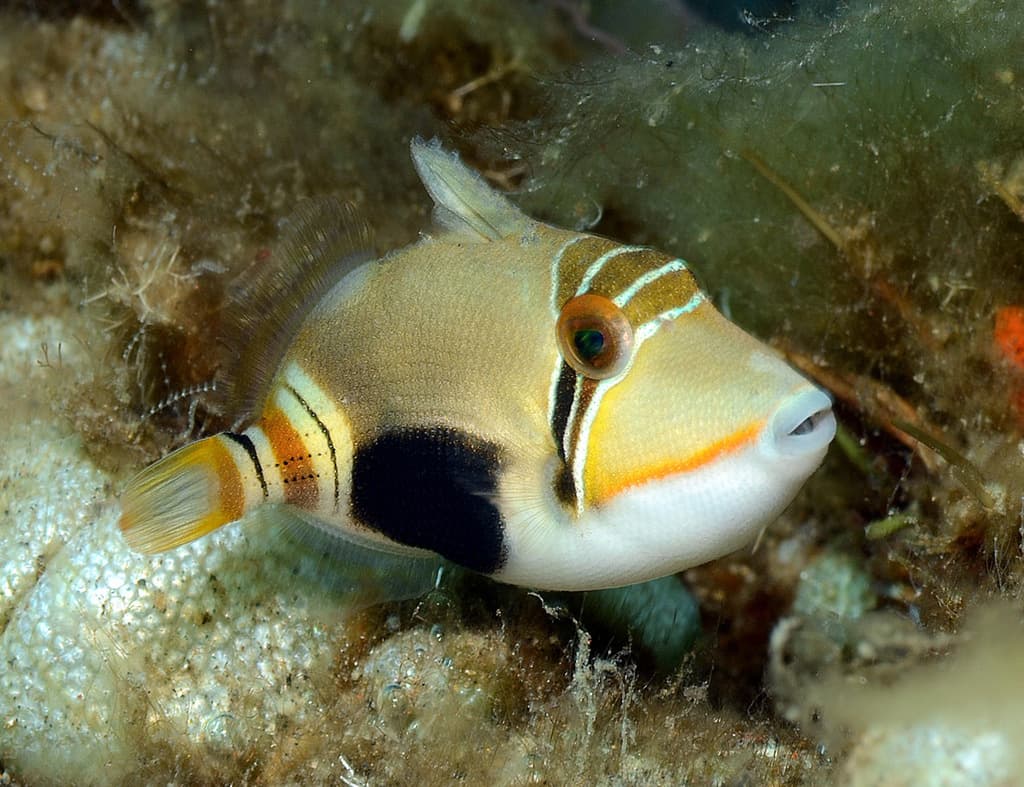
The Bursa Triggerfish is a member of the Rhinecanthus genus, sharing the same distinctive geometric body pattern as its more famous relatives the Picasso and Assasi triggerfish. It features a complex arrangement of tan, brown, blue, and yellow markings, with a prominent dark patch on the belly region that gives rise to its alternate name Blackbelly Triggerfish. The body is adorned with the characteristic blue and yellow lip stripe and angular dark marking on the posterior that defines the Rhinecanthus group.
In the wild, the Bursa Triggerfish inhabits shallow reef flats, lagoons, and coastal areas across the Indo-Pacific, where it is commonly found in rubble zones and areas of mixed sand and rock. It is an opportunistic feeder that uses its strong jaws to flip over rubble and rocks, exposing hidden crustaceans, worms, and other invertebrates. This species is particularly bold and territorial, aggressively defending its chosen area against intruders of any size.
The Bursa Triggerfish is a hardy and robust aquarium species that adapts well to captive conditions. It is intelligent, bold, and often becomes the dominant personality in the aquarium. Like other Rhinecanthus species, it will rearrange rockwork, consume all invertebrates, and may harass timid tankmates. It is not reef-safe and is best kept in fish-only or FOWLR systems with other assertive species that can stand up to its territorial behavior. Despite its aggression, it is a long-lived and interactive pet that develops a strong bond with its keeper.
Feeding & Diet
Carnivore
Bursa Triggerfish are carnivores that feed on crustaceans, mollusks, worms, echinoderms, and algae. In captivity, offer frozen krill, mysis shrimp, squid, chopped shrimp and clam, and marine pellets. Provide hard-shelled foods regularly to maintain their continuously growing teeth. Feed two to three times daily.
Compatibility
not-reef-safeaggressiveintelligentfish-onlymay-rearrange-decor
The Bursa Triggerfish is an aggressive species that will assert dominance over most tankmates. Best housed with other robust, similarly-sized aggressive fish such as large wrasses, groupers, puffers, and other triggerfish. It will consume all invertebrates. Not safe for reef aquariums. Smaller or timid fish will be relentlessly harassed.
Check CompatibilityBreeding
Not bred in captivity
Bursa Triggerfish have not been bred in home aquariums. Like other Rhinecanthus species, females deposit eggs in sandy nests that are aggressively guarded. The pelagic larval stage has not been successfully replicated in captive settings.
Special Requirements
- Tight-fitting lid essential - capable of jumping
- Will rearrange rockwork and substrate
- Provide hard-shelled foods for dental maintenance
- Not suitable for reef aquariums
- Robust filtration needed
- Secure all loose equipment
Water Parameters
Temperature74–80°F
Specific Gravity1.02–1.026 sg
pH8.1–8.4
Alkalinity8–12 dKH
Coloration
tanbrownblueyellowblack
Tags
not-reef-safeaggressiveintelligentfish-onlymay-rearrange-decor