BeginnerSemi-AggressiveNot Reef Safe
Map Puffer
Arothron mappa
Family: Tetraodontidae · Pufferfish
Also known as: Scribbled Puffer, Mappa Puffer, Map Pufferfish
(c) Poseidon’s Adventure, some rights reserved (CC BY-NC)
Max Size
26"
Min Tank
250 gal
Lifespan
10-20 years
Origin
Indo-Pacific, Red Sea
Diet
Carnivore
Swims
All
About
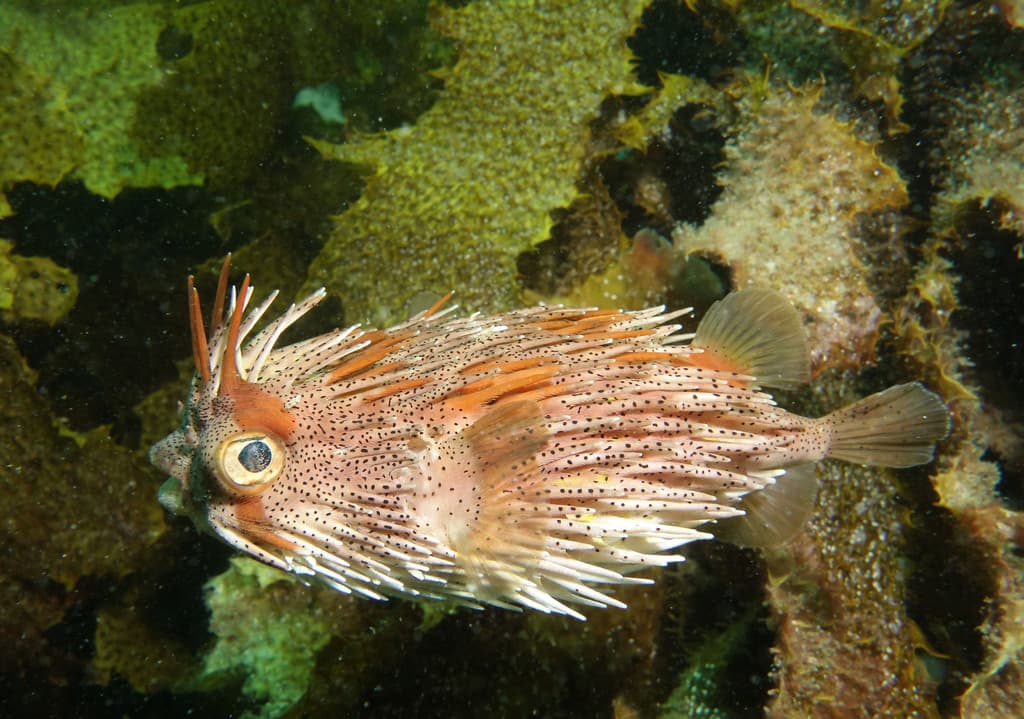
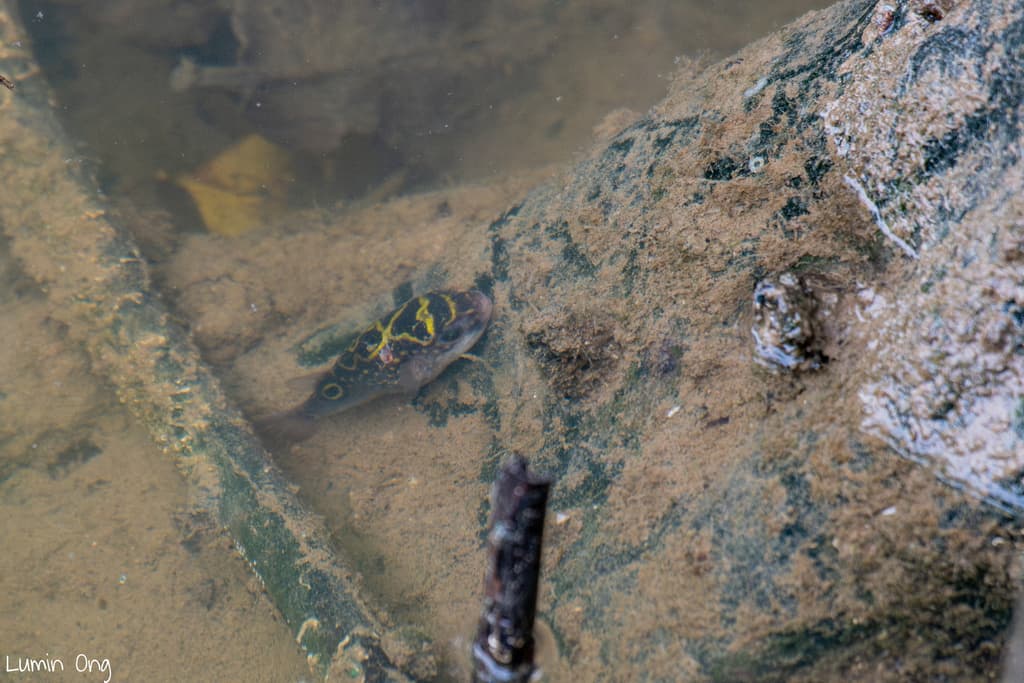
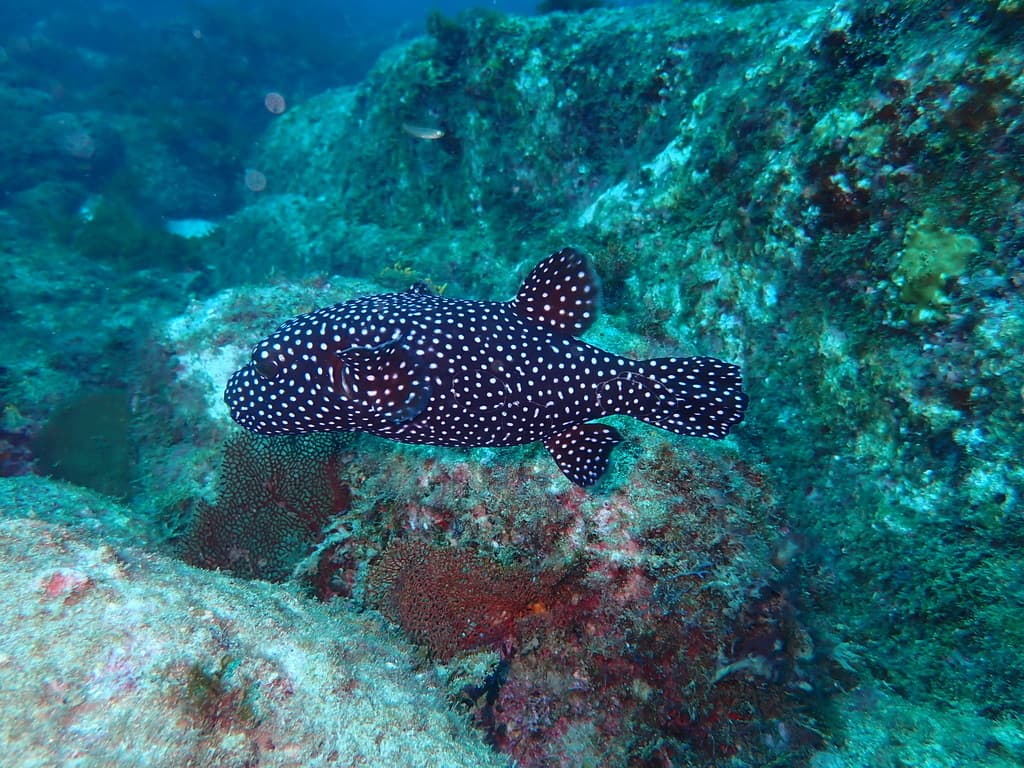
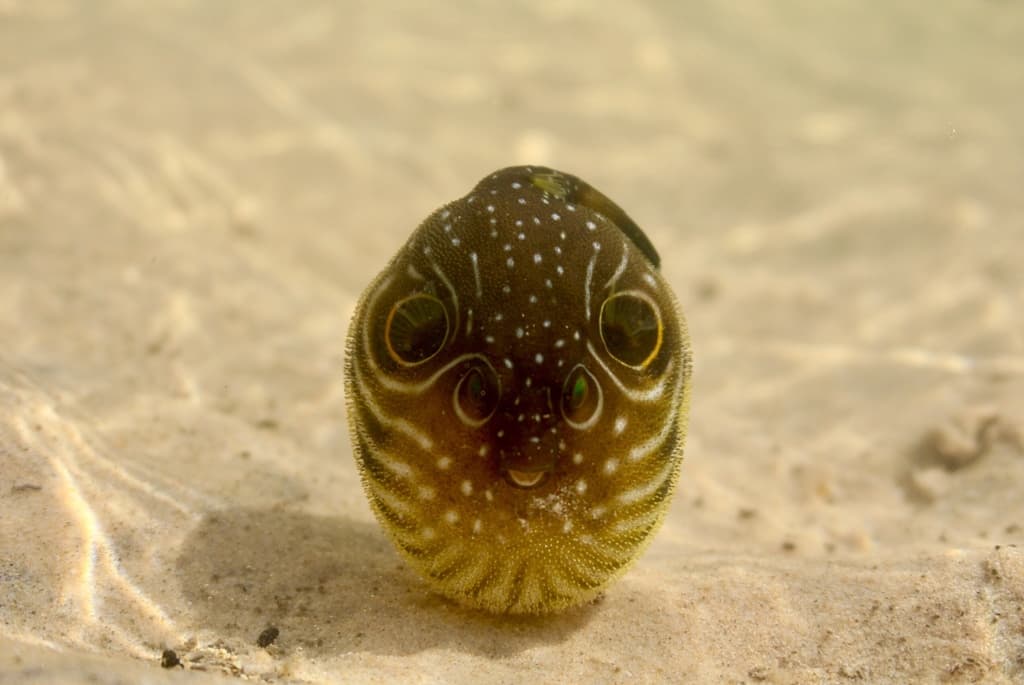
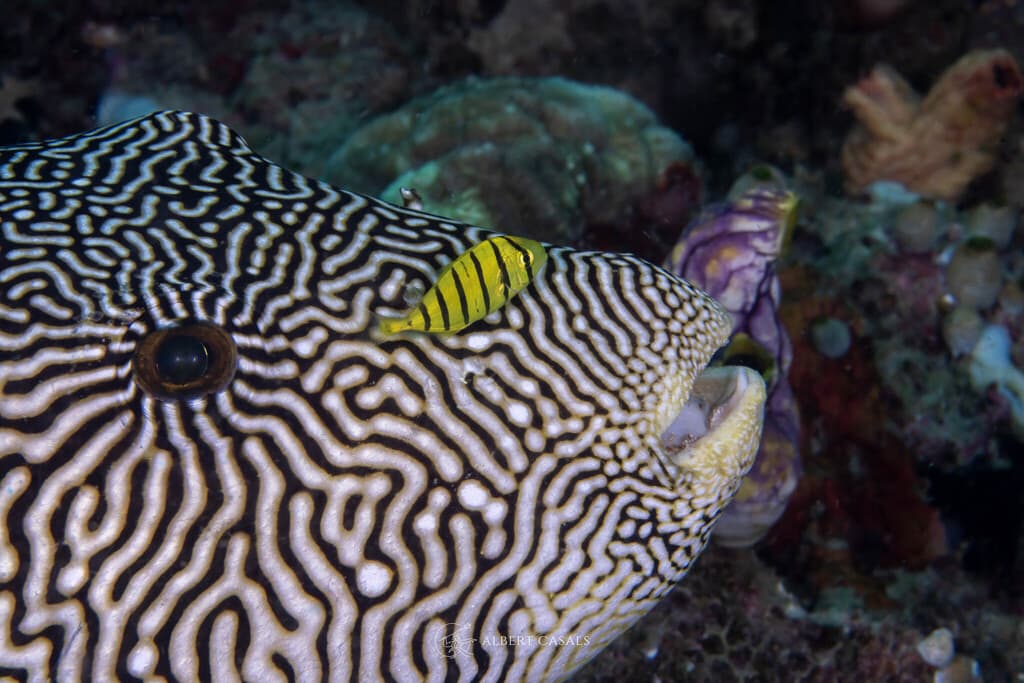
The Map Puffer is one of the largest and most impressively patterned pufferfish available in the marine aquarium trade. Its substantial body is adorned with an elaborate network of dark brown to black lines, swirls, and irregular markings on a light gray to white base, creating a pattern that resembles the contour lines of a topographic map. A prominent dark ring surrounds each eye, and the pattern extends across the entire body and fins. Each individual has a unique pattern, much like a fingerprint.
Growing to a formidable 26 inches in length, the Map Puffer is among the largest pufferfish species commonly encountered in the aquarium trade. In the wild, it inhabits coral reefs, lagoons, and reef slopes across the Indo-Pacific, feeding on sponges, algae, tunicates, and various hard-shelled invertebrates. Its massive beak-like teeth can generate tremendous crushing force, easily breaking through shells, coral, and even aquarium equipment.
Despite its imposing size, the Map Puffer is a relatively gentle giant with a docile personality. It quickly bonds with its keeper and displays the intelligence and interactivity that makes pufferfish such beloved aquarium pets. However, the sheer volume of space and filtration required to house this species puts it firmly in the realm of advanced hobbyists with very large systems of 250 gallons or more. It is emphatically not reef-safe and will consume any and all invertebrates. The Map Puffer is best suited for large fish-only systems where its personality and dramatic appearance can be fully appreciated.
Feeding & Diet
Carnivore
Map Puffers are carnivores with powerful crushing jaws. In the wild, they feed on sponges, tunicates, algae, crustaceans, and mollusks. In captivity, offer frozen krill, shrimp, squid, clam, silversides, and high-quality marine pellets. Hard-shelled foods such as whole crabs, clams, and large snails are essential for dental maintenance. Feed two to three times daily with portions appropriate to their large size.
Compatibility
not-reef-safesemi-aggressiveintelligentfish-onlypersonality-fishlarge-species
The Map Puffer is generally docile toward other large fish but may bully smaller or slower species. It will consume all invertebrates without exception. Best kept in very large fish-only systems with other robust, moderately aggressive species such as large tangs, groupers, triggerfish, and other puffers. Avoid housing with anything small enough to be considered prey or that could be damaged by its powerful jaws.
Check CompatibilityBreeding
Not bred in captivity
Map Puffers have not been bred in home aquariums. Their massive adult size and pelagic spawning habits make captive breeding impractical. Reproduction in the wild is poorly documented, and all specimens in the trade are wild-caught.
Special Requirements
- Very large aquarium required - grows to 26 inches
- Provide hard-shelled foods to maintain teeth
- Not suitable for reef or invertebrate aquariums
- May damage tank equipment with powerful jaws
- Extremely heavy bioload - oversized filtration essential
- Intelligent and interactive - bonds with its keeper
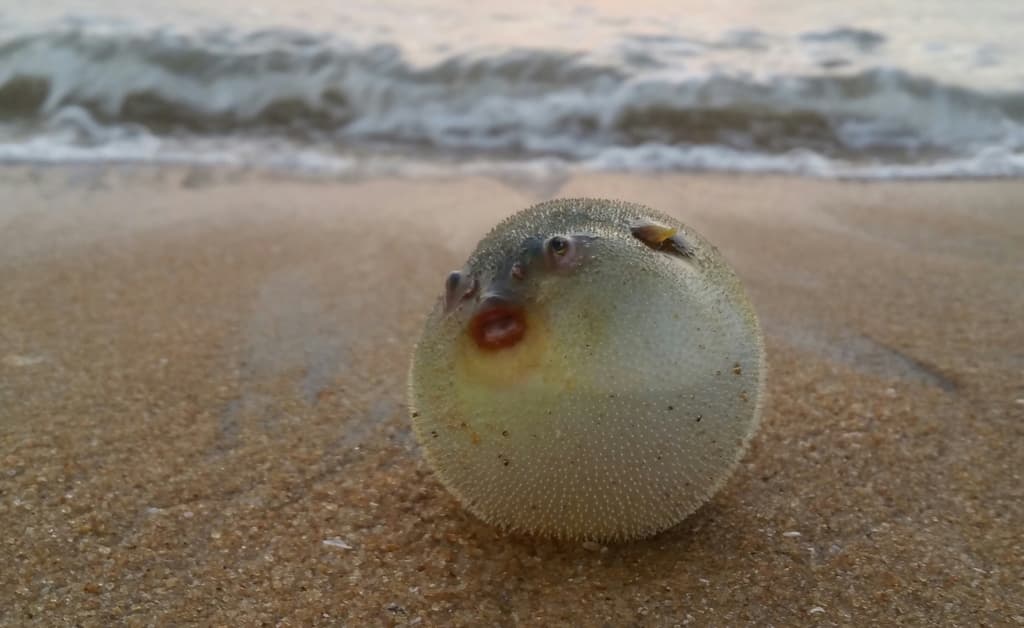
- Can inflate body when stressed - never provoke intentionally
- Best suited for public aquaria or dedicated large home systems
Water Parameters
Temperature74–80°F
Specific Gravity1.02–1.026 sg
pH8.1–8.4
Alkalinity8–12 dKH
Coloration
whitegraybrownblack
Tags
not-reef-safesemi-aggressiveintelligentfish-onlypersonality-fishlarge-species