IntermediateSemi-AggressiveReef Safe with Caution
Yellowtail Hamlet
Hypoplectrus chlorurus
Family: Serranidae · Hamlets
Also known as: Yellowtail Seabass
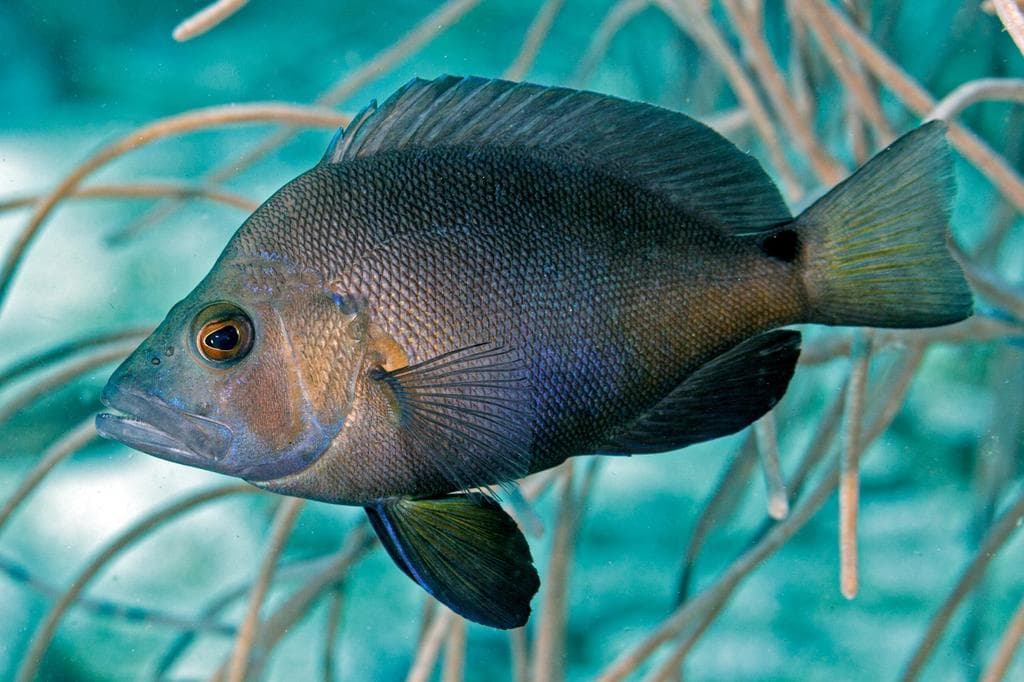
(c) Jim Greenfield, all rights reserved
Max Size
5"
Min Tank
30 gal
Lifespan
5-8 years
Origin
Caribbean, Western Atlantic
Diet
Carnivore
Swims
Middle
About
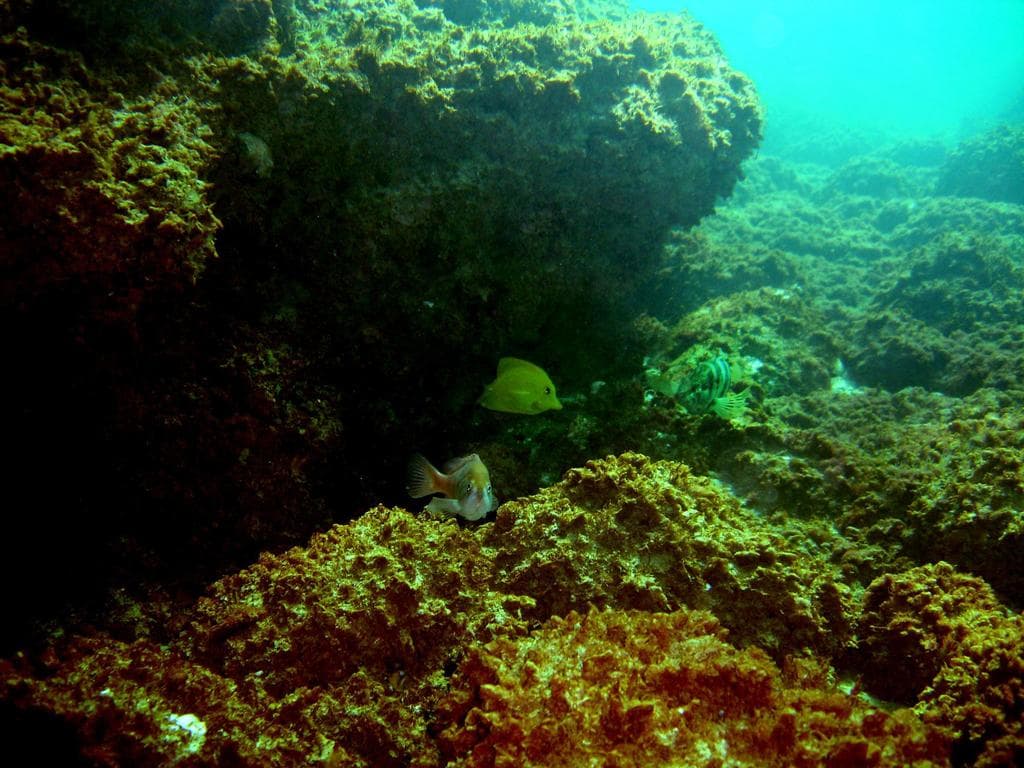
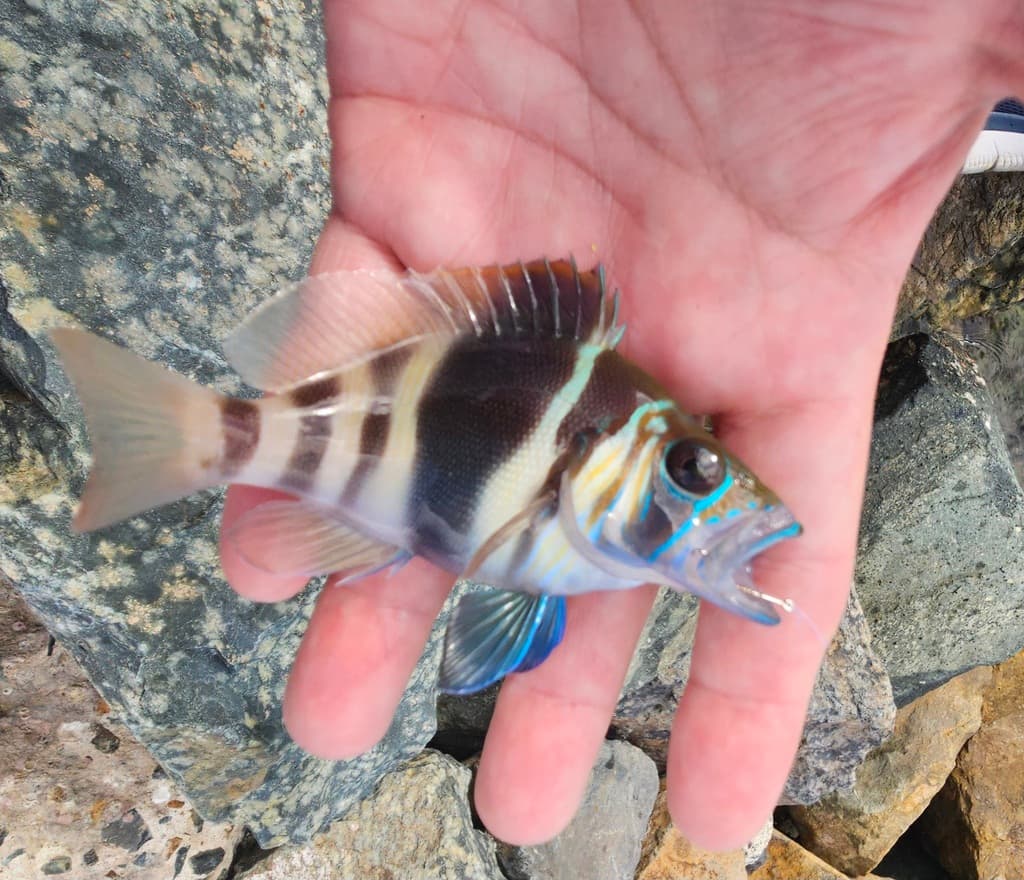
The Yellowtail Hamlet is an attractive Caribbean hamlet species characterized by its warm brown to olive body contrasted with a bright yellow caudal fin and rear body section, which gives the species its descriptive common name. The front portion of the body displays the typical hamlet pattern of subtle vertical bars on a brownish background, while the posterior third transitions to a vivid golden-yellow that extends through the entire tail fin. This two-toned color scheme creates a distinctive and appealing appearance. Like all members of the Hypoplectrus complex, it has a compact, robust body shape reaching approximately 5 inches.
In the wild, Hypoplectrus chlorurus is found throughout the Caribbean and Western Atlantic, including the Florida Keys, Bahamas, Belize, and Honduras. It inhabits coral reef environments at moderate depths of 3 to 25 meters, where it establishes territories around coral heads, sponges, and rocky reef structures. It is a solitary micro-predator that feeds by making short, rapid strikes from cover to capture small crustaceans, worms, and tiny fish. The hamlet species complex, to which this species belongs, is one of the most studied examples of potential ongoing speciation driven by color-pattern-based assortative mating in the marine environment.
In the aquarium, the Yellowtail Hamlet is an intermediate-level species that offers the same engaging personality and manageable size as other hamlets. It adapts reasonably well to captive conditions, becoming more confident over time as it learns to associate its keeper with feeding. A 30-gallon tank with well-structured live rock provides appropriate habitat. It is reef-safe with caution, as it may consume very small ornamental shrimp, but it poses no threat to corals or other sessile invertebrates.
Feeding & Diet
Carnivore
Yellowtail Hamlets are carnivores that feed on small crustaceans, worms, and tiny fish in the wild. In captivity, offer frozen mysis shrimp, enriched brine shrimp, finely chopped silversides, and high-quality marine pellets. They typically accept frozen foods without difficulty after a brief adjustment period. Feed two to three times daily with small meaty portions.
Compatibility
reef-cautionterritorialCaribbeansmall-predator
Yellowtail Hamlets are semi-aggressive and territorial toward conspecifics and similarly shaped species. They coexist well with most medium-sized reef community fish that are too large to eat. Compatible tankmates include clownfish, dwarf angelfish, wrasses, and larger gobies. Keep singly to avoid territorial fighting unless the tank is large enough for a mated pair. Small ornamental shrimp such as sexy shrimp may be at risk.
Check CompatibilityBreeding
Moderate
The Yellowtail Hamlet is a simultaneous hermaphrodite that engages in reciprocal egg-trading during twilight spawning events. Pairs rise in the water column at dusk and alternate between releasing and fertilizing small batches of eggs. This reciprocal spawning ensures both individuals contribute equally to reproduction. While spawning behavior is regularly observed in aquariums, successfully raising the pelagic larvae through metamorphosis remains a significant challenge.
Special Requirements
- Provide structured live rock with caves and hiding areas
- May consume very small shrimp — exercise caution with tiny invertebrates
- Best kept singly or as a mated pair
- Becomes more confident and visible over time
- Part of the scientifically fascinating Hypoplectrus hamlet complex
Water Parameters
Temperature72–78°F
Specific Gravity1.02–1.026 sg
pH8.1–8.4
Alkalinity8–12 dKH
Coloration
brownoliveyellow tailgolden
Tags
reef-cautionterritorialCaribbeansmall-predator