IntermediateSemi-AggressiveReef Safe with Caution
Barred Hamlet
Hypoplectrus puella
Family: Serranidae · Hamlets
Also known as: Barred Seabass
(c) jasonrl, some rights reserved (CC BY-NC)
Max Size
5"
Min Tank
30 gal
Lifespan
5-8 years
Origin
Caribbean, Western Atlantic
Diet
Carnivore
Swims
Middle
About
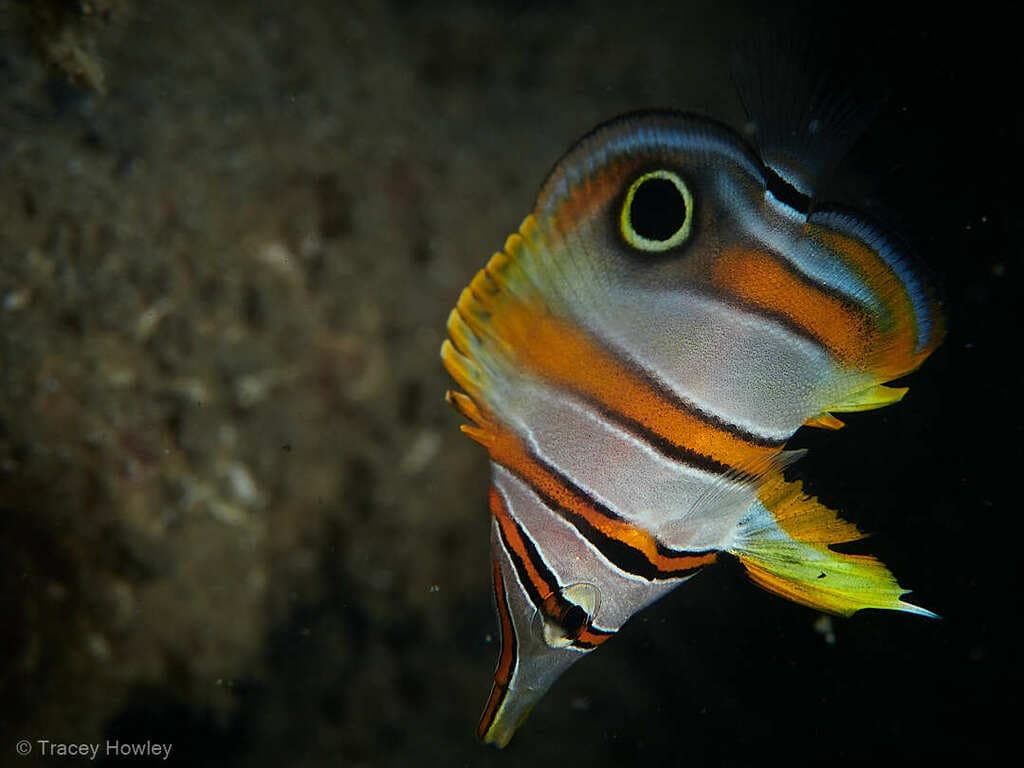
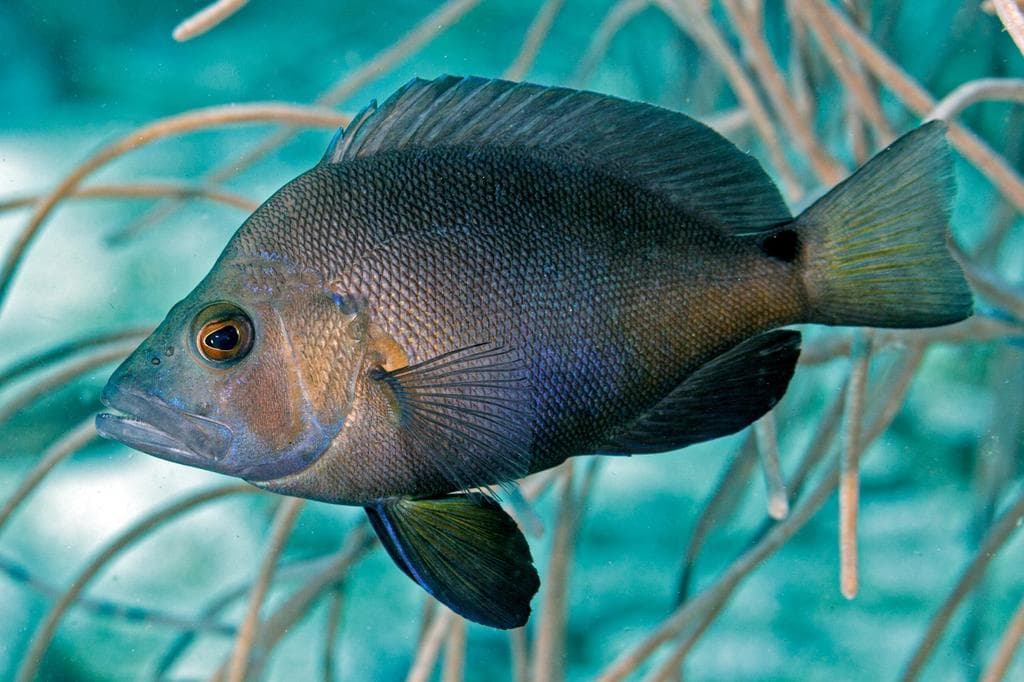
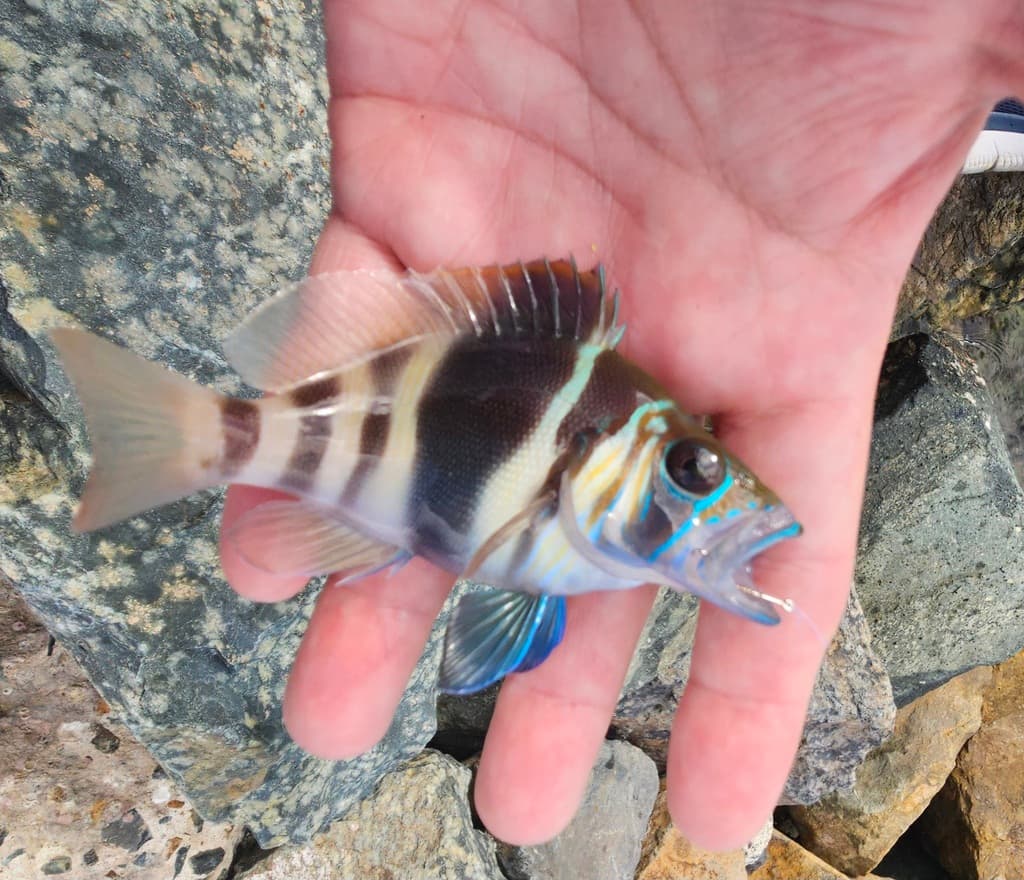
The Barred Hamlet is the most commonly encountered member of the Hypoplectrus hamlet complex, a group of closely related Caribbean reef fish that are a subject of ongoing scientific debate regarding their species status. The Barred Hamlet displays a warm golden-yellow to tan body marked with several prominent dark brown to black vertical bars, with the most distinctive bar running through the eye. The overall effect is an attractive, understated coloration that provides effective camouflage among reef structures and gorgonians.
In the wild, Hypoplectrus puella is found throughout the Caribbean and Western Atlantic, from southern Florida and the Bahamas to Belize and the Lesser Antilles. It inhabits coral reefs at depths typically ranging from 3 to 25 meters, where it is a solitary, territorial predator that feeds on small crustaceans, worms, and tiny fish. Hamlets are one of the few vertebrate groups known to be simultaneous hermaphrodites, with each individual possessing both functional male and female reproductive organs and engaging in reciprocal egg-trading during spawning events at dusk.
In the aquarium, the Barred Hamlet is a moderately challenging but rewarding species that combines predatory behavior with a manageable 5-inch adult size. It requires a tank of at least 30 gallons with plenty of live rock arranged to create hiding spots and territorial boundaries. While it is relatively hardy once acclimated, it can be shy initially and may require target feeding until it gains confidence. Its small mouth limits it to consuming only very small fish and shrimp, making it compatible with a wider range of tankmates than many other predatory species.
Feeding & Diet
Carnivore
Barred Hamlets are carnivores that feed on small crustaceans, worms, and tiny fish in the wild. In captivity, offer frozen mysis shrimp, enriched brine shrimp, finely chopped silversides, cyclops, and high-quality marine pellets. Most specimens accept frozen foods readily after a brief acclimation period. Feed two to three times daily with small, meaty portions.
Compatibility
reef-cautionterritorialCaribbeansmall-predator
Barred Hamlets are semi-aggressive and territorial, particularly toward conspecifics and similarly shaped fish. Their small mouth limits predation to very tiny tankmates, making them compatible with most medium-sized community fish. Good companions include clownfish, dwarf angelfish, wrasses, and gobies that are too large to eat. Keep singly or in mated pairs. Exercise caution with small ornamental shrimp, which may be consumed.
Check CompatibilityBreeding
Moderate
Barred Hamlets are simultaneous hermaphrodites, one of the few vertebrate groups exhibiting this reproductive strategy. Pairs engage in reciprocal egg-trading at dusk, taking turns releasing small batches of eggs which the partner fertilizes. This reciprocal system is thought to have evolved to prevent cheating, ensuring both individuals invest equally in reproduction. Spawning can occur in aquariums, though raising the pelagic larvae remains challenging.
Special Requirements
- Provide ample live rock with hiding spots and territorial boundaries
- May eat very small shrimp and tiny fish
- Best kept singly unless in a large aquarium
- May require target feeding during initial acclimation
- Simultaneous hermaphrodite — any two individuals can potentially spawn
Water Parameters
Temperature72–78°F
Specific Gravity1.02–1.026 sg
pH8.1–8.4
Alkalinity8–12 dKH
Coloration
yellowtanbrown barsblack
Tags
reef-cautionterritorialCaribbeansmall-predator