IntermediateSemi-AggressiveReef Safe with Caution
Blue Hamlet
Hypoplectrus gemma
Family: Serranidae · Hamlets
Also known as: Gem Hamlet, Blue Seabass
(c) Peeling Line, all rights reserved
Max Size
5"
Min Tank
30 gal
Lifespan
5-8 years
Origin
Caribbean, Western Atlantic
Diet
Carnivore
Swims
Middle
About
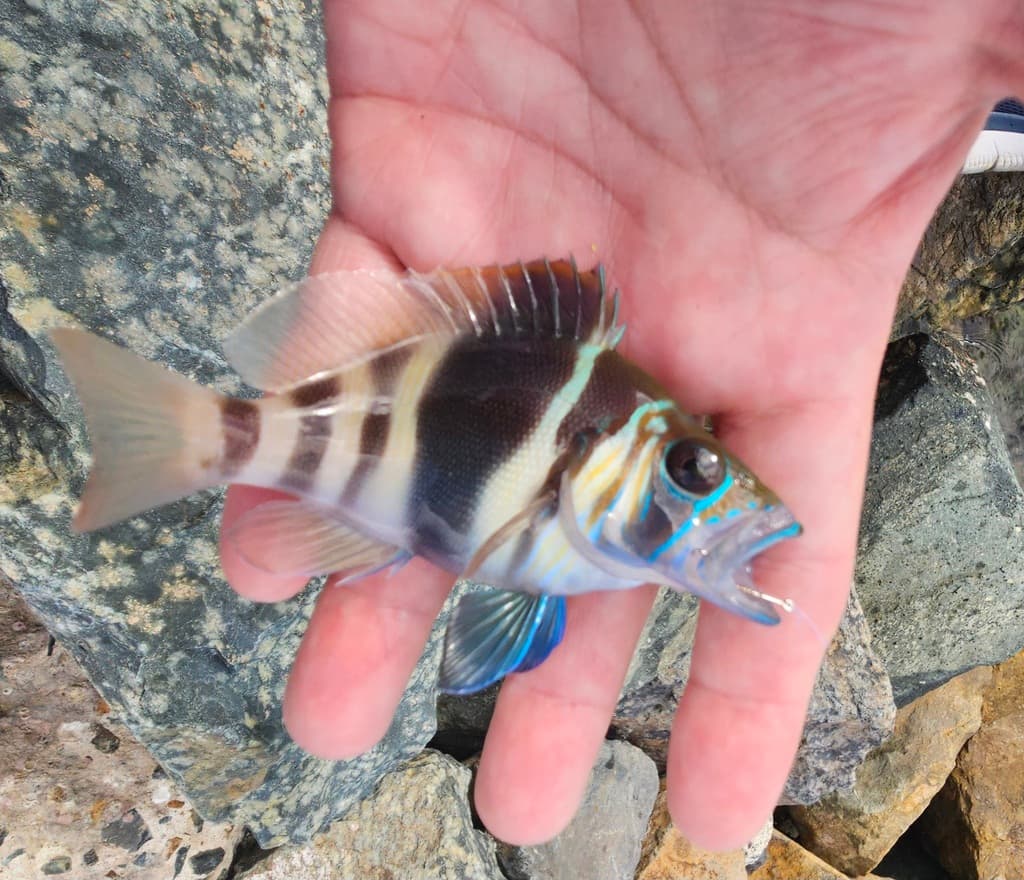
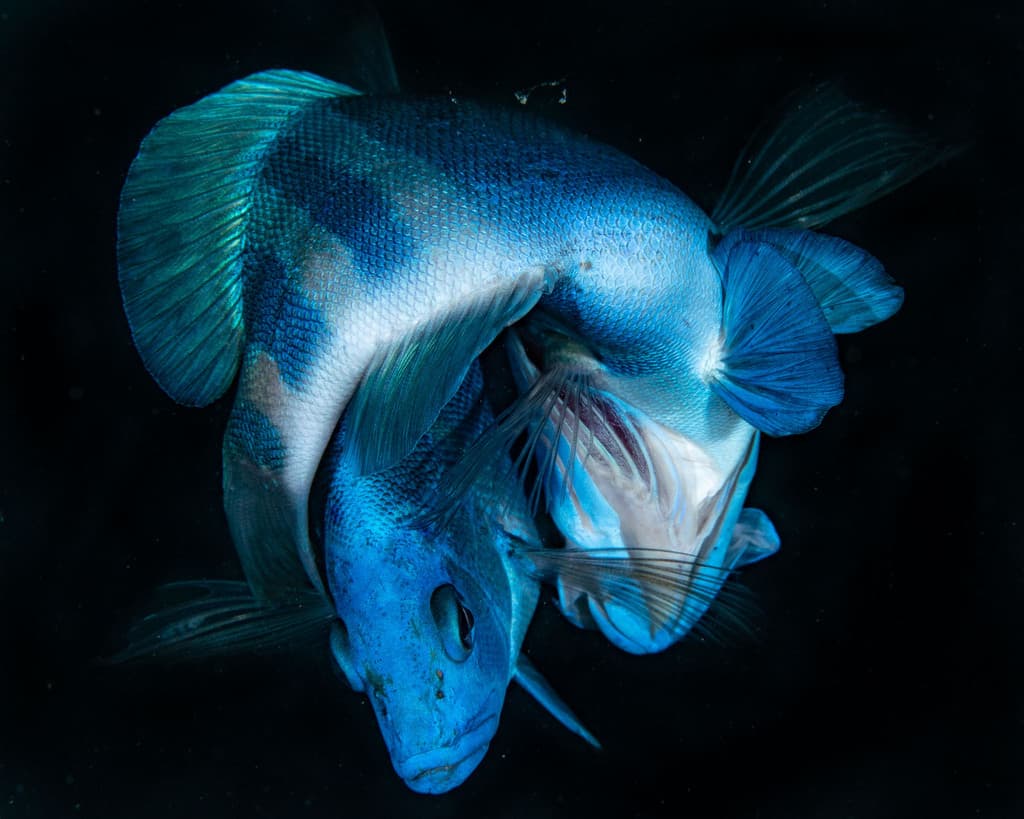
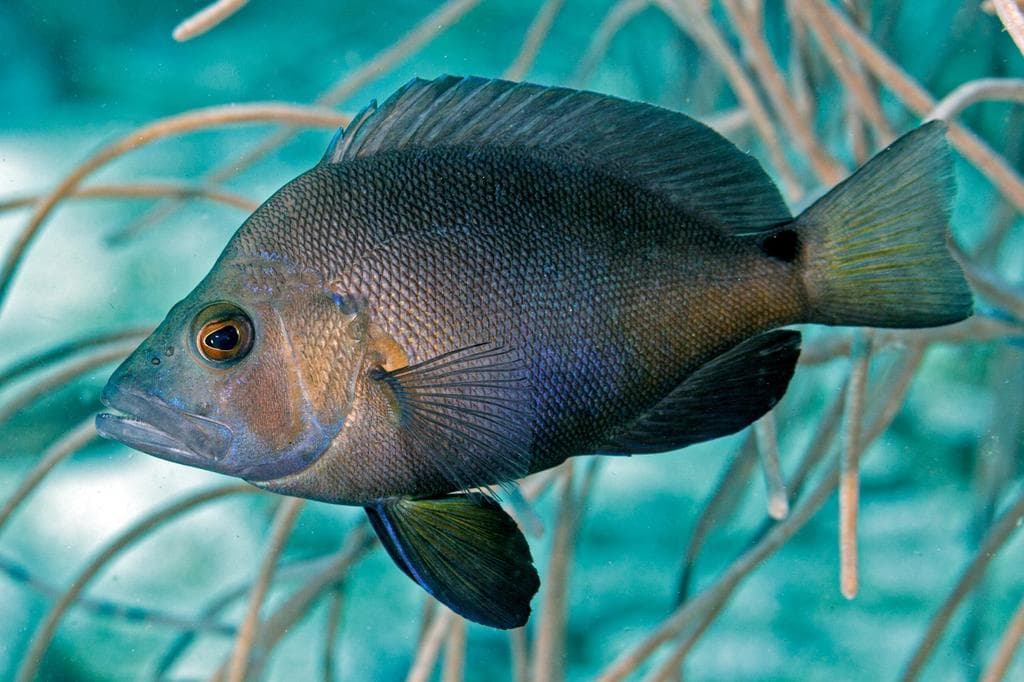
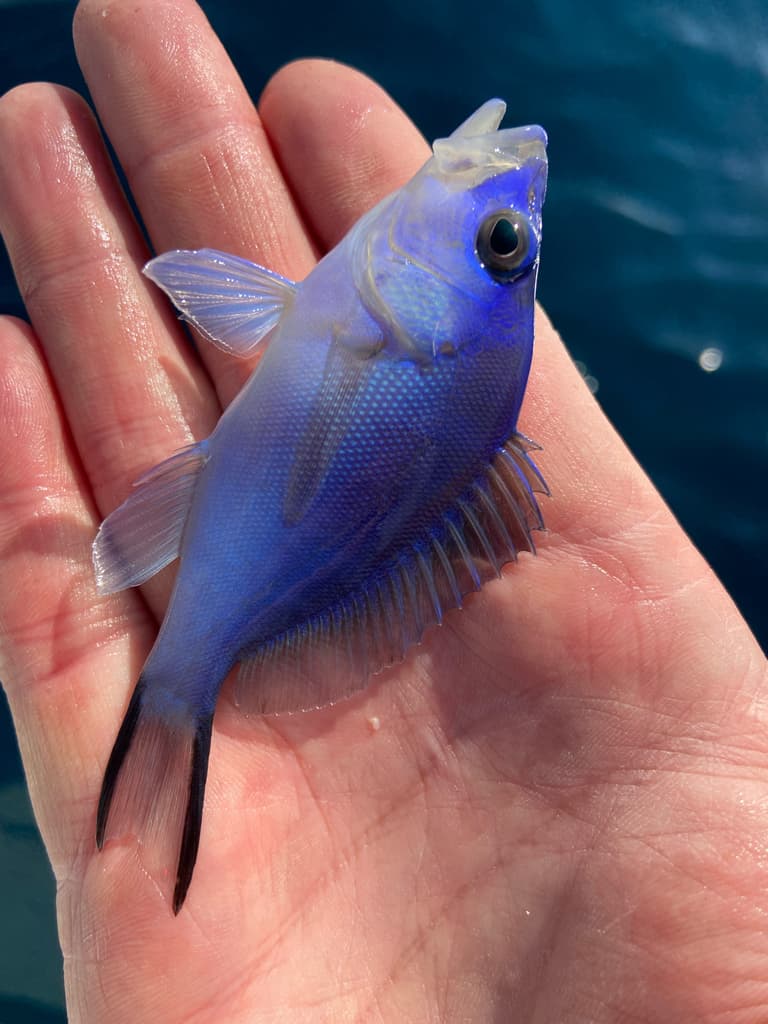
The Blue Hamlet is one of the most strikingly colored and sought-after members of the Hypoplectrus hamlet complex, displaying a vibrant electric blue coloration across its entire body that makes it a true standout among Caribbean reef fish. The intensity of the blue can vary from a deep sapphire to a brilliant azure depending on lighting conditions and the individual's mood, with some specimens showing subtle darker barring that is typical of the hamlet group. At about 5 inches maximum, it shares the compact, bass-like body shape common to all hamlets.
In the wild, Hypoplectrus gemma is found in the Caribbean and Western Atlantic, with populations recorded around Florida, the Bahamas, Jamaica, and other Caribbean islands. It is considered one of the rarer hamlet species, making wild sightings a noteworthy event for divers. Like other hamlets, it inhabits coral reefs at moderate depths, typically between 3 and 25 meters, where it leads a solitary, territorial existence among coral heads and reef structures. It feeds on small crustaceans, worms, and tiny fish, using quick dashes from cover to capture prey.
In the aquarium, the Blue Hamlet is a prized species for Caribbean enthusiasts and collectors drawn to its exceptional coloration. It is moderately challenging to maintain, primarily due to its initial shyness and the difficulty some specimens have transitioning to prepared foods. Once settled, however, it becomes a hardy and long-lived aquarium resident. A 30-gallon tank with ample live rock provides adequate space for a single specimen. Its rarity in the trade means it commands premium prices when available, and wild collection pressures have raised conservation concerns.
Feeding & Diet
Carnivore
Blue Hamlets are carnivores that feed on small crustaceans, worms, and tiny fish. In captivity, offer frozen mysis shrimp, enriched brine shrimp, finely chopped silversides, and high-quality marine pellets. Some specimens may require live food initially before being weaned onto frozen preparations. Feed two to three times daily with small portions of meaty foods.
Compatibility
reef-cautionterritorialCaribbeanrare
Blue Hamlets are semi-aggressive and territorial, particularly toward conspecifics and similarly shaped or colored fish. They are generally compatible with most medium-sized community fish that are too large to eat. Good tankmates include clownfish, dwarf angelfish, medium wrasses, and gobies. Keep singly unless in a very large aquarium. Exercise caution with small ornamental shrimp, which may be consumed.
Check CompatibilityBreeding
Moderate
Like all hamlets, the Blue Hamlet is a simultaneous hermaphrodite. Pairs engage in reciprocal egg-trading at dusk, alternating between male and female roles during spawning bouts. This fascinating reproductive strategy ensures equal investment from both partners. While spawning has been observed in aquariums, raising the small pelagic larvae to settlement is extremely challenging and rarely accomplished.
Special Requirements
- Rare in the aquarium trade — handle acquired specimens with care
- May require live food initially before weaning to frozen
- Provide ample live rock for hiding and territory
- May be shy initially — allow adequate acclimation time
- Best kept singly to avoid territorial aggression
Water Parameters
Temperature72–78°F
Specific Gravity1.02–1.026 sg
pH8.1–8.4
Alkalinity8–12 dKH
Coloration
blueelectric bluesapphire
Tags
reef-cautionterritorialCaribbeanrare