IntermediateSemi-AggressiveReef Safe with Caution
Indigo Hamlet
Hypoplectrus indigo
Family: Serranidae · Hamlets
Also known as: Indigo Seabass
(c) Gabriel Jensen, some rights reserved (CC BY-NC)
Max Size
5"
Min Tank
30 gal
Lifespan
5-8 years
Origin
Caribbean, Western Atlantic
Diet
Carnivore
Swims
Middle
About
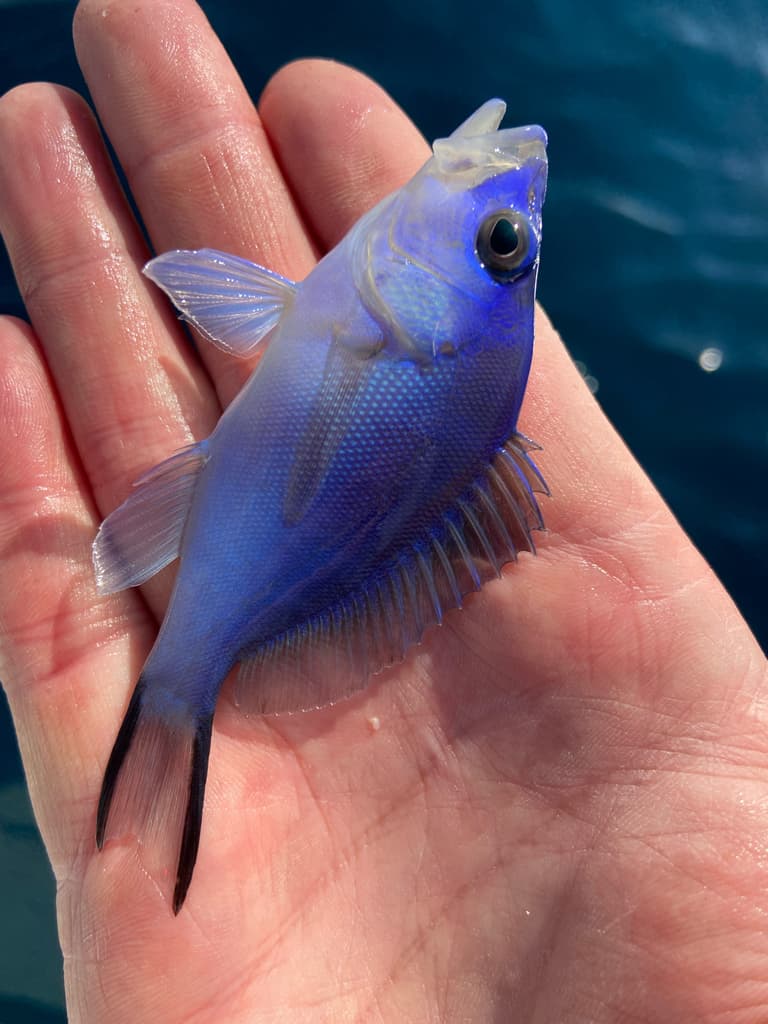
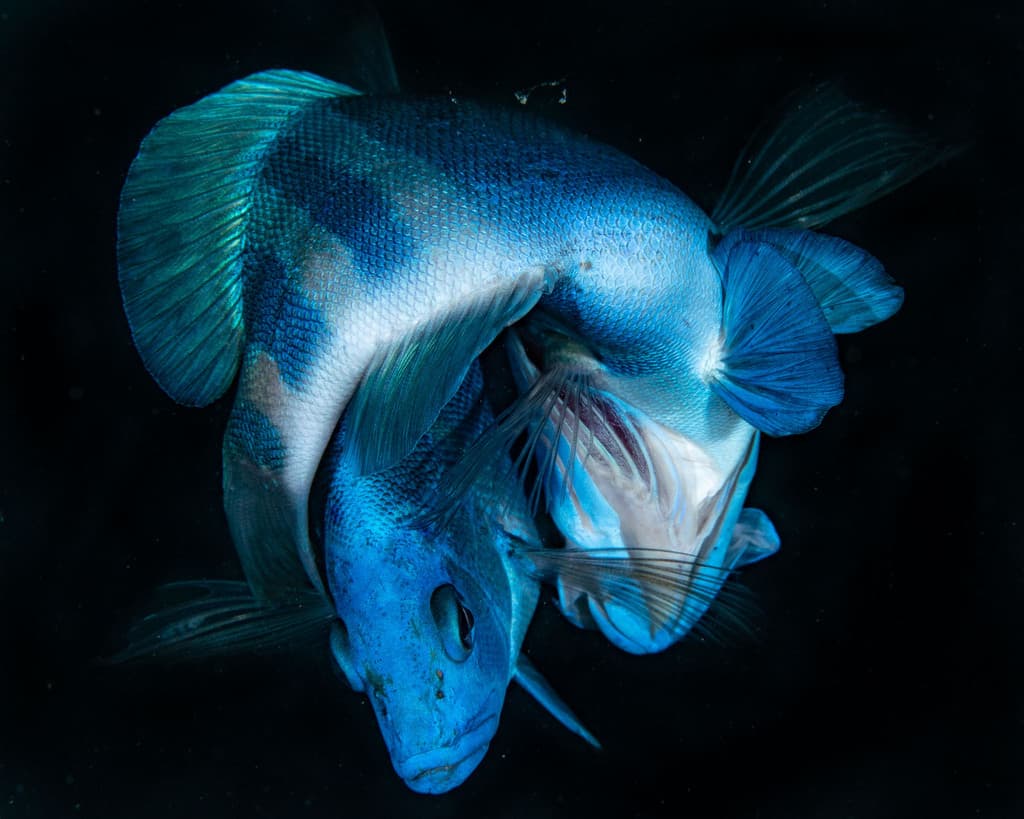
The Indigo Hamlet is a beautifully colored member of the Hypoplectrus hamlet complex, displaying a deep, rich indigo-blue coloration that distinguishes it from the brighter electric blue of the closely related Blue Hamlet. The body is suffused with a dusky blue-purple hue that deepens toward a dark navy along the dorsal region, while the belly may show lighter silvery-blue tones. Faint vertical bars, characteristic of the hamlet group, are often visible across the flanks, becoming more pronounced when the fish is stressed or displaying territorial behavior. Like all hamlets, it has a compact, bass-like body reaching about 5 inches.
In the wild, Hypoplectrus indigo is found across the Caribbean and Western Atlantic, including the Florida Keys, Bahamas, Belize, Cayman Islands, and other Caribbean reef systems. It inhabits coral reefs at depths typically ranging from 3 to 30 meters, where it is a solitary, territorial species associated with coral heads, sponges, and reef structures. It is a micro-predator that feeds on small crustaceans, worms, and tiny fish, making quick sorties from cover to snatch passing prey. The Indigo Hamlet is part of the broader hamlet species complex that continues to fascinate evolutionary biologists studying the mechanisms of color-based assortative mating and potential speciation.
In the aquarium, the Indigo Hamlet is an intermediate-level species that offers a unique combination of attractive coloration, manageable size, and fascinating reproductive biology. A 30-gallon aquarium with well-arranged live rock provides suitable habitat. It acclimates reasonably well to captive conditions, though initial shyness is common and patience is required during the settling-in period. Once established, it becomes a confident, curious fish with an engaging personality.
Feeding & Diet
Carnivore
Indigo Hamlets are carnivores that feed on small crustaceans, polychaete worms, and tiny fish in the wild. In captivity, offer frozen mysis shrimp, enriched brine shrimp, finely chopped silversides, cyclops, and high-quality marine pellets. Most specimens transition to frozen foods within a few days of acclimation. Feed two to three times daily with small, meaty portions for best results.
Compatibility
reef-cautionterritorialCaribbeansmall-predator
Indigo Hamlets are semi-aggressive and territorial toward conspecifics and similarly shaped fish. They are compatible with most medium-sized community fish that are too large to eat. Suitable companions include clownfish, dwarf angelfish, medium wrasses, hawkfish, and larger gobies. Keep singly or in mated pairs to avoid territorial fighting. Small ornamental shrimp may be at risk of predation.
Check CompatibilityBreeding
Moderate
The Indigo Hamlet is a simultaneous hermaphrodite, possessing both functional male and female reproductive organs. Pairs engage in elaborate dusk spawning rituals involving reciprocal egg-trading, where each partner alternates between releasing eggs and fertilizing the other's eggs. This behavior has been extensively studied as a model for understanding the evolution of reciprocal altruism in vertebrates. Spawning occurs readily in aquariums, but larval rearing remains very challenging.
Special Requirements
- Provide ample live rock with caves and hiding spots
- May eat very small shrimp and tiny fish
- Best kept singly or as a mated pair
- Allow adequate acclimation time — initial shyness is common
- Part of the fascinating hamlet species complex
Water Parameters
Temperature72–78°F
Specific Gravity1.02–1.026 sg
pH8.1–8.4
Alkalinity8–12 dKH
Coloration
indigodark bluepurplenavy
Tags
reef-cautionterritorialCaribbeansmall-predator