ExpertSemi-AggressiveReef Safe
Lined Sweetlips
Plectorhinchus lineatus
Family: Haemulidae · Grunts & Sweetlips
Also known as: Yellowbanded Sweetlips, Diagonal-banded Sweetlips, Oblique-banded Sweetlips
(c) Sabine Templeton, some rights reserved (CC BY-NC)
Max Size
20"
Min Tank
250 gal
Lifespan
10-20 years
Origin
Indo-Pacific, Western Pacific
Diet
Carnivore
Swims
Middle
About
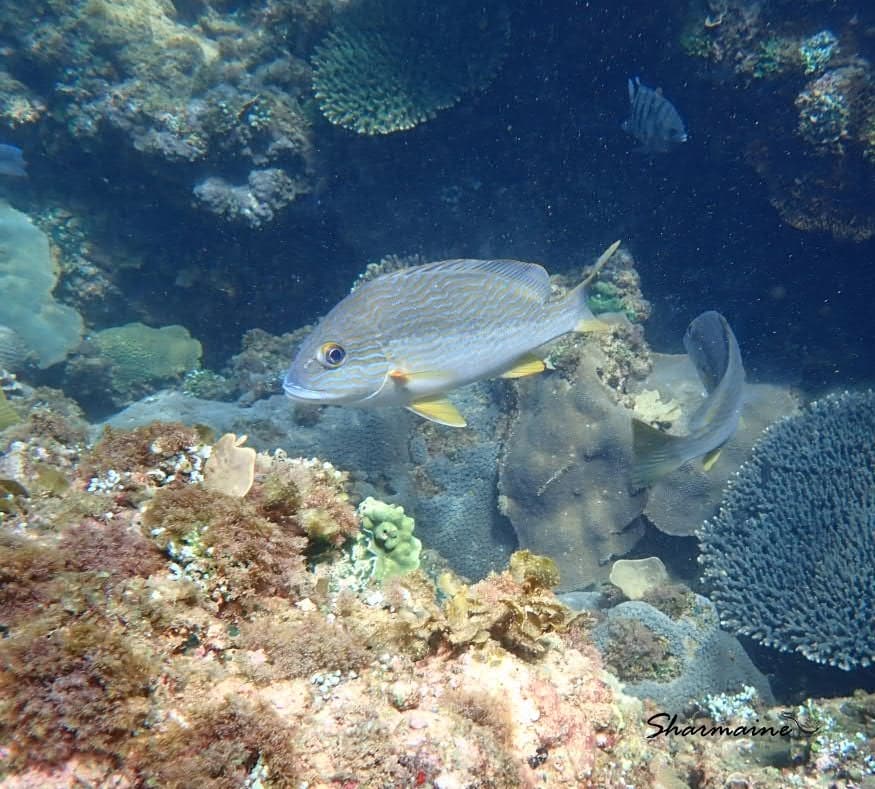
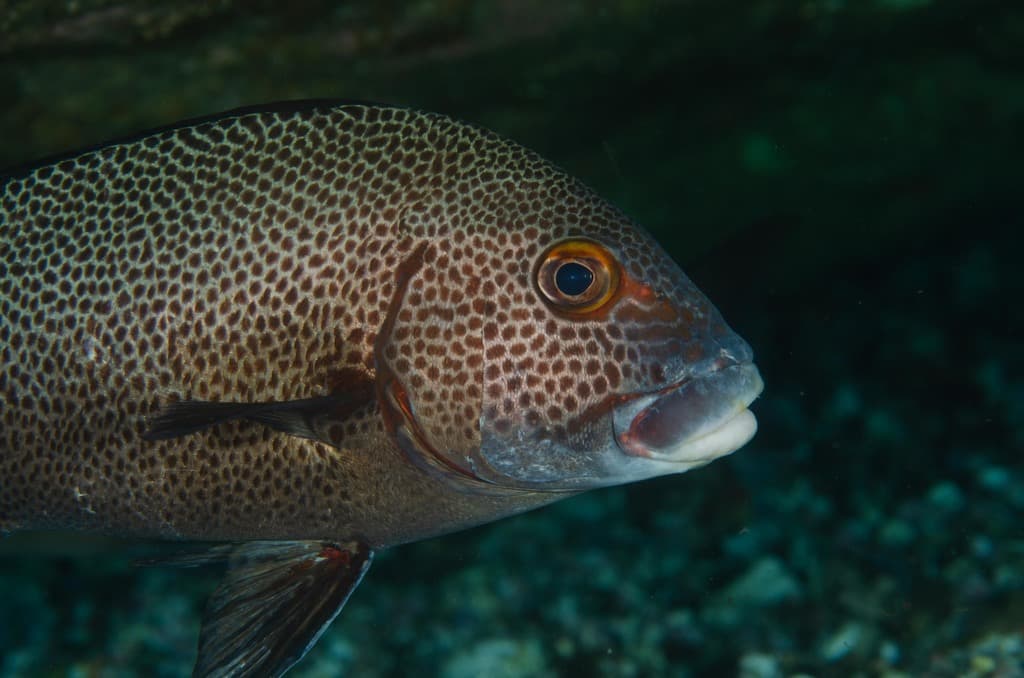
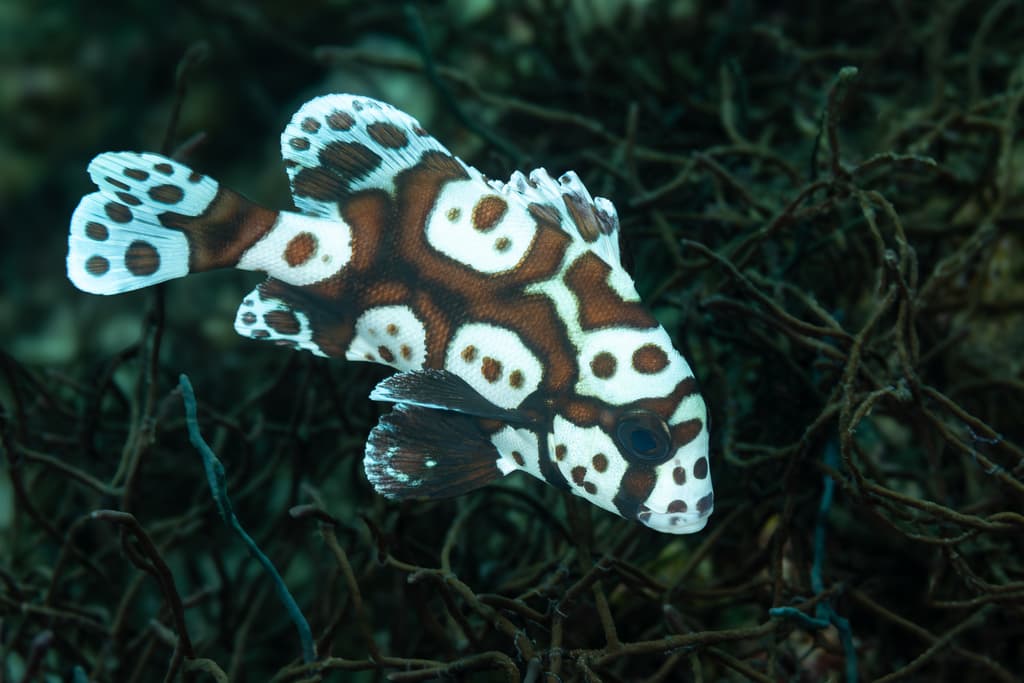
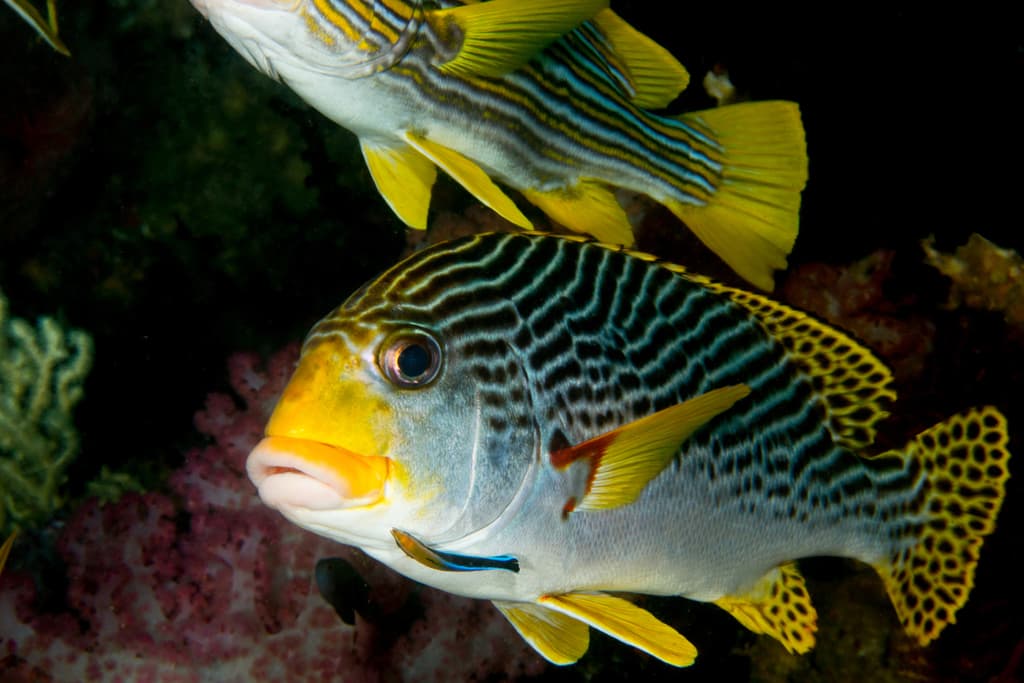
The Lined Sweetlips is a large and visually impressive member of the Haemulidae family, distinguished by its bold pattern of alternating black and yellow-white horizontal stripes running the length of its body. Like other sweetlips, juveniles display a dramatically different appearance from adults, with young fish sporting a pattern of dark brown and white patches that gradually transitions to the distinctive lined adult pattern as the fish matures. The thick, fleshy lips characteristic of the sweetlips group give this species a somewhat comical, endearing expression.
In the wild, Plectorhinchus lineatus is found across the Indo-Pacific, from Indonesia and the Philippines through to the Great Barrier Reef and beyond. Adults are typically encountered in small groups or pairs around coral reef slopes, overhangs, and cave entrances at depths of 5 to 35 meters. They are primarily nocturnal feeders, resting in sheltered areas during the day and emerging at dusk to hunt crustaceans, worms, and small invertebrates across the reef and sandy substrate.
The Lined Sweetlips is considered one of the most difficult marine fish to maintain in captivity. Newly imported specimens almost universally refuse prepared foods, and the weaning process requires exceptional patience and expertise. Many specimens simply fail to adapt to captive conditions regardless of the keeper's efforts. Those rare individuals that do acclimate can live for many years, but the combination of feeding difficulty, sensitivity to water quality, and large adult size of 20 inches makes this a species strictly for expert aquarists with well-established systems of 250 gallons or more.
Feeding & Diet
Carnivore
Lined Sweetlips are strict carnivores that feed on crustaceans, polychaete worms, and small benthic invertebrates. In captivity, weaning onto prepared foods is extremely challenging. Begin with live ghost shrimp, live blackworms, or live adult brine shrimp, and attempt a very gradual transition to frozen foods over weeks or months. Many specimens never fully accept non-living foods. Feed small amounts multiple times daily.
Compatibility
semi-aggressiveFOWLRlarge-tankexpert-onlynocturnal-feeder
The Lined Sweetlips can be semi-aggressive toward smaller or similar-looking fish, particularly in confined spaces. It does best with other large, robust tankmates that will not outcompete it for food. Avoid very aggressive species that may stress this sensitive fish. Despite being reef-safe regarding corals, it will consume ornamental shrimp, crabs, and worms.
Check CompatibilityBreeding
Not bred in captivity
Lined Sweetlips have not been bred in home aquariums. They are pelagic spawners in the wild, with courtship and spawning occurring in open water during dusk. The extreme difficulty of even maintaining this species in captivity makes breeding attempts impractical. All specimens in the trade are wild-caught.
Special Requirements
- Extremely difficult to wean onto prepared foods — expert feeding skills required
- Live food must be available during acclimation and potentially long-term
- Pristine water quality is non-negotiable — very sensitive to dissolved organics
- Provide multiple caves and overhangs for daytime resting
- Only for expert aquarists with large, well-established systems
Water Parameters
Temperature72–80°F
Specific Gravity1.02–1.026 sg
pH8.1–8.4
Alkalinity8–12 dKH
Coloration
black stripesyellowwhitebrown (juvenile)
Tags
semi-aggressiveFOWLRlarge-tankexpert-onlynocturnal-feeder